
Cool Facts on Hawaii: 15 Things Most Visitors Never Learn
Hawaii is the only U.S. state with two official languages, it was a sovereign kingdom before it was a state, and one of its volcanoes has been erupting almost nonstop since 1983. Those are just the start. Below are 15 of the coolest facts about the islands, each tied to an official or scientific source, plus a few tips for turning trivia into a real experience when you visit.
TL;DR
- Hawaii became the 50th state on August 21, 1959, and it has two official languages: English and Hawaiian.
- The islands sit at the end of a volcanic chain more than 70 million years old, and the Big Island is the youngest and largest.
- About 10,000 humpback whales, roughly half of the North Pacific population, visit Hawaiian waters each winter.
- You can see the islands from above without a helicopter at Flight of Aloha, our Native Hawaiian-owned flying theater in Kailua-Kona and Whalers Village Kaanapali.
Hawaii by the numbers: statehood, symbols and the Aloha State
Start with the basics, because even these have a twist.
1. Hawaii is the 50th state, and the newest
Hawaii was admitted to the Union on August 21, 1959, according to the state’s official facts and figures. That makes it the most recent state to join. The same document notes that Polynesians found the islands between the 3rd and 7th centuries A.D., and that British Captain James Cook arrived in 1778.
2. The state motto is a promise
The motto, Ua mau ke ea o ka ʻāina i ka pono, translates to “The life of the land is perpetuated in righteousness,” per the same state publication. Locals will tell you it is not just a slogan. Caring for the land (mālama ʻāina) shapes how people talk about everything from farming to tourism.
3. The state bird is a goose
The nēnē, or Hawaiian goose, is the official state bird. The state flower is the yellow hibiscus, and the state anthem is Hawaiʻi Ponoʻī, all listed in the state’s facts and figures. If you spot a nēnē near a lava field or a golf course, give it space.
4. Hawaii was a kingdom first
King Kamehameha the Great conquered and united the major Hawaiian Islands in 1810 and ruled until his death in 1819, according to the Governor’s office 50 Fun Facts brochure. A statue of him stands in the historic district of Kapaʻau on the Big Island’s north side and is among the most photographed monuments in the state. Hawaii’s story as a sovereign monarchy is one reason its culture feels so distinct from the mainland.
Language facts: small alphabet, big meaning
5. Two official languages, only in Hawaii
Hawaii is the only U.S. state with two official languages, English and Hawaiian, per the Governor’s 50 Fun Facts brochure. You will see Hawaiian on street signs, in greetings and on menus all over Kona and Maui.
6. The alphabet has just 13 letters
The Hawaiian alphabet has five vowels (A, E, I, O, U) and eight consonants (H, K, L, M, N, P, W and the ʻokina), according to the same brochure. The ʻokina is a glottal stop, the little pause in Hawaiʻi. The kahakō is a macron that marks a long vowel.
Those marks matter. A University of Hawaiʻi at Hilo language blog points out that pronouncing Hawaiian names correctly conveys the specific meaning of a place, and that English speakers often add an ʻokina to words that begin with a vowel while leaving them out in the middle of words, which changes meaning.
7. Hawaiian is coming back
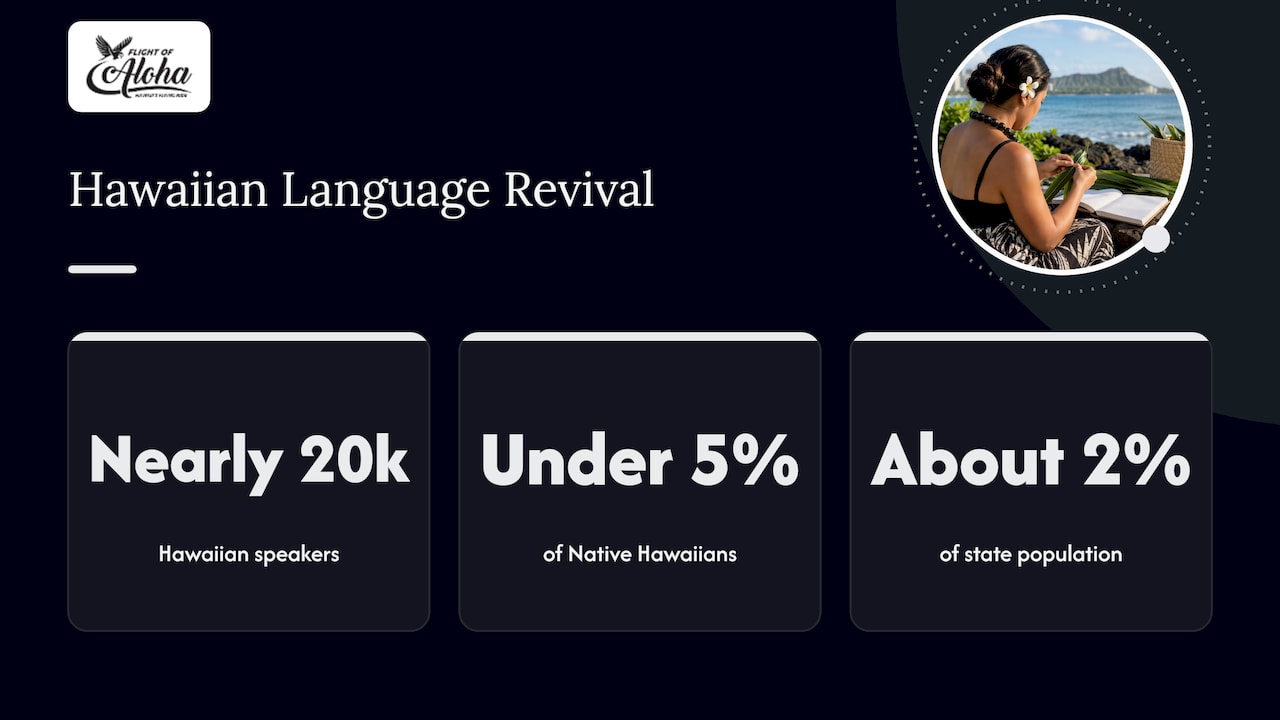
Revitalization efforts have produced nearly 20,000 speakers, according to the Institute of Hawaiian Language Research and Translation. That is still under 5% of Native Hawaiians and about 2% of the state’s population, which shows how much the language was once at risk and how much work keeps it alive. The same institute notes that many 1800s records are hard to read today because of archaic vocabulary and idioms.
A quick respectful tip: learn to say mahalo (thank you) and aloha properly, and try place names slowly. People notice the effort.
Volcano facts: an island chain still being built
8. The chain is more than 70 million years old
The U.S. Geological Survey explains that the Hawaiian Islands are at the southeast end of a volcanic chain that began forming more than 70 million years ago. Each island is made of one or more volcanoes that first erupted on the Pacific floor before rising above the surface.
9. The Big Island is the youngest and largest
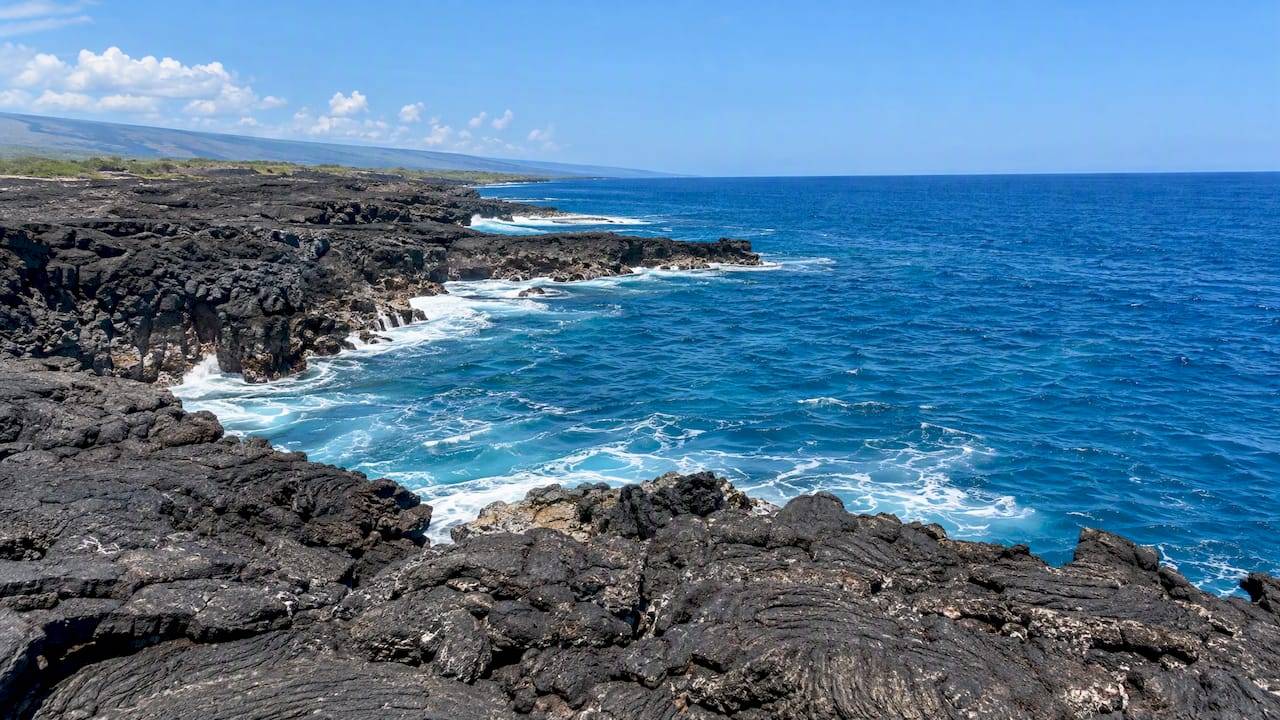
Hawaiʻi Island is both the largest and the youngest of the islands, and it is home to active volcanoes, as the Meet Hawaii island fact sheet puts it. That is why Kona’s coastline looks so dramatic: dark lava rock meeting bright blue water.
10. Two of the world’s most active volcanoes live in one park
Hawaiʻi Volcanoes National Park protects Kīlauea and Mauna Loa, according to the National Park Service fact sheet. Some details from that sheet:
- The park was established in 1916 and covers 333,086 acres.
- It is both a World Heritage Site and an International Biosphere Reserve.
- Mauna Loa is the largest volcano on Earth by mass.
- Kīlauea has been in nearly continuous eruption since 1983, and Mauna Loa last erupted in 2022.
- The park welcomes more than 1.6 million visitors a year.
Conditions at an active volcano change quickly. Check the park’s current alerts and closures before you go, and follow ranger guidance at every overlook.
11. The state has 137 islands, but only a handful are inhabited
Hawaii consists of 137 volcanic islands spanning about 1,500 miles. Most people only visit a few of the main ones, and the rest are tiny islets and atolls.
Ocean facts: whales, reefs and the winter swell
12. Half of the North Pacific’s humpbacks come here
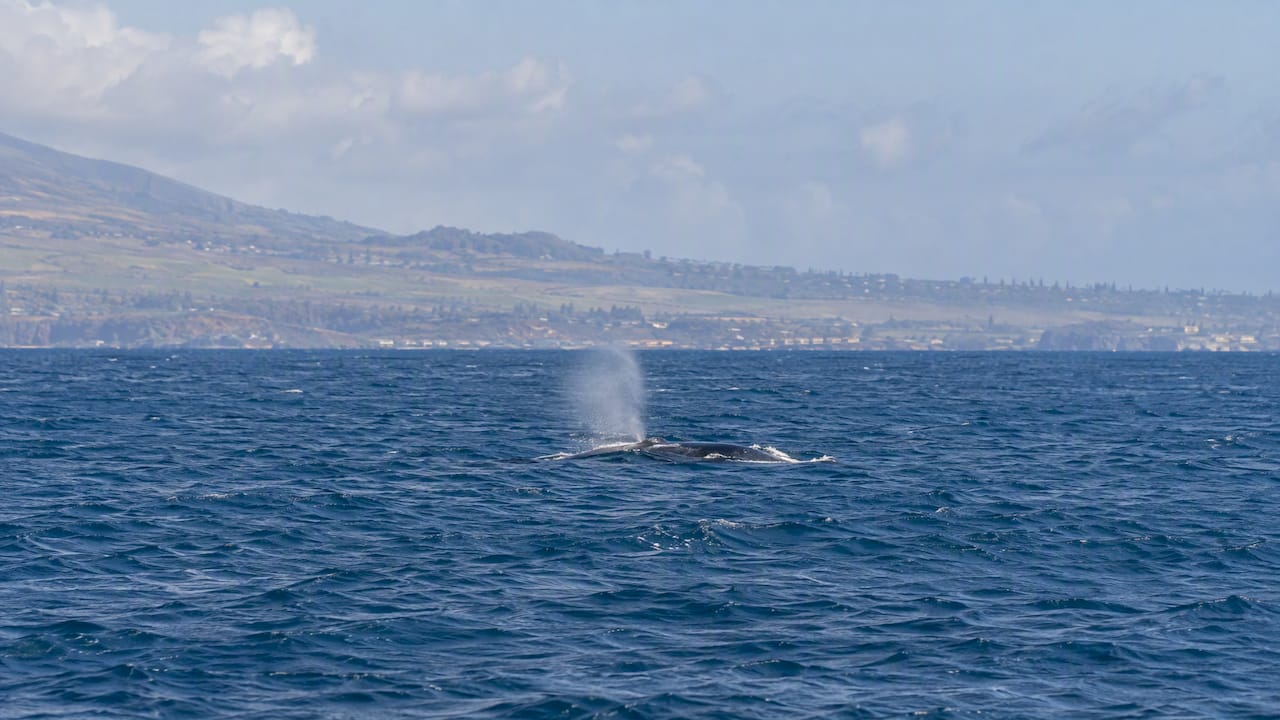
About 10,000 humpback whales, roughly half of the North Pacific population, migrate to Hawaiian waters between November and April to breed, give birth and nurse, according to NOAA. The peak runs January through March. Both Kona and Maui’s Kaanapali coast are great places to look for spouts from shore during the season. Keep a respectful distance and follow the rules for boats and swimmers.
13. Reefs hold a quarter of marine life, and they are fragile
NOAA Fisheries says Hawaii’s coral reefs support approximately 25 percent of all marine life, yet they are among the most threatened ecosystems because of ocean acidification, bleaching, pollution and physical damage from people. Protecting reefs is also tied to the cultural practices of Native Hawaiians. Practical takeaway: do not touch or stand on coral, and use reef-safe habits when you snorkel.
Culture facts: more than luau and hula
14. Authentic representation matters to residents
The Hawaiʻi Tourism Authority says that accurate representation of the islands is vital, and that misspellings or inappropriate imagery in marketing remain a persistent concern for residents. Its Maʻemaʻe Toolkit was created with Native Hawaiian organizations. That is one of the reasons we care so much about who tells the story. If you want to dig into this, our guide to Native Hawaiian owned tourist attractions is a good start, and our piece on Hawaiian culture in modern entertainment shows how old stories find new forms.
15. Access to special places is being managed with care
Some of Hawaii’s best-known landscapes are now managed with reservations, shuttles and seasonal rules. Go Hāʻena’s information page says Haena State Park on Kauaʻi is re-opening on October 15, 2026, with shuttle service resuming and day-use hiking to Hanakapiai Beach and Valley open. Its conditions page also notes that rougher conditions and more rain are expected from October through April, and that hikers who meet flash flooding should shelter in place rather than cross rushing water. Always check the day-of conditions before heading out.
Why these facts are hard to experience from the ground
Here is the catch with Hawaii trivia: so much of it is about scale and perspective. A volcanic chain stretching across the Pacific, a coastline carved by lava, whales crossing open ocean. From the road, you see a slice of it.
The usual answer is a helicopter tour. They are spectacular, but they often cost hundreds of dollars per seat, they depend on weather, and they are not for everyone, especially anyone prone to motion sickness or traveling with small children. That is where we come in.
Our perspective: the smart alternative to a helicopter
We are Flight of Aloha, a Native Hawaiian-owned immersive flying theater in Kailua-Kona and at Whalers Village in Kaanapali, Maui. If a helicopter tour and a Disney ride had a baby, rooted in aloha, that would be us.
Here is how we think about it. Hawaii’s facts are really stories, and stories land best when you feel them. Our ride films combine 8K visuals, motion effects, scents and wind to simulate flying over the islands, so you get the aerial perspective without leaving the ground. Our films are built around cultural storytelling rooted in Hawaiian legends, developed with local advisors and storytellers, and they are made for all ages and abilities. That accessibility is what we are proudest of: grandparents, toddlers and everyone in between can fly together.
It is also practical. Rainy day in Kona or Maui? Vog hanging over the coast? Midday heat getting to everyone? We are indoors and air-conditioned, which makes us a go-to plan when the weather does not cooperate. And if you are visiting on a cruise, our Kona location is within walking distance of Kailua Pier and the tender dock, so it fits neatly into a short shore excursion.
— Ola
Where to fly: our ride films and prices
Prices below are the ones published on our site. Ranges reflect different ticket types.
| Experience | What it is | Price |
|---|---|---|
| Naupaka | A ride film inspired by Hawaiian legend | $29.99 to $34.99 |
| Lahaina | A flight over Maui’s historic Lahaina region | $29.99 to $34.99 |
| Europe | A film that carries the Merrie Monarch spirit abroad | $29.99 to $34.99 |
| Double Feature Flying Ride | Two films in one visit | $49.99 to $59.99 |
| VIP Package | Our premium experience | $69.99 to $79.99 |
| Annual Pass | Repeat flights for a full year | $200 per year |
We also offer a gift card, which you can find on our homepage. Another film, Whale Song, pairs well with the humpback fact above if you are visiting in winter.
If you live on the islands, the annual pass is worth a look: it works for rainy weekends, visiting relatives and anyone who wants to see a favorite film again.
How to turn facts into a great Hawaii day
Here is a simple, weather-proof plan for the Big Island or Maui that uses what you just learned.
- Morning outdoors. Do your beach, hike or whale watching early, when it is cooler and the seas are often calmer. Check conditions first.
- Midday indoors. Beat the heat or the rain with a flight. Families with young kids often find this is the best reset of the day.
- Afternoon culture. Visit a local market, learn a few Hawaiian words and ask people about their place names.
- Evening. Watch the sunset and see if you can spot a spout in the winter months.
For more ideas on learning while you travel, see our list of Hawaii educational experiences, and our explainer on why cultural entertainment matters in Hawaii. If you want to go deeper into the islands’ natural side, What Makes Hawaii Unique covers biodiversity, and the same article explores the spirit of aloha. Our write-up on cultural storytelling in Hawaiian attractions explains how we approach the stories we tell.
Ready to see Hawaii from above?
Pick your location, choose a film or a double feature, and fly. Visit Flight of Aloha to see showtimes and tickets for Kailua-Kona and Whalers Village Kaanapali. Travelling with a group or planning two visits? The Double Feature Flying Ride and the Annual Pass are the best values.
FAQ
What is the coolest fact about Hawaii?
It depends on what you love, but many people point to Hawaii’s sovereign past: it was a kingdom before becoming the 50th state in 1959. Volcano fans prefer the fact that Kīlauea has been in nearly continuous eruption since 1983, per the National Park Service.
Is Hawaiian a difficult language to learn?
The alphabet is short, with only 13 letters, so reading it is more approachable than many people expect. The harder part is the ʻokina and kahakō, which change pronunciation and meaning. Nearly 20,000 people now speak it, so classes and community programs are a growing way in.
When is the best time to see whales in Hawaii?
Humpback whales are in Hawaiian waters from November through April, with the peak from January through March, according to NOAA. Watch from shore on the Kona coast or along Maui’s west side, or choose a rainy-day alternative like a film about whales indoors.
What can I do on the Big Island or Maui when it rains?
Indoor, family-friendly options are your best bet. We are air-conditioned in Kailua-Kona and at Whalers Village Kaanapali, so a flying ride is an easy way to stay comfortable and still see the islands from above.
Is a flying theater a good option for kids or people who get motion sick?
Our experience is made for all ages and abilities, and it is indoors with no altitude or weather risk. If you are sensitive to motion, check the ride details on our site before you book and ask our team at the venue.
Sources
- Hawaii State Facts and Figures (DBEDT)
- 50 Fun Facts about Hawaii (Office of the Governor)
- Ka Leo o ka Uluau, University of Hawaiʻi at Hilo
- Institute of Hawaiian Language Research and Translation
- Active Volcanoes of Hawaii (USGS)
- Hawaiʻi Island Fact Sheet (Meet Hawaii)
- Hawaiʻi Volcanoes National Park Fact Sheet (NPS)
- Hawaii (Wikipedia)
- NOAA humpback whale sanctuary report
- NOAA Fisheries Pacific Islands science
- Maʻemaʻe Toolkit (Hawaiʻi Tourism Authority)
- Go Hāʻena info and FAQs
- Go Hāʻena park conditions
Book online to secure your seat.