
Cultural Entertainment: Shaping Experiences in Hawaii
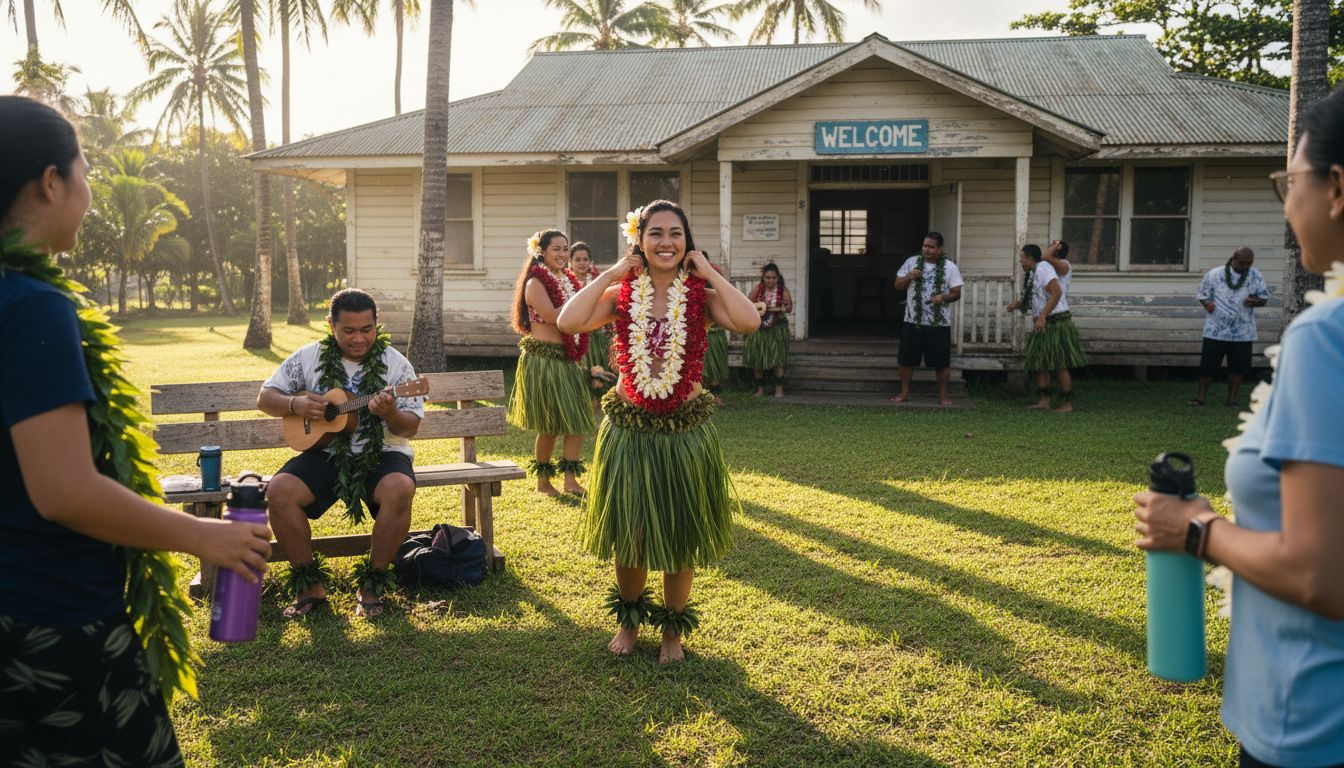
Every parent faces that moment when a vacation needs more than sun and sand to truly connect the family. For travelers heading to Hawaii, cultural entertainment offers much more than just a show or festival. It is a gateway to authentic Hawaiian stories, rich traditions, and hands-on activities that let you experience community values firsthand. By choosing cultural entertainment that blends history, creativity, and genuine participation, families build lasting memories and a real understanding of what makes Hawaii unique.
Table of Contents
- Cultural Entertainment Defined and Debunked
- Types of Cultural Entertainment Experiences
- How Immersion Enhances Cultural Storytelling
- The Role of Cultural Entertainment in Tourism
- Common Pitfalls and What to Avoid
Key Takeaways
| Point | Details |
|---|---|
| Cultural Entertainment Encompasses More Than Entertainment | It includes education, storytelling, and community connection, offering insights into heritage and traditions. |
| Authenticity Matters | Seek experiences that respect and honor cultural traditions, ensuring genuine representation. |
| Impact of Immersive Experiences | Active participation enhances understanding and emotional connection, leading to deeper cultural appreciation. |
| Beware of Commercialization | Avoid experiences that prioritize profit over community benefit, which can lead to cultural exploitation. |
Cultural Entertainment Defined and Debunked
Cultural entertainment gets misunderstood all the time. People often think it’s just another word for watching a show or listening to music. But the reality is much richer. Cultural entertainment encompasses a broad spectrum of experiences that blend education, storytelling, and community connection. It includes music, dance, theater, festivals, crafts, and countless other forms of creative expression. What separates cultural entertainment from regular entertainment is its intentional connection to heritage, traditions, and the shared values of a community. When you experience cultural entertainment, you’re not just being entertained. You’re participating in something that teaches you about a way of life, connects you to history, and helps you understand different perspectives.
Here’s where the misconception often happens: many people assume that cultural entertainment reflects commercialization and lacks depth. They think if something is popular or accessible, it can’t be authentic or meaningful. That’s not how it works in real life. Cultural entertainment can absolutely be both entertaining and educational. In fact, the most powerful experiences are ones that engage your emotions while expanding your understanding of the world. Whether it’s a traditional Hawaiian hula performance, an immersive flight experience that tells the story of the islands, or a festival celebration, authentic cultural entertainment respects and reflects real traditions while inviting new audiences to participate.
The key distinction lies in intention and respect. Culture and arts education develop essential skills like critical thinking, empathy, and creative problem-solving. When cultural entertainment prioritizes authentic storytelling over shallow spectacle, it builds genuine bridges between peoples. It acknowledges that culture isn’t limited to artistic performances. Culture includes ways of life, traditions, social values, and shared identity. Real cultural entertainment invites you to see the world through a different lens while honoring the communities whose stories are being told.
Pro tip: When evaluating any cultural entertainment experience, ask yourself whether the attraction respects and honors the traditions it represents, and whether it creates space for authentic learning alongside enjoyment.
Types of Cultural Entertainment Experiences
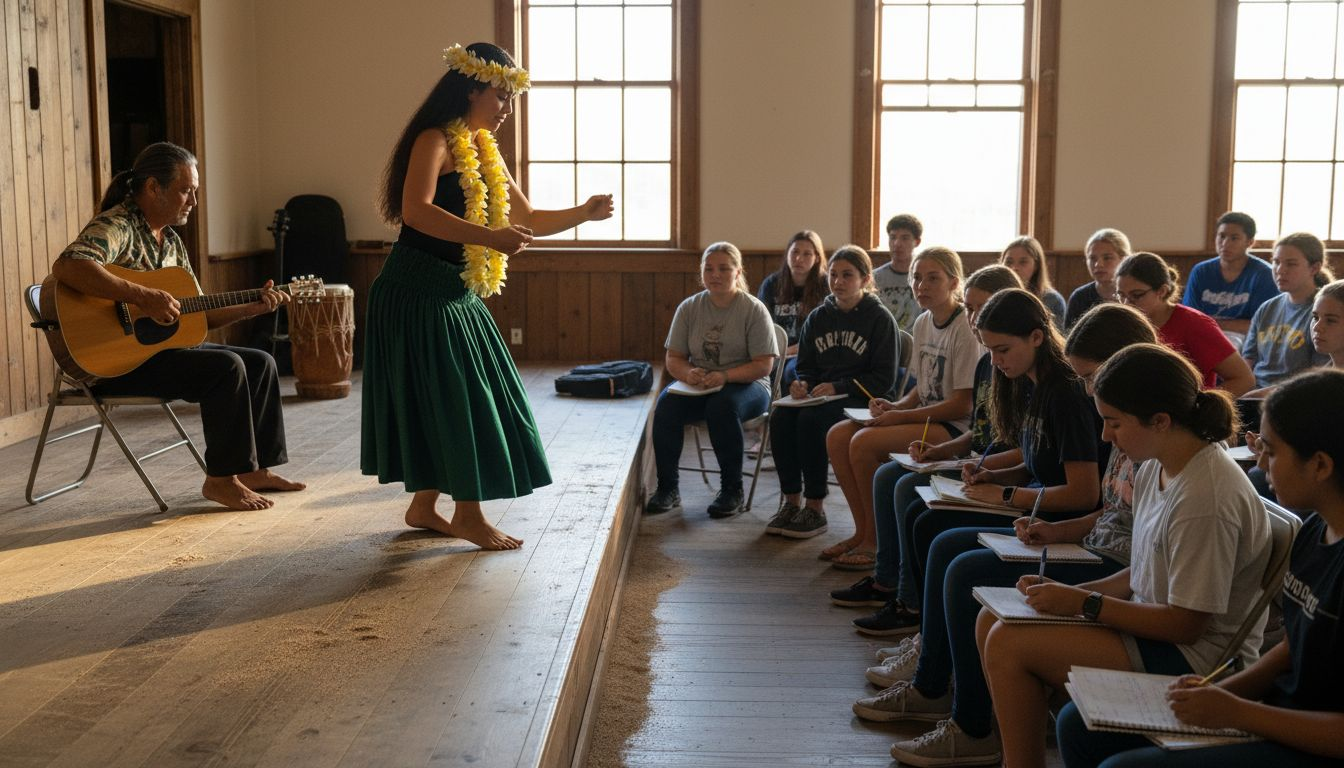
Cultural entertainment comes in as many varieties as the cultures that create it. You’ve got performances like traditional dances and theater shows where you watch skilled artists bring stories to life. These performances preserve cultural values and create a direct connection between audience and heritage. Then there are interactive experiences where you become part of the action. Pottery making classes, calligraphy workshops, and craft transmission sessions let you learn techniques that have been passed down through generations. The difference matters. When you’re sitting in an audience, you absorb the story. When you’re actually making something with your hands, you understand the skill, patience, and intention behind it in a completely different way.
Museum trips and dialogue with indigenous peoples represent another layer of cultural engagement. These experiences go deeper than surface level entertainment. You’re learning directly from community members, asking questions, and gaining context that purely observational experiences can’t provide. Storytelling sessions, folk music concerts, and festivals round out the spectrum. Music and dance lessons enhance creativity while building intercultural understanding. What makes these experiences powerful is that they can happen almost anywhere. Some occur in formal settings like theaters and museums. Others take place in community centers, schools, or outdoor venues. This accessibility means more people can participate, regardless of their background or previous exposure to cultural activities.
Hawaii offers a particularly rich variety of these experiences. You can watch a traditional hula performance that tells stories of ancient Hawaiian culture. You can participate in lei making workshops or learn about the islands through immersive storytelling experiences that combine modern technology with traditional narratives. You might explore the significance of Hawaiian crafts, taste local food at cultural festivals, or engage with interpretive experiences that bring the islands’ history to life. Each type of experience serves a purpose. Some educate. Some inspire. The best ones do both, creating moments where visitors genuinely understand and respect the culture they’re experiencing rather than simply consuming entertainment.
Pro tip: When choosing a cultural entertainment experience, prioritize those where the community whose culture is being shared has a direct role in creation and delivery, ensuring authenticity and proper respect for traditions.
Here’s a summary of major types of cultural entertainment experiences and how they engage participants:
| Experience Type | Level of Participation | Typical Setting | Unique Benefit |
|---|---|---|---|
| Traditional Performance | Passive observation | Theater, festival stage | Direct connection to heritage |
| Hands-on Workshop | Active involvement | Studio, classroom | Skill-building, personal insight |
| Museum Dialogue | Interactive learning | Museum, heritage site | Deeper historical context |
| Food & Craft Festival | Sensory engagement | Outdoor venue, market | Multisensory cultural immersion |
How Immersion Enhances Cultural Storytelling
There’s a massive difference between hearing about a culture and actually experiencing it. When you’re simply watching a video or reading text, your brain processes the information in a passive way. But when you’re immersed in a story, using multiple senses and actively participating, something fundamentally changes. You’re no longer a bystander. You become part of the narrative. This shift from passive observation to active engagement transforms how you understand and remember cultural information. Immersive interactive narratives promote motivation and continuous engagement, allowing you to connect emotionally and cognitively with the stories being told. That emotional connection is what makes cultural knowledge stick. It’s what turns abstract concepts into lived understanding.
The science behind immersion is compelling. When cultural storytelling engages multiple senses simultaneously, your brain creates stronger neural pathways. You’re not just hearing words. You’re seeing visuals, feeling environmental effects, smelling scents, hearing authentic music. This multisensory approach makes the experience more memorable and impactful. Immersion facilitates deeper engagement and critical thinking by placing you directly into the cultural narrative rather than observing it from the outside. When you’re standing in a Hawaiian landscape, hearing traditional music, and experiencing the wind and warmth, your understanding of Hawaiian culture deepens in ways that traditional education cannot match. The story becomes personal because your senses confirm its reality.
What makes immersive cultural storytelling particularly powerful is that it cultivates empathy. When you experience the world through a cultural perspective rather than learning about it academically, you develop genuine understanding and respect. You’re not just accumulating facts. You’re gaining awareness of values, traditions, and ways of life that matter to real communities. In Hawaii specifically, immersive experiences that authentically represent Native Hawaiian stories and perspectives allow visitors to appreciate the islands’ rich heritage in meaningful ways. Whether through traditional performances enhanced with modern technology or guided cultural experiences, immersion transforms tourism from surface-level entertainment into genuine cultural exchange.
Pro tip: Seek out cultural experiences that engage your senses actively and invite genuine participation rather than passive observation, as these create deeper emotional connections and lasting understanding of the stories being shared.
The Role of Cultural Entertainment in Tourism
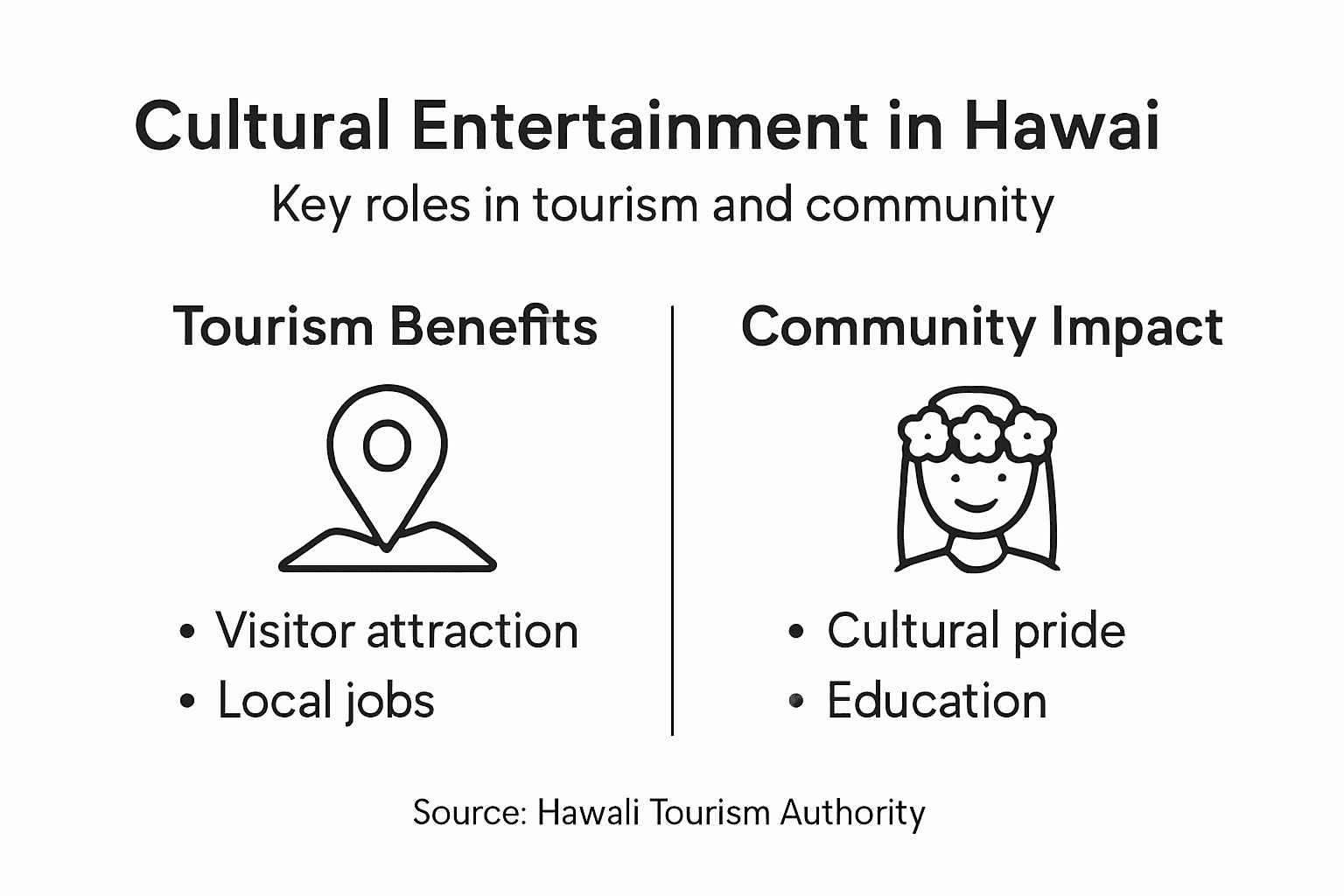
Cultural entertainment isn’t just nice to have in a tourist destination. It’s fundamental to how destinations thrive economically and culturally. When visitors come to Hawaii, many choose activities specifically because they want to connect with Hawaiian culture. That desire drives real economic impact. Hotels fill, restaurants prosper, local artisans find customers, and guides build careers. But the value goes far beyond dollars and cents. Cultural events and festivals drive tourism development while fostering genuine cultural exchange between communities. When tourism centers on authentic cultural experiences, both visitors and locals benefit. Visitors gain meaningful memories and understanding. Communities gain economic support while maintaining control over how their heritage is presented and shared. This creates a sustainable model where tourism actually strengthens rather than diminishes cultural traditions.
The relationship between cultural entertainment and tourism success is direct. Performing arts, storytelling experiences, festivals, and interactive cultural activities give tourists reasons to extend their stays and spend money locally. They also differentiate destinations. Hawaii could be just another beach vacation, but it becomes something profoundly different when visitors experience Native Hawaiian traditions, learn about the islands’ history, and engage with local artists and storytellers. Performing arts promote cultural exchange and sustainable tourism, creating authentic connections between travelers and destinations. This authenticity is what transforms casual tourists into advocates who return, recommend the destination to others, and develop genuine respect for Hawaiian culture.
What makes this model work is intentionality. When cultural entertainment is integrated thoughtfully into tourism offerings, it preserves heritage while creating economic opportunity. When it’s treated as an afterthought or commercialized without community input, it becomes hollow. The difference matters profoundly. Family visitors seeking meaningful vacations want experiences that feel real and respectful. They want to tell their children true stories about the places they visit. When tourism infrastructure supports authentic cultural entertainment, it attracts the right visitors and creates conditions where communities can thrive. In Hawaii specifically, cultural entertainment represents the islands’ greatest asset because it’s simultaneously the most authentic, the most valuable, and the most rewarding for everyone involved.
Pro tip: When planning your Hawaii visit, prioritize cultural entertainment experiences operated or guided by Native Hawaiians, as these directly support local communities and guarantee authentic representation of traditions.
Common Pitfalls and What to Avoid
Not all cultural entertainment is created equal. Some experiences celebrate authentic traditions while others reduce rich cultures to caricatures. The difference matters tremendously, especially when you’re visiting a place and want to support its communities respectfully. One major pitfall is stereotyping and overgeneralization. When cultural entertainment relies on simplified versions of traditions, it reinforces false narratives. Hawaiian culture doesn’t consist solely of hula dancing and lei garlands. It encompasses complex histories, spiritual beliefs, governance systems, environmental knowledge, and artistic traditions that span centuries. When providers focus only on the most visually spectacular elements while ignoring everyday cultural practices and deeper context, they create a hollow version of the real thing. Another common mistake is ignoring the power dynamics at play. Stereotyping and cultural overgeneralization undermine authentic representation, perpetuating inequality and misrepresenting communities.
Another critical pitfall is commercialization without community benefit. Some cultural entertainment experiences exist purely for profit, with little of the revenue flowing back to the communities whose culture is being packaged and sold. When you participate in these experiences, you’re not supporting cultural preservation. You’re actually incentivizing the extraction of culture as a commodity. Ask questions before booking. Who owns the business? Do Native Hawaiians have decision-making power? Where does the money go? Are local artists and storytellers fairly compensated? These aren’t cynical questions. They’re essential ones that separate authentic cultural exchange from cultural exploitation.
A third pitfall is failing to address context and critical reflection. Effective cultural entertainment requires conscious effort to avoid reinforcing harmful stereotypes and power imbalances. Entertainment education must employ norm-critical approaches to prevent perpetuating inequality and biased narratives. When cultural experiences include educated guides who provide historical context, explain why traditions matter, and invite genuine dialogue, they transform from spectacle into learning. The best cultural entertainment acknowledges complexity rather than flattening it. It invites questions rather than expecting passive acceptance. It respects the intelligence and curiosity of visitors while protecting the dignity of the communities being represented.
Pro tip: Before choosing a cultural entertainment experience, research whether it’s Native Hawaiian-owned or operated, whether guides provide substantive historical context, and whether the business structure ensures communities benefit from your participation.
To deepen your understanding, here’s a comparison of authentic vs. commercialized cultural entertainment:
| Aspect | Authentic Experience | Commercialized Experience |
|---|---|---|
| Community Involvement | Led by tradition bearers | Often corporate or non-local agents |
| Educational Value | Context and storytelling | Limited or superficial explanation |
| Economic Impact | Direct benefit to locals | Profits may bypass communities |
| Representation | Honors heritage and values | May stereotype or oversimplify |
Experience Authentic Hawaiian Culture Like Never Before
Understanding cultural entertainment means embracing experiences that honor heritage while engaging your senses and emotions. If you are looking for more than just a show and want a genuine connection to Hawaiian stories and traditions, Flight of Aloha offers an immersive adventure that brings cultural storytelling to life. By blending stunning 8K visuals with motion effects, scents, and wind, this unique flying theater attraction invites you to actively participate in the narrative rather than merely observe it.

Discover why cultural immersion transforms your visit into a meaningful journey by booking a ride at Flight of Aloha. Don’t settle for superficial entertainment that misses the deeper context. Experience authentic Hawaiian legends like “Naupaka” and “Lahaina” in a way that respects and celebrates local heritage. Act now to secure your spot, explore VIP packages, and support native storytelling traditions at this one-of-a-kind Kailua-Kona attraction. Visit our official site to learn more and book today!
Frequently Asked Questions
What is cultural entertainment?
Cultural entertainment refers to experiences that blend education, storytelling, and community connection, including music, dance, theater, and festivals. It connects individuals to heritage and traditions, enhancing understanding of diverse cultures.
How does immersion enhance cultural storytelling?
Immersion in cultural storytelling engages multiple senses, transforming passive observation into active participation, leading to a deeper emotional connection and greater retention of cultural knowledge.
What are some examples of hands-on cultural entertainment experiences?
Hands-on cultural entertainment experiences include pottery-making classes, calligraphy workshops, and craft transmission sessions, allowing participants to learn traditional skills and understand cultural practices more profoundly.
How can I ensure that cultural entertainment experiences are authentic?
To ensure authenticity, choose experiences led by community members, where local traditions are respected, and utilize providers that emphasize genuine storytelling and education rather than superficial entertainment.
Recommended
- What Is Hawaii Themed Entertainment? Understanding Its Charm | Flight Of Aloha
- Understanding Entertainment Trends In Hawaii 2025 | Flight Of Aloha
- What Sets Hawaiian Theater Apart: Complete Guide | Flight Of Aloha
- Understanding Hawaiian Culture In Modern Entertainment | Flight Of Aloha
- Entrepreneurs and Media Personalities Terrence J & Angela Yee to Speak at Miramar’s Coffee, Chocolate & Culture Expo – Luxury Apartments for Rent in Boca Raton | Premium Boca Raton Apartments | Aapartments Boca Raton