
Group Tourism: Unique Ways Families Connect in Hawaii

Every family trip sparks questions about how to create meaningful moments everyone will remember, especially when your sights are set on Hawaii. Planning group tourism is more than just organizing schedules; it is about building connections that last long after the journey ends. When travelers explore Hawaii together, they dive deeper into cultural exchange and community experiences, while discovering activities that foster shared memories for every age and interest.
Table of Contents
- What Is Group Tourism and Why It Matters
- Major Types of Group Travel Experiences
- Key Benefits and Challenges for Travelers
- Cost Factors and Booking Group Tours
- Group Tourism vs. Private or Solo Travel
Key Takeaways
| Point | Details |
|---|---|
| Group Tourism Enhances Cultural Exchange | Traveling in groups allows for deeper engagement with local cultures and fosters meaningful connections between travelers and host communities. |
| Significant Economic Impact | Group travel supports local economies by generating coordinated spending on accommodations and activities, benefiting small businesses. |
| Various Travel Types Cater to Different Interests | Options like Senior Tours, Adventure Tours, and Educational Tours cater to diverse traveler preferences, ensuring a suitable experience for everyone. |
| Balancing Group Benefits and Challenges | While group travel offers cost savings and community engagement, it also poses challenges like environmental impacts and managing diverse group dynamics. |
What Is Group Tourism and Why It Matters
Group tourism represents a dynamic and transformative travel approach where multiple individuals journey together with shared objectives, creating meaningful experiences that extend far beyond traditional solo travel. Unlike individual trips, group tourism involves coordinated travel experiences where families, friends, colleagues, or organized tour groups explore destinations collectively.
At its core, group tourism is about connection. Stakeholders in tourism ecosystems recognize that these collaborative travel experiences offer profound opportunities for cultural exchange and social interaction. Travelers engage more deeply with destinations, sharing experiences that create lasting memories and cross-cultural understanding.
The significance of group tourism extends well beyond personal enjoyment. It plays a critical economic and social role by supporting local communities, boosting regional economies, and facilitating cultural preservation. When groups travel together, they generate substantial economic impact through coordinated spending on accommodations, dining, attractions, and local services. Moreover, these collective experiences help small businesses thrive and provide opportunities for meaningful cultural engagement.
Group tourism also serves as a powerful mechanism for social connection. Whether it’s a multigenerational family exploring Hawaiian landscapes or a professional conference visiting international destinations, these shared journeys create powerful bonds between travelers and host communities. The interactions foster mutual understanding, break down cultural barriers, and create networks that can have long-lasting positive implications.
Pro tip: When planning group travel, prioritize experiences that offer interactive cultural learning and support local communities to maximize the social and economic benefits of your journey.
Major Types of Group Travel Experiences
Group travel offers a diverse landscape of experiences tailored to different interests, ages, and objectives. Travelers can choose from multiple group travel categories that cater to unique preferences and travel styles, ensuring something for every type of traveler.
The primary types of group travel experiences include senior group tours, which focus on comfortable, culturally enriching journeys designed for retirees who prefer relaxed, educational trips. Adventure group tours target thrill-seekers and physically active travelers, offering challenging experiences that push personal boundaries and create memorable outdoor encounters. These tours often involve activities like hiking, kayaking, mountain biking, and exploring challenging terrains.
Affinity groups represent another significant category, encompassing specialized travel experiences like destination weddings, family reunions, hobby-based trips, and social group adventures. These trips are characterized by their shared interests and strong interpersonal connections, allowing participants to explore destinations while strengthening existing relationships. Educational group tours round out the major categories, particularly popular among students and academic groups seeking structured learning experiences that combine travel with cultural immersion and educational objectives.
Each group travel type requires unique planning considerations, from logistical arrangements to understanding the specific needs and expectations of participants. Corporate incentive trips, professional conferences, and special interest group travel further expand the potential of this dynamic travel segment, offering opportunities for networking, team building, and shared experiences across diverse contexts.
Here’s a summary of major group travel types and their common characteristics:
| Travel Type | Typical Activities | Ideal Participants |
|---|---|---|
| Senior Tours | Museum visits, leisurely sightseeing | Retirees, older adults |
| Adventure Tours | Hiking, kayaking, outdoor challenges | Active travelers, thrill-seekers |
| Affinity Groups | Weddings, reunions, hobby trips | Friends, families, shared interests |
| Educational Tours | Guided learning, local immersion | Students, academic groups |
Pro tip: Research and select group travel experiences that align closely with your personal interests, physical capabilities, and learning goals to maximize enjoyment and personal growth.
Key Benefits and Challenges for Travelers
Group tourism presents a complex landscape of opportunities and potential obstacles for modern travelers. Tourism policies are increasingly focused on balancing traveler experiences with destination sustainability, creating a nuanced environment for group travel participants.

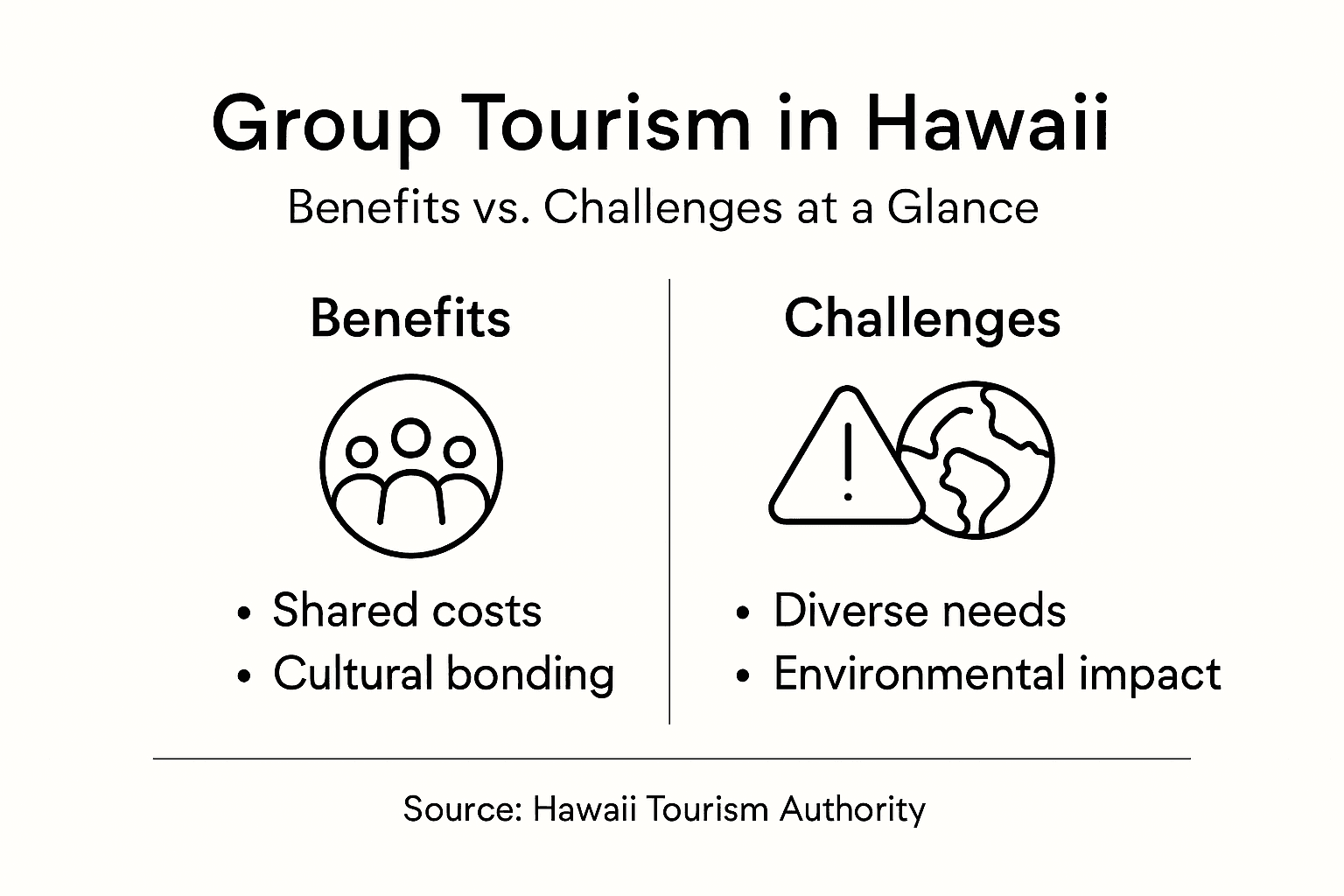
The primary benefits of group travel include significant economic advantages and enriching social experiences. Shared costs make travel more accessible, allowing participants to access experiences that might be financially challenging for individual travelers. Group tours provide organized logistics, reducing personal planning stress and offering structured itineraries that maximize destination exploration. Moreover, these experiences facilitate profound cultural interactions, enabling travelers to develop deeper connections with local communities and gain insights that extend beyond typical tourist encounters.
However, group travel also presents notable challenges. Environmental pressures remain a critical concern, with large groups potentially contributing to overtourism and ecological strain. Travelers must navigate complex dynamics of group expectations, managing diverse individual preferences within a collective framework. Labor shortages in tourism sectors can impact service quality, while maintaining cultural integrity becomes increasingly challenging as destinations accommodate growing numbers of visitors.
Successful group travel requires careful consideration of these multifaceted dynamics. Collaborative engagement between travelers, local communities, and tourism stakeholders becomes essential in creating meaningful, sustainable travel experiences that respect both visitor needs and destination preservation.
Pro tip: Research group travel options that prioritize sustainable practices and offer meaningful cultural interactions to ensure a more responsible and enriching travel experience.
Cost Factors and Booking Group Tours
Booking group tours requires strategic financial planning and understanding of complex pricing structures. Tour booking strategies involve multiple cost considerations that impact overall travel expenses and experience quality.
Group tour pricing encompasses several critical cost components. Transportation represents a significant expense, with options ranging from shared coaches to private transportation services. Accommodation costs can be substantially reduced through group volume discounts, potentially saving participants 20-40% compared to individual bookings. Activity pricing varies based on group size, with larger groups often qualifying for negotiated rates that make experiences more affordable. Key pricing models include seat-in-coach (SIC) tours, which offer budget-friendly shared experiences, and private group tours providing more personalized itineraries at premium pricing.
Effective group tour budgeting demands careful financial coordination. Travelers should establish clear payment protocols, including deposit schedules, individual contribution methods, and contingency fund allocations. Early planning emerges as a critical strategy, with advanced bookings often securing more favorable rates and ensuring group availability. Successful groups typically designate a financial coordinator to manage shared expenses, track individual contributions, and negotiate group rates with vendors.
Understanding the nuanced pricing landscape helps travelers make informed decisions. Additional cost factors include meal plans, activity inclusions, potential group discounts, and seasonal pricing variations. Transparent communication about expected expenses and flexible payment options can significantly enhance group travel planning and reduce financial stress.
Pro tip: Designate a group financial coordinator and establish clear budget expectations at least three months before your travel date to streamline group tour planning and expense management.
Group Tourism vs. Private or Solo Travel
Comparing travel models reveals unique advantages for different traveler personalities and preferences. Group tourism and solo travel represent two distinct approaches to experiencing destinations, each offering compelling benefits and potential drawbacks.
Group tourism provides a structured, socially engaging travel experience with significant practical advantages. Shared experiences create opportunities for connection, with travelers benefiting from collective knowledge, reduced individual planning stress, and potential cost savings. Group tours typically include professionally curated itineraries, expert guides, and logistical support that eliminate the complex planning requirements faced by solo travelers. These tours particularly benefit first-time visitors, travelers with limited destination knowledge, or those seeking a more secure and coordinated travel experience.
Solo and private travel, by contrast, offer unparalleled flexibility and personal control. Independent travelers can customize their journeys moment by moment, changing plans spontaneously and exploring destinations at their own pace. While this approach requires more personal research and potentially higher individual costs, it allows for deeper personal discovery and more intimate cultural interactions. Solo travelers often develop stronger problem-solving skills and enjoy a sense of complete autonomy that group tours cannot replicate.
Ultimately, the choice between group and solo travel depends on individual travel goals, comfort levels, and personal preferences. Some travelers might even combine approaches, participating in group experiences for certain activities while maintaining independent exploration windows. Understanding these distinct travel models helps individuals design more meaningful, enjoyable travel experiences tailored to their unique needs.
Below is a comparison of group tourism and solo travel models:
| Aspect | Group Tourism | Solo Travel |
|---|---|---|
| Flexibility | Fixed itinerary | Adaptable schedule |
| Social Interaction | High, many shared moments | More limited, independent |
| Cost Savings | Group discounts likely | Fewer discounts available |
| Planning Effort | Shared, often guided | Self-managed, higher effort |
Pro tip: Consider mixing group and solo travel strategies to balance structured experiences with personal exploration during your Hawaiian adventure.
Experience Togetherness in Hawaii Like Never Before
Group tourism brings families and friends closer by creating shared memorable experiences filled with cultural connection and joyful discovery. If you are looking for unique ways to strengthen bonds while exploring the rich stories and landscapes of Hawaii, immersive attractions offer something truly special. Flight of Aloha blends 8K visuals, motion effects, and authentic Hawaiian storytelling to simulate breathtaking flights over the islands, making it perfect for group travelers who want engaging, accessible, and unforgettable experiences.

Ready to elevate your family or group trip with an immersive journey rooted in aloha? Discover the magic of Flight of Aloha in Kailua-Kona today and secure your spot with easy online booking. Learn more about our VIP experiences and annual passes that add extra layers of excitement and value for groups. Don’t miss this opportunity to create a shared adventure that connects hearts and minds in true Hawaiian style. Visit Flight of Aloha now to plan your group experience.
Frequently Asked Questions
What are the different types of group travel experiences?
Group travel experiences include senior tours, adventure tours, affinity group trips, and educational tours, catering to various interests and age groups.
How does group tourism benefit local communities?
Group tourism supports local economies by generating substantial economic impact through coordinated spending on accommodations, dining, and attractions, which helps small businesses thrive and preserves local cultures.
What are some challenges travelers might face during group tourism?
Challenges include managing diverse preferences within a group, environmental pressures from large groups, and potential impacts on local cultures due to overtourism.
How can I enhance my group travel experience?
To enhance your group travel experience, prioritize interactive cultural learning, engage with local communities, and participate in activities that resonate with the group’s shared interests.
Recommended
- Understanding Multigenerational Fun In Hawaii | Flight Of Aloha
- Understanding The Family Outing Guide Hawaii Experience | Flight Of Aloha
- Understanding Why Choose Family Activities In Hawaii | Flight Of Aloha
- How To Enhance Family Outings For Memorable Hawaiian Adventures | Flight Of Aloha
- Fordele Ved Familieoplevelser – Styrker Samvær Og Læring – Rejs i Danmark