
How to find cheap flights to Hawaii in 2026
Finding affordable flights to Hawaii has become increasingly challenging as airfares continue climbing in 2026. Budget travelers face sticker shock when searching for tickets, with summer roundtrips often exceeding $1,000 per person. The good news? Strategic booking techniques and expert timing can slash your flight costs significantly. This comprehensive guide reveals proven methods to secure cheap Hawaii flights, from leveraging multiple search tools and price alerts to booking during shoulder seasons and mixing airlines. You’ll learn exactly when to book, which days offer the best deals, and how to maximize miles and rewards while avoiding common pitfalls that waste money.
Table of Contents
- Essential Tools And Preparation For Finding Cheap Hawaii Flights
- Best Timing Strategies To Book Cheap Flights To Hawaii
- Smart Booking Tactics And Ways To Save On Your Hawaii Flight
- Balancing Cost Savings With Comfort And Travel Quality
- Find Your Perfect Flight Deal To Hawaii With Flight Of Aloha
- Frequently Asked Questions
Key takeaways
| Point | Details |
|---|---|
| Use multiple search tools | Compare prices across Google Flights, Skyscanner, Kayak, and Hopper to catch the best Hawaii deals |
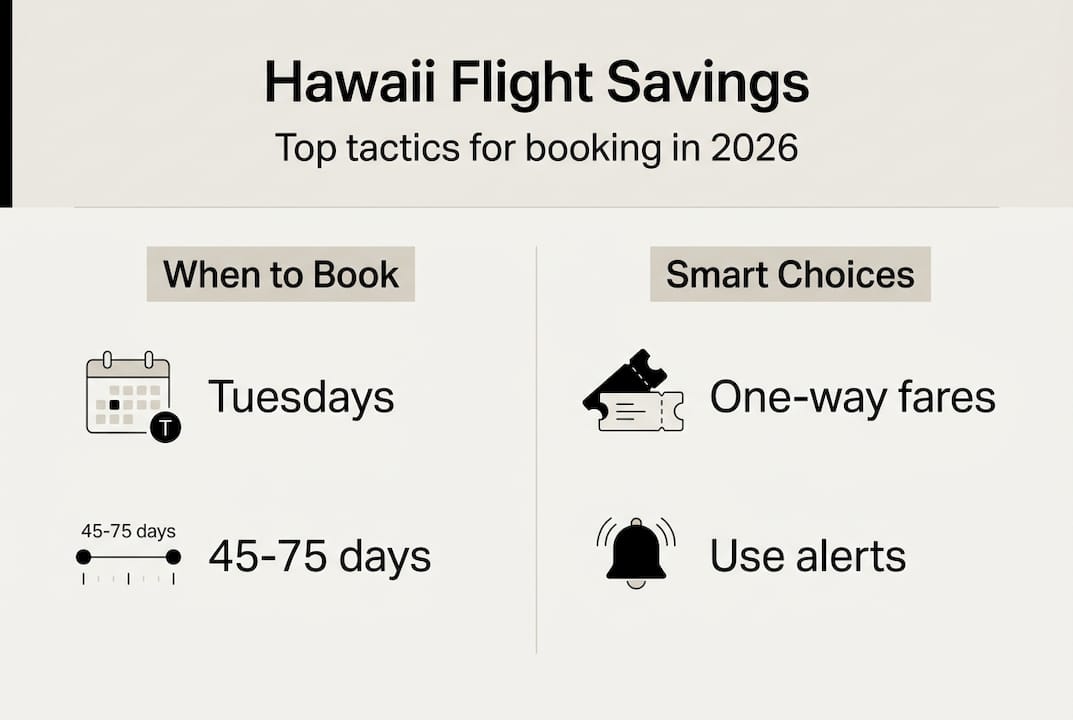
| Book 2-3 months ahead | Optimal booking window is 45-75 days before departure, earlier for peak summer and holidays |
| Target shoulder seasons | April-May and September-October offer 15-45% savings compared to expensive summer months |
| Fly midweek and mix airlines | Book separate one-way tickets on Tuesdays or Wednesdays and combine carriers for maximum savings |
| Leverage rewards wisely | Use airline miles and credit card points strategically while avoiding risky tactics like hidden city ticketing |
Essential tools and preparation for finding cheap Hawaii flights
Successfully hunting down affordable Hawaii flights starts with the right search platforms. Relying on a single booking site limits your deal discovery because airlines and aggregators display different inventory and pricing. You need multiple flight comparison tools to maximize your chances of finding the lowest fares.
Google Flights excels at flexible date searches and tracking price trends over time. Skyscanner searches across budget carriers and international options that other sites miss. Kayak offers robust filtering options and price forecasts. Momondo frequently surfaces deals other platforms overlook. Hopper specializes in predicting whether current prices will rise or fall, helping you decide when to pull the trigger.
Setting up price tracking alerts transforms you from passive searcher to active deal hunter. Google Flights lets you monitor specific routes and dates, sending email notifications when fares drop. Hopper’s app alerts include predictions about whether to book now or wait. These automated watchers catch flash sales and mistake fares that disappear within hours.
| Search Tool | Best Feature | Hawaii Strength |
|---|---|---|
| Google Flights | Flexible date calendar | Comprehensive mainland to Hawaii coverage |
| Skyscanner | Budget carrier inclusion | International and inter-island options |
| Kayak | Price forecasts | Advanced filtering for preferences |
| Hopper | Predictive pricing | Mobile alerts for price drops |
| Momondo | Unique deal discovery | Often finds hidden bargains |
Pro Tip: Always check Southwest Airlines directly on their website since they don’t appear on most aggregator platforms, and they frequently offer competitive Hawaii fares with free checked bags.
Some airlines maintain exclusive distribution agreements, meaning their inventory appears only on select platforms or their own sites. Alaska Airlines sometimes offers special promotions through their website that aggregators don’t display. Hawaiian Airlines occasionally runs flash sales visible only to email subscribers. By checking multiple sources, you ensure no stone goes unturned in your quest for the best Hawaii flights.
Best timing strategies to book cheap flights to Hawaii
Timing determines whether you score a bargain or pay premium prices for identical seats. Research consistently shows that booking 45-90 days in advance delivers optimal pricing for domestic Hawaii flights, with the sweet spot around 60-66 days before departure. This window gives airlines enough lead time to fill seats without triggering last-minute price surges.
Peak travel periods demand earlier action. Summer vacations from June through August and major holidays like Thanksgiving, Christmas, and spring break require booking 3-6 months ahead to avoid sky-high fares. Procrastination during these windows costs hundreds of dollars per ticket as inventory shrinks and prices climb.
Shoulder seasons represent your best opportunity for substantial savings. Flying during April-May or September-October typically costs 15-45% less than summer peak. Early November and January through February (excluding holiday weeks) also offer attractive pricing. These periods balance pleasant Hawaiian weather with reduced tourist crowds and lower airfares.

| Season | Booking Window | Average Savings | Considerations |
|---|---|---|---|
| Peak Summer | 3-6 months ahead | Baseline pricing | Highest fares, book earliest |
| Shoulder Spring | 2-3 months ahead | 15-25% off peak | Great weather, fewer crowds |
| Shoulder Fall | 2-3 months ahead | 20-45% off peak | Hurricane season risk |
| Winter Low | 2-3 months ahead | 15-30% off peak | Some rain, cooler temps |
Pro Tip: Avoid booking last-minute unless you’re extremely flexible with dates and destinations, as Hawaii routes rarely see the deep discounts common on mainland flights.
The 45-75 day booking window works because airlines use sophisticated revenue management systems that adjust prices based on demand forecasts. Book too early and you pay premium prices set for eager planners. Book too late and you compete with desperate travelers willing to pay anything. The middle ground captures the algorithmic sweet spot where airlines balance filling seats against maximizing revenue. Understanding this dynamic helps you book multiple Hawaii flights strategically across different islands.
Smart booking tactics and ways to save on your Hawaii flight
Beyond timing, specific booking techniques can shave hundreds off your Hawaii airfare. Traditional roundtrip searches often miss better deals hiding in one-way ticket combinations. Here’s your step-by-step approach:
- Search one-way tickets separately for your outbound and return flights instead of roundtrip
- Compare different airline combinations (Alaska outbound, Hawaiian return, or vice versa)
- Check prices for flying out on Tuesday or Wednesday and returning on the same weekdays
- Look at nearby departure airports if you live within driving distance of multiple options
- Consider connecting flights versus nonstop when price differences exceed $200 per person
Booking separate one-way tickets and mixing carriers exploits pricing inefficiencies between airlines. Alaska might offer a cheaper westbound flight while Hawaiian beats them eastbound. Aggregators don’t always surface these mixed-carrier combinations automatically, so manual checking pays dividends.
| Booking Strategy | Average Fare | Potential Savings | Best For |
|---|---|---|---|
| Standard roundtrip, weekend | $850-1,200 | Baseline | Convenience, schedule constraints |
| Roundtrip, midweek travel | $650-950 | $200-250 | Flexible schedules |
| Mixed carriers, midweek | $550-850 | $300-400 | Maximum savings, some complexity |
| Award tickets with miles | $100-300 fees only | $550-900 | Accumulated rewards |
Tuesdays and Wednesdays consistently offer the cheapest fares for both booking and flying. Airlines release sales Tuesday mornings, triggering price wars that benefit midweek searchers. Flying midweek means fewer business and weekend leisure travelers competing for seats.
Frequent flyer miles and credit card points provide powerful savings tools when used strategically. Alaska and Hawaiian Airlines regularly offer award sales requiring just 7,500 miles one-way between the mainland and Hawaii. Travel rewards credit cards with generous signup bonuses can cover entire family trips. Focus on cards offering points transferable to multiple airline partners for maximum flexibility.
Pro Tip: Check Southwest separately since their fares don’t appear on most aggregators, and their Companion Pass can make one ticket essentially free.
Avoid risky tactics that seem clever but carry serious downsides. Hidden city ticketing (booking through Hawaii to another destination but deplaning in Honolulu) violates airline contracts and risks losing your return flight and frequent flyer account. Basic economy fares save $30-50 upfront but charge separately for seat selection, carry-ons, and changes, often costing more overall. Evaluate the total trip cost including all fees before committing to rock-bottom fares that nickel and dime you later. For more aggressive strategies, explore how to get super cheap Hawaii flights with advanced techniques.
Balancing cost savings with comfort and travel quality
Chasing the absolute cheapest fare sometimes compromises your vacation enjoyment. Understanding these trade-offs helps you make informed decisions about where to save and where to spend.
Common compromises with budget fares include:
- Red-eye flights departing late at night and arriving exhausted in Hawaii
- Long layovers exceeding three hours that waste precious vacation time
- Multiple connections increasing delays and lost baggage risks
- Flying during hurricane season (September-October) when weather disrupts plans
- Basic economy restrictions limiting flexibility if plans change
Summer 2026 Hawaii airfares have hit unprecedented highs due to airline capacity constraints. Roundtrip fares regularly exceed $1,000 per person during peak weeks. Booking early remains your best defense against these inflated prices, as waiting until closer to departure virtually guarantees paying premium rates.
Cheap fares during hurricane season come with weather risks that can derail your entire trip. While major hurricanes rarely make direct hits on the Hawaiian Islands, tropical storms bring heavy rain and rough ocean conditions. Weigh the $200-300 savings against potential disappointment if weather forces you indoors during your beach vacation.
Evaluate comfort trade-offs against actual dollar savings. A $100 difference might justify a 6am departure instead of a convenient noon flight. A $400 gap makes that red-eye with a three-hour layover worth considering. But saving $50 by accepting terrible flight times and multiple connections rarely enhances your overall trip value.
Consider your personal circumstances when balancing price and quality. Families with young children benefit from nonstop flights even at higher costs, as connections multiply meltdown opportunities. Solo travelers or couples might happily accept a red-eye to save $300 per person. Business travelers needing to work immediately upon arrival should prioritize convenient schedules over minor savings.
Last-minute flight deals occasionally surface when airlines need to fill empty seats, but Hawaii routes rarely see the dramatic drops common on mainland routes. The islands’ consistent appeal means seats fill reliably, giving airlines little incentive to slash prices at the last minute. Build your booking strategy around advance planning rather than hoping for last-minute miracles.
Find your perfect flight deal to Hawaii with Flight Of Aloha
Once you’ve mastered these booking strategies and secured your affordable Hawaii flights, maximize your island experience by exploring everything the destination offers. Flight Of Aloha specializes in helping visitors discover unique Hawaiian adventures that complement any budget.

After saving hundreds on airfare using the techniques in this guide, invest those savings into unforgettable island experiences. Flight Of Aloha’s immersive flying theater attraction in Kailua-Kona offers a distinctive way to experience Hawaii’s natural beauty and cultural heritage through cutting-edge 8K visuals, motion effects, and sensory elements. It’s the perfect addition to any Hawaii itinerary, combining education and entertainment in a way that deepens your connection to the islands.
Pro Tip: Apply the same advance booking principles to your Hawaii activities and attractions as you do to flights, securing better rates and guaranteed availability during your trip.
The money you save on flights creates room in your budget for experiences that transform a good vacation into an extraordinary one. Whether you’re interested in cultural storytelling, family-friendly entertainment, or simply want to see Hawaii from a unique perspective, Flight Of Aloha’s booking platform makes planning seamless. Your Hawaiian adventure deserves both smart financial planning and rich, memorable experiences that justify every dollar spent.
Frequently asked questions
How far in advance should I book my flight to Hawaii for the best price?
Book your Hawaii flight 45-75 days before departure for optimal pricing, with 60-66 days being the sweet spot for most routes. Peak summer and holiday travel requires earlier booking, ideally 3-6 months in advance, to avoid significantly higher fares. Waiting until the last minute rarely produces savings on Hawaii routes due to consistent demand.
Are there specific days of the week better for booking or flying to Hawaii cheaply?
Tuesdays and Wednesdays consistently offer the cheapest fares for both booking and flying to Hawaii. Airlines typically release sales Tuesday mornings, creating competitive pricing throughout the week. Avoid booking or flying on Fridays and weekends when business travelers and weekend vacationers drive prices higher.
Can I use airline miles or credit card points to reduce my Hawaii flight costs?
Yes, frequent flyer miles and credit card travel rewards can dramatically reduce your Hawaii flight costs. Alaska and Hawaiian Airlines frequently offer award sales requiring as few as 7,500 miles one-way between the mainland and islands. Travel rewards credit cards with generous signup bonuses can cover entire roundtrip tickets or significantly offset cash prices when redeemed strategically.
Is it safe to book separate one-way tickets with different airlines for Hawaii travel?
Booking separate one-way tickets with different airlines is a legitimate strategy that many travelers use to save money on Hawaii flights. However, understand that airlines won’t protect you if delays on your first flight cause you to miss your second flight, since they’re separate reservations. Build in sufficient buffer time between flights and consider travel insurance to protect against disruptions when mixing carriers.