
How to Maximize Hawaii Itinerary for Unforgettable Adventures
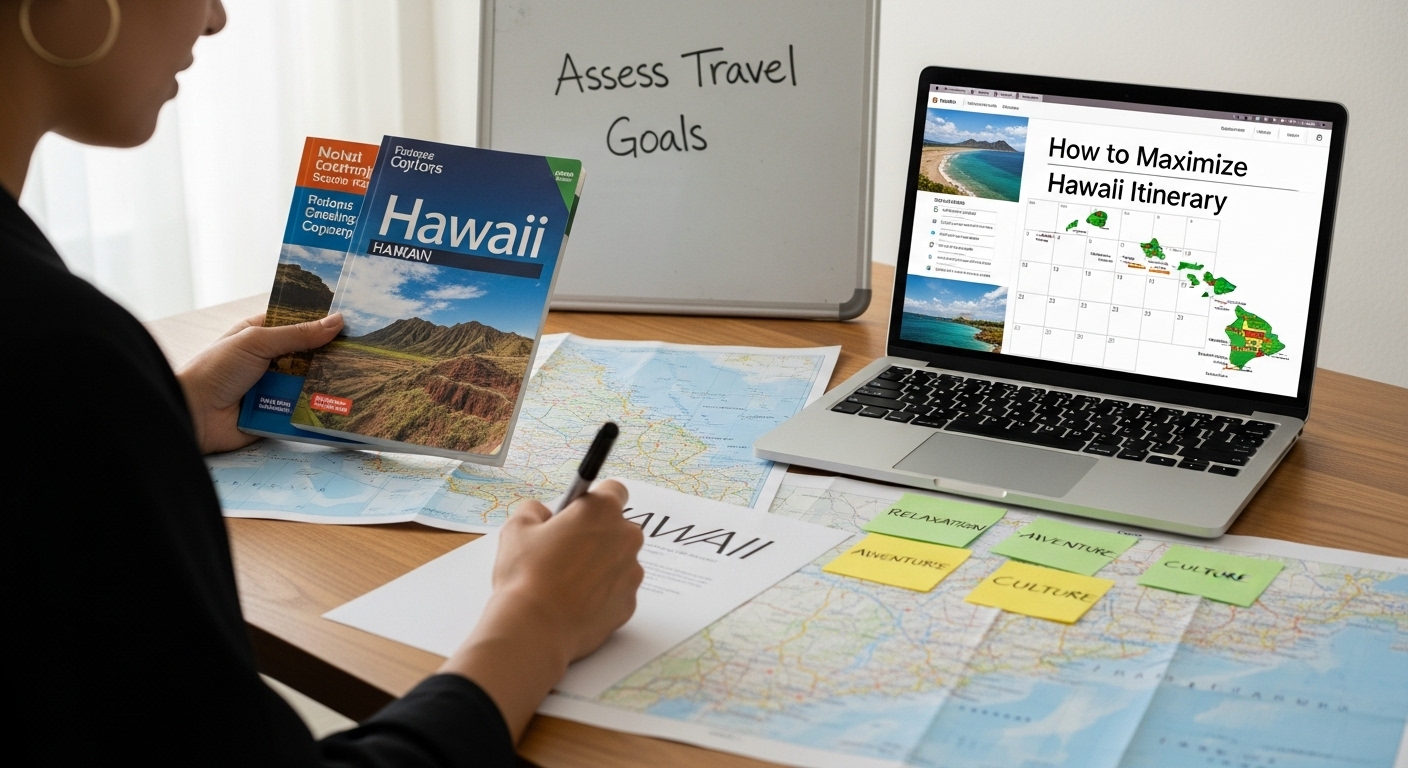
Planning a trip to Hawaii sounds like a dream and for millions of visitors each year, the Islands promise everything from volcano hikes to world-class beaches. Yet, over 90% of travelers admit their Hawaii itineraries leave them feeling rushed or missing out on hidden wonders entirely. What if crafting your perfect Hawaiian adventure is less about following the crowds and more about asking yourself the right questions before you book that flight?
Table of Contents
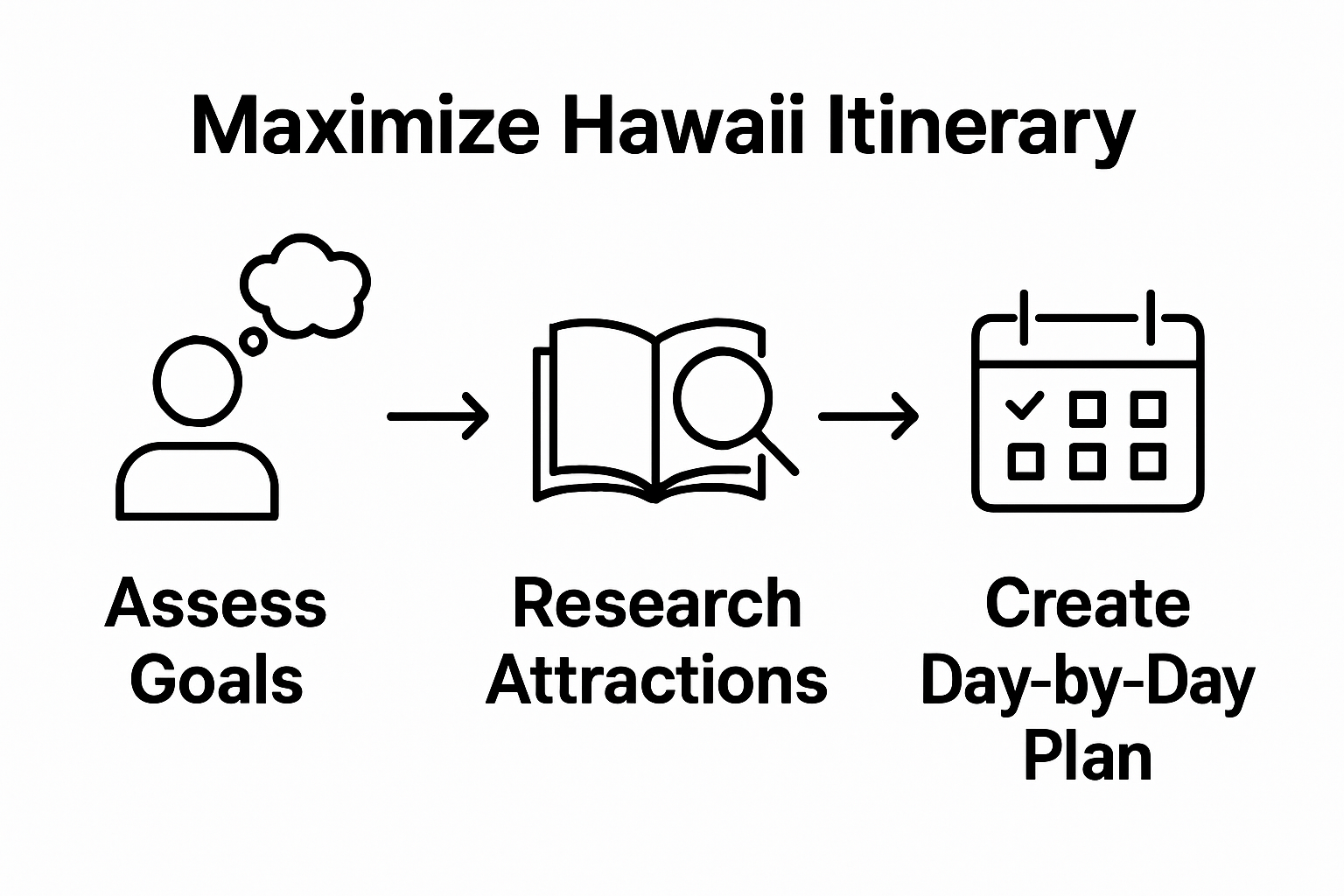
- Step 1: Assess Your Travel Goals And Priorities
- Step 2: Research Top Attractions And Hidden Gems
- Step 3: Create A Day-By-Day Itinerary Plan
- Step 4: Book Accommodations And Transportation
- Step 5: Verify Your Itinerary For Balance And Feasibility
Quick Summary
| Key Point | Explanation |
|---|---|
| 1. Assess personal travel goals first | Reflect on motivations like relaxation, culture, or adventure to tailor your Hawaiian experience effectively. |
| 2. Conduct thorough research on attractions | Dive deep into online resources for a mix of popular spots and hidden gems across Hawaii’s islands. |
| 3. Create a flexible day-by-day itinerary | Balance activity types and downtime while allowing for spontaneity and unexpected encounters. |
| 4. Strategically book accommodations and transport | Choose lodging and transport that fit your desired experience and budget; consider distance and logistics as key factors. |
| 5. Verify itinerary for balance and feasibility | Review all elements to ensure activities align with energy levels, logistics, and budget for a fulfilling trip. |
Step 1: Assess Your Travel Goals and Priorities
Crafting an exceptional Hawaii itinerary begins with understanding what truly matters to you as a traveler. The Hawaiian Islands offer incredibly diverse experiences, from volcanic landscapes and pristine beaches to rich cultural heritage and adventure opportunities. Your first critical step is conducting a thoughtful self-assessment that will transform a generic vacation into a personalized journey.
Start by reflecting on your primary travel motivations. Are you seeking relaxation, cultural immersion, outdoor adventures, or a blend of experiences? Some travelers prioritize beach time and water activities, while others might want to explore historical sites, trek through rainforests, or learn about Native Hawaiian traditions. Hawaii Tourism Authority recommends travelers consider their personal interests and the unique characteristics of each Hawaiian island before planning.
To effectively assess your goals, create a structured approach. Consider these key dimensions of your potential Hawaiian adventure:
- Personal interests (nature, culture, relaxation, adventure)
- Physical capabilities and comfort levels
- Budget constraints
- Available travel time
- Specific bucket list experiences
Take time to discuss potential plans with travel companions, ensuring everyone’s expectations align. If traveling with family or a group, each person might have different priorities. Some might want active volcano tours, while others prefer leisurely resort experiences. Compromise and balance are essential in creating a satisfying itinerary that accommodates diverse preferences.
Research becomes your strategic tool in this assessment phase. Explore detailed island guides, watch documentaries about Hawaii, read traveler blogs, and consult multiple resources to understand the unique offerings of each island. Maui offers different experiences compared to Kauai or the Big Island, so understanding these distinctions will help you make informed decisions.
To help you compare the primary Hawaiian islands for your trip, here is a table outlining unique features and travel experiences highlighted in the article:
| Island | Key Features | Experience Type | Best For |
|---|---|---|---|
| Oahu | Urban amenities, public transit, beaches | Urban & Nature | City experiences & classic beaches |
| Maui | Luxury resorts, adventure diversity | Adventure & Luxury | Blend of adventure and relaxation |
| Big Island | Volcanoes, observatories, rugged lodging | Nature & Adventure | Volcanic hikes & unique landscapes |
| Kauai | Lush tropics, hiking, rural environment | Nature & Quiet | Hiking and tropical exploration |
Finally, verify your travel goals by creating a preliminary priority list. Rank your must-do experiences and be realistic about what you can accomplish within your timeframe. A successful Hawaii itinerary balances structured planning with flexibility, allowing spontaneous discoveries while ensuring you don’t miss your most cherished experiences.
 Remember, the goal is creating memories that will last a lifetime, not checking off a rigid checklist.
Step 2: Research Top Attractions and Hidden Gems
Researching Hawaii’s attractions transforms a generic vacation into an extraordinary adventure. With eight unique islands offering vastly different experiences, your research phase requires strategic exploration beyond typical tourist brochures. Understanding both popular destinations and lesser-known treasures will elevate your Hawaiian journey from ordinary to extraordinary.
Begin by leveraging digital resources and official tourism platforms. Websites like the Hawaii Tourism Authority provide comprehensive insights into each island’s distinctive character. Professional travel blogs, destination-specific forums, and Instagram geotags can reveal insider perspectives that traditional guidebooks might miss. Create a digital research folder where you can compile screenshots, bookmarked websites, and notes about potential experiences that align with your initial travel goals.
Puukohol01 Heiau National Historic Site exemplifies the kind of hidden gem that transforms a typical vacation. Such historical locations offer deeper cultural understanding beyond standard tourist attractions. While researching, categorize potential experiences into distinct groups: cultural sites, natural landscapes, adventure activities, relaxation spots, and local culinary experiences.
Key research strategies include:
- Follow local Hawaiian travel bloggers and photographers
- Watch documentary series about Hawaiian culture and landscapes
- Join online traveler forums specific to Hawaiian destinations
- Check seasonal event calendars for unique festivals or cultural celebrations
- Read recent traveler reviews on multiple platforms
Consider the unique characteristics of different islands. The Big Island offers volcanic landscapes and astronomical observatories, while Kauai provides lush tropical environments perfect for hiking. Maui balances adventure with luxury, and Oahu combines urban experiences with stunning natural beauty. Your research should help you understand these nuanced differences.
Develop a preliminary list of must-visit attractions and potential backup options. Prioritize experiences that genuinely excite you rather than feeling obligated to visit every recommended site. Some travelers prefer in-depth exploration of fewer locations, while others enjoy a more comprehensive island-hopping approach.
Verify your research by cross-referencing multiple sources and checking current accessibility, potential seasonal restrictions, and admission requirements. Local tourism websites, official park services, and recent traveler reviews will provide the most up-to-date information. Remember that thorough research transforms your trip from a simple vacation to an immersive cultural and natural exploration of Hawaii’s incredible landscapes.
Step 3: Create a Day-by-Day Itinerary Plan
Transforming your Hawaiian research into a structured day-by-day plan requires strategic thinking and thoughtful organization. Your itinerary is more than a schedule—it’s a blueprint for an unforgettable adventure that balances exploration, relaxation, and cultural immersion. The goal is creating a flexible framework that allows spontaneity while ensuring you experience the islands’ most compelling attractions.
Begin by mapping out your available travel days and considering the unique characteristics of each Hawaiian island. Realistic planning means understanding travel times between locations and allowing breathing room between activities. If you’re island-hopping, factor in transportation logistics like inter-island flights or ferry schedules. Some travelers make the mistake of overscheduling, which leads to exhaustion rather than enjoyment.
National Park Service guidelines emphasize the importance of allocating sufficient time for meaningful experiences. Apply this principle to your Hawaiian adventure by creating a balanced daily structure. Divide each day into morning, afternoon, and evening segments, allowing for natural transitions and unexpected discoveries.
Recommended daily planning approach:
- Prioritize 2-3 primary activities per day
- Include buffer time between experiences
- Mix active adventures with relaxation periods
- Consider local weather patterns and seasonal variations
- Plan for rest and personal downtime
Utilize digital tools like Google Sheets or dedicated travel planning apps to create your itinerary. These platforms allow easy modifications and provide visual representations of your travel schedule. Color-code activities by type—cultural experiences in one color, nature adventures in another—to quickly understand your daily balance.
Consider the physical demands of your chosen activities. Hawaiian experiences range from gentle beach walks to challenging volcano hikes. Sequence your activities intelligently, placing more strenuous adventures earlier in your trip when energy levels are highest. If you’re planning a multi-island journey, sequence islands from most challenging to most relaxing to optimize your overall experience.
Verify your itinerary by performing a final review with several key questions. Does your plan align with your original travel goals? Have you included a mix of planned activities and free exploration time? Are transportation logistics between activities realistic? Have you accounted for potential weather changes or local event schedules?
Remember that the most memorable Hawaiian adventures balance structure with spontaneity. Your day-by-day plan should feel like a supportive guide, not a restrictive mandate. Leave room for unexpected cultural encounters, stunning viewpoints, or local recommendations that might transform your journey into something truly extraordinary.
Step 4: Book Accommodations and Transportation
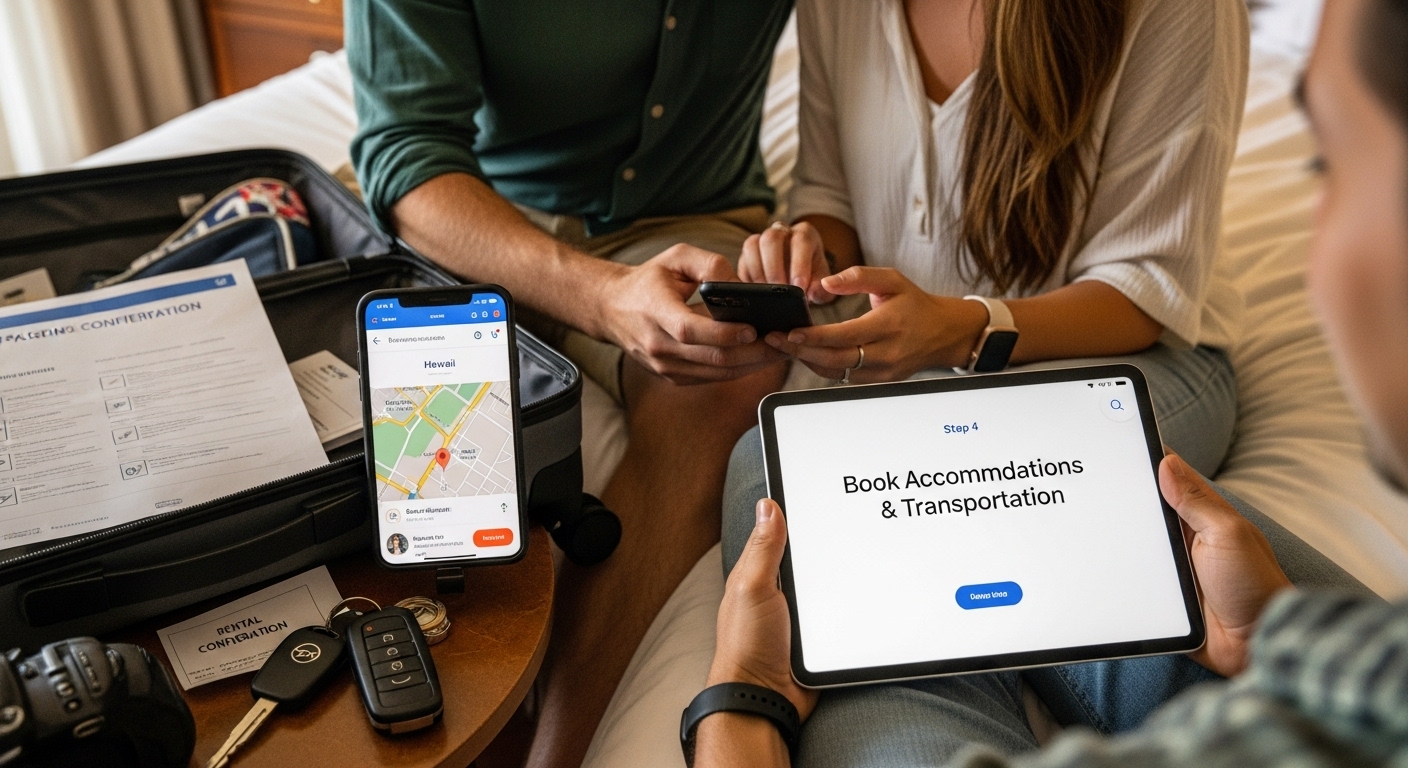
Booking accommodations and transportation represents the critical infrastructure of your Hawaiian adventure. This step transforms your conceptual itinerary into a tangible travel plan, requiring careful consideration of logistics, budget, and personal preferences. Your choices will significantly impact the overall quality and convenience of your island experience.
Strategic accommodation selection begins with understanding each island’s unique character. Oahu offers urban experiences with Honolulu’s amenities, while Maui provides luxurious resort environments. The Big Island presents more rugged, adventure-focused lodging options. Consider proximity to your planned activities, transportation accessibility, and the type of experience you desire—whether that’s a high-end resort, a budget-friendly vacation rental, or an intimate bed and breakfast.
Hawaii Volcanoes National Park transportation guidelines highlight the critical importance of transportation planning. Rental cars remain the most flexible option for exploring Hawaiian islands, offering freedom to discover remote locations and spontaneous attractions. However, each island has distinct transportation characteristics. Oahu provides excellent public transit, while more rural islands like Kauai might require more comprehensive personal transportation strategies.
Essential booking considerations include:
- Compare accommodation prices across multiple booking platforms
- Read recent traveler reviews focusing on location and amenities
- Check cancellation policies and travel insurance options
- Verify parking availability for rental vehicles
- Understand local transportation alternatives
Timing plays a crucial role in your booking strategy. Hawaii’s peak tourist seasons—typically summer and winter holidays—demand earlier reservations. Booking 4-6 months in advance can secure better rates and ensure availability, especially for popular destinations and peak travel periods. Consider shoulder seasons like spring and fall for more competitive pricing and fewer crowds.
Develop a comprehensive transportation plan that connects your accommodations with planned activities. Map out driving distances, understand parking limitations, and explore alternative transportation like shuttle services or local bus routes. Some travelers mix transportation methods—using rental cars for specific excursions while utilizing public transit or organized tours for other experiences.
Verify your bookings by creating a consolidated travel document that includes confirmation numbers, contact information, reservation details, and specific check-in instructions. Use digital tools like Google Docs or dedicated travel planning apps to keep all information accessible. Double-check that your accommodations and transportation align with your meticulously crafted day-by-day itinerary, ensuring a smooth and stress-free Hawaiian adventure.
Step 5: Verify Your Itinerary for Balance and Feasibility
Verifying your Hawaiian itinerary represents the critical bridge between meticulous planning and genuine travel experiences. This step transforms your theoretical adventure into a realistic, achievable journey that balances excitement with practical considerations. Think of this process as a final quality check that ensures your travel dreams align with real-world logistics and personal capabilities.
Comprehensive verification requires a multifaceted approach that goes beyond simple scheduling. Begin by conducting a comprehensive time and energy audit of your planned activities. Hawaiian experiences range from leisurely beach days to challenging volcanic hikes, each demanding different physical and mental resources. Carefully assess whether your proposed daily activities are realistically achievable without causing traveler fatigue or overwhelming your group.
U.S. Department of State travel guidelines underscore the importance of thorough travel preparation. Apply this principle by creating a detailed spreadsheet or travel planning document that breaks down each day’s activities, including estimated durations, transportation times, and potential rest periods. Color-code activities by intensity level—green for relaxed experiences, yellow for moderate adventures, and red for physically demanding excursions.
Key verification checkpoints include:
- Confirm realistic travel times between locations
- Evaluate physical demands of planned activities
- Check weather compatibility with scheduled experiences
- Assess budget alignment with proposed plans
- Verify operational hours of attractions
Pay special attention to geographical challenges unique to Hawaiian islands. Distances that appear short on maps can involve complex terrain or limited transportation options. If your itinerary involves island-hopping, factor in additional time for inter-island travel, including airport transfers and potential flight delays.
Financial feasibility represents another critical verification aspect. Create a comprehensive budget column in your planning document that tracks estimated costs for each activity, including potential hidden expenses like parking fees, equipment rentals, or guided tour charges. Build a financial buffer of 10-15% to accommodate unexpected opportunities or minor changes.
Verify your final itinerary by conducting a comprehensive review with potential travel companions. Walk through the day-by-day plan, discussing potential challenges, excitement points, and individual comfort levels. A successful Hawaiian adventure balances structured planning with flexible spontaneity. Your verification process should result in a document that feels both meticulously organized and wonderfully open to unexpected island magic—a true reflection of the Hawaiian travel spirit.
A comprehensive checklist ensures your Hawaii itinerary is balanced, realistic, and meets your travel needs before finalizing plans:
| Verification Step | What to Check | Why It Matters |
|---|---|---|
| Travel Times Between Locations | Confirm all driving/transport times | Prevent over-scheduling and logistical stress |
| Physical Demands | Assess activity difficulty levels | Avoid exhaustion and match group capabilities |
| Weather Compatibility | Check weather for planned days | Ensure optimal conditions for scheduled activities |
| Budget Alignment | Review costs and hidden fees | Stay within financial limits & avoid surprises |
| Operational Hours of Attractions | Verify opening/closing times | Prevent missing key experiences |
| Rest and Downtime | Include buffer periods | Maintain energy and flexibility |
| Group Review | Walk through itinerary together | Address concerns and optimize trip enjoyment |
Turn Your Carefully Planned Hawaii Itinerary Into an Unforgettable Aerial Experience
When crafting your dream Hawaiian itinerary, you face the challenge of creating a balance between standout adventures and authentic cultural moments. Even with the best day-by-day plans, it can be tough to pack in breathtaking scenery and true local storytelling without feeling rushed or overwhelmed. Many travelers want immersive experiences but are limited by time and transportation across the islands.
Flight of Aloha offers the perfect way to elevate your vacation. Imagine capturing the dramatic volcanoes, lush coastlines, and legendary stories of Hawaii in one thrilling, family-friendly attraction. Our immersive flying theater in Kailua-Kona blends 8K panoramic visuals, exhilarating motion, and even Hawaiian scents to simulate the feeling of soaring over paradise. You can experience the extraordinary in just one visit, making it ideal for optimizing your Hawaii itinerary and creating memories that will last far beyond your trip.

Ready to enhance your journey with an experience no standard tour provides? Discover the magic of Flight of Aloha and secure your ride now. Bring your group, your curiosity, and your sense of adventure. Tickets and VIP packages can be booked easily online. Make this the highlight of your Hawaii adventure—visit Flight of Aloha today and see for yourself what makes us a must-do in Kailua-Kona.
Frequently Asked Questions
What should I assess before planning my Hawaii itinerary?
Start by reflecting on your travel motivations, such as relaxation, cultural immersion, or outdoor adventure. Consider your personal interests, physical capabilities, budget, available time, and specific bucket list experiences.
How can I find hidden gems in Hawaii?
Leverage digital resources like local travel blogs, official tourism platforms, and Instagram geotags. Create a digital research folder to compile insights and categorize potential experiences into groups like cultural sites and natural landscapes.
What is the best way to structure my day-to-day itinerary for Hawaii?
Prioritize 2-3 main activities per day while allowing for buffer time between experiences. Mix active adventures with relaxation periods, and consider local weather patterns and seasonal variations when planning your activities.
How can I ensure my travel plans are feasible for my group?
Conduct a time and energy audit of your planned activities to assess whether they are realistically achievable. Verify travel times, weather compatibility, and budget alignment, and review your itinerary with travel companions to discuss potential challenges.