
Cultural Education in Amusement Parks: Hawaii’s Impact
{
“@type”: “Article”,
“image”: {
“url”: “https://csuxjmfbwmkxiegfpljm.supabase.co/storage/v1/object/public/blog-images/organization-5115/1771460852892_image.png”,
“@type”: “ImageObject”,
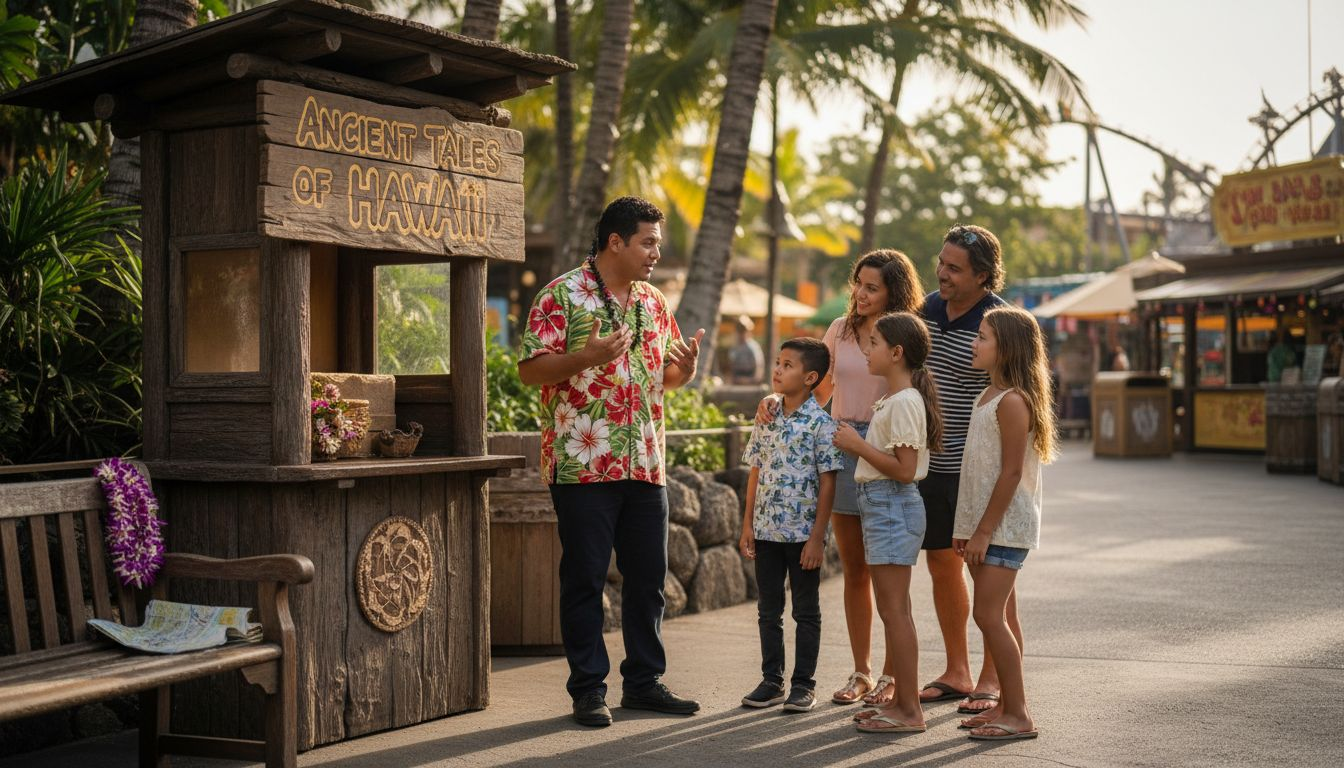
“caption”: “Hawaiian cultural performer engaging family outdoors”
},
“author”: {
“url”: “https://flightofaloha.com”,
“name”: “Flightofaloha”,
“@type”: “Organization”
},
“@context”: “https://schema.org”,
“headline”: “Cultural Education in Amusement Parks: Hawaii’s Impact”,
“publisher”: {
“url”: “https://flightofaloha.com”,
“name”: “Flightofaloha”,
“@type”: “Organization”
},
“inLanguage”: “en-US”,
“articleBody”: “”,
“description”: “Cultural education in amusement parks reveals how immersive attractions teach Hawaiian legends, engage families, and balance authenticity with entertainment.”,
“datePublished”: “2026-02-19T00:27:46.337Z”
}
Families searching for ways to make their Kailua-Kona adventure meaningful often find themselves looking beyond ordinary fun. When culture and learning are woven into entertainment, every moment can spark curiosity and connection across generations. Amusement parks and attractions here merge cultural storytelling with hands-on experiences, encouraging visitors to engage deeply with Hawaiian legends through sensory, narrative-rich journeys that create lasting memories.
Table of Contents
- Defining Cultural Education In Amusement Parks
- Types Of Cultural Experiences In Attractions
- How Immersive Technology Enhances Learning
- Hawaiian Legends And Local Storytelling
- Balancing Authenticity With Entertainment Value
- Avoiding Cultural Misappropriation In Experiences
Key Takeaways
| Point | Details |
|---|---|
| Cultural Education | Amusement parks serve as platforms for cultural storytelling and education, bridging leisure with learning. |
| Immersive Technologies | Technologies like VR and AR enhance the learning experience by creating interactive, multisensory environments. |
| Authenticity in Representation | Balancing entertainment with cultural authenticity is crucial; involve community voices to prevent misappropriation. |
| Active Engagement | Visitors should approach attractions as opportunities for learning, seeking to understand deeper narratives rather than passive entertainment. |
Defining Cultural Education in Amusement Parks
Amusement parks represent far more than mere entertainment destinations – they are powerful platforms for cultural storytelling and educational experiences. These immersive environments offer unique opportunities to explore historical narratives, social dynamics, and cultural heritage through engaging multimedia presentations. Theme park studies reveal that these spaces function as complex socio-cultural landscapes where leisure intersects with learning.
In the context of cultural education, amusement parks serve multiple critical functions:
- Transmit historical knowledge through interactive experiences
- Preserve and showcase cultural traditions
- Create emotional connections with different cultural narratives
- Provide sensory and multimedia approaches to learning
- Bridge generational gaps in understanding cultural contexts
These educational environments are particularly potent when they incorporate authentic storytelling techniques that respect and represent indigenous perspectives. By moving beyond superficial entertainment, cultural amusement parks can transform visitor experiences into meaningful educational journeys that foster cross-cultural understanding and empathy.
Immersive storytelling becomes the primary mechanism through which cultural education occurs. Through carefully designed attractions, visitors can virtually travel through time, experiencing historical moments, cultural practices, and societal transformations in deeply engaging ways. These experiences go beyond traditional museum exhibits by creating multisensory environments that activate emotional and intellectual engagement.
Pro tip: When visiting cultural amusement parks, approach each attraction as an opportunity for learning rather than just entertainment, and engage actively with the narratives and perspectives presented.
Types of Cultural Experiences in Attractions
Cultural attractions offer diverse approaches to storytelling and educational engagement, each designed to create immersive and meaningful visitor experiences. Theme park narrative characteristics demonstrate the complex ways these environments communicate cultural content through carefully crafted environments and interactive experiences.
These cultural experiences typically manifest in several key formats:
- Historical Narrative Exhibits: Chronological displays showcasing cultural evolution
- Immersive Performance Spaces: Live interpretations of traditional practices
- Interactive Multimedia Installations: Technology-driven cultural learning environments
- Sensory Experience Zones: Environments that engage multiple human senses
- Character-Driven Storytelling: Narrative experiences featuring cultural protagonists
Each experience type serves a unique educational purpose, transforming passive observation into active cultural engagement. By integrating multiple sensory and narrative techniques, these attractions create powerful learning environments that transcend traditional educational models.
The most effective cultural attractions go beyond simple representation, instead creating deeply contextual storytelling that allows visitors to emotionally connect with different cultural perspectives. Through meticulously designed spaces, visitors can virtually travel through time and geography, experiencing nuanced cultural narratives that challenge preconceived notions and foster genuine cross-cultural understanding.
Pro tip: Approach cultural attractions with an open mind and engage actively with each exhibit, seeking to understand the deeper narratives behind the visual experiences.
How Immersive Technology Enhances Learning
Immersive technology represents a revolutionary approach to cultural education, transforming passive learning into dynamic, engaging experiences. Multisensory learning technologies stimulate cognitive and emotional engagement by creating rich, interactive environments that go far beyond traditional educational methods.
Key technologies driving this educational transformation include:
- Virtual Reality (VR): Complete sensory immersion in historical or cultural contexts
- Augmented Reality (AR): Layering digital information over real-world experiences
- Motion-Based Simulation: Physical engagement that mimics real-world movements
- Interactive Touchscreen Exhibits: Personalized learning through direct interaction
- Scent and Sound Technologies: Engaging multiple sensory pathways simultaneously
These technologies work synergistically to create deeply interactive learning environments that allow visitors to experience cultural narratives more intimately. By transforming abstract concepts into tangible, multi-sensory experiences, immersive technologies bridge the gap between intellectual understanding and emotional connection.
The most sophisticated immersive experiences leverage advanced technologies to create narrative-driven learning journeys. These environments don’t just present information – they craft compelling stories that invite participants to become active participants in cultural exploration, breaking down barriers between education and entertainment.
Here’s how major immersive technologies uniquely enhance cultural learning:
| Technology Type | Unique Learning Benefit | Example Use Case |
|---|---|---|
| Virtual Reality (VR) | Simulates historical environments | Explore ancient cities interactively |
| Augmented Reality (AR) | Adds layers to real-world scenes | Overlay facts on cultural artifacts |
| Motion Simulation | Engages physical movement | Reenact traditional dance or ceremony |
| Touchscreen Displays | Enables personalized exploration | Choose your cultural learning path |
| Scent & Sound Tech | Triggers emotional associations | Experience festivals through senses |
Pro tip: Engage fully with immersive exhibits by allowing yourself to be present and open to the sensory experiences, rather than approaching them as traditional educational displays.
Hawaiian Legends and Local Storytelling
Hawaiian storytelling represents a profound cultural tradition that transforms narrative into a living, breathing educational experience. Themed cultural attractions play a crucial role in preserving and transmitting indigenous narratives, bridging generations through immersive storytelling techniques that honor traditional oral histories.
These legendary narratives typically encompass several key themes:
- Creation Myths: Stories explaining the origins of Hawaiian islands
- Ancestral Heroic Tales: Narratives of legendary Hawaiian warriors and leaders
- Nature-Based Legends: Stories connecting humans with natural world elements
- Supernatural Encounters: Myths involving gods, spirits, and mystical beings
- Moral and Philosophical Lessons: Narratives teaching cultural values and wisdom
Understanding these legends requires more than simple recitation – it demands deep cultural interpretation and respectful representation. Each story carries intricate layers of meaning, connecting contemporary audiences with ancient wisdom through carefully crafted narrative experiences that transcend mere entertainment.
The most powerful storytelling approaches blend traditional oral techniques with modern technological interpretations, creating immersive experiences that allow visitors to step into the rich tapestry of Hawaiian cultural narratives. By combining authentic storytelling with interactive technologies, cultural attractions can transform passive observation into active cultural engagement.
Pro tip: Listen to Hawaiian legends with an open heart, recognizing them as living stories that continue to shape cultural understanding, not just historical artifacts.
Balancing Authenticity With Entertainment Value
Creating cultural attractions requires a delicate dance between preserving genuine heritage and delivering engaging experiences. Authentic performance strategies reveal the complex challenges of representing cultural narratives without reducing them to shallow entertainment.
Key strategies for maintaining this balance include:
- Collaborative Cultural Consultation: Involving indigenous community members in storytelling design
- Respectful Narrative Framing: Presenting stories with contextual depth and nuance
- Interactive Storytelling Techniques: Allowing visitors to engage meaningfully with cultural content
- Transparent Historical Interpretation: Acknowledging complex cultural histories
- Multimedia Contextual Approaches: Using technology to provide layered understanding
The most successful cultural attractions recognize that entertainment and education are not opposing forces, but complementary elements. Authentic representation requires moving beyond superficial dramatization, instead creating experiences that invite genuine cultural understanding and emotional connection.
Technology plays a crucial role in this delicate balance, offering innovative ways to present cultural narratives that are both compelling and deeply respectful. By combining traditional storytelling techniques with modern interactive design, attractions can create powerful learning experiences that honor cultural heritage while remaining engaging and accessible.
Pro tip: Approach cultural attractions with curiosity and humility, understanding that each exhibit represents a living cultural narrative, not just a historical artifact.
Avoiding Cultural Misappropriation in Experiences
Cultural representation demands profound sensitivity and intentional respect, especially within entertainment environments that risk reducing rich traditions to shallow spectacles. Ethical content integration strategies reveal the complex landscape of presenting cultural narratives responsibly and authentically.
Key principles for preventing cultural misappropriation include:
- Community Consultation: Involving indigenous stakeholders in narrative development
- Contextual Depth: Providing comprehensive background for cultural elements
- Authentic Voice Prioritization: Centering perspectives of cultural practitioners
- Avoiding Stereotypical Representations: Rejecting simplified or exoticized portrayals
- Transparent Historical Acknowledgment: Recognizing complex cultural histories
Successful cultural experiences move beyond superficial representation, creating nuanced storytelling frameworks that honor the complexity and dynamism of living cultures. This approach requires ongoing dialogue, continuous learning, and a commitment to understanding cultural contexts beyond surface-level interactions.
Technology and design can play crucial roles in responsible cultural representation, offering innovative methods to create immersive experiences that educate, inspire, and respect the integrity of cultural narratives. By prioritizing ethical representation, attractions can transform potential misappropriation into meaningful cross-cultural understanding.
This table summarizes common risks and solutions for ethical cultural representation:
| Potential Risk | Example in Attractions | Responsible Practice |
|---|---|---|
| Stereotyping | Overly simplified themes | Collaborate with community leaders |
| Historical Inaccuracy | Misrepresented timelines | Consult verified cultural sources |
| Loss of Meaning | Entertainment over depth | Prioritize authentic storytelling |
| Lack of Indigenous Voice | Absence in design input | Involve tradition bearers directly |
| Exoticization | Focus on spectacle only | Provide full cultural context |
Pro tip: Approach cultural experiences as opportunities for genuine learning, always seeking to understand the deeper meanings behind cultural practices rather than consuming them as entertainment.
Experience Hawaiian Cultural Education Like Never Before
The article highlights the challenge of blending authentic cultural storytelling with immersive entertainment in amusement parks. Visitors often seek deeper emotional connections and genuine understanding of Hawaiian legends and traditions. Flight of Aloha offers a solution by delivering an 8K immersive flying theater experience that goes beyond passive observation. It combines multisensory learning with authentic narrative-driven storytelling rooted in Hawaiian culture, allowing families and tourists to engage with history and legends in a vivid, respectful way.
Discover how Flight of Aloha bridges the gap between education and entertainment through advanced motion effects, scents, and wind, creating a deeply interactive cultural journey. This attraction transforms Hawaiian legends like those of Naupaka and Lahaina into living stories that inspire empathy and curiosity.
Ready to immerse yourself in Hawaii’s rich heritage and breathtaking landscapes?

Book your visit today at Flight of Aloha and explore unique ride films and VIP packages. Don’t miss this opportunity to experience cultural education in an exhilarating new form. Learn more about our ride films and experiences and secure your tickets now to connect with the spirit of aloha like never before.
"## Frequently Asked Questions
What is cultural education in amusement parks?
Cultural education in amusement parks refers to the use of these environments as platforms for storytelling and teaching about cultural heritage, history, and social dynamics through interactive and engaging experiences.
How do immersive technologies enhance cultural education in amusement parks?
Immersive technologies, such as virtual reality and augmented reality, create multi-sensory environments that engage visitors deeply, transforming traditional educational methods into dynamic and interactive learning experiences.
What are some examples of cultural experiences found in amusement parks?
Cultural experiences in amusement parks can include historical narrative exhibits, immersive performance spaces, interactive multimedia installations, and sensory experience zones that allow visitors to engage with different cultures actively.
How can visitors approach cultural attractions for a meaningful experience?
Visitors should approach cultural attractions with an open mind, viewing each exhibit as an opportunity for learning. Engaging actively with the narratives and understanding the deeper cultural contexts can enhance the overall experience.
Recommended
- Why Choose Cultural Entertainment In Hawaii | Flight Of Aloha
- Understanding Hawaiian Cultural Rides: A Comprehensive Guide | Flight Of Aloha
- What Is Hawaii Themed Entertainment? Understanding Its Charm | Flight Of Aloha
- Hawaiian Flora And Fauna In Rides: Complete Guide | Flight Of Aloha
- Emirates fairytale: Disney opens theme park in Abu Dhabi – Living on the Côte d’Azur
- Best Cultural Tours in Africa 2025: Explore Unique Traditions