
Why Choose Cultural Entertainment in Hawaii
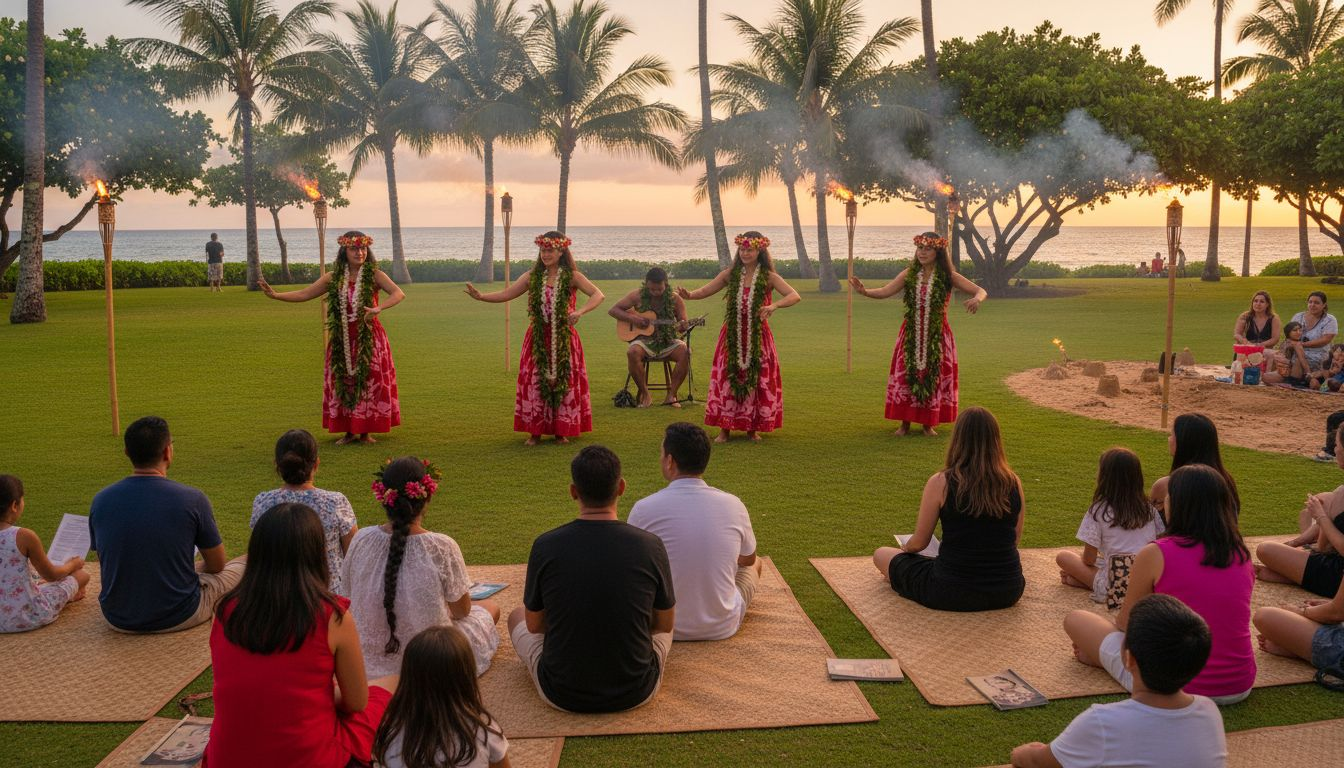
Every parent faces the challenge of finding vacation activities that truly engage their children and connect the whole family. When you travel to Kailua-Kona, the search for immersive, meaningful entertainment leads to a living tradition—Native Hawaiian cultural experiences that stretch back over 1,600 years. These unique forms of Hawaiian storytelling invite families into a world where music, legend, and nature are deeply woven together, promising encounters far richer than anything found in typical tourism.
Table of Contents
- Defining Cultural Entertainment In Hawaii
- Types Of Cultural Entertainment Experiences
- How Immersive Attractions Enhance Storytelling
- Personal And Social Benefits For Families
- Common Misconceptions And What To Avoid
Key Takeaways
| Point | Details |
|---|---|
| Authenticity Matters | Genuine Hawaiian cultural entertainment reflects Native Hawaiian traditions and promotes cultural preservation. Choose experiences led by Native Hawaiians for authentic connections. |
| Cultural Engagement Enhances Family Bonds | Participating in cultural activities strengthens family connections and fosters empathy, shaping children’s worldview and values. |
| Misconceptions to Avoid | Many visitors mistake cultural experiences for mere entertainment; it’s essential to recognize their deeper significance and respect. |
| Support Local Practices | Opt for experiences that prioritize Native Hawaiian voices and ownership, ensuring your support contributes to cultural preservation and education. |
Defining Cultural Entertainment in Hawaii
Cultural entertainment in Hawaii isn’t a modern invention designed for tourists. It’s a living, breathing continuation of Native Hawaiian traditions that stretch back over 1,600 years. When you experience authentic Hawaiian cultural entertainment, you’re tapping into a heritage that encompasses everything from celestial navigation techniques used by ancient voyagers to the spiritual significance embedded in traditional music and dance.
At its core, Hawaiian cultural entertainment reflects a profound kinship between people and nature. Native Hawaiian traditions blend storytelling, music, and reverence for the land in ways that feel fundamentally different from entertainment in other parts of the world. Central figures like the volcano goddess Pele and ocean deity Kanaloa appear in performances and chants, connecting modern audiences to centuries of spiritual belief and cultural identity.
What sets this form of entertainment apart is authenticity. Real Hawaiian cultural experiences teach you about indigenous food cultivation, traditional textiles, sacred architecture, and the complex social governance systems that sustained island communities. These aren’t just pretty stories or exotic performances. They represent actual knowledge systems and living practices that Native Hawaiians continue to preserve and share.
The difference between Hawaiian-themed entertainment and genuine cultural entertainment matters enormously. Cultural entertainment rooted in authentic Hawaiian practices honors the people and traditions it represents rather than commercializing them. When families choose cultural experiences that prioritize Native Hawaiian voices and perspectives, they support meaningful preservation efforts and gain deeper understanding of what makes Hawaii truly unique.
Here’s a comparison of authentic versus commercial Hawaiian entertainment:
| Aspect | Authentic Cultural Entertainment | Commercial Hawaiian-themed Entertainment |
|---|---|---|
| Leadership | Led by Native Hawaiians | Run by non-Hawaiian entities |
| Purpose | Cultural preservation and education | Profit and entertainment |
| Content Source | Rooted in lived tradition | Inspired by stereotypes or themes |
| Impact | Supports local community and heritage | Risks dilution of cultural meaning |
For visitors seeking immersive cultural experiences, this distinction shapes everything. You’re choosing to learn from actual practitioners and storytellers rather than simplified interpretations. You’re supporting cultural continuity rather than dilution. This choice transforms a vacation activity into a genuine educational and spiritual experience.
Pro tip: Look for entertainment experiences that are Native Hawaiian-owned or operated, as this directly supports cultural preservation and ensures authenticity in storytelling and traditional practices.
Types of Cultural Entertainment Experiences
Hawaiian cultural entertainment comes in many forms, each offering unique ways to connect with the islands’ heritage. The variety reflects how Native Hawaiian culture evolved through centuries of tradition, blending influences while maintaining distinct identity. Understanding the different types helps families choose experiences that match their interests and learning goals.
Traditional music and hula remain the most recognized forms of Hawaiian cultural entertainment. These performances tell stories through movement, chant, and rhythm, often depicting historical events, natural landscapes, or spiritual beliefs. When you watch authentic hula, you’re witnessing a teaching method that has preserved Hawaiian knowledge for generations. Kaholo steps, kahano moves, and chants connect directly to specific islands, families, and cultural practices.
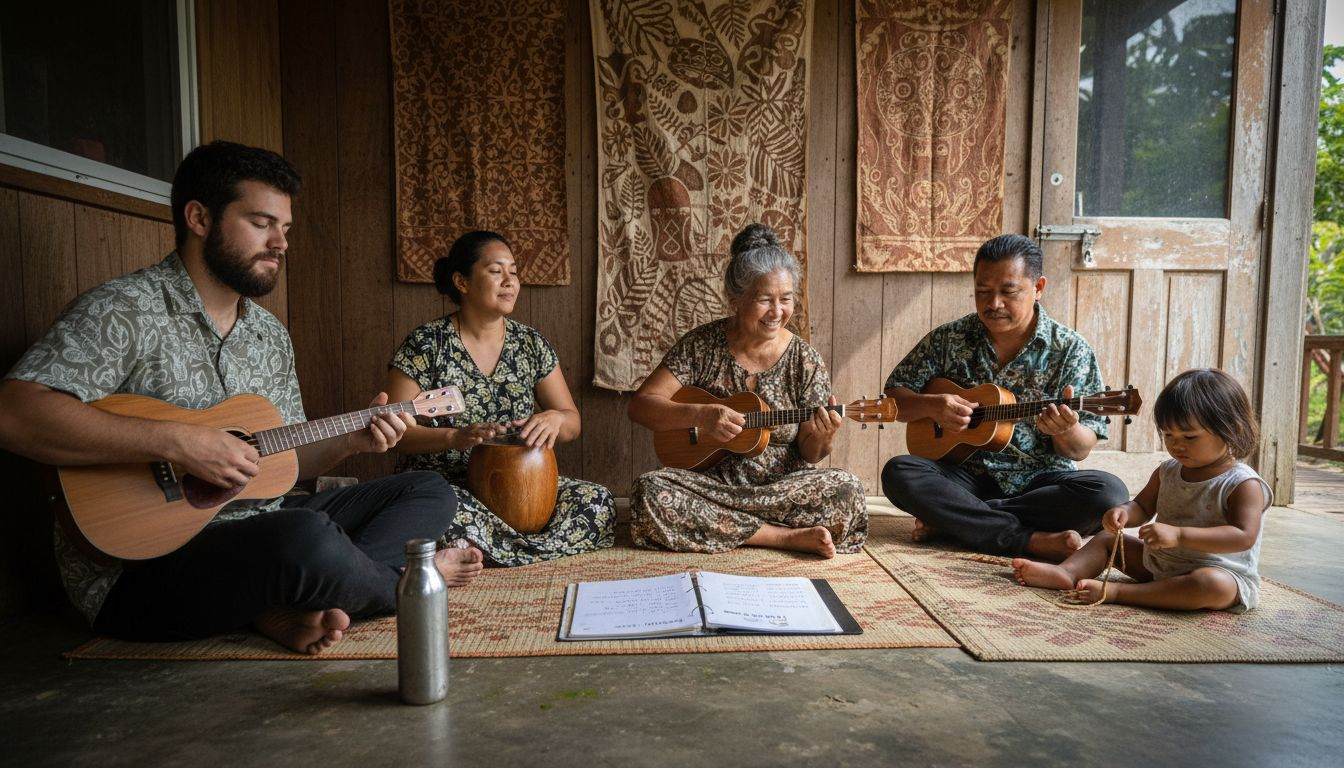
Storytelling and oral traditions represent another vital category. Kupuna, or respected elders, share mele, oli, and historical narratives that explain everything from how the islands formed to the relationships between people and ocean creatures. These aren’t entertainment in the commercial sense but rather living history that changes based on audience and context. Families sitting together during storytelling sessions experience the same transmission method that sustained Hawaiian culture for 1,600 years.
Cultural practices extend beyond performance into experiential learning. Hawaiian paniolo or cowboy culture emerged from 19th century influences and created a unique blend of horseback riding, music, and storytelling distinct from mainland traditions. This shows how Hawaiian culture adapted and incorporated outside influences while maintaining its own character.
Immersive cultural attractions now blend traditional elements with modern technology to create accessible experiences. These venues use visual storytelling, sensory effects, and authentic narratives to recreate Hawaiian landscapes and historical moments. For families with varying attention spans or mobility needs, these experiences make cultural education engaging and comfortable. They’re particularly valuable on rainy days or when seeking air-conditioned alternatives to outdoor activities.
The key across all types is authenticity and respect. Whether you’re watching traditional hula, hearing stories from Native Hawaiian storytellers, or experiencing immersive cultural theater, the best options prioritize genuine representation over simplified commercialization.
Pro tip: Choose experiences led or created by Native Hawaiians, as this ensures cultural accuracy, supports preservation efforts, and provides deeper learning for your family.
How Immersive Attractions Enhance Storytelling
Traditional storytelling in Hawaii has always relied on presence, voice, and the connection between storyteller and listener. Immersive attractions take this ancient practice and amplify it using modern technology. The goal isn’t to replace traditional methods but to make Hawaiian stories accessible to families who might not otherwise experience them deeply.
Immersive environments engage multiple senses simultaneously. When you step into a space with 8K visuals, motion effects, wind, and scent layered together, your brain processes information differently than reading text or watching a flat screen. Participatory design and narrative transportation create emotionally compelling storytelling experiences that foster deeper empathy and cultural understanding. Your body believes it’s flying over Kona’s coastline or witnessing a historical moment, even though you’re in a theater.
This sensory immersion changes how children and adults retain information. Stories told through movement, visuals, and emotion stick in your memory longer than passive observation. When a story makes you feel wind on your face and smell ocean salt while hearing traditional chants, the narrative becomes personal. You’re not just learning about Hawaiian culture from the outside. You’re experiencing it.
Immersive media programs rooted in Hawaiian Indigenous knowledge use animation and digital cinema to convey cultural perspectives that resonate with both local and global audiences. This approach respects traditional knowledge while using tools that modern families understand and connect with. It’s a bridge between generations and between old storytelling methods and new ones.
For families visiting Kona, immersive attractions offer something unique. They work on rainy days. They’re temperature controlled. They welcome visitors of all mobility levels. Children who might struggle sitting through a traditional performance can become engaged participants in an immersive experience. Yet the stories remain authentic and rooted in real Hawaiian heritage.
The power lies in transformation. You arrive as a tourist watching entertainment. You leave having felt something deeper, having understood Hawaiian perspectives more fully, having connected emotionally to the islands’ history and culture.
Below is a summary of how immersive attractions enhance family experiences:
| Immersive Feature | How It Engages Families | Lasting Benefit |
|---|---|---|
| Multi-sensory effects | Appeals to sight, sound, touch, smell | Deepens emotional connection |
| Participatory elements | Involves audiences in stories | Increases retention and empathy |
| Accessibility | Welcomes all mobility levels | Inclusive family experiences |
| Modern storytelling tools | Uses technology children know | Bridges generational interests |
Pro tip: Arrive early on your visit day so immersive experiences can set the emotional tone for your entire trip, making other cultural activities feel more meaningful.
Personal and Social Benefits for Families
Cultural entertainment does more than fill vacation time. When families experience Hawaiian culture together, something shifts in how they relate to each other and the world. These moments create lasting bonds while teaching values that extend far beyond the trip itself.
Shared cultural experiences strengthen family connections. When parents and children sit together watching traditional hula or listening to Hawaiian stories, you’re not just observing performance. You’re participating in something meaningful together. These shared moments become family memories that children reference years later, shaping how they understand heritage, respect, and community.
Cultural engagement builds empathy in young people. Exposure to Hawaiian perspectives, values, and worldviews helps children understand that different ways of living are equally valid and valuable. Enhanced empathy and cultural pride develop when families participate in cultural experiences, contributing to stronger community bonds and more compassionate citizens. A child who learns about the Hawaiian connection to ocean and land thinks differently about environmental responsibility.
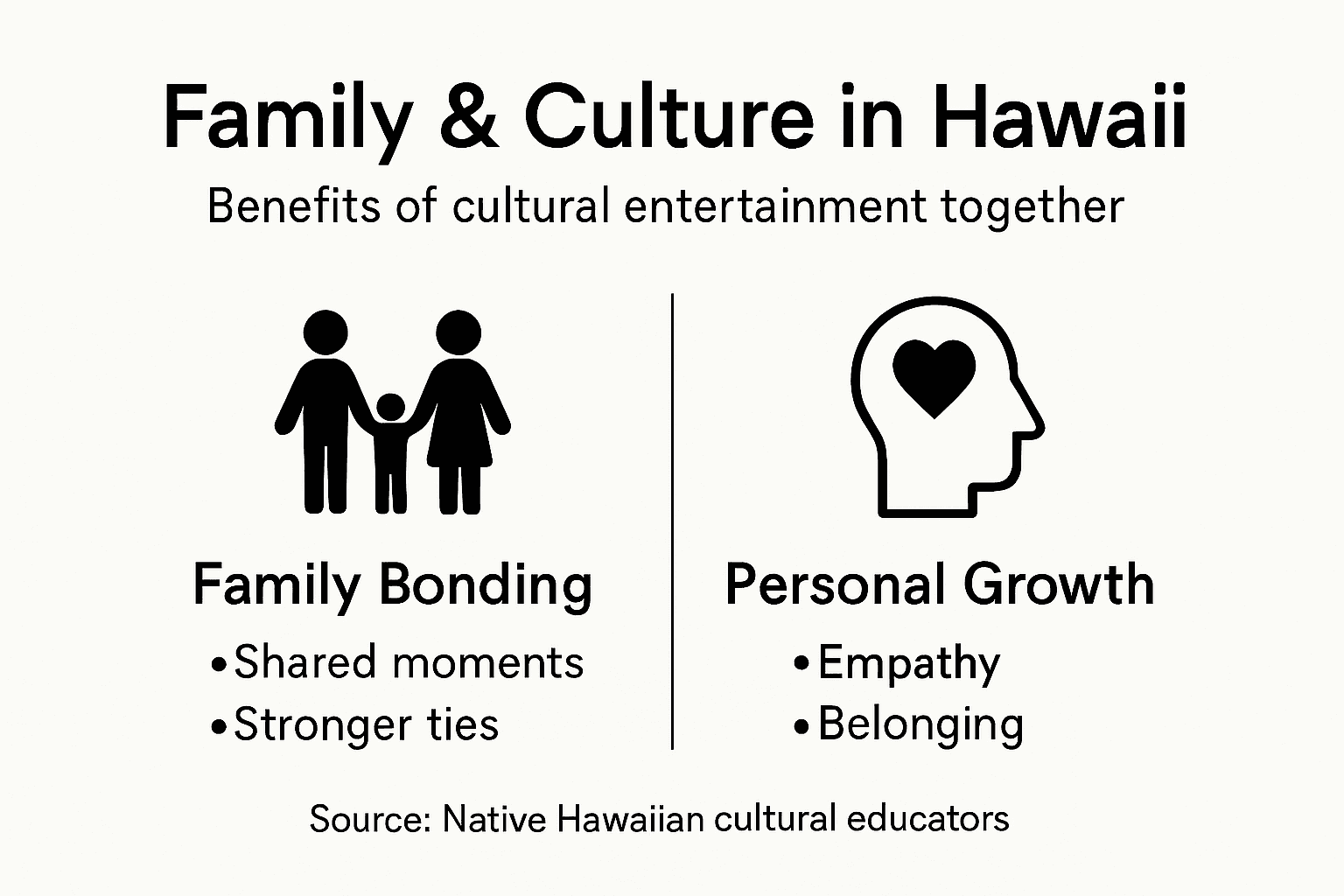
Participating in cultural activities reinforces identity and belonging. For Hawaiian families, cultural entertainment provides intergenerational connection to traditions and values. For visiting families, it offers perspective and humility. Either way, you’re part of something larger than yourselves.
Intergenerational engagement in cultural activities sustains Hawaiian traditions while fostering collective well-being across families and communities. When your family chooses authentic cultural experiences, you’re supporting this sustainability directly. Your participation matters to the people whose culture you’re experiencing.
Children benefit from exposure to diverse storytelling and values. Hawaiian culture teaches interconnectedness, respect for nature, and community responsibility. These lessons complement formal education and shape character in ways that test scores don’t measure. Your family returns home with deeper perspectives on what matters.
Pro tip: Discuss what you experienced as a family after leaving the attraction, asking children what surprised them and how it changed their understanding of Hawaii and its people.
Common Misconceptions and What to Avoid
Many visitors approach Hawaiian cultural entertainment with good intentions but incomplete understanding. Clearing up these misconceptions helps you make choices that truly respect the culture and support its preservation.
The biggest misconception is that cultural entertainment is purely commercial entertainment for tourists. Hawaiian cultural entertainment is deeply rooted in living traditions and Native Hawaiian identity, not something invented to entertain visitors. Real cultural experiences center Native Hawaiian voices and knowledge systems. When you choose experiences led by Hawaiian practitioners, you’re engaging with actual cultural transmission, not a performance created for profit.
Another common mistake is treating cultural events as just entertainment rather than significant cultural expressions. Hawaiian cultural events carry historical and spiritual meaning that deserves respect beyond casual consumption. When you enter a space where traditional chants are performed, you’re in a place of spiritual significance. Your respect and attention matter. Taking photos without permission, talking during performances, or treating it like any other tourist activity misses the entire point.
Avoid superficial engagement that romanticizes Hawaiian culture without understanding it. This means skipping attractions that use stereotypes, reduce complex traditions to catchy songs, or prioritize visual spectacle over authentic storytelling. Real cultural entertainment educates. It challenges you. It sometimes makes you uncomfortable because it asks you to examine your own assumptions.
Don’t assume all Hawaiian entertainment is equally authentic. Some businesses use Hawaiian imagery while having no connection to Hawaiian people or values. Research the ownership and leadership. Are Native Hawaiians making decisions about how their culture is presented? Is revenue supporting Hawaiian communities?
Finally, avoid the mindset that you’re doing Native Hawaiians a favor by participating. This is a mutual exchange. You gain perspective and connection. Hawaiian cultural practitioners share their heritage as a choice. Respect that choice by showing up prepared to learn, listen, and honor what you’re experiencing.
Pro tip: Before booking any cultural experience, verify Native Hawaiian ownership or leadership and read reviews from local Hawaiian families to ensure authenticity and community support.
Experience Authentic Hawaiian Culture Like Never Before
Many visitors struggle to find cultural entertainment in Hawaii that truly honors Native Hawaiian traditions without feeling commercialized or superficial. The challenge is discovering experiences that offer genuine storytelling, deep emotional connection, and respect for living heritage. If you want your family vacation to become a meaningful journey rather than just sightseeing, immersing yourselves in authentic cultural narratives matters.
Flight of Aloha provides a unique solution with its immersive flying theater attraction in Kailua-Kona. Using cutting-edge 8K visuals, motion effects, scents, and wind, you can soar above iconic Hawaiian landscapes while absorbing cultural stories rooted in Native Hawaiian legends like “Naupaka” and “Lahaina.” This attraction balances modern technology with profound cultural respect to create engaging, educational experiences suitable for families, tourists, and groups.
Discover how Flight of Aloha turns cultural entertainment into an unforgettable, multi-sensory adventure. Learn more about the captivating ride films and VIP packages and secure your spot today to support meaningful cultural preservation in Hawaii.

Don’t settle for superficial tourism. Choose immersive cultural entertainment that honors Hawaiian voices and traditions. Visit Flight of Aloha now and book your experience to create lasting family memories with authentic Hawaiian storytelling from a Native Hawaiian perspective.
Frequently Asked Questions
What is cultural entertainment in Hawaii?
Cultural entertainment in Hawaii encompasses authentic practices that reflect Native Hawaiian traditions, including music, dance, storytelling, and spiritual expressions that have been preserved for centuries.
How can I differentiate between authentic Hawaiian cultural entertainment and commercialized versions?
Authentic Hawaiian cultural entertainment is led by Native Hawaiians and focuses on cultural preservation and education, while commercialized entertainment is often aimed primarily at profit and may use stereotypes instead of genuine traditions.
What types of cultural experiences can I find in Hawaii?
Hawaiian cultural experiences include traditional music and hula performances, oral storytelling from respected elders, immersive attractions, and hands-on cultural practices such as learning about the paniolo culture or engaging with Hawaiian textiles.
Why is participating in cultural entertainment important for families visiting Hawaii?
Participating in cultural entertainment builds empathy, reinforces family bonds, and provides educational experiences that promote respect for diverse cultures and deepen understanding of Hawaiian heritage.
Recommended
- Cultural Entertainment: Shaping Experiences In Hawaii | Flight Of Aloha
- What Is Hawaii Themed Entertainment? Understanding Its Charm | Flight Of Aloha
- Understanding Entertainment Trends In Hawaii 2025 | Flight Of Aloha
- Understanding Hawaiian Cultural Rides: A Comprehensive Guide | Flight Of Aloha
- Why Choose Bavarian Entertainment for Events