
Cultural Storytelling Experiences in Kailua-Kona
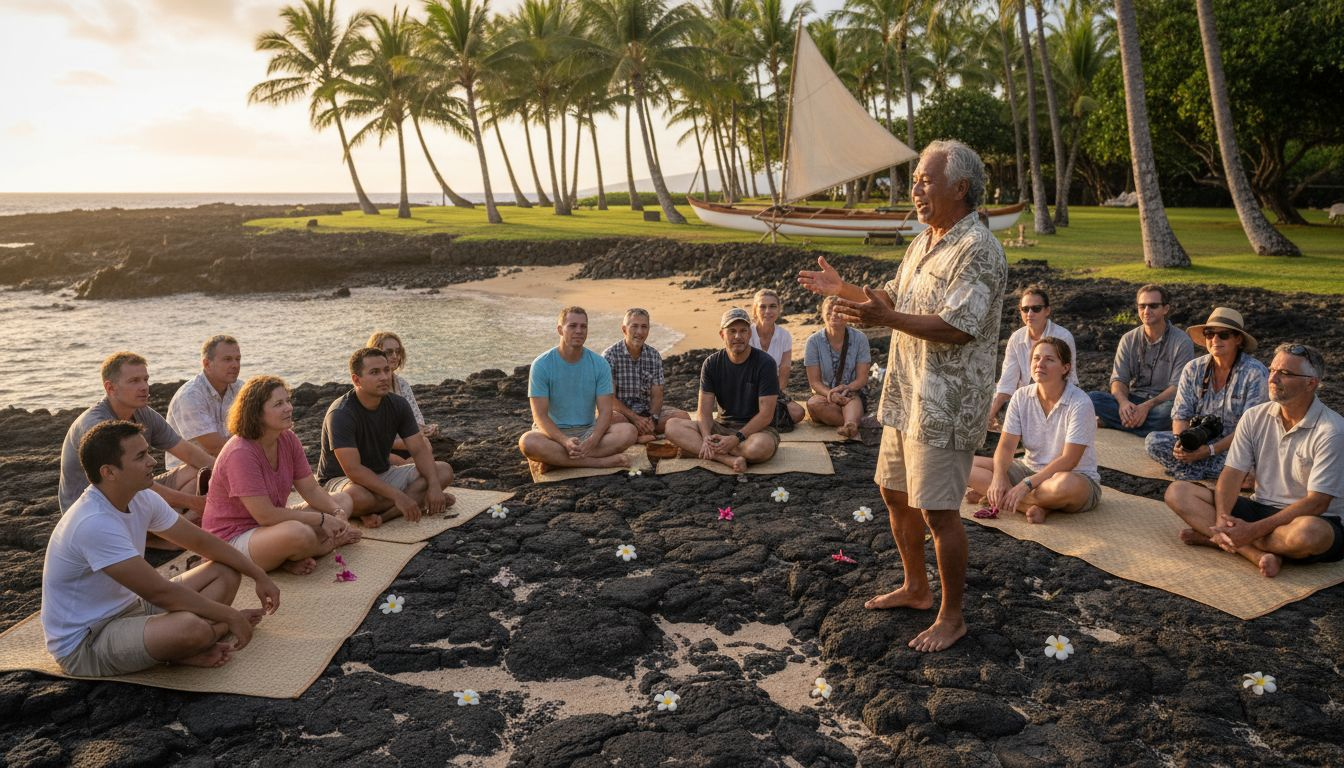
Some families want more than just beautiful beaches when visiting Kailua-Kona. They crave opportunities for connection and learning that go beyond sightseeing. Whether you are sharing stories with your children or exploring Hawaiian legends firsthand, cultural storytelling is a fundamental practice that shapes how people understand themselves and their community. Discover how modern attractions use interactive technology and immersive formats to turn every legend and local tale into a memorable, meaningful experience for all ages.
Table of Contents
- Defining Cultural Storytelling Experiences
- Formats and Methods in Modern Attractions
- The Role of Technology in Immersion
- Cultural Significance of Hawaiian Legends
- What to Expect at Flight of Aloha
- Mistakes to Avoid When Participating
Key Takeaways
| Point | Details |
|---|---|
| Cultural Storytelling Defined | Cultural storytelling is essential for understanding identity, heritage, and social connections, going beyond mere entertainment to engage individuals in meaningful ways. |
| Modern Technology Enhancements | Technologies like virtual reality and augmented reality elevate cultural experiences, turning passive observation into active, immersive engagement. |
| Hawaiian Legends As Cultural Foundation | Hawaiian legends serve as vital narratives that transmit ancestral wisdom and reinforce cultural identity across generations. |
| Mindful Participation Is Crucial | Engaging in cultural storytelling requires respect and active listening to maximize understanding and appreciation of the narratives shared. |
Defining Cultural Storytelling Experiences
Cultural storytelling is a profound human practice that transcends simple narrative transmission, serving as a powerful mechanism for understanding identity, heritage, and social connection. At its core, storytelling represents a fundamental way humans interpret and make sense of their world, creating meaningful narratives that bridge individual experiences with collective understanding.
Understanding cultural storytelling requires recognizing its complex dimensions. Fundamental cultural practice reveals that storytelling is more than entertainment – it’s a critical life form that helps individuals construct meaning and navigate social contexts. These narratives are not passive accounts but active processes of interpretation and identity formation.
Key characteristics of cultural storytelling include:
- Transmitting collective memory and traditions
- Representing community values and beliefs
- Creating emotional and historical connections
- Facilitating intercultural understanding
- Preserving indigenous knowledge systems
Stories function as living archives, dynamically capturing the essence of cultural experiences. Intercultural communication approach demonstrates that narratives are not merely descriptive but actively negotiate cultural representation, helping communities share complex experiences beyond simple verbal exchange.
Pro Tip: Always approach cultural storytelling with respect, humility, and a genuine desire to understand the deeper meanings behind the narrative.
Formats and Methods in Modern Attractions
Modern cultural storytelling attractions have undergone a remarkable transformation, leveraging cutting-edge technologies to create immersive and engaging visitor experiences. These innovative approaches go far beyond traditional exhibit formats, integrating digital storytelling frameworks that revolutionize how cultural narratives are shared and experienced.
Digital storytelling frameworks now combine traditional narratives with interactive multimedia tools, enabling cultural attractions to reach diverse audiences through visually rich and participatory experiences. These methods are particularly effective in engaging younger generations who seek more dynamic and personalized interactions with cultural content.
Key formats and methods in modern cultural attractions include:
- Interactive mobile applications
- Augmented reality (AR) experiences
- Multimedia storytelling installations
- Immersive sensory environments
- Community-driven narrative platforms
- Virtual reality (VR) cultural reconstructions
Interactive digital storytelling has become a sophisticated approach for cultural heritage sites. Multimedia participatory design now employs advanced technologies like mobile apps and artificial intelligence to create deeply engaging narrative experiences. These innovative methods allow visitors to not just observe, but actively participate in cultural storytelling, blending traditional narrative elements with cutting-edge technological interfaces.
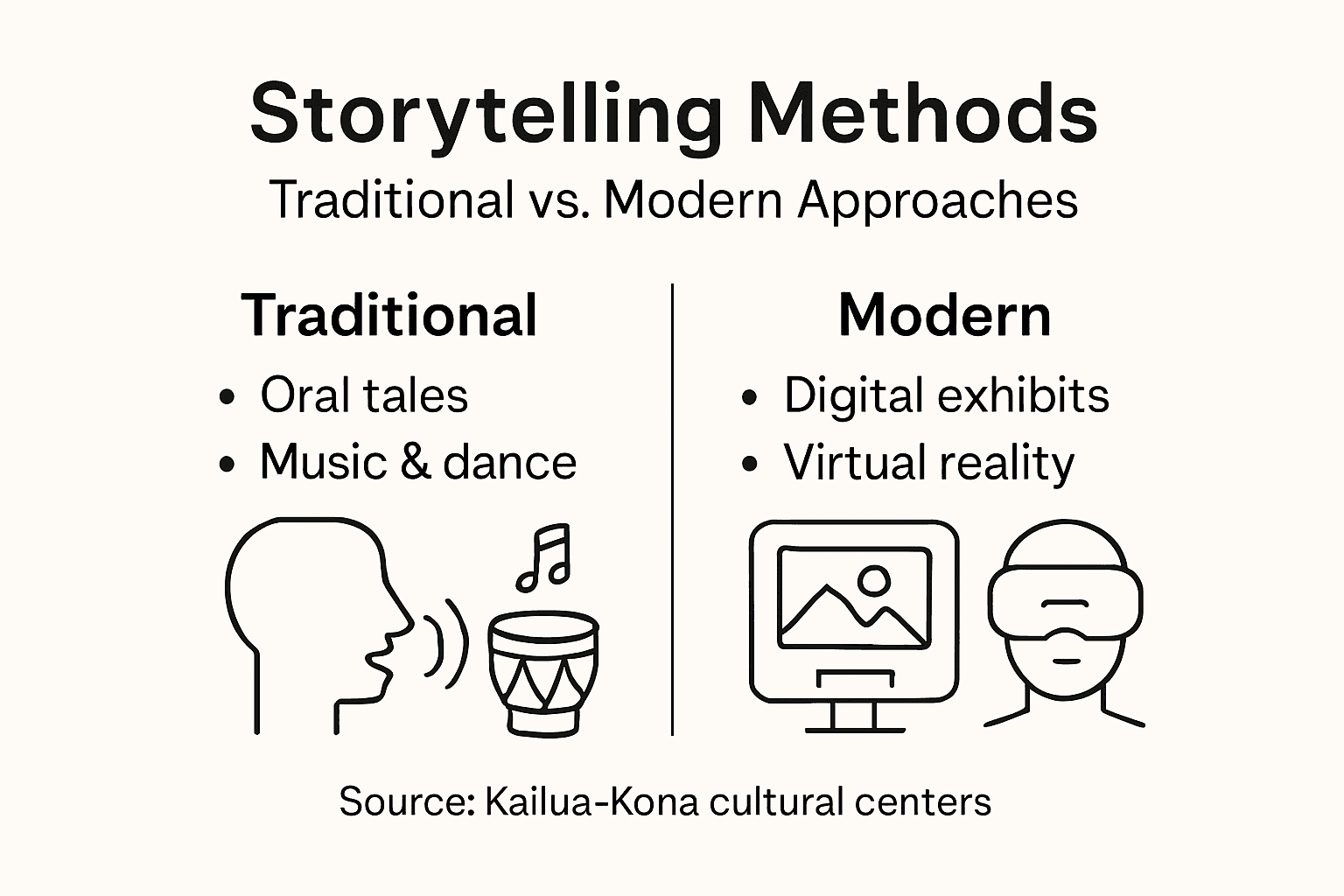
Here’s a comparison of traditional versus modern methods for cultural storytelling:
| Aspect | Traditional Storytelling | Modern Digital Storytelling |
|---|---|---|
| Audience Engagement | Passive listening and observation | Active participation and interaction |
| Accessibility | Local, limited by physical space | Global, accessible via devices |
| Sensory Experience | Primarily auditory and visual | Multi-sensory (visual, tactile, etc) |
| Adaptability | Static, set narratives | Dynamic, personalized journeys |
Pro Tip: When exploring cultural attractions, engage actively with interactive elements to transform your visit from passive observation to a rich, personal learning experience.
The Role of Technology in Immersion
Technology has revolutionized cultural storytelling, transforming passive experiences into dynamic, interactive journeys that engage visitors on multiple sensory levels. Modern immersive technologies are not just tools, but powerful bridges connecting audiences with rich cultural narratives in ways never before possible.
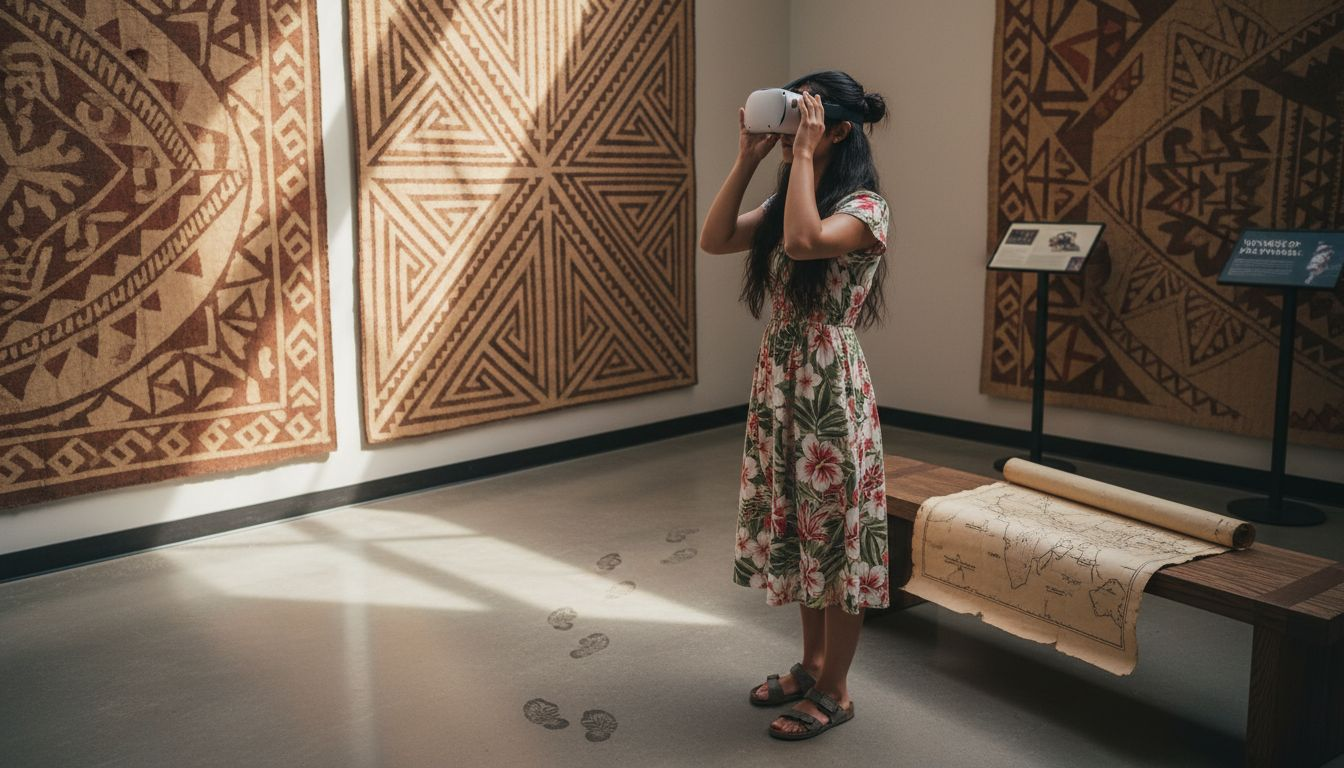
Immersive technologies in museums like virtual reality, augmented reality, and mixed reality are dramatically reshaping how cultural heritage is experienced and understood. These innovative approaches enable visitors to explore complex narratives through interactive, emotionally resonant experiences that transcend traditional exhibit limitations.
Key technological approaches for cultural immersion include:
- Virtual reality (VR) historical reconstructions
- Augmented reality (AR) storytelling layers
- Interactive touchscreen narratives
- Spatial audio environments
- Motion-triggered multimedia displays
- Personalized digital guide experiences
Virtual reality-based digital storytelling has proven particularly powerful in creating meaningful connections. Digital storytelling impact demonstrates that these technologies significantly enhance visitor presence, emotional engagement, and educational value. By transforming abstract cultural concepts into visceral, interactive experiences, technology enables deeper understanding and personal connection with historical and cultural narratives.
Below is a quick summary of immersive technology types and their impact at cultural attractions:
| Technology | Typical Use Case | Impact on Visitor Experience |
|---|---|---|
| Virtual Reality | Historical reconstructions | Deep emotional involvement |
| Augmented Reality | Adding interactive story layers | Real-time narrative enrichment |
| Spatial Audio | Environmental soundscapes | Heightened sense of place |
| Motion Displays | Responsive exhibits | Enhanced physical immersion |
Pro Tip: Always approach technological immersion with curiosity and openness, allowing the narrative to unfold naturally through the interactive experience.
Cultural Significance of Hawaiian Legends
Hawaiian legends represent far more than simple folklore; they are living, breathing narratives that form the foundational fabric of cultural identity and understanding. These profound stories connect generations, transmitting complex cultural knowledge, spiritual wisdom, and historical insights through intricate oral traditions that have survived centuries of social transformation.
Hawaiian myths and cultural preservation play a crucial role in maintaining linguistic heritage and societal values. These narratives serve as powerful vehicles for education, inspiring cultural revitalization and providing deep insights into the philosophical and spiritual worldviews of Native Hawaiian communities.
Key aspects of Hawaiian legendary significance include:
- Transmitting ancestral wisdom
- Explaining natural phenomena
- Preserving historical memories
- Teaching moral and ethical principles
- Connecting current generations to ancestral roots
- Reinforcing cultural identity
Oral storytelling traditions represent a dynamic, living mechanism of cultural transmission. Legends communicate complex philosophical concepts through metaphorical narratives that engage listeners emotionally and intellectually, creating profound connections between past and present. These stories are not static artifacts but vibrant, evolving expressions of Hawaiian cultural resilience and continuity.
Pro Tip: Listen to Hawaiian legends with an open heart, recognizing that each story carries multiple layers of meaning beyond its surface narrative.
What to Expect at Flight of Aloha
Flight of Aloha represents a revolutionary approach to cultural storytelling, transforming traditional visitor experiences into an immersive journey through Hawaii’s most breathtaking landscapes and profound narratives. This cutting-edge flying theater attraction goes beyond simple entertainment, offering a deeply meaningful exploration of Hawaiian culture, history, and natural beauty.
Unique flying theater experience provides visitors with a state-of-the-art adventure that combines advanced technology with authentic cultural storytelling. The attraction uses sophisticated sensory techniques to simulate aerial journeys across the Hawaiian islands, creating an engaging and educational experience for guests of all ages.
Key features of the Flight of Aloha experience include:
- 8K ultra-high-definition visual landscapes
- Motion-synchronized seating
- Environmental sensory effects (wind, mist, scents)
- Multilingual narrative options
- Culturally authentic storytelling
- Accessible design for various mobility levels
Immersive storytelling techniques transport visitors beyond traditional observation, allowing them to feel deeply connected to Hawaiian legends and natural wonders. Each ride offers a unique narrative journey, blending entertainment with cultural education and creating memorable, emotionally resonant experiences that celebrate the rich heritage of the Hawaiian Islands.
Pro Tip: Arrive at least 15 minutes early to fully appreciate the pre-show cultural context and maximize your immersive experience.
Mistakes to Avoid When Participating
Participating in cultural storytelling experiences requires more than passive observation – it demands genuine respect, openness, and mindful engagement. Understanding potential pitfalls can transform your experience from a superficial encounter to a meaningful cultural connection.
Common storytelling engagement mistakes reveal that visitors often unintentionally create barriers to authentic cultural understanding. These errors can range from oversimplifying complex narratives to approaching the experience with preconceived expectations that limit genuine learning and connection.
Key mistakes to avoid during cultural storytelling experiences include:
- Treating the experience as mere entertainment
- Remaining emotionally detached
- Interrupting or talking over cultural narratives
- Making assumptions about cultural practices
- Failing to listen actively and empathetically
- Comparing experiences through a narrow cultural lens
Cultural sensitivity in storytelling requires deep respect and intentional listening. Authentic cultural representation demands that participants approach narratives with humility, recognizing that each story carries profound meanings beyond surface-level interpretations. Understanding cultural nuances transforms passive observation into a transformative learning experience.
Pro Tip: Approach each cultural storytelling moment with curiosity, respect, and a willingness to be vulnerable and learn.
Experience Authentic Hawaiian Cultural Storytelling Like Never Before
The article highlights the need for immersive cultural storytelling experiences that deeply connect you to Hawaiian heritage through dynamic narratives and advanced technology. If you want to move beyond simple observation and truly feel the spirit of Hawaii alongside vivid legends like those of Naupaka and Lahaina, Flight of Aloha offers the perfect solution. Combining 8K ultra-high-definition visuals, motion effects, environmental scents, and wind simulation, this flying theater attraction in Kailua-Kona creates an authentic and unforgettable journey rooted in Hawaiian culture.
Discover how modern storytelling blends tradition and innovation with interactive sensory immersion that transforms every visitor’s experience into a personal and emotional voyage. Learn more about the Flight of Aloha experience and explore detailed ride options and VIP packages designed to fit families, tourists, and groups. For a fully immersive cultural adventure in Kailua-Kona, check out Flight of Aloha and secure your tickets today.
Elevate your visit to Hawaii by stepping into a living narrative rather than just watching one.
Immerse yourself now and create lasting memories rooted in aloha.

Ready to embark on this unique cultural journey that brings Hawaiian legends to life? Visit Flight of Aloha to book your immersive flying theater experience today and feel the magic of Hawaii like never before.
Frequently Asked Questions
What is cultural storytelling?
Cultural storytelling is a vital practice that uses narratives to convey identity, heritage, and social connections, serving as a mechanism for understanding individual and collective experiences.
How does modern technology enhance cultural storytelling experiences?
Modern technology, such as virtual reality and augmented reality, transforms cultural storytelling from passive experiences to dynamic, interactive journeys, allowing visitors to engage with narratives on multiple sensory levels.
What are some methods used in cultural storytelling attractions?
Cultural storytelling attractions incorporate various methods including interactive mobile applications, multimedia installations, immersive sensory environments, and community-driven narrative platforms to create engaging visitor experiences.
Why are Hawaiian legends important in cultural storytelling?
Hawaiian legends preserve ancestral wisdom, explain natural phenomena, teach moral principles, and maintain cultural identity, serving as crucial narratives that connect contemporary generations to their heritage.
Recommended
- 7 Top Hawaiian Storytelling Experiences You Must Try | Flight Of Aloha
- Why Choose Kailua-Kona Attractions: A Deep Dive | Flight Of Aloha
- Why Hawaiian Stories Matter For Travelers And Locals | Flight Of Aloha
- Complete Guide To The Appeal Of Kailua Kona | Flight Of Aloha
- Wedding Storytelling Photography Steps for Natural Memories