
Humpback Whale Songs: What They Are and Why Males Sing
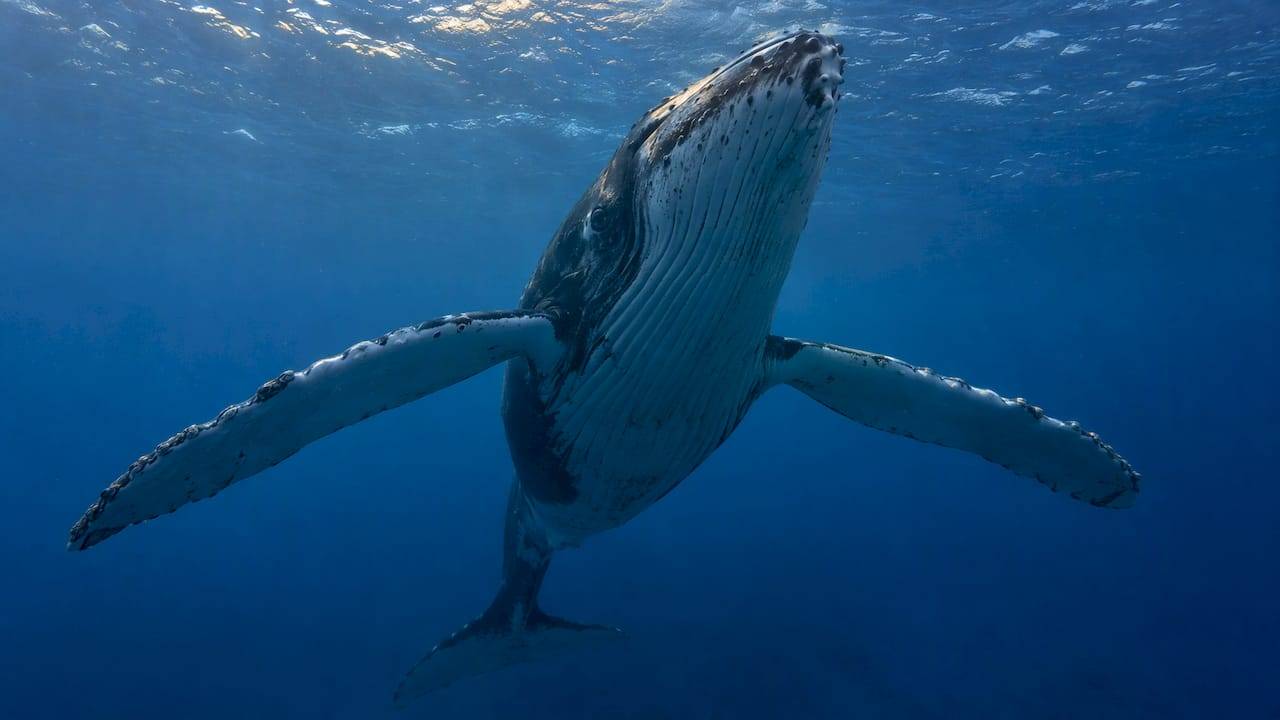
Humpback whale songs are long, repeating sequences of moans, cries and chirps sung by male humpbacks, and scientists are still working out exactly what they are for. The leading ideas: they help males sort out their relationships with one another and advertise to females during the breeding season. If you are visiting Hawaii and want to understand the sound behind the legend, this guide covers what the songs are, who sings, why, and how they travel across entire oceans. It also shows how to bring the story of the whales to life on a rainy or hazy day with a flight over the islands at Flight of Aloha, our Native Hawaiian-owned flying theater in Kailua-Kona and Whalers Village in Kaanapali, Maui.
TL;DR
- Only male humpbacks are believed to sing, and a song is a structured pattern: sounds form phrases, phrases form themes, and themes repeat in a fixed order.
- A song can last from several minutes to more than half an hour, and a singer may repeat it for hours.
- The purpose is not fully settled. Leading ideas include advertising to females, signaling status to other males, and organizing male relationships in the breeding season.
- Songs change over time and spread from population to population, in one documented case across thousands of kilometers of ocean.
- You can hear and feel Hawaii’s whale story at Flight of Aloha, a short, air-conditioned flying ride in Kona and Kaanapali.
What a humpback whale song actually is
Most animal calls are short. Humpback songs are not. Researchers who study them describe a hierarchy, a bit like a poem. NOAA’s sanctuary scientists explain that repeated phrases act like lines, and lines are grouped into themes, like stanzas, which occur in a specific sequence. Sing the themes in order, repeat them, and you have a song.
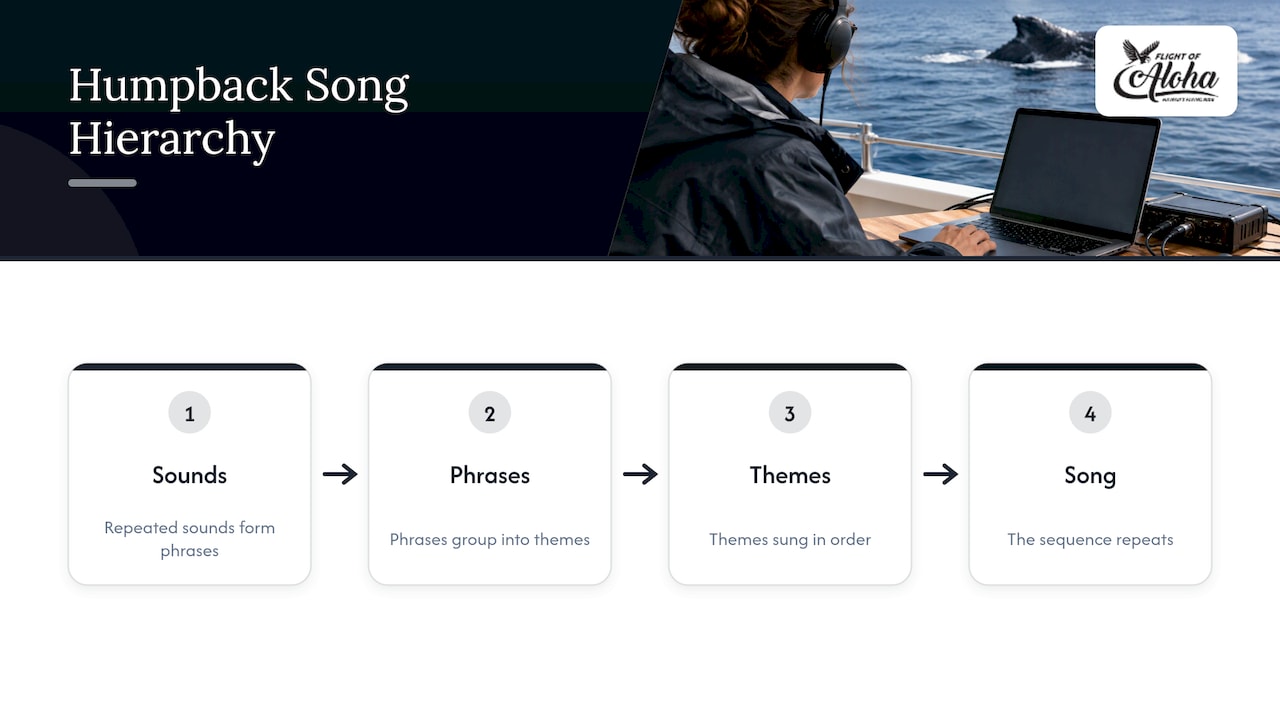
The pioneering 1971 paper by Roger Payne and Scott McVay, Songs of Humpback Whales in Science, is what established the word “song” for this behavior. They defined it as a series of sounds lasting roughly 7 to 30 minutes that is then repeated with remarkable precision. A singer could continue for hours without an obvious pause.
What it sounds like
If you have only heard a relaxation recording, the real thing is stranger and richer. A Smithsonian Magazine feature describes some phrases as the low moan of a cello and others as the chirp of a songbird. A review in Current Biology lists moans, snores, chirps and cries, all below 4 kHz, which is why the lowest notes feel as much as they sound.
How far does it carry? PBS Nature reports that songs can be heard more than 20 miles away. Males often sing while hanging motionless deep below the surface, with their long front flippers jutting out stiffly to the sides. So when you see a whale at the surface, the singer you are hearing may be somewhere else entirely, far below.
How long do they sing?
The numbers vary by source and study, and that is normal, because whales vary too. A single song cycle runs from about 6 to 35 minutes according to the Current Biology review, which also notes individuals singing for up to 22 hours while repeating the song. NOAA says adult males sing in sessions from five minutes to more than 24 hours. The National Park Service’s Kenai Fjords guide gives a more modest range of 20 minutes to as much as seven hours for a typical bout. The takeaway: a humpback singing is not a passing call, it is a long performance.
Do females sing too?
As far as anyone can tell, no. NOAA says only males are believed to sing. The Current Biology review adds that every singer identified so far has been male, and that singing is limited to certain whales: humpbacks, blue, fin and minke whales, and bowheads. Gray whales, right whales and toothed whales such as sperm and killer whales do not produce song in this sense.
That last point surprises many visitors. The clicks of a sperm whale and the whistles of a dolphin are very different things from a humpback’s song. When people talk about whales “singing,” they almost always mean male humpbacks.
One more detail: baleen whales have no vocal cords in the way we do. Australia’s environment department notes in its guide to whales, dolphins and sound that exactly how they make the sounds remains unclear.
Why do humpback whales sing?
This is the question behind most searches, and the honest answer is that several ideas are in play, and researchers keep refining them.
The “serenade” idea
The most familiar explanation is that males sing to attract females. There is real reasoning behind it. A 2018 paper by Eduardo Mercado III notes that the strongest evidence for this view is that whales sing mainly during the breeding season and that singers are exclusively male.
The “status” idea
The National Park Service says singing may be used to show dominance among males competing for a female, who is followed by interested males as an escort. PBS Nature reports that some researchers believe the songs are closer to a warning than a love song, since many whales that approach a singer are other males, and those meetings often end in a tussle. One biologist quoted there put it as the singer telling other males who is boss.
The “relationships” and “lek” ideas
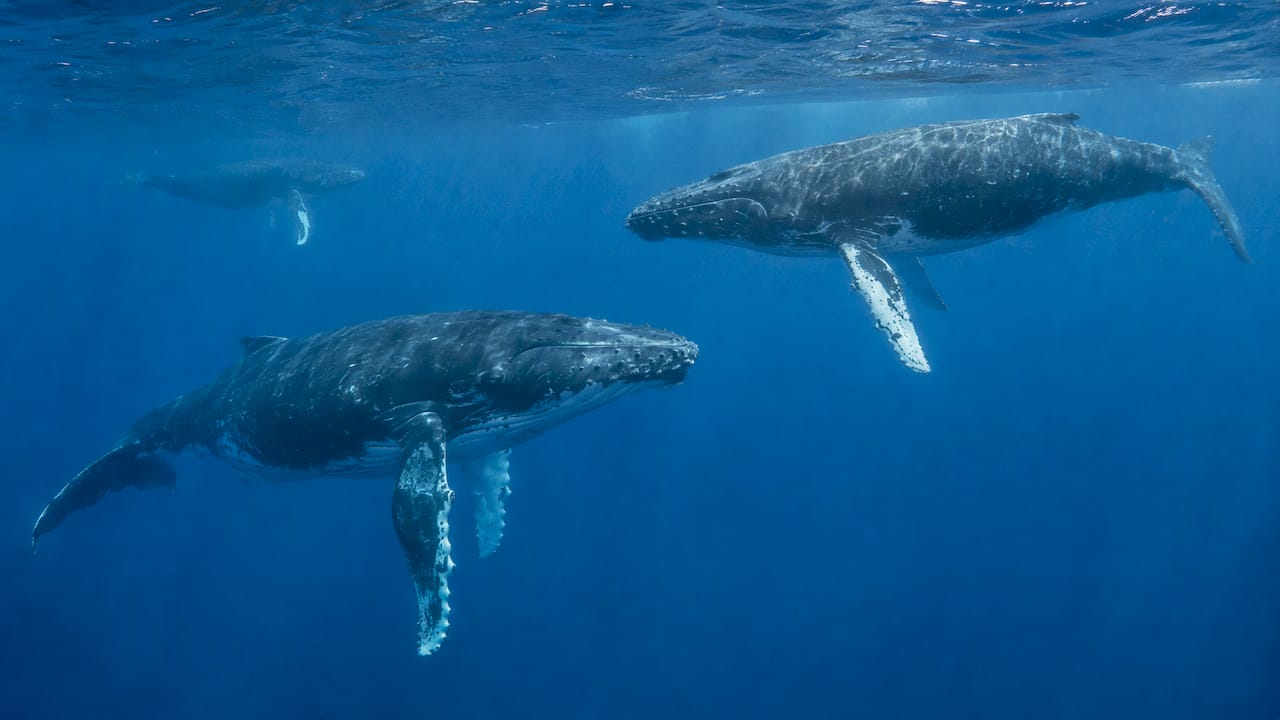
A 2017 synthesis in Biological Reviews by Louis Herman, on the multiple functions of male song, found that visits to singers by females are virtually absent in field observations and playback studies. The visitors are almost always other lone males, who may be seeking an alliance, trying to disrupt the song, affirming dominance, or checking whether the singer is escorting a female. Herman argues the pattern fits a lekking system, where males gather on the winter grounds and females visit for mating, with communal singing as a shared by-product that may also help prepare females to mate.
Whale Trust takes a related view: it says the attract-females and dominance explanations have not been substantiated, and proposes that song may index association between males and help organize their relationships during the breeding season.
So what does a whale song mean? Best current reading: it is a social signal in the breeding season, mostly about males dealing with males, with females very likely paying attention too. It is not a sentence in a whale language, and nobody has decoded it as one.
Songs that change, travel and catch on
Here is what makes humpback songs unusual among animals: they are not fixed. Mercado’s review describes them as unique among cetaceans in complexity, thanks to their hierarchical structure and changing features. Singers within a population also converge on similar songs, a form of cultural transmission, meaning whales learn from one another.
Smithsonian Magazine reports that humpbacks in different populations sing entirely different songs, and that each year a few whales in a breeding area add new elements that other males then adopt. Whales in the same area sing very similar “dialects,” per PBS Nature, with new songs emerging every few years.
Song revolutions across the Pacific
In the South Pacific, songs spread like a trend. A 2021 modeling study found that in northern populations songs show long-lasting traditions that evolve slowly, while in the South Pacific periodic “revolutions” happen when a song is adopted from a neighboring population and spreads rapidly, moving west to east. A 2022 follow-up study found that three song themes from French Polynesia matched 2018 song from Ecuador, extending the eastward spread another 8,000 km and linking populations 14,000 km apart.
Something similar happens between oceans. The Wildlife Conservation Society reported in 2019 that humpbacks in the South Atlantic and Indian Oceans sing similar song types, which suggests males from the two basins exchange song parts over time. As the Smithsonian piece notes, individual innovators do not stay on top for long, because the new phrase quickly becomes everyone’s.
Humpback whale behavior beyond the song
Song belongs to a bigger picture of humpback life: a yearly migration between cold feeding waters and warm winter breeding grounds. NOAA’s data show that singing on the feeding grounds is most common in the months when whales begin or end that migration. Proposed reasons include impressing females, intimidating males, practicing before the breeding season, or a side effect of changing hormones and seasonal cues.
A 2012 study that tagged ten humpbacks off the Western Antarctic Peninsula found background song on all ten records. Two whales sang intensely and continuously, some bouts lasting close to an hour, even during dives deeper than 100 meters and around feeding lunges. The authors read this as behavioral flexibility: whales balancing the need to feed with preparing for breeding.
There is also something reassuring in the 1971 paper: loud sounds in the ocean, such as dynamite blasts, did not seem to interrupt the singing. Whales are remarkable performers.
Hearing the story, not just the recording
A recording gives you the sound. It does not give you the scale: the depth, the open water, the slow rolling swell that the song travels through. Many visitors want that feeling but have a day that does not cooperate: rain on the Kona coast, vog in the air, a hot afternoon, or a cruise ship call with a tight window.
Boat tours and aerial tours are one way to see the ocean. Another is to experience it from a seat, with no motion sickness and no weather worries. Wildlife outings abroad, like a Racha Noi Island boat tour in Thailand where guests look for dolphins, show how much people love to meet marine life up close, and Hawaii’s version is a story the islands tell about their own waters.
If you are planning a wider trip, our guides on top Hawaii entertainment options and Hawaiian storytelling experiences help you sort the days. And since sound is half of any whale story, you may enjoy how music shapes the flying theater experience.
Fly over Hawaii at Flight of Aloha
Flight of Aloha is a Hawaiian immersive flying theater. Our rides combine 8K visuals, motion effects, scents and wind to simulate flying over Hawaii, and our films are rooted in Hawaiian culture and legend. One of them is Whale Song. Others include Naupaka, Lahaina and Europe.
We have two locations: Kailua-Kona on the Big Island, and Whalers Village in Kaanapali, Maui. The Kona location is within walking distance of Kailua Pier and the tender dock, which makes it a fit for a quick cruise shore excursion. Indoors and air-conditioned, it is a go-to for rainy days in Kona and Maui, and for escaping the heat and vog. It is also a friendly choice for all ages and abilities, and an easy way to get the aerial view that helicopter tours are known for, without the high cost.
If you are choosing a ticket, here is how the options line up (prices as published on our site):
| Option | Price | Good for |
|---|---|---|
| Naupaka, Lahaina or Europe single feature | $29.99 to $34.99 | A first flight or a short stop |
| Double Feature Flying Ride | $49.99 to $59.99 | Families who want two films |
| VIP Package | $69.99 to $79.99 | A special occasion |
| Annual Pass | $200 per year | Residents and repeat visitors |
Want the details for the Big Island? Start with our Kailua-Kona flying ride page. Cruise visitors may also like our 30-minute, cruise-friendly flight guide.

When you are ready, you can book online at Flight of Aloha and pick the film and the location that fit your day.
Our perspective
Whale song is one of the great shared stories of Hawaii. The humpbacks that winter around these islands are part of how people here understand the ocean, and part of why visitors fall in love with the place.
At Flight of Aloha, we are Native Hawaiian-owned, and we believe the best way to share that story is with respect and a little wonder. Our films are built around cultural storytelling, with local advisors and storytellers behind the legends we tell, so that a flight over the islands feels like a visit to a place with a past, not just a view.
We also believe it should be easy for everyone. Our rides are indoors, comfortable and designed to be accessible for all ages and abilities, so grandparents, toddlers and cruise-day travelers can all share the same seat row. If you want the thrill of a flight over Hawaii without the high cost or the motion sickness, that is what we offer.
Come fly with us in Kailua-Kona or at Whalers Village in Kaanapali, and take a little aloha home.
Ola
FAQ
Do humpback whales sing songs?
Yes. Male humpbacks produce long, structured songs made of phrases arranged into themes. NOAA compares the structure to a poem, and says males repeat the same song in sessions that can last from five minutes to over 24 hours.
Why do whales sing?
Nobody has a single proven answer. Leading ideas are that males sing to advertise to females, to signal status to other males, or to organize relationships among males in the breeding season. Field studies show most visitors to a singer are other males.
What does whale song mean?
It is best understood as a social signal, not a language. Researchers know the songs have a strict hierarchical structure and that whales in a population learn and copy changes from one another, but no one has translated a song into words.
Is humpback whale behavior only about migration and mating?
Migration and breeding frame the year, but there is more. Tagging work in Antarctic waters found humpbacks singing while feeding and diving deep, which shows whales juggling feeding and breeding needs.
Sources
- Whale song, Current Biology (2009)
- Unraveling Mysteries of Humpback Whale Song, NOAA (2022)
- Songs of Humpback Whales, Science (1971)
- Songs from the Deep, Smithsonian Magazine
- Humpback Whales: Song of the Sea, PBS Nature
- Humpback Whale, National Park Service
- Whales, dolphins and sound, DCCEEW
- The Sonar Model for Humpback Whale Song Revised (2018)
- Why Humpback Whales Sing, Whale Trust
- The multiple functions of male song within the humpback whale, Biological Reviews (2017)
- Global cultural evolutionary model of humpback whale song (2021)
- Humpback whale song revolutions continue to spread (2022)
- Humpback Whale Song and Foraging Behavior on an Antarctic Feeding Ground (2012)
- Giant Singers From Neighboring Oceans Share Song Parts, WCS (2019)
- Racha Noi Island Tour
Book online to secure your seat.