
Interactive Tourism: How It Elevates Visitor Engagement

Over 65 percent of American travelers now seek experiences that go beyond simple sightseeing and passive tours. This shift signals how the meaning of travel is changing, with visitors wanting to become more involved and connected in every destination. Interactive tourism meets this desire by turning trips into hands-on adventures, offering opportunities for cultural immersion, multisensory engagement, and real personal growth at every stop.
Table of Contents
- Definition And Core Concept
- Types Of Interactive Tourism
- How Interactive Tourism Works
- Benefits And Visitor Impact
- Risks And Practical Considerations
Key Takeaways
| Point | Details |
|---|---|
| Interactive Tourism Redefines Travel | It transforms travelers from passive observers into active participants, creating deeper connections with destinations. |
| Technology Enhances Experiences | Interactive tourism leverages multimedia and sensory technologies to create personalized, immersive experiences. |
| Types of Engagement | Different methods such as cultural immersion and narrative-driven experiences allow diverse participation and deeper understanding. |
| Be Mindful of Risks | Visitors should consider privacy, accessibility, and cultural representation when engaging in interactive tourism activities. |
Definition And Core Concept
Interactive Tourism represents a revolutionary approach to travel experiences that transform passive observation into active participation. Unlike traditional tourism models, this innovative concept invites travelers to become integral participants in their journey, engaging directly with cultural, environmental, and immersive storytelling elements.
At its core, interactive tourism shifts the traveler’s role from a mere spectator to an engaged contributor. This paradigm is exemplified by attractions like Flight of Aloha’s immersive flying theater, where visitors don’t just watch Hawaiian landscapes but experience them through multisensory technologies. Research exploring international student mobility underscores how modern tourism increasingly prioritizes dynamic, personal connections over traditional passive experiences.
Key characteristics of interactive tourism include:
- Sensory Engagement: Utilizing multiple perception channels like visual, auditory, and olfactory stimulation
- Narrative Participation: Allowing visitors to influence or become part of the storytelling experience
- Cultural Immersion: Providing authentic, direct interactions with local traditions and environments
- Technology Integration: Leveraging advanced multimedia and motion technologies to create realistic experiences
Pro Tip for Interactive Travelers: Always approach interactive experiences with an open mind and willingness to fully engage. The most memorable moments happen when you step outside your comfort zone and embrace the opportunity to truly connect with a destination’s unique spirit.
By reimagining tourism as a collaborative, multisensory journey, interactive experiences like Flight of Aloha are transforming how people understand and appreciate travel destinations.
Types Of Interactive Tourism
Interactive tourism encompasses a diverse range of immersive experiences that transform traditional travel into dynamic, participatory journeys. Digital twin technologies have revolutionized tourism approaches, creating innovative ways for travelers to engage with destinations through cutting-edge interactive formats.
The primary types of interactive tourism include:
- Cultural Immersion Tourism: Experiences that allow travelers to deeply engage with local traditions, practices, and community life
- Technology-Enhanced Tourism: Attractions using advanced multimedia, augmented reality, and motion technologies to create realistic, sensory-rich experiences
- Narrative-Driven Tourism: Interactive storytelling experiences where visitors become active participants in historical or cultural narratives
- Digital Interaction Tourism: AI-driven systems that personalize and adapt tourist experiences through intelligent technological platforms
Technology plays a crucial role in modern interactive tourism, with attractions like Flight of Aloha demonstrating how multisensory experiences can transport visitors beyond traditional sightseeing. These innovative approaches blend cutting-edge technology with authentic cultural storytelling, creating memorable and deeply engaging travel experiences.
Additionally, interactive tourism types can be categorized by their primary engagement method:
- Physical Interaction: Hands-on experiences requiring direct traveler participation
- Digital Interaction: Technology-mediated experiences using virtual or augmented reality
- Narrative Interaction: Experiences where travelers influence or become part of the story
- Sensory Interaction: Multisensory experiences engaging multiple perception channels
Pro Tip for Interactive Travelers: Research destination-specific interactive experiences before your trip. Many attractions offer unique, immersive options that go far beyond traditional tours, providing deeper cultural understanding and more memorable travel moments.
By embracing these diverse interactive tourism types, travelers can transform their journeys from passive observation to active, meaningful exploration.
Here’s a summary of how different interactive tourism types engage travelers:
| Tourism Type | Main Engagement Method | Typical Technologies Used | Example Experience |
|---|---|---|---|
| Cultural Immersion Tourism | Hands-on participation | Local guides, workshops | Cooking with a local family |
| Technology-Enhanced Tourism | Sensory tech integration | Virtual reality, motion platforms | Immersive flying theater ride |
| Narrative-Driven Tourism | Story-based interaction | Augmented reality, live actors | Historic reenactment with AR |
| Digital Interaction Tourism | AI-powered customization | AI chatbots, personalized apps | AI-tailored museum tour |
How Interactive Tourism Works
Interactive tourism operates through a sophisticated blend of technology, storytelling, and participatory design that transforms traditional travel experiences. Gamified participatory sensing technologies enable travelers to become active contributors rather than passive observers, creating a more engaging and personalized journey.
The core mechanisms of interactive tourism involve several key technological and experiential components:
- Sensory Engagement: Utilizing multisensory technologies that stimulate visual, auditory, and olfactory perception
- Real-Time Personalization: Semantic web technologies that adapt experiences based on individual preferences
- Narrative Interactivity: Allowing visitors to influence or participate in storytelling
- Technology Integration: Combining advanced multimedia, augmented reality, and motion-based systems
Attractions like Flight of Aloha exemplify these principles by creating immersive experiences where technology and cultural storytelling converge. The interactive process typically follows a dynamic workflow:
- Visitor Input: Travelers provide preferences and interaction signals
- Technology Processing: Systems analyze and personalize the experience
- Multisensory Delivery: Customized content is presented through advanced technologies
- Real-Time Adaptation: Continuous adjustment based on visitor engagement
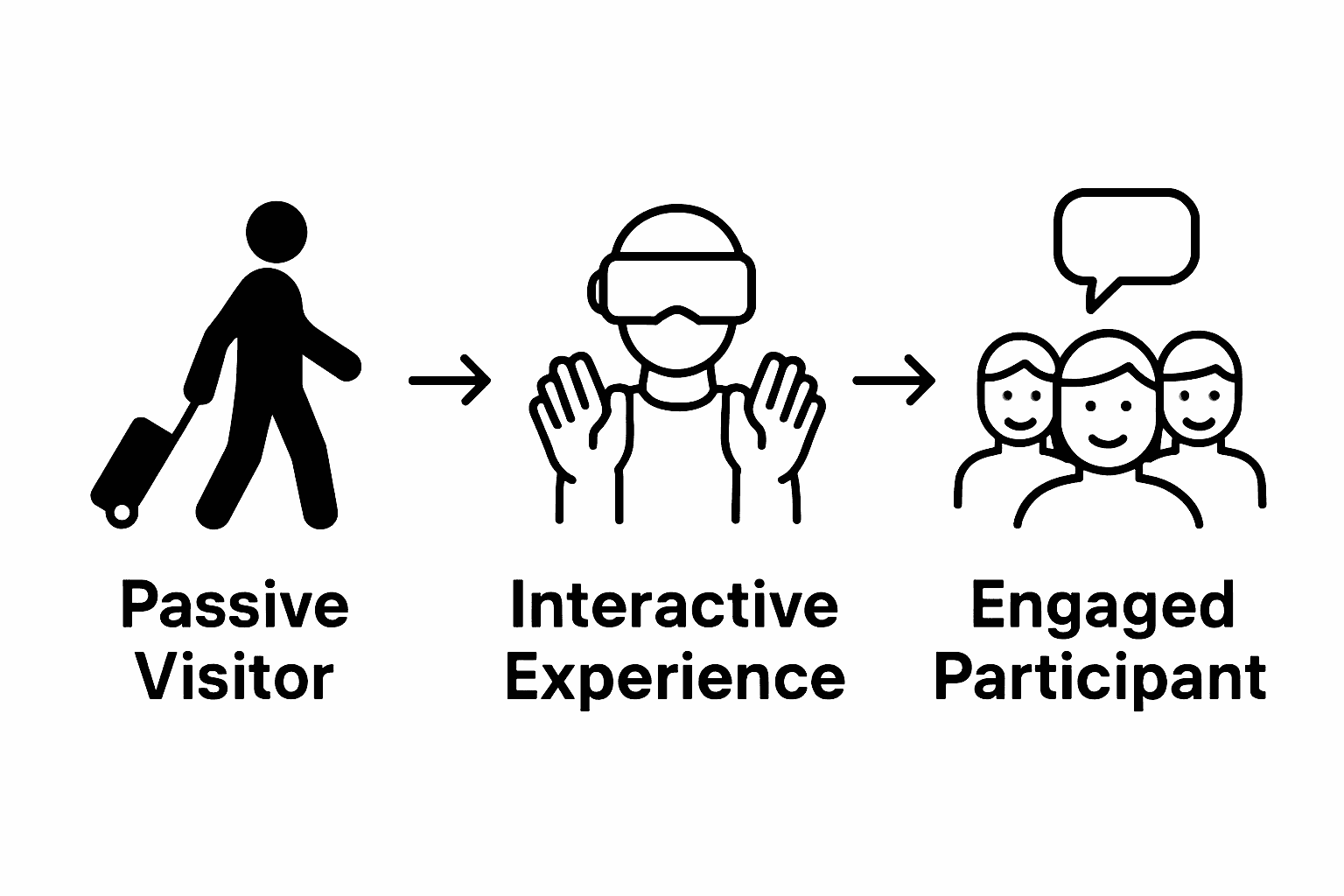
Interactive tourism technologies create a feedback loop that transforms traditional travel from a passive viewing experience to an active, participatory journey. This approach allows travelers to become co-creators of their experience, moving beyond simple observation to meaningful interaction.
Pro Tip for Tech-Savvy Travelers: Research interactive attractions in advance and be prepared to fully engage with the experience. The more open and participatory you are, the more personalized and memorable your journey will become.
By embracing these interactive mechanisms, modern tourism breaks down barriers between travelers, destinations, and cultural narratives, creating more profound and meaningful travel experiences.
Benefits And Visitor Impact
Interactive tourism fundamentally transforms the travel experience by creating deeper, more meaningful connections between visitors and destinations. Digital twin technologies enhance visitor satisfaction by offering personalized, immersive experiences that go far beyond traditional sightseeing.
The primary benefits for visitors include:
- Enhanced Engagement: Transforming travelers from passive observers to active participants
- Cultural Understanding: Providing authentic, nuanced insights into local traditions and narratives
- Personalized Experience: Tailoring journeys to individual preferences and interests
- Emotional Connection: Creating memorable, emotionally resonant travel moments
These interactive approaches deliver significant psychological and educational benefits. By enabling visitors to actively participate in storytelling, explore cultural contexts, and experience destinations through multisensory technologies, interactive tourism creates a more profound and transformative travel experience.
The visitor impact can be categorized across several key dimensions:
- Cognitive Impact: Deeper learning and understanding of destinations
- Emotional Impact: More meaningful and memorable travel experiences
- Cultural Impact: Enhanced cross-cultural understanding and empathy
- Personal Growth: Opportunities for self-reflection and personal transformation
Attractions like Flight of Aloha demonstrate how interactive technologies can bridge cultural understanding, allowing visitors to experience Hawaiian stories and landscapes in unprecedented ways. The immersive nature of these experiences goes beyond traditional tourism, creating lasting connections between travelers and destinations.

Pro Tip for Meaningful Travelers: Approach interactive experiences with curiosity and openness. The more you engage and participate, the more profound and transformative your travel experience will become.
Ultimately, interactive tourism represents a paradigm shift in how we understand travel – moving from consumption of experiences to co-creation of meaningful cultural connections.
Risks And Practical Considerations
Interactive tourism, while transformative, presents several critical challenges that travelers and operators must carefully navigate. Artificial Intelligence systems in tourism require robust safeguards to protect visitor experiences and maintain technological reliability.
Key risks and practical considerations include:
- Data Privacy: Protecting personal information in technology-driven experiences
- Technical Reliability: Ensuring consistent performance of interactive systems
- Accessibility: Making interactive experiences inclusive for diverse visitor capabilities
- Cultural Sensitivity: Maintaining authentic representation of local traditions
Semantic web technology integration presents complex infrastructural challenges that demand careful technological planning and implementation. These challenges range from technical compatibility to maintaining the authenticity of cultural narratives within interactive frameworks.
Potential risks can be categorized into several critical domains:
- Technological Risks: System failures, technical glitches
- Privacy Risks: Potential unauthorized data collection
- Experience Quality Risks: Inconsistent or underwhelming interactive elements
- Cultural Representation Risks: Potential misinterpretation of local traditions
Attractions like Flight of Aloha mitigate these risks through careful design, rigorous testing, and a commitment to cultural authenticity. By prioritizing visitor experience and technological reliability, interactive tourism can minimize potential drawbacks while maximizing engagement.
Pro Tip for Savvy Travelers: Always review an attraction’s technology and privacy policies before participating. Ask questions about data usage, accessibility options, and the authenticity of the interactive experience.
Successful interactive tourism requires a delicate balance between technological innovation and genuine cultural respect, ensuring that visitor experiences remain meaningful, respectful, and transformative.
To help travelers prepare, here are typical risks in interactive tourism and practical strategies to address them:
| Risk Category | Common Issues | Mitigation Strategy |
|---|---|---|
| Technological | System failures, device glitches | Regular maintenance and tech support |
| Privacy | Data collection without consent | Transparent privacy policies, opt-in features |
| Accessibility | Exclusion of visitors with disabilities | Universal design and adaptive technology |
| Cultural Representation | Misinterpretation of local traditions | Local expert involvement and review |
Experience Interactive Tourism Like Never Before at Flight of Aloha
The article highlights the challenges of engaging travelers beyond passive sightseeing by offering immersive, multisensory experiences that foster genuine cultural connections. If you are looking to transform your visit into an active, participatory journey full of vivid storytelling and sensory engagement Flight of Aloha offers the perfect solution. Our Hawaiian immersive flying theater combines 8K visuals, motion effects, scents, and wind to create a breathtaking simulation of flying over Hawaii rooted in authentic cultural narratives.
Whether you want to deepen your cultural understanding or simply crave an unforgettable adventure Flight of Aloha captures the essence of interactive tourism, elevating visitor engagement to new heights. Discover more about our unique attraction and see how we blend technology and storytelling to make your experience truly memorable.

Ready to move beyond traditional tourism and become part of Hawaii’s vibrant story Visit Flight of Aloha today to book your immersive journey. Explore exclusive ride films like “Naupaka” and “Lahaina” and unlock special packages including VIP experiences. Don’t miss your chance to create emotional and lasting connections through a truly interactive travel experience. Secure your tickets now and fly over Hawaii with us.
Frequently Asked Questions
What is interactive tourism?
Interactive tourism is an innovative travel approach that emphasizes active participation rather than passive observation. It transforms visitors into contributors who engage with cultural and sensory elements within their travel experiences.
How does interactive tourism enhance visitor engagement?
Interactive tourism enhances visitor engagement by utilizing sensory technologies, narrative participation, cultural immersion, and real-time personalization. This approach fosters deeper connections, creating memorable and meaningful travel experiences.
What are the main types of interactive tourism?
The main types of interactive tourism include cultural immersion tourism, technology-enhanced tourism, narrative-driven tourism, and digital interaction tourism. Each type emphasizes different engagement methods, such as hands-on participation or technology-mediated experiences.
What are the potential risks of interactive tourism?
Potential risks of interactive tourism include data privacy concerns, technical reliability issues, accessibility challenges, and the need for cultural sensitivity. It’s crucial for both operators and travelers to address these risks to ensure meaningful and respectful experiences.