
Book Two Trips First: Kailua-Kona Travel Guide With Dry Day Backups

Kailua-Kona delivers sunny beach days, world-class snorkeling, and Kona coffee country right off the same stretch of highway, which makes it the easiest home base on Hawaii Island. Book the manta ray night snorkel and a Kealakekua Bay snorkel trip first, since both fill up fastest, then add a coffee farm tour for the days you want a slower pace. Base yourself in town, rent a car the moment you land, and pack reef-safe sunscreen before you touch the water.
TL;DR:
- Manta ray night snorkels and Kealakekua Bay trips should be booked early on different days, with better weather preferred for the first activity.
- The best months to visit are April through June and September through mid-November to avoid crowds and unpredictable weather.
- Beaches like Kahaluʻu and Kamakahonu are ideal for beginners and families, but check conditions and avoid exposed spots during winter swells.
- Renting a car is essential for exploring Kona, with early parking and walking to attractions being the most convenient.
- Indoor activities like Flight of Aloha offer a cultural and scenic experience suitable for rainy days or vog-heavy weather.
Weather and the Best Time to Visit Kailua-Kona
Kona sits on the leeward side of Hawaii Island, which means it dodges the trade-wind rain that soaks Hilo. The district averages roughly 27 inches of rain a year, with temperatures holding steady in a comfortable, warm range almost every month. Most of that rain falls fast and late in the day, so mornings are your safest bet for beaches, snorkeling, and boat trips.
The shoulder months, April through June and September through mid-November, bring the fewest crowds and the most predictable skies. Summer and the winter holidays pack the town and push hotel rates up. A few things to keep on your radar no matter when you go:
- The sun here is stronger than it feels, especially on the water, where glare doubles the exposure.
- Vog (volcanic haze) can roll in and dull visibility on the coast; the AirNow air quality forecast is worth a quick check if anyone in your group has asthma or lung sensitivity.
- Afternoon showers are usually brief. Plan outdoor activities for morning and treat afternoons as flexible.
Top Things to Do in and Around Kailua-Kona
Kona rewards visitors who plan around the water first and fill in the rest around it. Here’s how to sequence the essentials:
- Manta ray night snorkel. Boats gather off the coast near the Sheraton after dark, where lights attract plankton and the manta rays follow. Book a licensed tour operator directly through their website a few days ahead. It runs two to three hours and suits confident swimmers of any age, though non-swimmers can often ride along with a flotation noodle.
- Kealakekua Bay snorkeling. This marine sanctuary has some of the clearest water on the island and a real dose of history. Most visitors reach it by boat tour, since kayaking in requires a permit and a long paddle. Plan a half day.
- Kona coffee farm tour. Several working farms along the Mamalahoa Highway offer free walking tours and tastings, including the Kona Coffee Living History Farm, which recreates a working homestead from the early 1900s. Give it 90 minutes to two hours.
- Evening activities. Once the sun drops, Kona’s live music scene and cultural shows pick up the slack, a good option covered in more depth in this guide to authentic Hawaiian music around town.
Pro Tip: Book the manta ray tour and the Kealakekua Bay trip for different days, and put whichever one has better weather on your first morning. If the coast turns cloudy, coffee farms further inland often stay dry.
Best Beaches Near Kailua-Kona
Not every beach here works for every traveler, and knowing which is which saves you a wasted afternoon.
- Kahaluʻu Beach Park sits a short drive south of town and is the easiest spot for beginner snorkelers, thanks to a shallow, partly reef-protected bay full of green sea turtles.
- King Kamehameha (Kamakahonu) Beach sits right downtown next to the pier, calm enough for young kids and an easy walk from most hotels.
- Kua Bay (Manini’owali Beach) north of town has some of the whitest sand on this coast, but parking now runs on a cashless, fee-based entry system for non-residents, and the small lot fills early.
- Surf and currents pick up at exposed spots during winter swells, so check conditions before swimming anywhere outside the sheltered bays.
Pack reef shoes, a refillable water bottle, and a rash guard for sun coverage. None of these beaches have much natural shade, and the lava rock underfoot gets hot fast.
Where to Eat in Kailua-Kona and the Best Farmers Markets
Aliʻi Drive is where Kona does most of its eating, and it’s walkable enough that you can park once and graze your way down the strip. Food trucks and casual counters dot the road, serving loco moco, poke bowls, and fresh-caught fish tacos alongside sit-down spots with ocean views for those who want a slower dinner.
For produce and local crafts, two markets anchor the week:
- Keauhou Farmers Market runs Saturday mornings with local fruit, macadamia nuts, and prepared foods from island growers.
- Kona Village market events rotate through the week with a mix of produce stands and artisan vendors.
- Buy fruit and coffee beans for eating and drinking, but save souvenir shopping for the artisan shops in town, since market crafts are often priced for tourists rather than locals.
Where to Stay: Kailua-Kona Town vs. Kohala vs. South Kona
Your choice of neighborhood shapes your whole trip more than almost any other decision.
- Kailua-Kona town suits travelers who want to walk to dinner, the pier, and shops without driving every night. Expect condos and mid-range hotels, generally $150 to $300 a night.
- Kohala Coast (the “Gold Coast” north of the airport) is where the resort properties live, with manicured grounds and private beaches, usually $350 and up.
- South Kona fits travelers chasing coffee farms, quiet ocean views, and a slower pace, with vacation rentals typically in the $150 to $250 range.
Reserve at least two to three months ahead for peak summer and winter weeks, especially around cruise ship calls, when in-town rooms disappear fast.
Getting Around Kailua-Kona and Where to Park
A rental car is close to essential here, since the town, beaches, and coffee farms sprawl along miles of coastline with no rail and limited transit. Reserve at Kona International Airport (KOA) early, because rates climb fast as your travel date approaches.
The Hele-On Bus runs commuter routes and can work for a budget trip between town and a few outlying stops, but its schedule is built for residents, not tourists hopping between beaches on a tight itinerary.
- Park once along Aliʻi Drive and walk the strip rather than re-parking for every stop.
- Public lots and street spots fill by mid-morning on weekends, so arrive early or plan a slightly longer walk.
- Watch posted signs closely; some lots are time-limited or resident-only.
Day Trips From Kailua-Kona Worth the Drive
Kona’s location puts two of Hawaii Island’s biggest draws within striking distance for a full day out.
- Hawaiʻi Volcanoes National Park sits roughly two hours away by car, making it a full-day commitment. The park’s official NPS page is worth checking before you go, since trail and viewing access shifts with volcanic activity.
- Puʻuhonua o Hōnaunau and Kealakekua Bay sit closer, about a 30 to 45-minute drive south, and pair well as a single half-day trip. The Puʻuhonua o Hōnaunau National Historical Park preserves a sacred refuge site with tide pools and easy walking trails.
- Kohala Coast beaches make sense as a day trip if you’re based in town but want a resort-style beach afternoon without changing hotels.
Rainy-Day and Air-Conditioned Attractions in Kailua-Kona
Kona’s weather is generous, but every trip eventually hits a cloudy afternoon or a vog-heavy day when the coast looks gray instead of blue. That’s exactly when Flight of Aloha, a Native Hawaiian-owned immersive flying theater, earns its spot on this list. Shows blend 8K visuals, motion effects, wind, and scent to simulate flying over Hawaii, from Naupaka’s forest legends to Whale Song’s open-ocean footage, all inside a fully air-conditioned theater walking distance from Kailua Pier and the tender dock.
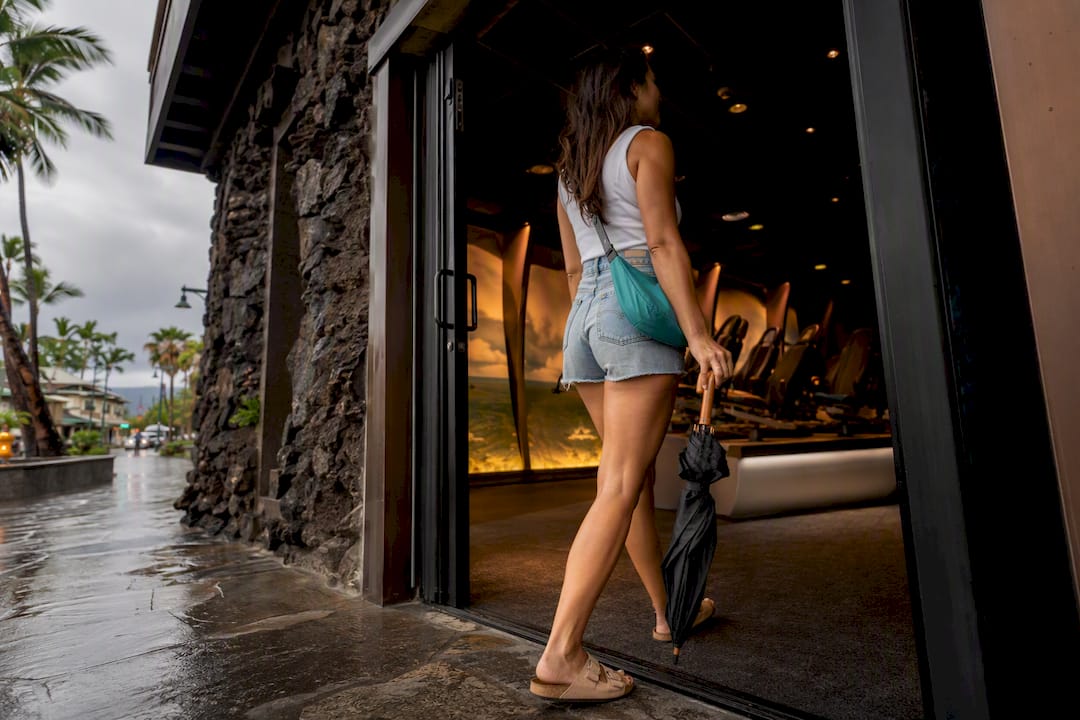
For cruise passengers, that location matters as much as the show itself: a show fits neatly inside a shore excursion window without a shuttle or a long drive. It’s also the smart alternative to a helicopter tour, delivering the aerial sensation of flying over the islands without the roughly $400 price tag or the motion sickness a real helicopter ride can trigger.
Other sheltered options for a rainy day include:
- The Kona Historical Society’s indoor exhibits
- A local brewery tour
- Glass-bottom boat rides that keep you dry while still viewing the reef
Practical Tips and Safety in Kailua-Kona
Reef-safe mineral sunscreen, the kind built on zinc oxide or titanium dioxide, protects both your skin and the coral you’re swimming over. Bring it from home or buy it at any Kona surf shop, since chemical sunscreens are increasingly discouraged near reef systems.
Drink more water than you think you need. The dry heat here hides how much you’re sweating, and dehydration sneaks up fast on hiking days.
Pro Tip: Check surf and tide reports the morning of any beach day, not the night before. Conditions on this coast can shift within hours.
Ask before photographing people you don’t know, and treat sacred sites, or wahi pana, with the same quiet respect you’d want shown at a place that matters to your own family.
Maps, Directions, and Quick Logistics
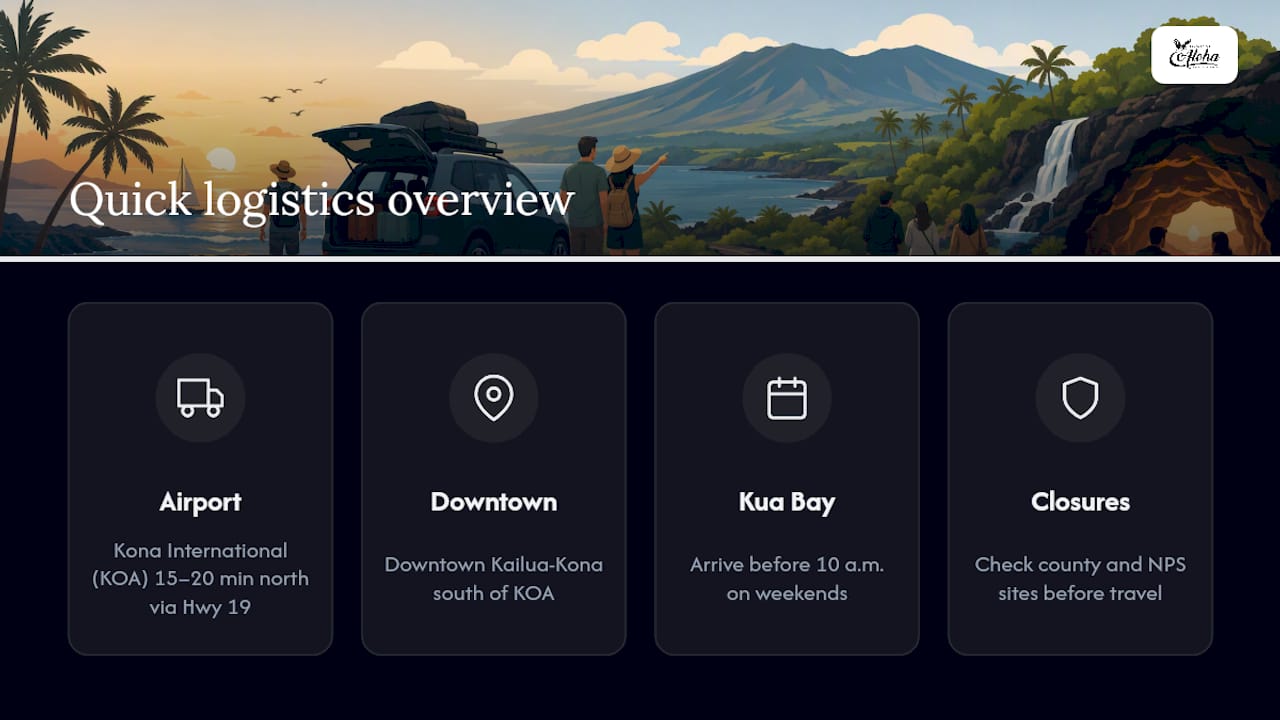
Kona International Airport (KOA) sits about 15 to 20 minutes north of downtown via Highway 19. At Kua Bay, arrive before 10 a.m. on weekends to beat the cashless parking lot filling up. Check county and NPS sites directly for current closures before you drive out to any park.
Local Festivals and Events Calendar
Kona’s event calendar runs on the same easygoing rhythm as the town itself, but a few dates are worth building a trip around. The Kona Coffee Cultural Festival takes over the district every November, stretching across roughly ten days of parades, farm tours, cupping competitions, and live music that celebrate the harvest season. If coffee is part of why you’re coming, timing your trip around this festival turns a farm tour into a full cultural immersion.

Earlier in the year, the Ironman World Championship brings a different kind of energy to Aliʻi Drive, with the swim start right off Kailua Pier and thousands of spectators lining the route. Hotel rooms vanish fast around this date, so either build your trip around the spectacle or plan to avoid it entirely if you want a quieter visit.
Smaller happenings pop up more often than most guides mention: canoe races through the summer, hula performances tied to local school and community events, and holiday craft fairs at the farmers markets in November and December. None of these require advance tickets, but checking the county’s events listings a few weeks before your trip helps you catch whatever’s on while you’re there.
Shopping Options Beyond Farmers Markets
Aliʻi Drive and the side streets around it hold a solid stretch of artisan shops worth a slower browse than the market stalls allow. Local jewelers work with Hawaiian sea glass, koa wood, and black coral into pieces you won’t find mass-produced anywhere else. A handful of galleries feature working Hawaii Island painters and photographers, and several carry pieces small enough to actually fit in a suitcase.
For something more specific to the region, look for shops selling Kona coffee direct from the farm rather than the airport gift shop markup, along with locally made macadamia nut products and hot sauces that make better souvenirs than another t-shirt. A few stores specialize in traditional Hawaiian crafts, including lauhala weaving and quilting, where the pieces carry real cultural weight rather than tourist-trap gloss.
Downtown’s shops cluster close enough together that an evening stroll after dinner covers most of what’s worth seeing, no car required once you’ve parked for the night.
A Local’s Take on Building Your Kona Itinerary
If you’ve only got three days, spend one on the water (Kealakekua Bay or a manta ray night snorkel), one inland at a coffee farm with an afternoon buffer for weather, and one flexible day held open for whatever the sky decides to do. Five days lets you add a Volcanoes National Park run and a slower beach day at Kua Bay or Kahaluʻu without feeling rushed.
The travelers who enjoy Kona most aren’t the ones who cram in every activity on this list. They’re the ones who leave room for a slow coffee, a chat with a shop owner, and a little humility toward a place that’s been sacred to Hawaiian families for centuries. Spend your money at the family-run spots when you can. It matters more here than most places.
— Ola
Why Flight of Aloha Belongs on Your Kona Itinerary
Kona gives you plenty of ways to see the island from above, but a helicopter tour runs close to $400 and leaves more than a few passengers queasy over open water. Flight of Aloha is the alternative for travelers in Kailua-Kona who want that same soaring, over-the-island feeling without the price tag or the motion sickness, delivered inside an air-conditioned theater a short walk from Kailua Pier and the tender dock.

That location makes it one of the easiest add-ons for cruise passengers working a tight shore window, and one of the best fallback plans for anyone facing a rainy afternoon or a vog-heavy day on the coast. As a Native Hawaiian-owned attraction, every show, from Naupaka to Whale Song, is built around real cultural storytelling rather than a generic ride film. The same experience runs at Whalers Village in Kaanapali, Maui, if your trip spans both islands.
Shows run short enough to fit before your next excursion, and seats for peak afternoon slots go fast during cruise season. Book online to secure your seat.
Sources
- Rainfall atlas — University of Hawaiʻi
- Puʻuhonua o Hōnaunau National Historical Park — NPS
- Hawaiʻi Volcanoes National Park — NPS
- Kona Coffee Living History Farm — Kona Historical Society