
The Role of Interactivity in Family Attractions 🌺

Interactivity in family attractions is defined as the shift from passive observation to active, hands-on participation that produces measurable gains in learning, emotional connection, and shared memory. The role of interactivity in family attractions goes far beyond keeping kids busy. It shapes how families learn together, how long they stay, and how vividly they remember the experience. Whether you’re exploring interactive exhibits for families at a children’s museum, stepping into an immersive flying theater, or playing a gamified history trail, the design of that participation determines everything. Attractions that get this right see deeper engagement, stronger satisfaction scores, and families who come back.
How does interactivity enhance family engagement and learning outcomes?
Active participation is the single most effective driver of learning retention in family attraction settings. When children touch, move, decide, and respond, they retain information far more effectively than when they simply watch or listen. This is the core principle behind interactive learning design, which treats interactivity as the mechanism that closes the gap between passive observation and genuine understanding.
The evidence is striking. Gamified interactive experiences at Qinghui Garden increased visitor cognitive performance and subjective satisfaction by approximately 62.5% compared to traditional tours. That number reflects a real shift in how people process and remember what they experience when they are active participants rather than spectators.
Science centers and children’s museums have built entire programming models around this insight. The most effective of these institutions treat children as hands-on experts, learning through play and exploration rather than receiving instruction. This approach produces measurable social benefits too. Cooperative play at shared interactive stations builds communication skills, turn-taking, and problem-solving in ways that solo screen time simply cannot replicate.
“Interactivity fosters a sense of authenticity and engagement, bridging the gap between passive observation and active learning, significantly increasing visitor satisfaction.”
Here is what that looks like in practice for families:
- Cognitive gains: Children who physically interact with an exhibit recall its content at higher rates than those who read about the same topic.
- Social development: Multi-user interactive stations encourage siblings and caregivers to collaborate, negotiate, and celebrate together.
- Emotional memory: The physical sensation of doing something, pressing a button, solving a puzzle, or feeling wind and motion, creates stronger emotional anchors than visual content alone.
- Caregiver engagement: When adults participate alongside children, the experience becomes a shared story rather than a supervised activity.
The benefits of interactive experiences extend well beyond the visit itself. Families who engage actively at attractions report higher satisfaction and are significantly more likely to recommend the venue to others.
What design principles make interactive attractions effective for families?
Effective interactive design for families is not about adding screens or buttons. It is about removing barriers so that every member of the family, from a curious toddler to a grandparent, can engage immediately and meaningfully. The industry term for this is universal design for play, and it is the standard that separates memorable attractions from forgettable ones.
Here are the five principles that define well-designed family interactives:
- Zero-instruction engagement. The most successful interactives require no instruction and allow children to start playing within 3 seconds of approach. If a child needs to read a sign before they can participate, the design has already failed.
- Layered complexity. A single installation should offer a simple entry point for toddlers and a deeper challenge layer for school-age children. This prevents the “too easy, too hard” split that causes families to disengage.
- Multi-user support. Designing for multiple simultaneous users eliminates queues and turns waiting into watching, which itself becomes part of the social experience.
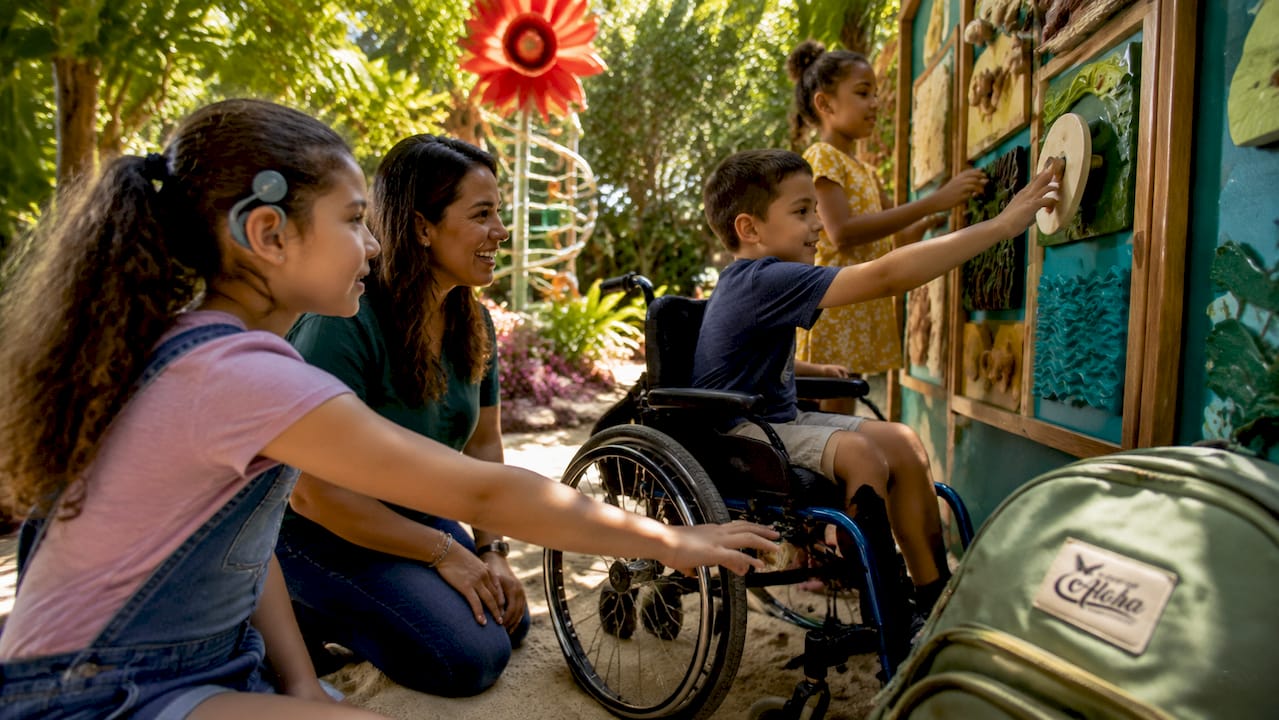
- Dual-height interfaces. Panels, touchpoints, and screens positioned at both child and adult height signal to caregivers that they are co-participants, not just supervisors. This single design choice transforms adult behavior during a visit.
- Durability and safety. Children’s environments demand materials and mechanisms that withstand thousands of daily interactions without creating hazards. Rounded edges, sealed electronics, and antimicrobial surfaces are not optional extras.
Sensory-rich, inclusive exhibit designs increase visitor satisfaction by up to 25% and boost content retention by 35% among children aged 4 to 12. That retention boost is the direct result of designing for the whole body, not just the eyes.
Pro Tip: When evaluating a family attraction, watch what happens in the first 10 seconds after a child approaches an exhibit. If they hesitate and look for instructions, the design is working against the experience. The best interactives pull children in instantly.
Digital vs. mechanical interactives: which works better for families?
The role of technology in attractions has expanded dramatically, but digital is not automatically better. Both digital and mechanical interactives serve distinct purposes, and the most effective family attractions use both deliberately.
| Feature | Digital interactives | Mechanical interactives |
|---|---|---|
| Content flexibility | High. Content updates without hardware changes. | Low. Physical changes require rebuild. |
| Tactile engagement | Limited. Touch screens lack physical feedback. | High. Levers, cranks, and buttons create physical memory. |
| Memorability | Moderate. Novelty fades quickly. | High. Physical interaction produces vivid recall. |
| Maintenance | Software patches are fast. Hardware failures can be costly. | Mechanical wear is predictable and repairable. |
| Accessibility | Screen readers and adjustable interfaces are possible. | Physical manipulation may challenge some visitors. |
Observations at Te Papa museum in New Zealand confirm that mechanical interactives produce more memorable experiences than digital ones due to tactile engagement. Visitors consistently recalled manual interactions more vividly, even when digital displays were more visually spectacular.
That said, digital technology opens doors that mechanical design cannot. Mixed reality mediates 41% of the total impact of tourist content on overall visitor experience, making it a powerful tool when the story demands immersion rather than manipulation. The key is matching the technology to the narrative. A history exhibit about ancient tools benefits from physical replicas. A flying theater experience over Hawai’i benefits from 8K visuals, motion, scent, and wind.
The smartest attractions combine both. Physical triggers activate digital responses. A child turns a real wheel and watches a digital waterfall change course. That hybrid moment, tactile cause and digital effect, produces the strongest engagement of all.
How do interactive attractions balance visitor experience and operational efficiency?
Family attraction engagement is not just about the visitor. It is also about keeping the operation running smoothly so that every family gets the same quality experience. Interactivity that creates bottlenecks, confusion, or long waits destroys the very engagement it was designed to produce.
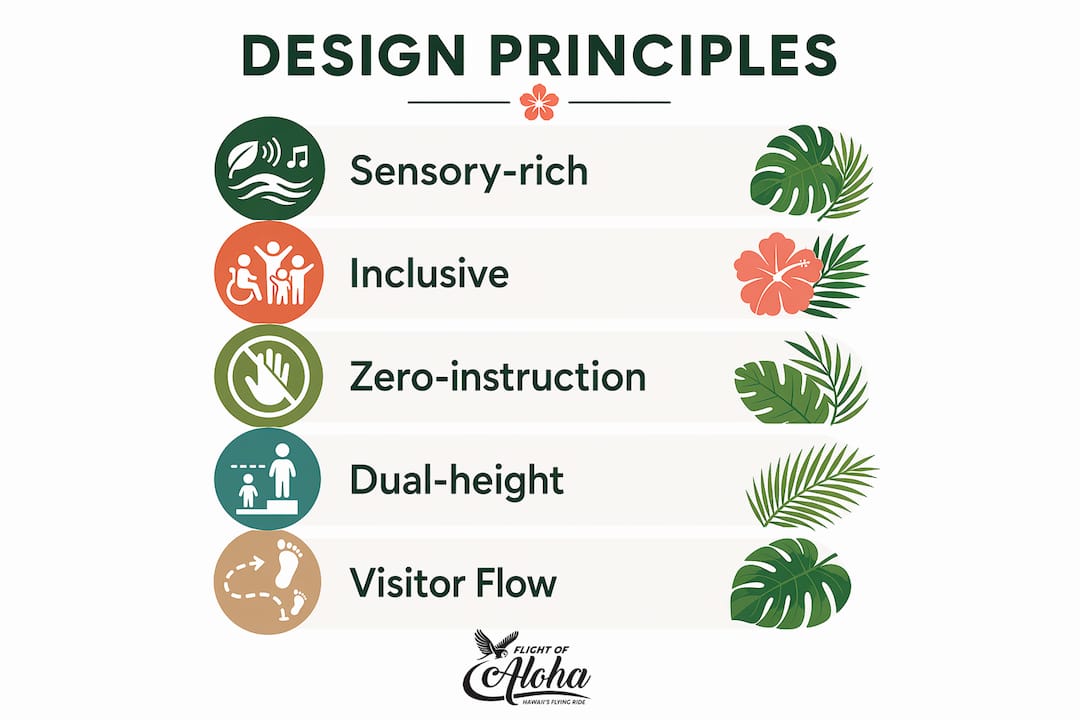
Well-designed game loops with clear start and end points prevent visitor bottlenecks and maintain throughput without sacrificing depth. This is the operational side of interactive design that most families never see but always feel. When a game has a natural conclusion, the next family knows when to step in. When it does not, crowds form and frustration follows.
The data on interactive floor games shows what good operational design achieves. One family entertainment center saw average guest dwell time increase by 18% and immediate zone food and beverage spend increase by 22% within six months of installing a multi-zone interactive floor. Longer, happier stays translate directly into revenue.
Key operational considerations for family-friendly interactive fun include:
- Analytics and KPIs. Tracking time-on-station, repeat engagement, and abandonment rates reveals which interactives are working and which need redesign.
- Accessibility. Wheelchair-accessible stations, sensory-friendly options, and age-appropriate safety barriers expand the audience and reduce liability.
- Staff training. Even zero-instruction interactives benefit from staff who can gently guide hesitant families without taking over the experience.
Pro Tip: Look for attractions that use visitor flow management as a design principle, not an afterthought. The best venues map the entire family journey from arrival to exit and design interactivity into every transition point.
Key takeaways
Interactivity in family attractions works because it converts passive visitors into active participants, producing measurable gains in learning, satisfaction, and dwell time across every age group.
| Point | Details |
|---|---|
| Active participation drives retention | Children and families recall experiences far more vividly when they physically engage rather than observe. |
| Zero-instruction design is non-negotiable | The best interactives pull children in within 3 seconds, with no reading or instruction required. |
| Mechanical and digital both have a role | Tactile interactives produce stronger memories; digital interactives offer content flexibility and immersion. |
| Operational design protects the experience | Clear game loops, analytics, and accessibility planning keep engagement high and queues short. |
| Sensory-rich design boosts outcomes | Inclusive, multi-sensory exhibits increase satisfaction by up to 25% and retention by 35% in children aged 4 to 12. |
Why interactivity changed how I think about family experiences
I used to think the best family attractions were the ones with the most impressive visuals. Big screens, dramatic lighting, stunning content. Then I watched a six-year-old completely ignore a gorgeous digital display to spend twenty minutes turning a simple wooden crank at a science center. That moment reframed everything for me.
The most powerful interactive experiences are not the most technologically complex ones. They are the ones where a child forgets they are learning. Where a parent stops checking their phone because they are genuinely curious about what happens next. Where a grandparent and a grandchild are both laughing at the same thing at the same time.
What I find most exciting about the current direction of family attractions is the shift toward cultural storytelling through interactivity. When an experience is rooted in real heritage, real legends, and real places, the interactivity carries meaning beyond entertainment. You are not just pressing a button. You are connecting to something larger. That is what separates a good attraction from an unforgettable one.
My honest advice to families: skip the passive shows and prioritize experiences where you are part of the story. The benefits of interactive experiences compound across the whole family, not just the kids. And if you are in Kona, there is one experience that proves this point beautifully.
— Ola
Experience interactivity at its best with Flight of Aloha
If you are looking for the best example of how interactivity enhances attractions on the Big Island, Flight of Aloha delivers something genuinely rare. Think of it as what you would get if a helicopter tour and a Disney ride had a baby, rooted in aloha and Native Hawaiian culture.

Located inside King Kamehameha’s Kona Beach Hotel, just a short walk from Kailua Pier and the tender dock, Flight of Aloha is one of the top immersive family attractions on the island. It blends 8K visuals, motion seats, real scents, and wind to simulate soaring over Hawai’i’s breathtaking landscapes, from lush valleys to volcanic coastlines. It is the smart alternative to a $400 helicopter tour, with no motion sickness and the best air conditioning in Kona. Perfect for rainy days, vog days, shore excursions, or any family looking for something extraordinary Mauka to Makai. Book your seats online to secure your spot before they fill up.
FAQ
What is the role of interactivity in family attractions?
Interactivity in family attractions transforms passive observation into active participation, producing measurable gains in learning retention, emotional connection, and visitor satisfaction. It is the primary driver of memorable, educational, and socially engaging family experiences.
How does interactivity improve learning for children at attractions?
Active, hands-on participation significantly improves how children retain and apply information compared to watching or listening. Research shows that gamified interactive experiences can increase cognitive performance and satisfaction by approximately 62.5% over traditional formats.
What makes an interactive exhibit effective for all ages?
The most effective interactive exhibits use layered complexity, zero-instruction design, and dual-height interfaces so that toddlers, school-age children, and caregivers can all engage simultaneously without frustration or queuing.
Are digital or mechanical interactives better for families?
Both serve different purposes. Mechanical interactives produce more vivid tactile memories, while digital interactives offer content flexibility and immersive storytelling. The strongest family attractions combine both, using physical triggers to activate digital responses.
How do interactive attractions increase dwell time and satisfaction?
Well-designed interactive floor games and exhibits with clear game loops increase average guest dwell time by up to 18% and boost nearby food and beverage spending by 22%, according to family entertainment center data. Longer, more engaged visits consistently produce higher satisfaction scores.