
Scent Effects Experiences: 7 Powerful Real-World Examples 🌺

Scent effects experiences are multisensory environments where fragrances are deliberately designed to alter mood, trigger memories, and deepen emotional storytelling. The industry term for this practice is olfactory design, and it sits at the intersection of neuroscience, entertainment technology, and cultural immersion. Whether you are exploring a world-class art museum, stepping into a flying theater, or walking through a themed cultural gallery, the impact of scent experiences on how you feel and what you remember is profound and measurable. From L’Oréal Luxe’s AI-powered scent museum to the Zayed National Museum’s culturally layered fragrances, the best examples of scent effects experiences in 2026 prove that smell is the most direct path to emotional connection.
1. Examples of scent effects experiences in immersive art museums
The most striking scent effect examples from 2026 come from the art world. L’Oréal Luxe and DATALAND launched a 25,000 sq ft AI art museum featuring 12 living scents that adapt in real time to visitor presence and the artworks on display. This means the fragrance you inhale changes based on where you stand and what you are looking at, creating a truly personalized sensory experience with fragrance that no two visitors share identically.
Smart diffuser devices read visitor movement and trigger specific scent releases, synchronizing olfactory stimuli with visual content dynamically. The result is not just atmosphere. It is a full narrative told through smell, sight, and sound simultaneously. This kind of multisensory design is what separates a memorable attraction from a forgettable one.
- Scent responds to you: Fragrances shift based on your position and the artwork nearby.
- 12 distinct living scents: Each scent is crafted to complement specific visual themes.
- AI-powered delivery: Smart devices coordinate timing so the scent arrives as you engage with each piece.
- Emotional layering: Sound and scent combine to create a complete sensory scene rather than isolated stimuli.
Pro Tip: When visiting any scent-enhanced museum or attraction, pause and take a slow, intentional inhale. Smell is uniquely tied to the nervous system, and intentional sniffing registers mood changes far more effectively than passive breathing.
2. Cultural scent storytelling at the Zayed National Museum
The Zayed National Museum in the UAE offers one of the most thoughtful examples of culturally grounded olfactory design. Rather than overwhelming visitors with strong fragrances, the museum introduces restrained local flora scents gradually, allowing sensory impressions to develop at a natural pace. Scent and sound layers build together, evoking warmth, familiarity, and a sense of place rooted in Emirati identity.
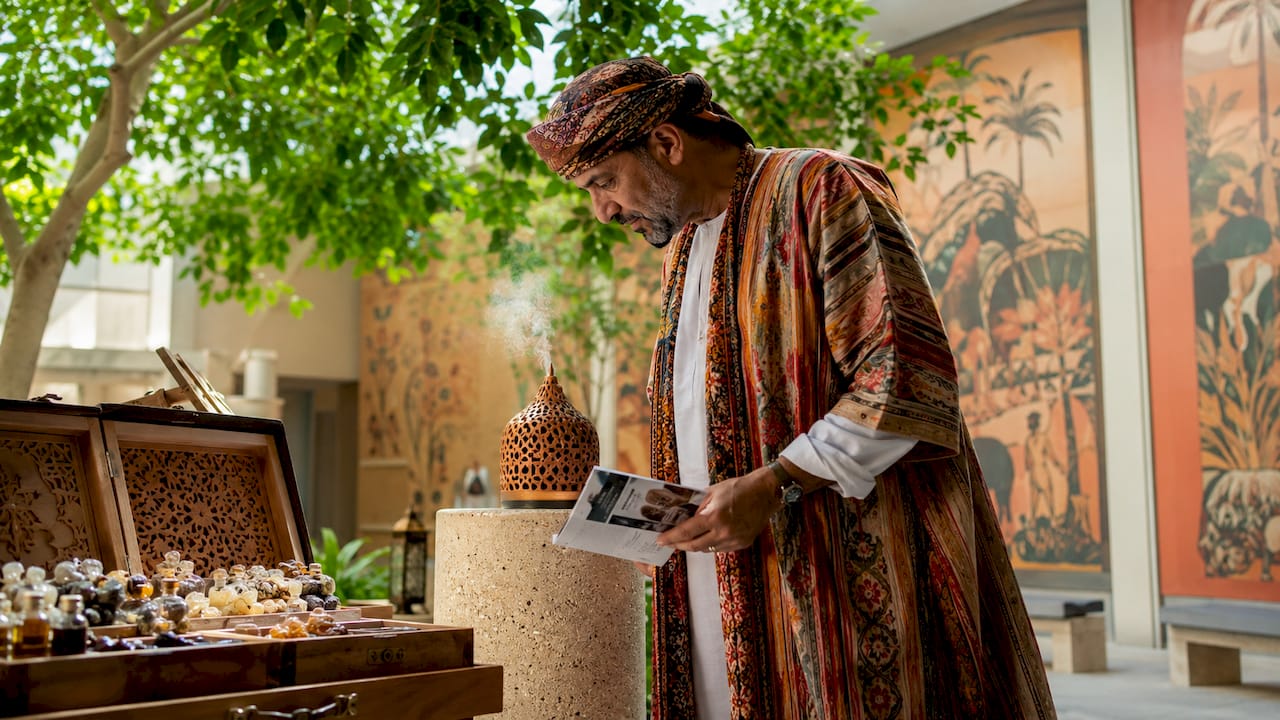
This approach demonstrates a key principle of aroma effect experiences: subtlety often creates deeper emotional resonance than intensity. The museum’s designers treat scent like a supporting actor, not the lead. It reinforces the visual and narrative experience without competing with it. For anyone interested in how scent influences emotions within cultural storytelling, this is a masterclass.
The pacing strategy used here mirrors theatrical scripting. Scents are introduced at specific narrative moments, not broadcast uniformly throughout the space. Scent stations in themed galleries deepen narrative resonance and help manage visitor flow, giving each fragrance moment its own weight and meaning.
3. How ambient scent influences mood, emotion, and creative perception
The science behind scents and emotional responses is both fascinating and practical for attraction designers. A study involving 24 painters found that strawberry and rose odors directly influenced color choices and object selection, biasing participants toward warm or cool palettes respectively. This means the fragrance in a room is not just background ambiance. It is actively shaping how visitors perceive and respond to everything around them.
Scent also does something no other sense can match: it reactivates the full emotional scene of a memory, not just the factual details. Scent triggers full emotional recall, which is why a single whiff of plumeria can transport you back to a specific afternoon in Hawai’i with startling vividness. For immersive attractions and cultural storytelling venues, this is an extraordinary tool.
| Scent | Documented effect | Application in immersive design |
|---|---|---|
| Strawberry | Biases toward warm color perception | Use in galleries with warm-toned visual art |
| Rose | Biases toward cool color perception | Pair with cool-palette or nature-themed exhibits |
| Peppermint | Mood lift and alertness | Ideal for high-energy or adventure sequences |
| Local flora (Zayed) | Warmth, cultural familiarity | Cultural identity storytelling and welcome spaces |
“Scent not only triggers factual recall but reactivates the full emotional ‘scene’ of memories, deepening immersive cultural storytelling.” — TIME, 2026
One important limitation: research on Douglas fir and Hinoki cypress essential oils found that only recognized scents produced measurable psychological benefits. Only 15% of participants correctly identified the tree scent, and only those individuals showed cognitive benefits. This means designing for recognition, not just exposure, is the foundation of effective olfactory design.
4. Technology innovations powering advanced scent delivery
The technology enabling today’s best scent-based memory triggers and immersive experiences has advanced dramatically. Here are the key innovations shaping the field in 2026:
- Smart diffuser networks: Devices linked to visitor position sensors release specific fragrances timed to scene changes and movement patterns. L’Oréal Luxe and DATALAND’s installation uses this approach to sync scent with content dynamically across a 25,000 sq ft space.
- Wearable olfactory VR displays: New wearable devices generate blended scents with a perception time of approximately 3.17 seconds, using ultrasonic atomization and activated carbon filters to control intensity and prevent scent blending. This is fast enough to feel synchronized with visual content.
- Activated carbon filtration: This technology clears residual scents between sequences, solving the long-standing problem of scent persistence and cross-contamination that previously made multi-scent experiences feel muddy.
- Position-triggered timing systems: Advanced installations link visitor location data with scent diffusion timing, so the fragrance arrives precisely as you engage with each visual element rather than drifting in from across the room.
Pro Tip: If you are designing a scent experience, build in a 3 to 4 second lead time before each scent cue. Olfactory VR systems recommend accommodating the natural perception delay rather than trying to fight it with rapid scene changes.
The biggest remaining challenge is scent longevity. A fragrance released in one zone can drift into the next, breaking immersion. The best installations treat scent diffusion like stage lighting: precise, directional, and timed to the second.
5. Scent effects in hospitality and branded immersive environments
Hospitality is where the impact of scent experiences on guest satisfaction becomes measurable and commercial. A Mood Media 2026 consumer survey found that scent is the top sensory element enhancing hotel guest experiences, outranking both music and digital displays. Specifically, 34% of surveyed U.S. adults prioritize scent when evaluating how an atmosphere affects their mood, comfort, and time spent in a space.
That finding has direct implications for immersive attractions. Visitors who feel comfortable and emotionally at ease stay longer, engage more deeply, and report higher satisfaction. Scent is the fastest path to that comfort state.
Here is what the best hospitality and branded immersive environments do with scent:
- Use warm, recognizable fragrances at entry points to signal welcome and safety before visitors even see the main experience.
- Avoid overpowering intensity. The most effective scent environments feel like a natural extension of the space, not a perfume counter.
- Align scent with narrative. A cultural venue telling Hawaiian stories benefits from ocean air, tropical florals, and volcanic earth notes far more than a generic “clean” scent.
- Extend dwell time intentionally. Comfortable, pleasant scent environments encourage visitors to slow down, explore more, and spend more time with each element of the experience.
The benefits of sensory attractions go well beyond novelty. When scent, sound, and visuals align, the emotional engagement visitors feel translates directly into stronger memories and higher likelihood of recommending the experience to others.
6. Practical tips for designing memorable scent effect experiences
Creating scent experiences that truly connect requires more than plugging in a diffuser. The most effective olfactory design follows principles borrowed from theater, neuroscience, and narrative storytelling.
- Design for recognition first. An unrecognized scent produces minimal psychological effect. Choose fragrances with strong semantic associations, like fresh ocean air, tropical flowers, or roasted coffee, so visitors immediately connect the smell to a feeling or place.
- Pace scent exposure like a script. Olfactory scripting at venues like Fragonard’s Perfume Theatre uses intensity variation and timed releases to avoid sensory saturation. Think of each scent moment as a scene beat, not background noise.
- Use interactive scent stations strategically. Fixed scent stations in specific gallery zones give visitors agency and create intentional moments of engagement rather than passive exposure.
- Manage transitions carefully. Scent diffusion timing must account for lingering odors. Build in clearance time between scent cues to prevent bleed between zones and maintain the integrity of each olfactory moment.
- Layer scent with complementary senses. Scent alone is powerful. Scent paired with matching sound and visuals creates an experience visitors describe as feeling completely real.
Pro Tip: Test your scent design with a diverse group of visitors before opening. Scent perception varies significantly by individual, and what reads as “tropical floral” to one person may read as “cleaning product” to another. Recognition testing is not optional.
The immersive attractions in Hawaii that resonate most deeply are the ones where every sensory element, including scent, has been chosen with cultural intention and narrative purpose.
Key takeaways
Scent effects experiences work because fragrance directly activates emotional memory, and the best immersive attractions use olfactory design to make every moment feel vivid, personal, and unforgettable.
| Point | Details |
|---|---|
| Design for recognition | Scents visitors can identify produce measurable mood and cognitive benefits; unrecognized odors do not. |
| Pace like a script | Time scent releases to narrative moments, not as constant background, to prevent sensory overload. |
| Technology enables precision | Smart diffusers and wearable olfactory VR now deliver scents within 3.17 seconds, synchronized to visitor movement. |
| Scent tops hospitality rankings | 34% of U.S. adults rank scent as the top sensory element affecting their comfort and mood in hospitality spaces. |
| Cultural alignment amplifies impact | Scents tied to local flora, food, or landscape deepen cultural storytelling and visitor emotional connection. |
Why scent is the sense immersive attractions can no longer ignore
I have spent years thinking about what separates a good attraction from one that stays with you for decades. The answer, almost every time, comes back to smell. You can forget a beautiful image within days. But the scent of plumeria on a warm Kona evening? That memory does not fade.
What excites me most about 2026 is that the technology has finally caught up with the vision. Smart diffusers, wearable olfactory displays, and position-triggered timing systems mean that scent can now be delivered with the same precision as lighting or sound design. The L’Oréal Luxe and DATALAND installation proved that at scale. The Zayed National Museum proved it with cultural nuance.
For Native Hawaiian cultural storytelling specifically, scent is not a gimmick. It is a gateway. The smell of the ocean, of volcanic earth, of tropical rain on lava rock: these are not decorative details. They are the emotional language of a place and a people. When an immersive attraction gets that right, visitors do not just watch a story. They feel like they lived it.
Flight of Aloha understands this. The combination of 8K visuals, motion, wind, and scent in a single experience is not about piling on effects. It is about creating the conditions for genuine emotional memory. That is the standard every immersive attraction should be chasing.
— Ola
Experience scent-enhanced immersive storytelling in Kona
If you are looking for one of the best examples of scent effects experiences on the Big Island, Flight of Aloha delivers it inside King Kamehameha’s Kona Beach Hotel, just steps from Kailua Pier. This Native Hawaiian-owned flying theater blends 8K visuals, motion, wind, and carefully crafted scents to simulate soaring over Hawai’i, making it the smart alternative to a $400 helicopter tour with zero motion sickness and the best AC in Kona. Whether you are a cruise passenger on a shore excursion, a family looking for indoor activities on a rainy day, or a visitor escaping the vog, Flight of Aloha is a top thing to do in Kona that hits every sense. It is family friendly, culturally authentic, and genuinely unforgettable.

Book your seat at Flight of Aloha online today and secure your spot in one of the most immersive sensory attractions on the Big Island. Book online to secure your seat.
FAQ
What are scent effects experiences?
Scent effects experiences, also called olfactory design, are multisensory environments where fragrances are deliberately timed and delivered to alter mood, trigger memories, and enhance storytelling. They are used in museums, immersive theaters, hospitality venues, and VR attractions.
How does scent influence emotions in immersive attractions?
Scent activates the brain’s emotional memory centers more directly than any other sense, reactivating the full emotional scene of a memory rather than just factual details. Research shows that recognized scents like strawberry and rose directly influence color perception and mood in measurable ways.
What technology delivers scent in immersive experiences?
Smart diffuser networks, wearable olfactory VR displays, and activated carbon filtration systems now deliver precise, timed scent releases synchronized to visitor movement and visual content. Wearable olfactory devices achieve scent perception in approximately 3.17 seconds.
Why does scent recognition matter for the experience?
Studies found that only participants who correctly identified a scent showed psychological benefits from it. Designing for recognition, using fragrances with strong cultural or sensory associations, is the foundation of effective olfactory design.
Is Flight of Aloha a good example of a scent-enhanced attraction?
Yes. Flight of Aloha in Kailua-Kona combines scent, wind, motion, and 8K visuals to simulate flying over Hawai’i, making it one of the most complete multisensory immersive experiences available on the Big Island and a standout among family friendly Kona activities.
Recommended
- Benefits Of Sensory Attractions: Why They Enhance Visitor Emotion | Flight Of Aloha
- The Role Of Interactive Experiences In Attractions | Flight Of Aloha
- Why Immersive Attractions In Hawaii Create Richer Experiences | Flight Of Aloha
- Why Themed Experiences Win: Deeper Connections For Hawaii Visitors | Flight Of Aloha