
Tips for Best Flight Seats: Your 2026 Comfort Guide

The best flight seats are defined by three factors: legroom, location on the aircraft, and seat type. Economy seat pitch ranges from roughly 32 to 34 inches depending on the airline, with Japan Airlines offering up to 34 inches of legroom in economy. That difference of just two inches changes how your legs feel after a five-hour flight. These tips for best flight seats cut through the noise and give you a clear plan for choosing flight seats that match your actual travel needs, whether you prioritize sleep, quick exits, or traveling with your family.
1. Sit near the wings for the smoothest ride
Seat location is the single most overlooked factor in airline seat selection. Seats near the wings provide the smoothest ride and most stability because they sit closest to the aircraft’s center of gravity and lift. That means less rocking during turbulence, which matters a lot on longer routes.
Here is what each zone of the aircraft gives you:
- Front cabin: Quieter, faster exit, and closer to the cockpit. Trade-off is that front-row seats often lack floor storage because tray tables live in the armrests, which narrows the seat slightly.
- Wing zone (rows 10–20 on most narrow-body jets): Best stability and least turbulence. Ideal for travelers who get motion sickness or just want a calmer ride.
- Rear cabin: Noisier from engine and galley activity, but rear seats are more likely to have empty seats next to them. That extra space can be worth the trade-off.
Pro Tip: If you are prone to motion sickness, book a window seat over the wing. The visual reference point of the horizon combined with the stability of the wing zone is the most effective combination for reducing nausea.
2. Choose window seats for sleep and privacy
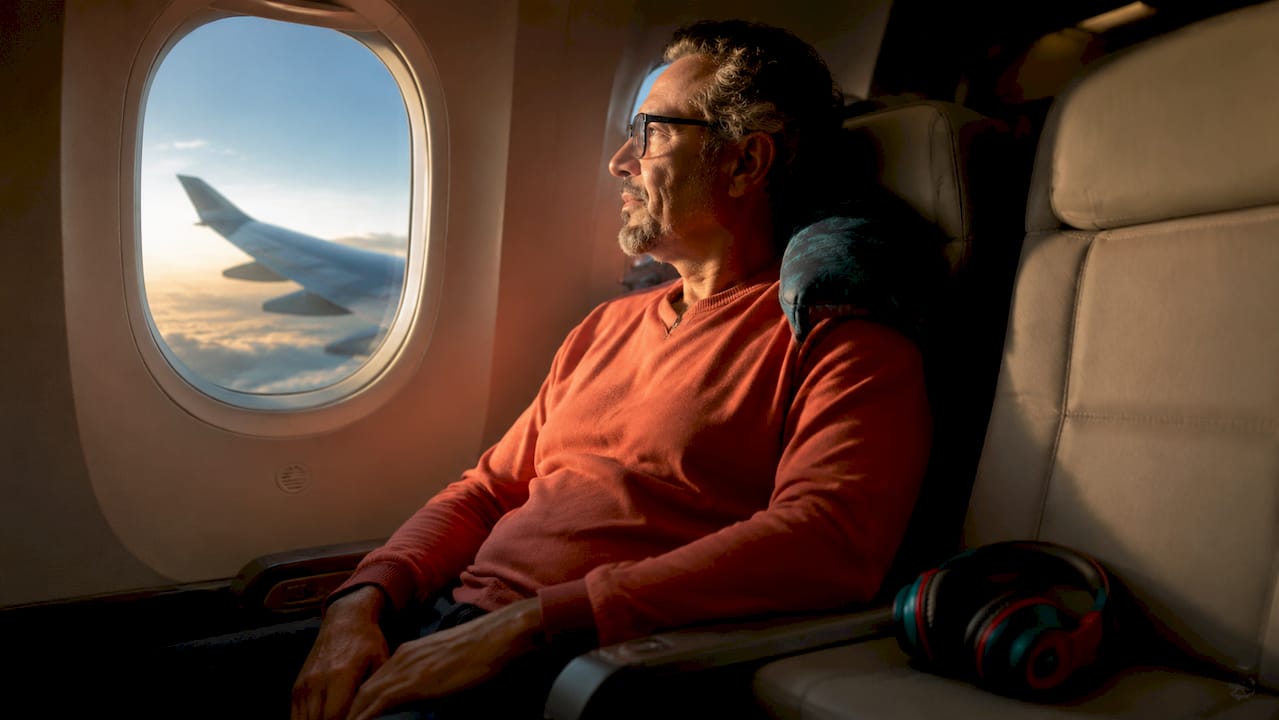
The window vs. aisle seat debate comes down to what you value most during a flight. Window seats offer a sleep surface and privacy but require you to disturb your neighbors every time you need the restroom. Aisle seats give you freedom to move but come with the risk of crew carts and other passengers bumping into you.
Here is a quick breakdown:
- Window seat: Best for sleepers, introverts, and anyone on a red-eye. You control your space, lean against the wall, and nobody wakes you up.
- Aisle seat: Best for tall travelers, frequent restroom users, and anyone who wants to stretch their legs during the flight.
- Middle seat: Generally the least desirable choice. The one exception is when you are traveling with a companion in a three-seat row and want to keep the group together.
The aisle vs. window preference is not a universal answer. It depends entirely on whether mobility or rest matters more to you on that specific trip.
3. Understand what you actually get with exit row seats
Exit row and bulkhead seats are the most popular upgrades in economy, and for good reason. They offer noticeably more legroom without the full cost of a premium economy ticket. Upgrading to exit row, bulkhead, or preferred seats costs $25 to $100 per segment depending on the route and demand.
That cost is often worth it on flights over three hours. On a short one-hour hop, it is harder to justify.
What to know before you pay:
- Exit row seats require passengers to assist in an emergency. Airlines will ask you to confirm this at the gate.
- Bulkhead seats (the row directly behind a wall or divider) offer legroom but zero under-seat storage. Your bag goes in the overhead bin for the entire flight.
- Extra legroom economy seats frequently come with limited recline or proximity to galleys, which adds noise and foot traffic.
Pro Tip: Book exit row seats as early as possible. Airlines often release these seats for free to elite status members first, then open them to general purchase closer to departure. Checking back 24 hours before your flight sometimes reveals newly available exit rows at no charge.
4. Check the specific aircraft layout, not just the airline’s general map
Airline seat maps shown during booking are often generalized. Seat maps are frequently inaccurate because airlines use multiple aircraft configurations on the same route, and swaps happen regularly. A seat that looks great in the booking map may be a different story on the actual plane.
The fix is simple: verify your seat using an aviation database that pulls data from your specific flight number and aircraft tail number, not just the airline’s standard layout. Do this again 48 hours before departure, since aircraft swaps are most common in that window.
Here is a practical booking sequence:
- Book your ticket and note the aircraft type (Boeing 737, Airbus A321, etc.).
- Look up that specific aircraft configuration using a flight-specific seat database.
- Select your seat based on the verified layout.
- Check again 48 hours before departure for any aircraft changes.
- If the aircraft swaps, request a new seat assignment at the gate or through the airline app.
Pro Tip: Set a calendar reminder for 48 hours before your flight to recheck your seat. Aircraft swaps are common, and catching one early gives you first pick of the remaining good seats.
5. Use the rear cabin to increase your odds of an empty seat next to you
Most travelers book seats toward the front of the cabin. That behavior creates a predictable pattern: the rear cabin fills last. Selecting seats toward the back cabin increases your chance of having an empty seat next to you because passengers and booking algorithms both favor forward positions.
This strategy works best on routes that are not sold out. On a full flight, it makes no difference. But on a flight that is 70–80% booked, sitting in the last five rows dramatically improves your odds of extra space at no cost.
The trade-off is real: rear seats are louder, closer to the lavatories, and board last. Weigh that against the value of an empty middle seat on a long flight.
6. Know when a premium economy upgrade is actually worth it
Premium economy is the category between standard economy and business class. Seats are wider, pitch is greater, and amenities like meals and priority boarding are often included. The value depends almost entirely on the aircraft type. Business class comfort depends 80% on aircraft type, and the same principle applies to premium economy.
On a wide-body aircraft like a Boeing 787 or Airbus A350, premium economy is a genuinely different experience. On a narrow-body regional jet, the difference from standard economy may be minimal. Always check the specific aircraft configuration before paying for a premium economy upgrade.
Premium economy makes the most sense for:
- Flights over six hours where rest directly affects your next day’s plans.
- Travelers with back or joint issues who need more recline and width.
- Business travelers who need to arrive ready to work.
7. Plan seat selection carefully when traveling with family or groups
Family seat selection requires a different approach than solo travel. Airlines automatically seat children next to adult passengers if the tickets are purchased in the same booking, even without paid seat selection. That policy gives families some flexibility on which seats to pay for in advance.
For families with infants, bulkhead seats are the top choice. Most airlines mount bassinets to bulkhead walls, which keeps your baby secure and gives you slightly more floor space. Book bulkhead seats as early as possible since they are limited and popular with families.
Additional tips for group and family travel:
- Book all tickets in a single transaction to trigger the automatic adjacent seating policy.
- For toddlers, choose seats close to the lavatory. The shorter the walk, the better.
- In a group of four, two pairs of aisle and window seats across the same row gives everyone access to the aisle while keeping the group together.
- Avoid splitting your group across different booking references. Airlines treat separate bookings as unrelated passengers.
8. Time your seat selection to match your airline’s release schedule
Airlines release different seat categories at different times. Standard seats open at booking. Exit rows and preferred seats often open to general passengers 24–72 hours before departure. Knowing this schedule helps you plan without paying for a seat you could get for free.
Book your ticket as early as possible to lock in your preferred zone. Then check back at the 72-hour mark for newly released exit rows. If you have airline status, check immediately after booking since elite members often access preferred seats at no charge from day one.
Peak travel periods like summer and major holidays fill preferred seats faster. During those windows, pay for your seat at booking rather than waiting. Off-peak travel gives you more room to wait and save.
Key Takeaways
Choosing the right airplane seat comes down to matching your seat location, type, and upgrade tier to your specific travel priorities, not following generic advice.
| Point | Details |
|---|---|
| Wing zone seats reduce turbulence | Book rows over the wings for the smoothest, most stable ride on any aircraft. |
| Window seats favor sleep, aisle seats favor mobility | Choose based on whether rest or restroom access matters more on your specific flight. |
| Exit row upgrades cost $25–$100 per segment | Weigh the cost against flight length; upgrades pay off most on flights over three hours. |
| Verify seat maps close to departure | Aircraft swaps are common; recheck your seat 48 hours before the flight using a flight-specific database. |
| Rear cabin seats increase empty-seat odds | On flights under 80% full, sitting in the last few rows often means extra space at no cost. |
What I have learned from years of choosing flight seats
The conventional wisdom says always book an aisle seat for comfort. I disagree, at least for flights over four hours. The aisle seat is a trap if you actually want to sleep. You get bumped by carts, woken up by neighbors, and you never fully relax. My go-to for long-haul flights is a window seat over the wing, left side if possible, because the sun angle on most routes hits the right side harder in the afternoon.
The rear cabin trick is genuinely underused. I have had full rows to myself on flights that were 75% booked simply by sitting in row 28 when everyone else clustered in rows 10–20. The noise is manageable with good headphones. The extra space is not manageable any other way without paying for it.
The one thing most travelers skip is rechecking their seat after an aircraft swap. I have shown up to flights where my carefully chosen exit row turned into a standard seat because the airline swapped to a smaller jet. Catching that 48 hours out gives you time to fix it. Catching it at the gate does not.
If your travels bring you to Kona or Maui, Flight of Aloha offers a first-time flying theater experience that puts a whole new spin on what “the best seat” can mean.
— Ola
Flight of Aloha: the best seat in Hawaii awaits you
After a long flight, the last thing you want is another uncomfortable seat. Flight of Aloha, a Native Hawaiian-owned immersive flying theater, is walking distance from Kailua Pier and the Tender Dock in Kona, making it the perfect shore excursion stop.

Flight of Aloha blends 8K visuals, motion effects, scents, and wind to simulate soaring over Hawaii’s most breathtaking landscapes. Films like Naupaka, Whale Song, and Lahaina bring Hawaiian culture to life in a way no helicopter tour can match, without the $400 price tag or motion sickness. It is the most accessible attraction in Hawaii, with the best air conditioning in town. Whether you are escaping Kona’s heat, vog, or a rainy day in Maui at Whalers Village Kaanapali, Flight of Aloha delivers. Book online to secure your seat.
FAQ
What are the best seats on a plane for avoiding turbulence?
Seats near the wings provide the smoothest ride due to their proximity to the aircraft’s center of gravity and lift. This is the most stable zone on any commercial aircraft.
Is a window or aisle seat better for long flights?
Window seats are better for sleep and privacy, while aisle seats are better for mobility and restroom access. The right choice depends on whether rest or movement matters more to you on that specific flight.
How much does it cost to upgrade to an exit row seat?
Exit row and preferred seat upgrades typically cost $25 to $100 per segment, depending on the route and demand. On flights over three hours, the extra legroom is usually worth the cost.
How do I make sure my seat map is accurate before I fly?
Airline seat maps at booking are often generalized and may not reflect aircraft swaps. Verify your seat using a flight-specific aviation database and recheck 48 hours before departure.
Do airlines seat children next to parents automatically?
Yes. Airlines automatically seat children next to adult passengers when tickets are purchased in the same booking, even without paid seat selection. Book all family tickets in one transaction to trigger this policy.