
Why Wind Matters in Rides: Safety, Thrills, and Sensation
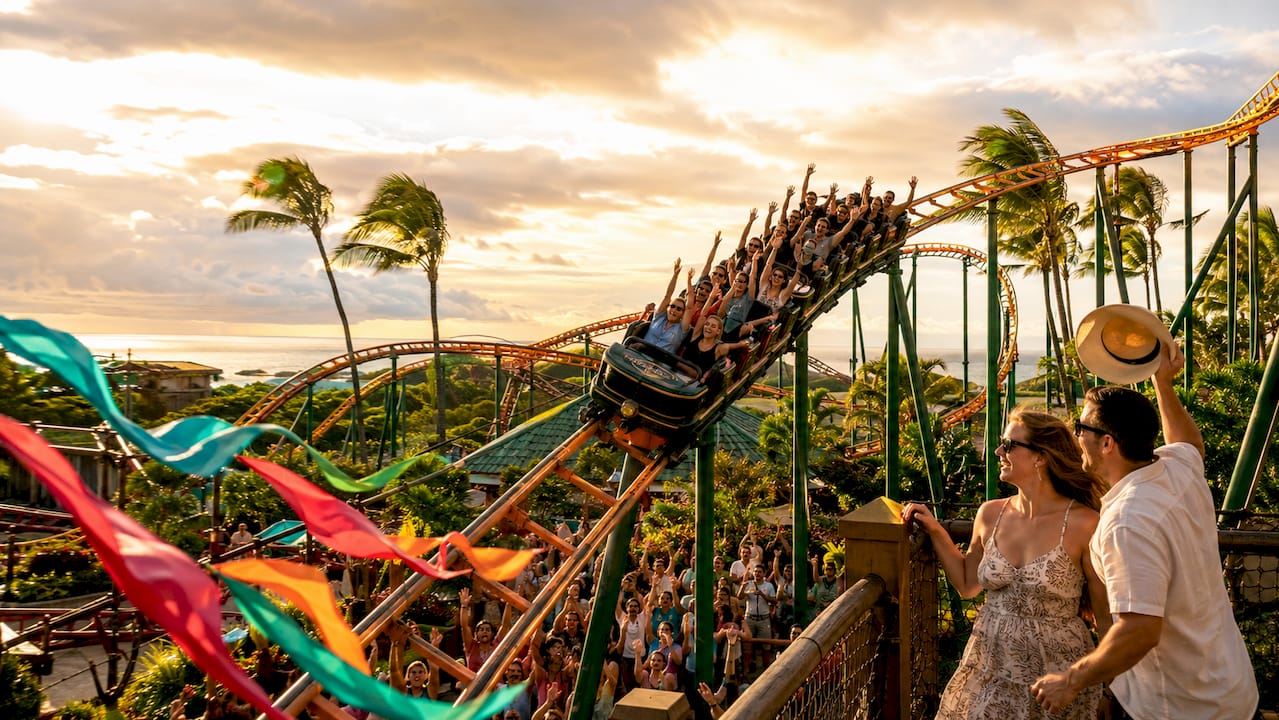
Wind is the single most underestimated force shaping your experience on a theme park ride. It affects everything from how fast a coaster moves through a turn to whether the ride operates at all. Understanding why wind matters in rides means understanding the physics, the safety protocols, and the sensory magic that wind creates for riders. Whether you are planning a park visit or just curious about what goes on behind the scenes, this breakdown covers the full picture.
Why wind matters in rides: safety thresholds and operational decisions
Wind does not just make a ride feel breezy. It changes the physics of how a ride vehicle moves, and at certain speeds, it becomes a genuine safety hazard. Ride operators use manufacturer-mandated wind thresholds to decide when to shut down, and those numbers are specific.
Large roller coasters close at sustained winds above 30–35 mph. Lighter, more exposed rides like swing rides and gondolas shut down at 20–25 mph. The difference comes down to mass, aerodynamic profile, and how much lateral force the structure can safely absorb.
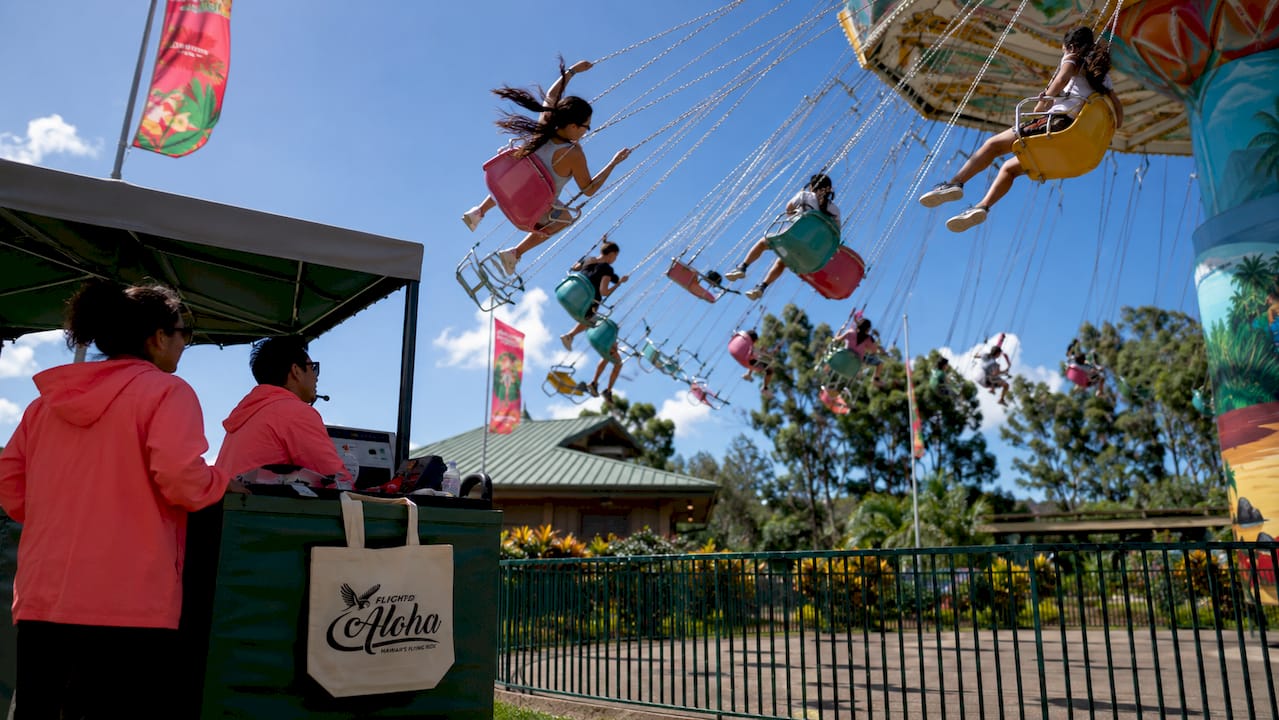
Wind direction matters just as much as raw speed. Crosswinds are more hazardous than tailwinds of equal strength because they apply lateral stress to ride vehicles and track systems. A 25 mph crosswind can be more dangerous than a 30 mph headwind on the same coaster. That is why operators do not simply watch a weather app. They monitor directional data in real time.
Modern parks run four or more weather stations per property, tracking wind and lightning within a 15-mile radius. That level of monitoring allows automated systems to respond faster than any human operator could.
Here is what the shutdown process actually looks like in practice:
- Anemometers mounted on ride structures measure wind speed and direction continuously.
- PLC systems (programmable logic controllers) receive that data and trigger automatic safe states when thresholds are crossed.
- Ride vehicles are held in station or parked at designated safe positions without manual input.
- Restart protocols require wind to drop below threshold for a sustained period before operations resume.
Pro Tip: If a ride closes on a windy day, check back after 20–30 minutes. Automated systems restart quickly once wind drops below the safe threshold, and lines are often shorter right after a reopening.
How does wind affect the physics of ride mechanics?
Wind is not just a comfort issue. It is a structural and mechanical force that changes how rides perform. The key concept here is aerodynamic drag, which is the resistance a moving object experiences as it pushes through air.
Aerodynamic drag increases proportionally to the square of wind speed. That means doubling the wind speed quadruples the drag force on a ride vehicle. At highway speeds, this is the same principle that makes a truck feel like it is fighting the air. On a coaster, it can slow a train enough to cause “valleying,” where the train loses momentum and stops mid-track.
Wind acts as a dynamic structural load on both the ride vehicle and the track itself. That load shifts constantly as wind gusts and changes direction. Engineers design rides to handle a range of wind loads, but those tolerances have hard limits. Exceeding them risks fatigue stress on track connections and support structures over time.
Open-air rides face a different challenge. Swing rides, cable cars, and gondolas experience wind-induced oscillations that create a pendulum-like swinging motion. Engineers sometimes use gyroscopes in gondola cabins to reduce how fast those oscillations build. However, gyroscopes reduce the feeling of instability without raising the actual safe wind speed limit. The physics ceiling stays the same.
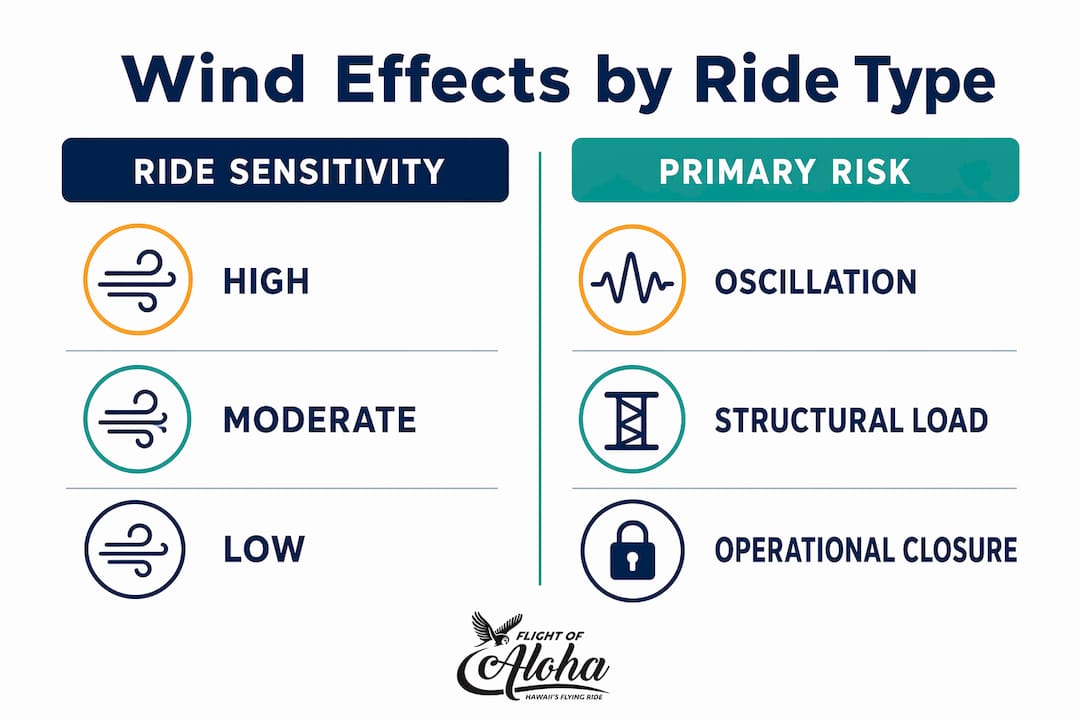
| Ride Type | Wind Sensitivity | Primary Risk | Design Response |
|---|---|---|---|
| Large roller coaster | Moderate | Valleying, lateral track stress | High mass, enclosed vehicles |
| Swing ride | High | Excessive oscillation | Gyroscopes, lower thresholds |
| Gondola / cable car | High | Pendulum swing, lateral sway | Gyroscopes, wind breaks |
| Ferris wheel | Moderate to high | Structural fatigue, passenger discomfort | Reinforced spokes, wind sensors |
Pro Tip: Sit toward the center of a gondola or cable car on a windy day. The oscillation effect is noticeably less intense away from the edges of the cabin.
How do wind conditions shape the ride sensation for park visitors?
Wind does not just create problems. For many riders, it is the ingredient that makes a ride feel genuinely alive. The impact of wind on rides goes well beyond safety thresholds. It creates physical sensations that no mechanical system alone can replicate.
The most obvious effect is the wind-in-your-face sensation on open coasters and drop towers. At speed, even a calm day generates enough relative wind to create that rushing, breathless feeling. Add real ambient wind and the sensation intensifies significantly. Riders often describe gusty days as producing the most memorable coaster runs, even if the ride itself is running at normal speed.
Wind-induced oscillations on swing rides and cable cars create a bounce and sway that feels organic rather than mechanical. That unpredictability is part of the appeal. Riders cannot anticipate the next gust, which keeps the nervous system engaged in a way that a perfectly smooth ride cannot.
Here is how wind shapes the sensation across different ride types:
- Open coasters: Wind amplifies the sense of speed and exposure, especially on high-banked turns where lateral wind hits riders directly.
- Swing rides: Gusts create irregular swinging that feels more like flying than a fixed mechanical arc.
- Drop towers: Wind resistance during the drop creates a slight drag that changes the timing and feel of the fall.
- Flat rides: Crosswinds on spinning rides can shift the axis of rotation slightly, adding an unpredictable wobble that riders either love or find unsettling.
The balance between thrill and safety is exactly where ride designers earn their pay. Some attractions intentionally permit harmonic oscillations within design tolerances to add dynamic movement to the experience. The goal is controlled unpredictability, which is a sensation that keeps riders coming back.
Common misconceptions about wind and ride closures
The most common frustration at a theme park is watching a favorite ride close on a day that does not feel that windy. That frustration usually comes from a misunderstanding of how wind closures actually work.
-
Closures follow manufacturer thresholds, not operator preference. Ride manufacturers set specific wind limits as part of the engineering certification. Operators cannot legally override those limits. A closure is not a judgment call. It is a compliance requirement.
-
Gusts matter more than average wind speed. A day with a 15 mph average wind can still trigger a closure if gusts spike above 30 mph. Sensors measure peak gusts, not averages, because a single strong gust is enough to cause a dangerous condition.
-
Direction changes the risk profile entirely. Wind direction often matters more than raw speed. A broadside wind on a coaster applies lateral forces the structure was not designed to absorb continuously. The same speed from behind is far less hazardous.
-
Automation removes human delay from the equation. Integrated PLC safety systems allow rides to enter safe states automatically without waiting for a human operator to notice and respond. This is faster and more reliable than manual monitoring.
-
Reopening is equally automated. Once wind drops below the safe threshold for a required period, the system flags the ride as ready to restart. Operators verify and resume operations. The whole process is designed to minimize downtime while keeping safety non-negotiable.
Operators treat wind as an invisible force altering ride gravity, and that framing captures the real issue. Wind does not just push riders around. It changes the fundamental physics of how a ride vehicle moves through its course.
Key Takeaways
Wind shapes every aspect of a theme park ride, from the safety threshold that triggers a shutdown to the sensory rush that makes a coaster run feel electric.
| Point | Details |
|---|---|
| Wind thresholds are fixed | Large coasters close above 30–35 mph; lighter rides shut down at 20–25 mph per manufacturer specs. |
| Direction beats raw speed | Crosswinds create more lateral stress than headwinds of equal strength, making direction the key safety variable. |
| Automation handles closures | PLC systems linked to on-site anemometers trigger shutdowns and restarts without manual operator input. |
| Drag compounds exponentially | Aerodynamic drag increases with the square of wind speed, meaning small speed increases create large structural loads. |
| Wind enhances sensation | Oscillations and wind resistance create organic, unpredictable sensations that mechanical systems alone cannot replicate. |
Wind, rides, and the moments that stay with you
By Ola
After spending time around theme park attractions and immersive ride experiences, the thing that surprises most people is how much respect operators have for wind. It is not treated as weather. It is treated as a co-pilot that can override the whole system.
The rides I find most memorable are always the ones where wind played a role. A swing ride on a gusty afternoon in Hawaii, where the ocean breeze pushed the arc just slightly off its expected path, felt more like actual flight than anything purely mechanical could deliver. That unpredictability is the point.
What I think most park visitors miss is that a wind closure is not a failure of the experience. It is proof that the system works. The automation is fast, the thresholds are real, and the operators are not being cautious for the sake of it. They are following engineering that took years to develop.
My honest advice: embrace the wind days. Rides that operate in moderate wind conditions often deliver their best runs. The sensation is heightened, the air is moving, and the experience feels genuinely alive. And if a ride closes, find something indoors, let the gusts pass, and get back in line when it reopens. The wait is almost always worth it.
— Ola
Flight of Aloha: aerial thrills with zero wind worries
Wind conditions can shut down outdoor rides in minutes. Flight of Aloha is a different kind of aerial experience entirely.

Flight of Aloha is a Native Hawaiian-owned immersive flying theater located in Kailua-Kona and Whalers Village Kaanapali, Maui. Inside, 8K visuals, motion effects, scents, and precisely controlled wind simulate soaring over Hawaii’s most breathtaking landscapes. You get the rush of flight, including the wind sensation, without the $400 helicopter price tag or the unpredictability of outdoor conditions. It is the best AC in Kona on a hot or rainy day, and it sits walking distance from Kailua Pier for cruise visitors on a quick shore excursion. Book your seat online to secure your spot at the most accessible attraction in Hawaii.
FAQ
What wind speed closes a roller coaster?
Large roller coasters typically close at sustained winds above 30–35 mph, while lighter rides shut down at 20–25 mph. Manufacturers set these thresholds as part of the ride’s engineering certification.
Does wind direction affect ride safety?
Yes. Crosswinds are more dangerous than headwinds or tailwinds of equal speed because they apply lateral stress to ride vehicles and track structures. Direction is often the deciding factor in a closure decision.
How do parks monitor wind conditions in real time?
Parks use four or more weather stations per property, with anemometers feeding data directly into automated PLC systems that trigger ride shutdowns without manual input.
Can ride design eliminate wind-related risks?
No. Gyroscopes and other design features can reduce the sensation of wind-induced oscillation, but they cannot raise the safe operating wind speed limit. The physics ceiling is set by engineering, not comfort technology.
Does wind make rides more exciting?
For many riders, yes. Wind creates organic oscillations and resistance that add unpredictability and a heightened sense of speed. Swing rides and open coasters in moderate wind conditions often deliver the most memorable experiences.