
Visitor Guide Cultural Storytelling: Hawaiian Immersion Impact

Most American families visiting Kailua-Kona look for more than just beaches and resort pools. Experiencing genuine Hawaiian storytelling is key to building meaningful connections and turning a simple outing into a rich, lasting memory. With over 60 percent of visitor attractions now offering immersive narrative journeys, discovering places where legends come alive lets your family step into the heart of Hawaii’s traditions. Explore how stories and sensory adventures create deeper understanding for every generation.
Table of Contents
- Cultural Storytelling In Visitor Attractions
- Hawaiian Legends As Immersive Narratives
- Ride Film Variations And Sensory Effects
- How Technology Deepens Guest Engagement
- Common Missteps In Cultural Representation
Key Takeaways
| Point | Details |
|---|---|
| Cultural Storytelling | Visitor attractions are evolving into immersive experiences that enhance cultural understanding through engaging narratives. |
| Importance of Tour Guides | Skilled tour guides utilizing character-driven and place-centered storytelling significantly boost visitor engagement. |
| Hawaiian Legends | Hawaiian legends serve as living expressions of culture, offering deep connections to ancestral knowledge through multimedia experiences. |
| Ethical Representation | Avoiding stereotypes and superficial narratives is crucial; cultural storytelling should center on authentic indigenous voices and perspectives. |
Cultural Storytelling in Visitor Attractions
Visitor attractions have transformed from simple sightseeing experiences into immersive narrative journeys that connect travelers with profound cultural meanings. Cultural storytelling techniques now serve as powerful mechanisms for engaging visitors through emotionally resonant narratives that transcend traditional educational approaches.
Tour guides play a critical role in this transformation, employing sophisticated storytelling methods that blend historical accuracy with compelling personal narratives. Research indicates that guides who utilize character-driven stories and place-centered narratives can significantly enhance visitor engagement. These storytelling approaches create multisensory experiences that allow travelers to understand cultural contexts more deeply, moving beyond superficial observations to meaningful cultural connections.
In Hawaiian cultural contexts, storytelling becomes particularly potent, serving not just as entertainment but as a vital mechanism for preserving ancestral knowledge and connecting contemporary visitors with traditional wisdom. By integrating sensory elements, symbolic representations, and authentic narrative techniques, visitor attractions can create transformative experiences that respect and celebrate indigenous cultural heritage. Narrative delivery methods that incorporate local perspectives and genuine storytelling traditions can turn a simple tour into a profound cultural encounter.
Here’s a comparison of storytelling techniques used in visitor attractions:
| Technique | Key Features | Visitor Impact |
|---|---|---|
| Character-driven Story | Personal narratives and emotional ties | Deepens empathy and engagement |
| Place-centered Story | Focus on location and history | Enhances cultural connection |
| Sensory Elements | Multisensory cues and symbolism | Immersive cultural experience |
| Authentic Narratives | Real traditions and local viewpoints | Fosters respect for heritage |
Pro tip: When visiting cultural attractions, actively listen to tour guides and ask thoughtful questions to deepen your understanding of the stories being shared.
Hawaiian Legends as Immersive Narratives
Hawaiian legends represent far more than simple folklore, serving as profound cultural transmission mechanisms that communicate complex traditional knowledge through richly layered narratives. Virtual reality simulations exploring traditional storytelling techniques demonstrate how immersive storytelling can preserve and communicate indigenous epistemologies, transforming narrative experiences into powerful educational tools.
These narratives often feature intricate mythological characters and cosmic events that illuminate Hawaiian worldviews, explaining natural phenomena, human relationships, and spiritual connections. Legends like the story of Pele, the volcano goddess, or the epic tales of Kamapua’a transcend mere entertainment, functioning as repositories of ancestral wisdom that connect contemporary Hawaiians with their cultural heritage. By embedding moral lessons, ecological knowledge, and social principles within compelling storylines, these legends create multidimensional learning experiences that engage listeners on intellectual, emotional, and spiritual levels.
Modern visitor attractions have increasingly recognized the transformative potential of these narrative traditions, developing immersive experiences that allow travelers to engage with Hawaiian stories beyond passive observation. Interactive storytelling methods that incorporate traditional performance techniques, sensory elements, and authentic cultural contexts enable visitors to experience legends not as distant historical artifacts, but as living, breathing cultural expressions. This approach respects indigenous storytelling traditions while creating meaningful cross-cultural understanding and appreciation.
Pro tip: When experiencing Hawaiian legend presentations, listen with an open heart and pay attention to the nuanced cultural meanings embedded within the narrative, not just the surface-level plot.
Ride Film Variations and Sensory Effects
Immersive storytelling technologies have revolutionized visitor experiences by creating multisensory environments that engage audiences far beyond traditional visual narratives. These innovative ride films blend complex visual, auditory, and tactile elements to transform passive viewing into active, participatory experiences that transport viewers into richly detailed Hawaiian landscapes and cultural narratives.
Modern ride films leverage sophisticated sensory technologies to create nuanced emotional responses. Haptic feedback systems play a critical role in this immersion, allowing visitors to physically feel environmental changes, wind currents, and motion dynamics that synchronize with on-screen storytelling. Tactile technologies in immersive entertainment have advanced significantly, enabling ride designers to simulate everything from gentle ocean breezes to the powerful eruptions of Hawaiian volcanoes, creating a deeply authentic sensory journey that goes far beyond traditional visual storytelling.
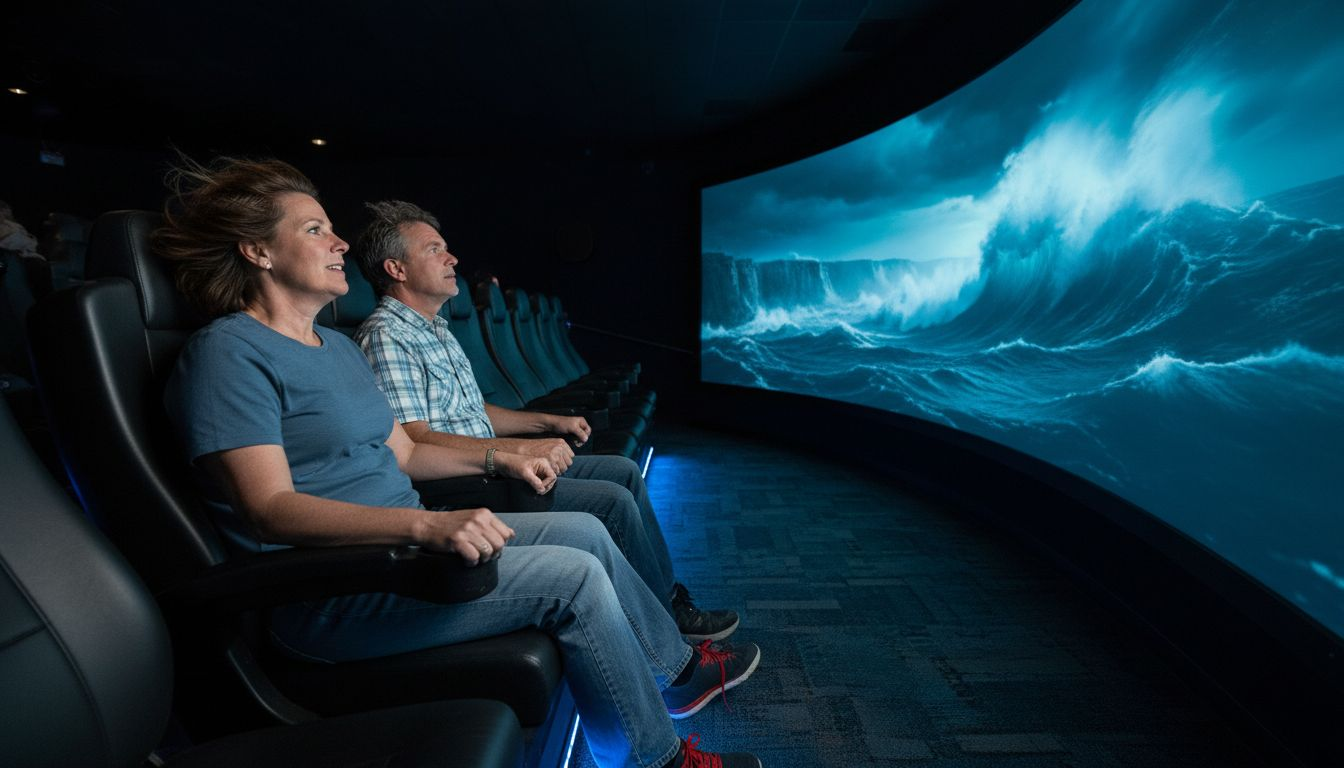
The complexity of these ride film experiences lies in their ability to fragment and personalize narratives, allowing each visitor to engage with Hawaiian cultural stories through uniquely tailored sensory interactions. By incorporating elements like scent diffusion, directional audio, motion platforms, and environmental temperature variations, these attractions create a holistic storytelling environment that communicates cultural narratives through multiple sensory channels. This approach transforms passive observation into an active, immersive cultural exploration that resonates on intellectual, emotional, and physiological levels.
Pro tip: Pay attention to all sensory cues during your ride experience, as each detail is carefully designed to enhance your understanding of Hawaiian cultural narratives.
How Technology Deepens Guest Engagement
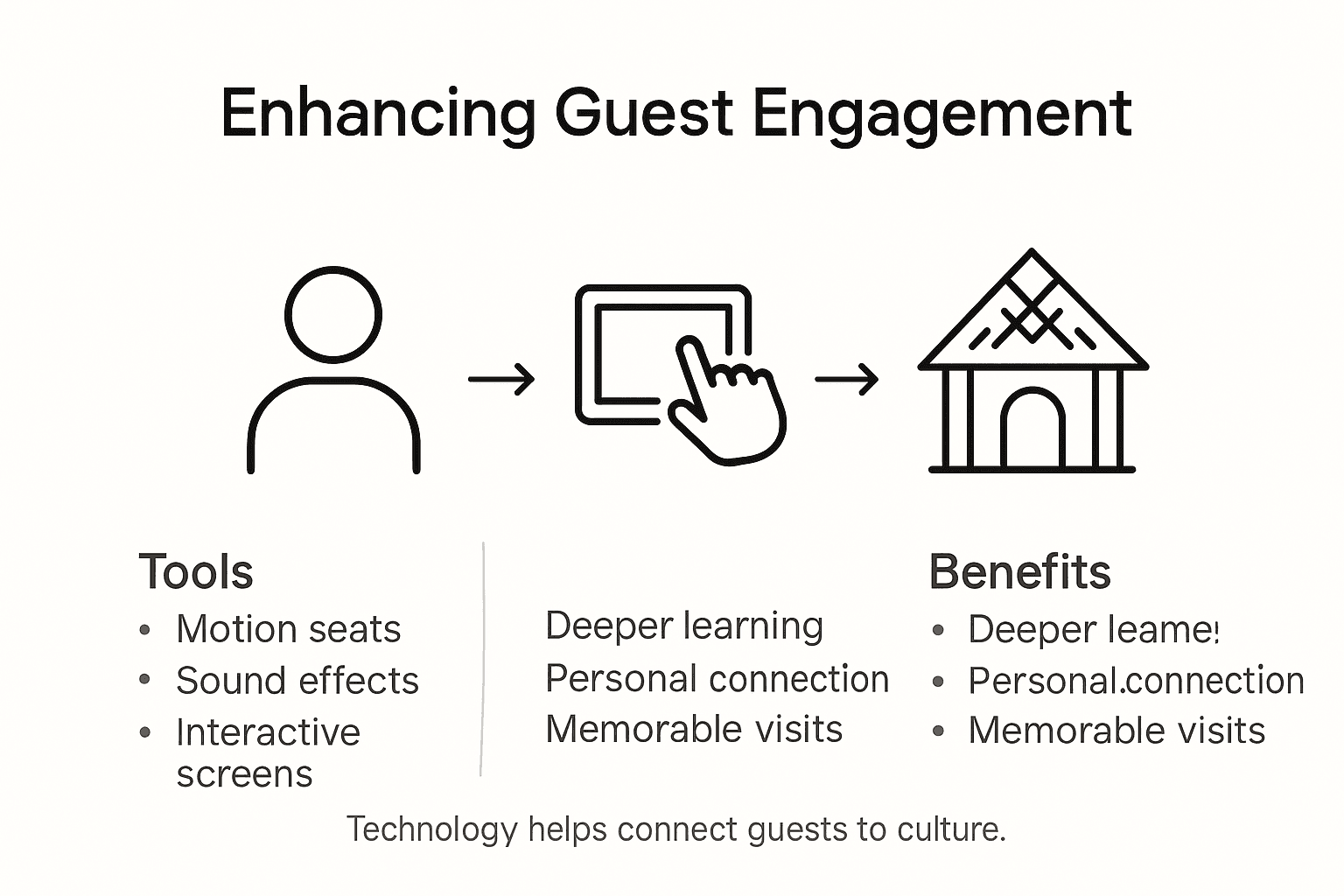
Emerging technologies in guest experiences are transforming cultural attractions from passive viewing environments into dynamic, interactive storytelling platforms. Artificial intelligence, augmented reality, and spatial audio technologies now enable unprecedented levels of personalization, allowing visitors to engage with Hawaiian cultural narratives through deeply individualized technological interactions that adapt in real time to each guest’s interests and emotional responses.
The sophistication of these technological approaches goes far beyond simple digital overlays. Adaptive storytelling systems create complex, branching narrative experiences that respond to visitor engagement, allowing each guest to explore Hawaiian cultural stories through unique pathways. Projection mapping, spatial audio, and AI-driven interactive elements work in concert to create immersive environments that communicate cultural nuances with remarkable depth and emotional resonance.
Advanced sensory technologies are particularly powerful in bridging cultural understanding, enabling visitors to experience Hawaiian traditions through multisensory interactions that transcend traditional language and educational barriers. Multi-sensory interaction designs now integrate sustainable technological innovations with authentic storytelling, creating experiences that are not just entertaining but profoundly educational. By leveraging AI, spatial computing, and responsive environmental design, these attractions transform cultural education from a passive learning model to an active, emotionally engaging exploration.
Pro tip: Approach technological experiences with curiosity and openness, allowing the interactive elements to guide you through the cultural narrative.
Common Missteps in Cultural Representation
Challenges in immersive storytelling reveal critical ethical considerations that extend far beyond simple entertainment experiences. Cultural representation demands extraordinary sensitivity, nuanced understanding, and a commitment to avoiding stereotypical or reductive narratives that can inadvertently harm the communities being portrayed. These missteps often emerge from well-intentioned but fundamentally flawed approaches that prioritize spectacle over authentic cultural understanding.
Stereotyping represents one of the most pervasive dangers in cultural storytelling, where complex traditions are reduced to simplistic, generalized representations. Superficial narratives risk transforming rich cultural experiences into performative displays that strip away the depth, complexity, and individual variation within indigenous communities. Cultural misrepresentation challenges demonstrate how seemingly innocuous storytelling choices can perpetuate harmful generalizations that marginalize and mischaracterize entire cultural groups, undermining the very intentions of immersive educational experiences.
Addressing these representation challenges requires a comprehensive, collaborative approach that centers indigenous voices and perspectives. This means moving beyond passive consultation to active partnership, ensuring that cultural storytelling is developed through genuine dialogue, mutual respect, and a commitment to amplifying authentic narratives. Successful cultural representation demands continuous learning, willingness to be corrected, and a fundamental recognition that cultural stories are living, evolving expressions of human experience rather than static, museum-like artifacts.
The following table summarizes common missteps and solutions in cultural representation:
| Misstep | Consequence | Solution |
|---|---|---|
| Stereotyping | Marginalizes cultural groups | Center indigenous voices |
| Superficial Narratives | Loss of complexity and authenticity | Commit to genuine partnerships |
| Performative Display | Reduces culture to spectacle | Continuous learning and dialogue |
Pro tip: Always approach cultural storytelling with humility, recognizing that your role is to listen and learn, not to define or interpret someone else’s cultural experience.
Experience Hawaiian Cultural Storytelling Like Never Before
The article highlights the challenge of transforming cultural storytelling into immersive and authentic experiences that deeply connect visitors to Hawaiian heritage. Many travelers seek more than just surface-level tours. They want to engage with character-driven stories, sensory elements, and authentic narratives that honor the true cultural traditions of Hawai’i. The pain points include avoiding superficial representations while creating emotional and intellectual connections through multisensory storytelling.
Flight of Aloha addresses these goals by offering an immersive flying theater that blends breathtaking 8K visuals, motion effects, scents, and wind to simulate flying over iconic Hawaiian landscapes. Our attraction brings legends like “Naupaka” and “Lahaina” to life using advanced technologies and genuine cultural narratives. This ensures guests are not simply passive observers but active participants in a cultural journey that respects indigenous storytelling traditions.
Ready to transcend ordinary sightseeing and immerse yourself in a deeply authentic Hawaiian experience?

Discover how Flight of Aloha transforms storytelling into a vivid adventure. Book your tickets now at Flight of Aloha and explore our unique ride films and exclusive VIP packages. Don’t miss your chance to connect with Hawaiian culture in a way that honors its depth and spirit. Visit us today and make your next Kailua-Kona visit truly unforgettable.
Frequently Asked Questions
What are character-driven stories in cultural storytelling?
Character-driven stories are narratives that emphasize personal experiences and emotional connections. In visitor attractions, these stories enhance visitor engagement by allowing them to empathize with the characters and the cultural context they represent.
How do sensory elements enhance cultural storytelling?
Sensory elements, such as sound, touch, and visual effects, create immersive experiences that engage visitors on multiple levels. This multisensory approach allows travelers to connect more deeply with the cultural narratives being shared, moving beyond mere observation.
Why is authentic representation important in cultural storytelling?
Authentic representation ensures that cultural narratives are presented accurately and respectfully. It prevents stereotypes and promotes a deeper understanding of the culture, allowing visitors to experience stories as living expressions rather than oversimplified portrayals.
How do modern technologies impact visitor experiences in cultural storytelling?
Modern technologies like augmented reality and adaptive storytelling systems create dynamic, interactive experiences. They enable personalized engagement with cultural narratives, transforming passive viewing into active exploration and enhancing emotional connections with the stories told.