
Travelers: Simple Sustainable Tourism Definition and 5-Item Checklist

Sustainable tourism means traveling in a way that protects the environment, respects local culture, and puts real money into the pockets of the people who live there. UN Tourism defines it as travel that accounts for its economic, social, and environmental impacts today and down the road. The Global Sustainable Tourism Council breaks that down into three pillars: caring for nature, respecting communities, and keeping tourism dollars local.
TL;DR:
- Most effective sustainable tourism practices involve continuous monitoring and aligning environmental, social, and economic pillars together, not just individual efforts.
- Community-led activities, local sourcing, and visitor limits help ensure tourism benefits locals, protects ecosystems, and maintains cultural authenticity.
- Certifications based on GSTC standards with transparent policies are essential indicators of genuine sustainability efforts.
- Real-world examples like Hawaii’s Flight of Aloha demonstrate how cultural storytelling, local employment, and indoor experiences support sustainable goals.
- Travelers can contribute by researching destination impact, choosing local providers, reducing waste, and asking meaningful questions about spending and ownership.
What Sustainable Tourism Means: The Three Pillars Explained Simply
Every serious definition of sustainable tourism rests on three legs, and if one of them wobbles, the whole idea falls over. Think of it as a stool: environmental, social, and economic. Take one leg away and you don’t have sustainable tourism anymore. You just have tourism.
The environmental pillar is the one most people think of first. It’s about using natural resources wisely instead of burning through them. A traveler practicing this might refill a water bottle instead of buying five plastic ones a day. An operator practicing it might install solar water heaters or route hiking groups away from fragile coral reefs.
The social pillar, sometimes called socio-cultural, is about respecting the people and traditions of a place instead of treating them as scenery. A traveler honors this by learning a few local words or asking before photographing someone. An operator honors it by hiring guides from the community and letting them tell their own stories, rather than importing a script written somewhere else.
The economic pillar asks a blunt question: does the money stay here? A traveler supports this by eating at a family-run restaurant instead of a chain, as explained in the guide on the role of local cuisine in tourism. An operator supports it by sourcing food, crafts, and staff locally instead of importing everything to cut costs.
Here’s what separates sustainable tourism from a marketing slogan:
- It applies to every kind of trip, not just eco-lodges and jungle treks. A downtown museum, a theme park, and a snorkeling tour can all practice it.
- It’s a moving target, not a fixed certificate. UN Tourism frames it as an ongoing process of monitoring impact and adjusting, not a box you check once.
- It works best when all three pillars move together. A hotel that saves water but pays workers poorly isn’t sustainable. It’s just efficient.
Why Sustainable Tourism Matters: Benefits And Harms It Prevents
Tourism done right builds up a place. Tourism done carelessly can wear it down fast, sometimes within a single decade. The difference shows up in jobs, ecosystems, and the everyday texture of a community’s life.
On the economic side, tourism can be one of the strongest development tools a coastal region has. Ocean-related tourism alone accounts for roughly 26% of ocean-based economic activity worldwide, which means marine conservation and local job creation are directly linked. When a dive shop hires local boat captains and buys fish from local fishermen instead of importing frozen product, that revenue actually circulates in the community instead of flying out on the next flight.
The trade-off is real: managed tourism builds communities up; unmanaged tourism can hollow them out within a generation.
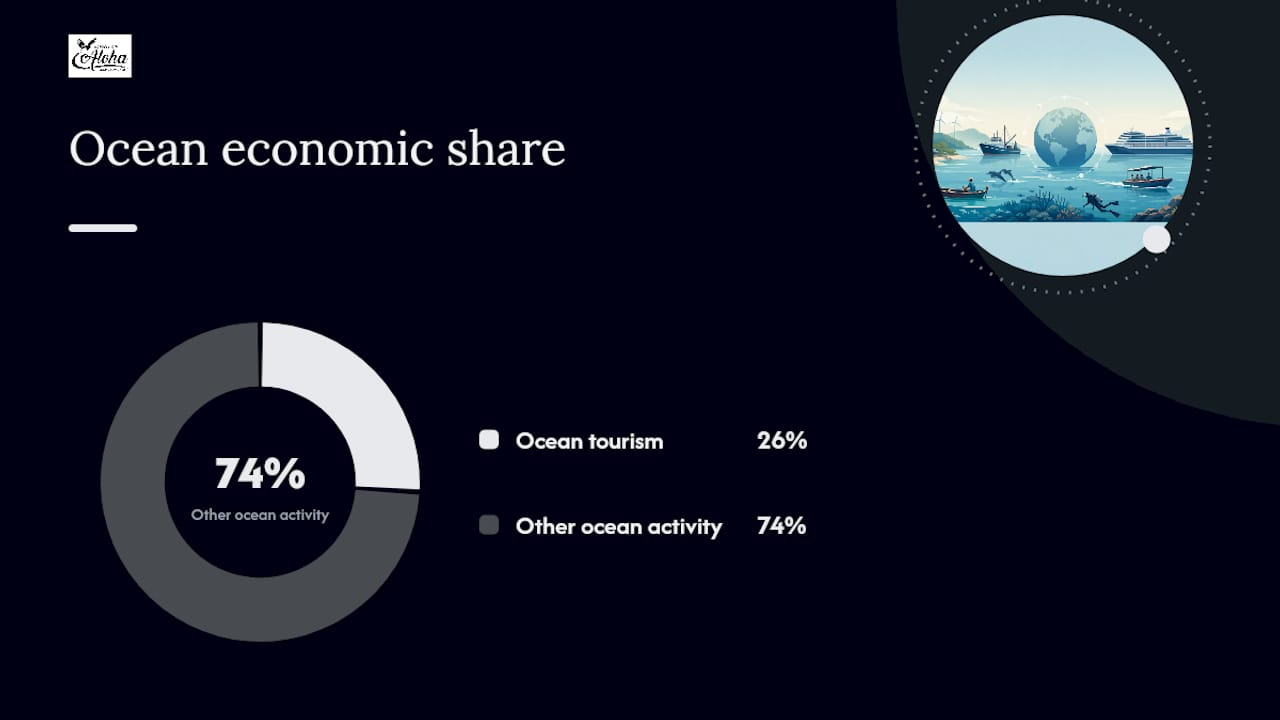
On the environmental side, sustainable practices protect the very things tourists came to see, whether that’s a reef, a rainforest, or a volcano. Marine protected areas that limit visitor numbers tend to keep fish populations healthier than open-access sites. On the social side, cultural heritage protection keeps traditions alive instead of turning them into props for a photo op.
When tourism isn’t managed, the harms tend to follow a predictable pattern:
- Overtourism strains water supplies, roads, and housing until residents can no longer afford to live in their own neighborhoods.
- Pollution from cruise ships, plastic waste, and unmanaged runoff degrades the reefs and beaches that drew visitors in the first place.
- Cultural erosion happens when sacred sites or traditions get repackaged into shallow entertainment stripped of meaning.
- Economic leakage occurs when most tourist spending flows to foreign-owned chains instead of local businesses.
Sustainable tourism isn’t about guilt. It’s about recognizing that a destination is a shared resource, not an unlimited one.
Simple, Real-World Examples of Sustainable Tourism
Abstract definitions are fine, but examples make the idea click. Here’s what sustainable tourism actually looks like on the ground, not in a brochure.
- Community-led walking tours. A guide from the neighborhood, rather than a distant tour company, shows visitors around and keeps the fee in the local economy.
- Restaurants that source from nearby farms and fishermen. This cuts transport emissions and keeps grocery money circulating locally instead of leaking to importers.
- Marine protected area visitor programs. Limited daily permits and trained guides help reefs recover while still letting people snorkel and dive.
- Structured volunteer moments, like Fiji’s Loloma Hour. Visitors spend one hour of their trip on a beach cleanup or a small community project. It’s a short, well-organized model that turns a passive vacation into an active contribution, and travelers who take part in it tend to report the experience feels more meaningful than a standard beach day.
- Attractions that hire and train locally. Storytelling, greeting, and hospitality roles filled by community members instead of seasonal outside hires.
There’s a newer idea building on all of this called regenerative tourism, which goes further than simply minimizing harm. It aims to leave a place better off than it was before the visitor arrived, restoring ecosystems and strengthening the social fabric rather than just avoiding damage.
How Travelers and Businesses Can Practice Sustainable Tourism: A Short Checklist
Knowing the definition is one thing. Actually doing something about it on your next trip is another. Here’s a checklist that works whether you’re packing a suitcase or running a tour company.
For travelers:
- Plan ahead. Research whether a destination has visitor caps, protected areas, or cultural etiquette you should know before you land.
- Pick local first. Choose family-run guesthouses, restaurants, and guides over international chains whenever you can.
- Reduce waste. Bring a reusable bottle and bag, and skip single-use plastics where alternatives exist.
- Follow the rules. Stick to marked trails, respect reef-safe sunscreen requirements, and don’t touch wildlife or coral.
- Learn before you go. A few sentences of the local language and a basic understanding of local customs go a long way.
For operators and businesses:
- Hire locally. Guides, drivers, and front-desk staff from the community keep wages in the local economy.
- Source locally. Food, crafts, and supplies bought from nearby producers cut both emissions and leakage.
- Measure your impact. Track water use, waste, and energy consumption, and set targets you actually report on.
- Be transparent. Publish your sustainability policies instead of just slapping a green leaf logo on your website.
Pro Tip: Before booking any tour or attraction, ask three questions: Who owns this business? Where does the food and staff come from? What happens to my entrance fee? If the answers are vague, that’s usually a sign the operation hasn’t thought much about sustainability at all.
Small operational choices, like using natural shade instead of cranking the air conditioning or buying produce from a farm ten minutes away, often do more for a destination’s long-term sustainability than a flashy solar panel installation that gets photographed once and forgotten. Passive design and local sourcing are unglamorous, but they’re the changes that actually move the needle.

Sustainable Tourism vs. Ecotourism, Responsible Travel, and Regenerative Tourism
These four terms get thrown around interchangeably, and that’s where a lot of the confusion around “what is sustainable tourism in simple words” actually starts. They overlap, but they’re not the same thing.
- Sustainable tourism is the umbrella term. It applies to any kind of trip, from a city break to a safari, and balances environmental, social, and economic impact.
- Ecotourism is a narrower slice focused specifically on nature-based travel, usually to natural areas, with conservation and education as the main goals.
- Responsible travel puts the focus on individual behavior. It’s less about systems and certifications and more about the choices a traveler makes: how they treat locals, what they buy, how they move around.
- Regenerative tourism is the newest and most ambitious of the four. Instead of asking “how do we minimize damage,” it asks “how do we leave this place better than we found it,” restoring habitats and strengthening communities rather than just avoiding harm.
Practitioners are increasingly drawn to the regenerative model because it sets restoration as the actual outcome, not just impact reduction as the ceiling. That’s a meaningful shift from the older mindset of “do less harm” to a newer one of “do measurable good.”
Who Sets Standards and Why They Matter: UNWTO and GSTC
Two organizations anchor almost everything written about sustainable tourism, and knowing their roles helps you spot the difference between real commitment and marketing.
UN Tourism (UNWTO) is the United Nations agency responsible for promoting sustainable, accessible tourism worldwide. It sets the broad definition, publishes guidance for governments and businesses, and pushes destinations to treat tourism as a development tool rather than an extraction industry.
The Global Sustainable Tourism Council (GSTC) takes that definition and turns it into something measurable. GSTC Standards act as minimum requirements, covering environmental resource use, sociocultural authenticity, and long-term economic viability, and they’re used as the basis for many third-party sustainability certifications.
Sustainable tourism should make optimal use of environmental resources, respect sociocultural authenticity, and ensure viable, long-term economic operations that provide socio-economic benefits to host communities.
Both organizations use their standards the same three ways: shaping government policy, training operators and guides, and giving travelers a way to measure claims instead of just trusting a logo. Here’s what to actually look for as a traveler:
- A published sustainability policy, not just a vague “eco-friendly” tagline.
- Certification tied to GSTC-recognized standards rather than a self-issued badge.
- Specific, checkable practices: local hiring numbers, water conservation steps, waste reduction targets.
Example: Flight of Aloha and Cultural Storytelling Rooted in Sustainability
Flight of Aloha’s immersive flying theater experiences in Kailua-Kona and Whalers Village Kaanapali on Maui offer a useful, real-world look at how an attraction can build sustainability into its identity rather than bolt it on. As a Native Hawaiian-owned attraction, Flight of Aloha builds its shows, including films like Naupaka and Lahaina, around Hawaiian legends told by the people whose culture those stories belong to.
That matters because cultural storytelling done right is itself a form of the social pillar in action. Instead of a generic nature film with a Hawaiian soundtrack slapped on, guests get narratives rooted in place, history, and legend, told with the intention of educating visitors rather than just entertaining them.
Attractions can support sustainable outcomes in a few concrete ways:
- Employing local storytellers and cultural consultants instead of outsourcing the narrative.
- Educating visitors on Hawaiian history and legend as part of the experience itself, not an afterthought.
- Sourcing locally where operations allow, keeping revenue circulating on the islands.
For readers looking for more Hawaii-specific detail, Flight of Aloha’s own guide on sustainable tourism principles and practices covers how this plays out across the islands.
An Editorial Take on Traveling with Purpose
Sustainable tourism gets treated like a checklist of virtuous behaviors, and that framing misses the point. It’s really about whether a place can still be itself after you leave it. Reefs that can still support fish. Neighborhoods where locals can still afford rent. Traditions that get told by the people who actually own them, not repackaged for a gift shop.
Try one thing on your next trip: before you book anything, ask where your money actually goes. That single question does more than any amount of guilt ever will.
— Ola
A Comfortable, Culturally Rooted Way to Experience Hawaii
If you want an aerial-feeling view of Hawaii without the $400 price tag or the motion sickness of a helicopter tour, Flight of Aloha gives you that lift while keeping both feet on the ground. It’s a Native Hawaiian-owned immersive flying theater that pairs 8K visuals, motion effects, scent, and wind with storytelling rooted in real Hawaiian legend, and it happens to be one of the most accessible things to do in Kona or Maui, rain or shine.

That accessibility shows up in the details. The Kailua-Kona location sits walking distance from Kailua Pier and the tender dock, which makes it an easy fit for a quick cruise shore excursion. The Whalers Village Kaanapali location on Maui offers the same draw. On a rainy day in Kona or Maui, or when vog rolls in and you want the best air conditioning in town instead of another beach afternoon, Flight of Aloha gives you a full cultural experience indoors, without waiting on the weather. Check showtimes and seats at Flight of Aloha. Book online to secure your seat.
Sources
- Sustainable development | UN Tourism
- GSTC Sustainable Tourism Glossary | GSTC
- Sustainable tourism can drive the blue economy | World Bank Blogs
- What is regenerative tourism? | Regenerative Travel
FAQ
What Is the Main Aim of Sustainable Tourism?
The main aim is to balance the needs of travelers, the tourism industry, the environment, and host communities so that a destination’s resources and culture remain intact for future visitors and residents alike, as UN Tourism defines it.
What Are the Three Main Pillars of Sustainable Tourism?
The three pillars are environmental, social (or socio-cultural), and economic. GSTC’s standards require optimal use of resources, respect for cultural authenticity, and viable long-term economic benefits for all three to count as sustainable.
What Are the Five Elements of Sustainable Tourism?
Definitions of “five elements” vary by source, but most build on the same three pillars above, adding governance and stakeholder participation as the ongoing management process that keeps sustainability from becoming a one-time fix.
How Is Sustainable Tourism Different From Ecotourism?
Ecotourism is a narrower category focused on nature-based travel and conservation education, while sustainable tourism is a broader approach that applies to any kind of trip, including museums, attractions, and city travel.
How Can I Tell If a Hawaii Attraction Practices Sustainable Tourism?
Look for local ownership, community-based storytelling, and transparency about hiring and sourcing. Flight of Aloha, for example, is Native Hawaiian-owned and builds its shows around authentic Hawaiian legend told from within the culture.