Skip a $400 Helicopter: Flight of Aloha’s ‘Forbidden Journey’ in Hawaii
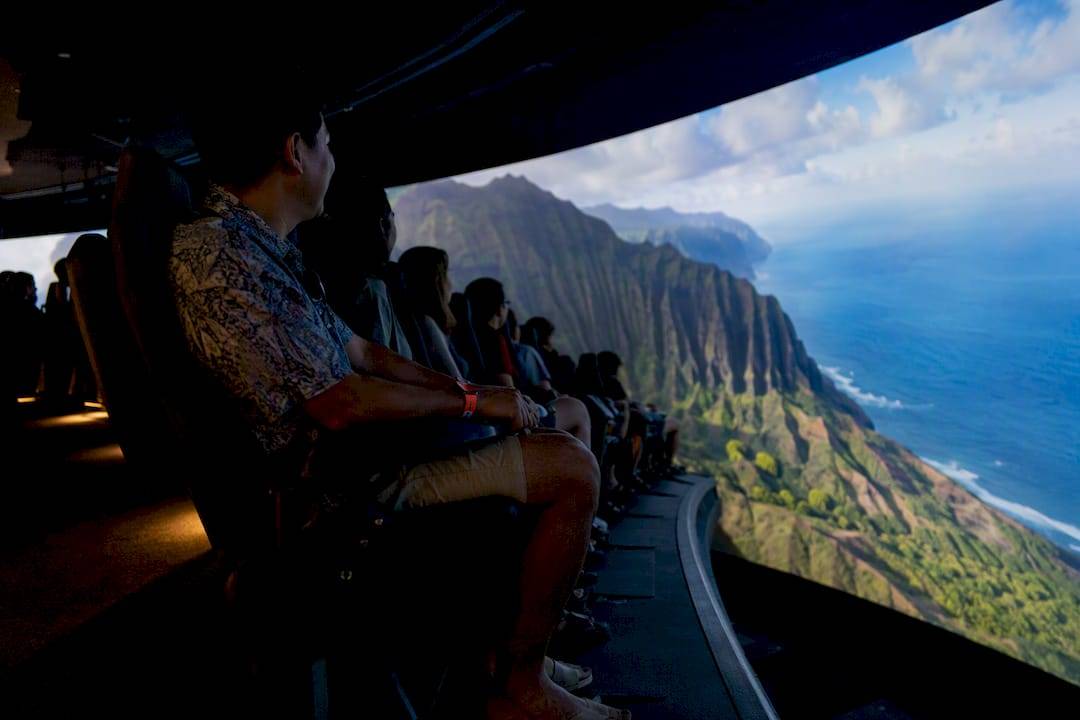
Flight of Aloha is a Hawaiian cultural flying theater with locations in Kailua-Kona and Whalers Village Kaanapali on Maui, blending 8K visuals, motion seating, wind, and scent into a “flight” over the islands. It tells Native Hawaiian stories through films like Naupaka and Lahaina, and it works as a family-friendly, cruise-friendly, weather-proof alternative to a $400 helicopter tour. If you’ve searched “what is Harry Potter and the Forbidden Journey” hoping to find Hawaii’s version of a flying-theater adventure, this is it, aloha-style.
TL;DR:
- The attraction uses an 8K wraparound screen and synchronized motion platforms with wind and scent effects to simulate a smooth, immersive flight experience.
- Shows last about 30 minutes, with options for single, double features, VIP upgrades, and annual passes, making it suitable for brief shore excursions or repeat visits.
- Its motion system offers a gentler experience than helicopters, reducing nausea risks and accommodating guests with mobility needs or motion sensitivities.
- Located near cruise docks in Kona and resort areas in Maui, it provides weather-proof, quick-access cultural entertainment that doesn’t require a full-day ticket.
- The films are rooted in Hawaiian legends and geography, emphasizing authentic storytelling over fantasy, and are designed with local cultural input and original footage.
What Is Flight of Aloha, And What Makes It a Forbidden-Journey-Style Ride?
Think of it as Hawaii’s answer to the immersive flying-theater ride category that made attractions like the Forbidden Journey experience famous on the mainland, minus the three-hour line and the broomstick theme. Flight of Aloha builds its version around genuine Hawaiian legends, not fantasy franchises, and it does that through a stack of sensory technology working in sync.
The centerpiece is an 8K wraparound screen that fills your peripheral vision, so the volcanic cliffs and coastlines on screen feel like they’re actually rushing past you. Underneath you, 18-seat motion platforms move with six degrees of freedom, tilting, dropping, and banking in sync with the footage. That’s the same category of motion-simulator engineering used in 4D ride technology, and it’s what separates this from a plain movie screen.
Add in timed wind bursts, scent cues released at just the right moment (think plumeria on Maui, salt air over Kona), and a seat design that lets your feet dangle free, and the “flying” sensation clicks into place fast.
Each show runs approximately half an hour, and you can typically choose a single feature or a double feature depending on how much time you’ve got. The rotating film lineup includes:
- Naupaka — a Hawaiian legend of love and loss tied to the naupaka flower
- Lahaina — a tribute flight over Maui’s storied coastline
- Whale Song — an underwater and above-water journey following humpback whales
- Europe Merrie Monarch — a cultural showcase connecting hula tradition to a wider stage
What Should You Expect During a Visit?
Walking in feels less like a ride line and more like settling into a small, air-conditioned theater built for exactly 18 people at a time. A crew member helps you into your seat, checks your harness, and gives you a quick rundown before the lights dim and the platform comes alive underneath you.
Here’s roughly how a visit unfolds:
- Check-in and seating — arrive a few minutes early, get seated on the motion platform, and settle in as your feet hang free.
- Liftoff sequence — the screen ignites and the platform tilts into its first climb, with wind kicking in as you “leave the ground.”
- Soaring and swooping — the film moves through dramatic dips, coastal flybys, and calmer narration-driven stretches that let the story breathe.
- Touchdown — the platform settles, the screen fades, and you’re guided out, usually buzzing and already talking about which film to catch next.
VIP experiences typically add early or priority seating and small extras to enhance the visit. Flight of Aloha markets itself as one of the most accessible activities in the islands, and the seat design and shorter runtime support that claim better than most physical attractions on either island.
Pro Tip: If you’re traveling with a motion-sensitive family member, ask staff about sitting in a middle row. Center seats tend to feel the gentlest tilt-and-drop motion during the flight sequences.
Where to Go, What It Costs, and How to Fit It Into a Short Visit
You’ll find Flight of Aloha in two spots: Kailua-Kona, walking distance from Kailua Pier and the cruise tender dock, and Whalers Village Kaanapali on Maui, right in the middle of one of the island’s busiest resort corridors. Both locations lean into cruise convenience. If your ship is tendering in Kona for a few hours, you can walk over, catch a full show, and be back at the pier without booking a shuttle.
Ticketing breaks down a few ways:
- Single feature — one film, about 30 minutes, ideal for tight schedules
- Double feature — two films back to back for guests who want more flight time
- VIP packages — priority seating and extras for groups or special occasions
- Annual passes — built for returning visitors and local residents who want repeat access
Booking online ahead of arrival is the smart move, especially during peak cruise season when show times fill fast. Check current pricing and available showtimes directly through the site before you head out, since seat counts are capped at 18 per platform and shows run on a set cadence throughout the day. If you’re stuck with a rainy afternoon in Kona or a hazy vog day that’s ruining outdoor plans, this is exactly the kind of indoor, air-conditioned refuge worth building into your itinerary early rather than as a backup plan.
Is It Safe, And Who Should Think Twice?
The motion platforms are engineered with six degrees of freedom, which lets the seats glide and swoop using coordinated actuation rather than the rougher vibration you’d feel in a small helicopter. That engineering choice is deliberate: it delivers the sensation of flight with noticeably less lateral shake than rotor-driven aircraft produce, which matters a lot for guests who get queasy in the air.
A few practical points worth knowing before you book:
- Height, age, and health advisories apply, similar to most motion-based attractions, so check current guidelines online
- Guests with mobility needs can generally be accommodated given the ride’s seated, low-transfer design
- Motion-sensitive travelers should consider a mid-row seat and avoid a heavy meal right before the show
- The roughly 30-minute runtime keeps intensity manageable for younger kids and older relatives alike
The six-degrees-of-freedom platform is the same core reason Flight of Aloha positions itself against helicopter tours: you get comparable aerial thrill with a motion profile built to be gentler on your stomach.
Why Visitors Pick Flight of Aloha Over a Helicopter Tour
A doors-off helicopter tour over Kona or Maui can run close to $400 per person, and that’s before factoring in the vibration, engine noise, and motion sickness that send some travelers reaching for a bag mid-flight. Flight of Aloha was built as a direct answer to that problem.
- Cost and comfort — you get sweeping aerial-style views of Hawaiian landscapes without the four-figure family price tag or the rotor shake
- Cultural depth — films like Naupaka and Whale Song are rooted in real Hawaiian legends, told by a Native Hawaiian-owned company, not a generic sightseeing script
- Weather-proof — rain, vog, or blazing heat outside doesn’t touch you inside a climate-controlled theater
- Location convenience — both Kona and Whalers Village Kaanapali sites sit in high-foot-traffic tourist zones, easy to reach on foot
For cruise passengers with a four-hour port window, that combination of a short runtime, walkable location, and weather independence solves a real planning headache.
How Flying Theaters Like This One Came to Be
Flying theater as a ride category didn’t start in Hawaii. It grew out of decades of theme park engineering that combined giant-format film with motion platforms, an approach parks worldwide adapted once the technology matured enough to run reliably at scale. Flight of Aloha entered that lineage recently, opening its Kona theater in early 2025 with a clear goal: apply that flying-theater format to authentic Hawaiian storytelling instead of borrowed franchise content.
The development brought together local cultural knowledge with motion-theater engineering from MediaMation, a technology partner known for advanced ride-motion systems. That partnership shows up in the platform hardware itself. Rather than adapting an existing fantasy film for the format, the company commissioned original footage shot specifically over Hawaiian coastlines, valleys, and reef systems, paired with narration and music grounded in island tradition.
Opening events for the Kona location leaned into that local-first framing, with community celebrations marking the launch rather than a typical theme park press junket. The Maui expansion into Whalers Village Kaanapali followed the same model, placing the second theater in a resort corridor already dense with tourist foot traffic. That rollout pattern, Kona first, then a resort hub on a second island, suggests a company building toward broader Hawaii coverage rather than a single flagship location.
What Actually Happens Once You’re Strapped In
The story arc across each film follows a similar shape, even though the settings change. You start grounded, literally, as the platform sits level while the screen orients you to where you’re about to “fly.” Then the seats lift and tilt into the first climbing sequence, and wind effects kick in to match the on-screen ascent.
From there, the pacing alternates between high-motion flying sequences and quieter narrative stretches. In Lahaina, that means soaring low over Maui’s coastline before slowing into a reflective pass over the town itself, with narration carrying the emotional weight rather than motion intensity. Whale Song follows a similar rhythm: fast surface-skimming glides over open water, then a slower, gentler dive sequence that tracks alongside humpback whales, timed so the platform’s movement mimics a whale’s rolling motion rather than a sharp drop.
Naupaka leans hardest into legend-driven storytelling, using the motion platform to punctuate key story beats, a startled lift during a dramatic turn, a gentle sway during a tender scene, rather than constant nonstop action. Europe Merrie Monarch shifts tone again, using the flying format to connect hula performance traditions to a larger stage, with scent and lighting cues built around the cultural performance rather than pure landscape flyover.
Every film closes on a descending sequence, the platform easing back to level as the screen pulls back to a wide establishing shot, giving your body and your emotions a clear signal that the flight is ending.
The Technology Powering the Flight Sensation
Six systems work together to create the illusion of flight, and understanding each one helps explain why this format feels different from a standard 3D movie. The 8K projection system anchors everything else, delivering resolution sharp enough that even peripheral detail, cloud texture, water spray, individual leaves, holds up under close viewing.
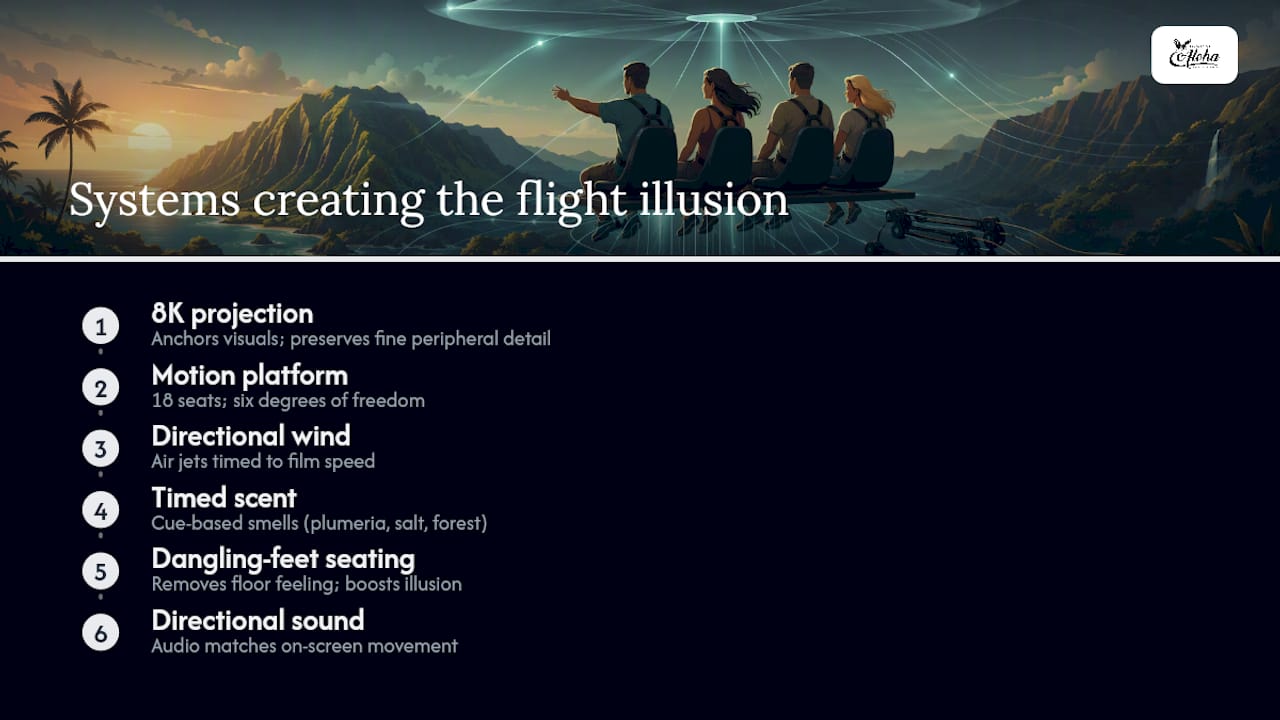
The motion platform itself carries 18 seats and moves across six degrees of freedom: forward and back, side to side, up and down, plus pitch, roll, and yaw rotation. That combination, engineered through MediaMation’s motion-theater systems, lets the platform simulate banking turns, sudden drops, and gentle glides using coordinated actuation, which produces noticeably less harsh vibration than a small helicopter’s rotor wash.
Wind effects come from directional air jets timed to the film’s flight speed, intensifying during dives and easing during calmer sequences. Scent delivery works on the same timed-cue system, releasing plumeria, salt air, or forest notes at specific moments in the story rather than running continuously. Seat design matters too. The dangling-feet configuration removes the sense of a solid floor beneath you, which does more to sell the flying illusion than the screen or motion alone. Sound design rounds it out, with directional audio placed to match on-screen movement so a swoop to the left carries an audio cue that leads your ear before your body catches up.
Where You’ll Find It and What Sits Nearby
Flight of Aloha operates two theaters, each embedded in a location built around tourist convenience rather than tucked into a standalone amusement park. The Kailua-Kona location sits walking distance from Kailua Pier and the cruise tender dock, making it one of the simplest shore-excursion options for anyone whose ship anchors offshore rather than docking directly.
The Whalers Village Kaanapali location on Maui places the second theater inside one of the island’s busiest oceanfront shopping and resort corridors, surrounded by beachfront hotels, restaurants, and retail. That positioning means a Flight of Aloha visit pairs naturally with an afternoon of shopping or a sunset dinner nearby, rather than requiring a dedicated trip out of the way.
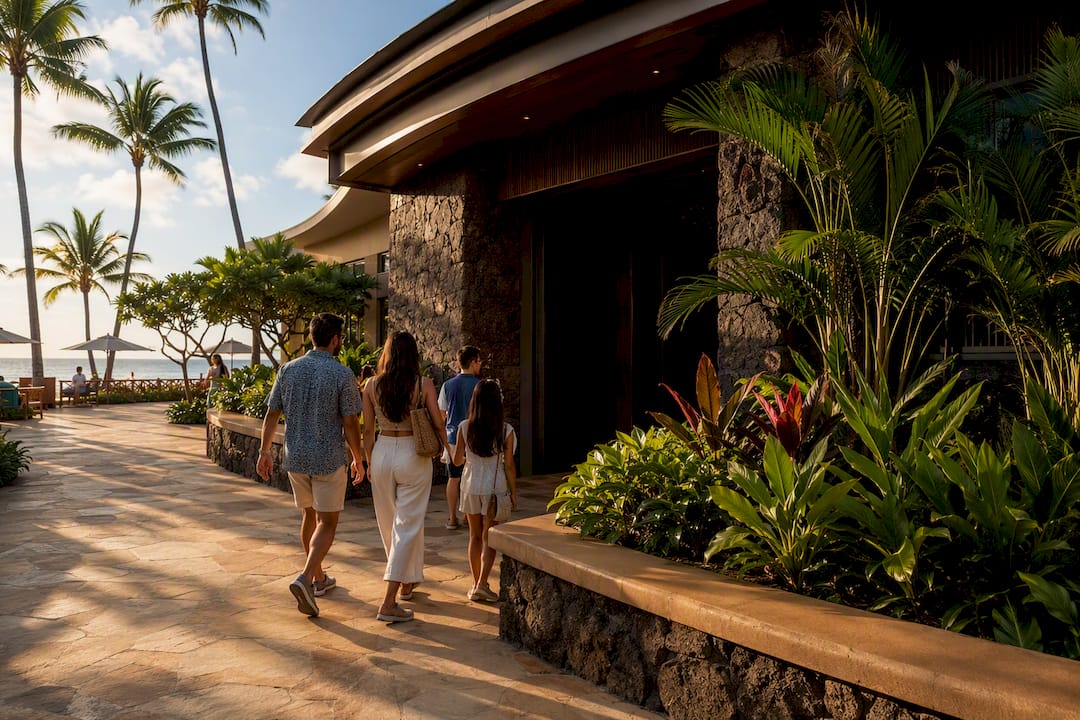
Neither location sits inside a larger theme park complex. Both function as standalone attractions inside existing tourist hubs, which keeps the visitor experience compact: no all-day park ticket, no long transit between attractions, no competing for your afternoon against a dozen other rides. For a family or cruise group with limited time on the ground, that standalone footprint is arguably the biggest practical advantage over a traditional theme park flying-theater ride, you’re in, you fly, you’re out, typically within an hour including check-in.
How Hawaiian Culture Shapes Every Design Choice
Every visual and sensory choice traces back to a specific piece of Hawaiian culture rather than an invented fantasy world. The film titles themselves signal this directly: Naupaka names a native flower tied to a well-known Hawaiian legend about separated lovers, and the film’s visual arc follows that story’s emotional beats rather than simply showcasing scenery.
Lahaina takes its name and its narrative focus directly from the historic Maui town, framing the flight as a tribute to a place with deep cultural weight rather than a generic coastal flyover. Whale Song draws on the cultural and ecological significance of humpback whales in Hawaiian waters, an animal woven into local tradition and seasonal life rather than treated as a random wildlife segment.
Europe Merrie Monarch connects most directly to a real, celebrated hula festival tradition, using the flying-theater format to carry performance and movement onto a screen-based stage. That choice reflects a broader design philosophy: rather than building fantasy creatures or invented mythology the way some flying-theater rides do, Flight of Aloha commissioned original footage and stories rooted in documented Hawaiian legend, geography, and cultural practice. Scent and wind cues reinforce that same authenticity, timed to real environmental textures, ocean spray, floral notes, forest air, instead of generic “adventure” effects. The result leans closer to a cultural documentary wrapped in ride technology than a theme park fantasy attraction, which is precisely the distinction the company built its identity around.
A Local Take on What Makes This Ride Different
Having watched Hawaii’s attraction scene lean harder into franchise-driven, imported entertainment over the past decade, what stands out about Flight of Aloha is how deliberately it refuses that path. It could have built a generic flying-theater ride and slapped a tropical filter over stock footage. Instead, it commissioned original stories tied to actual places tourists will recognize once they leave the theater, Lahaina, Maui’s whale waters, native flowers growing along the trail they hiked that morning.
For families weighing a $400 helicopter tour against a rainy afternoon with nothing planned, this fills a real gap. It’s not a replacement for seeing Hawaii firsthand. It’s a smart, comfortable, culturally grounded way to see more of it than your itinerary otherwise allows.
— Ola
Ready to Book Your Flight?
Flight of Aloha operates two theaters built for exactly this kind of trip: Kailua-Kona, walking distance from the pier, and Whalers Village Kaanapali on Maui, right in the middle of the resort strip. Both run single and double feature shows, VIP packages for special occasions, and annual passes for repeat visitors or local residents who want to catch every film in rotation.
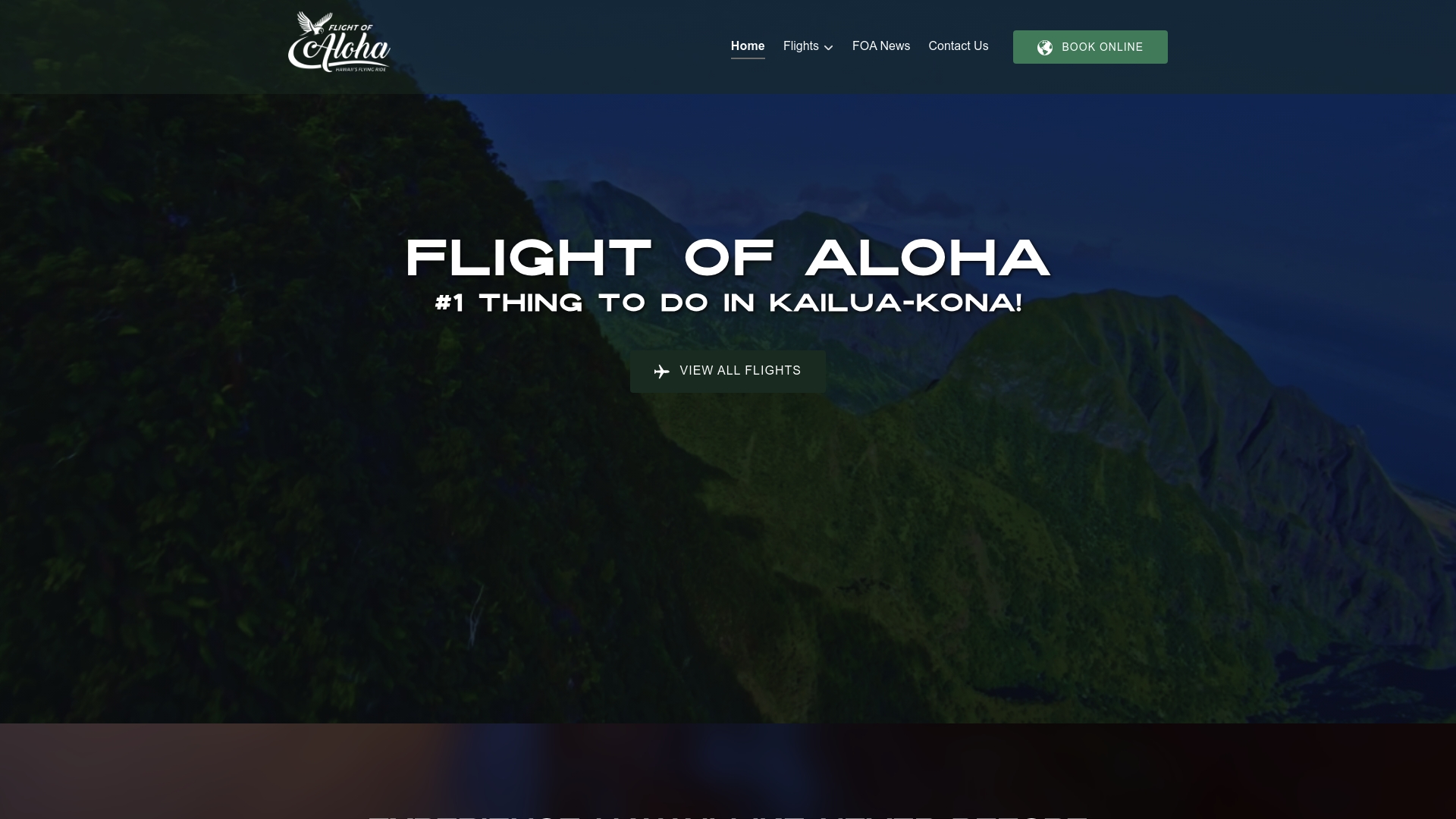
Unlike a helicopter tour that can run close to $400 per person and leaves some passengers queasy from rotor vibration, this ride delivers the same sense of soaring over Hawaiian landscapes from an 18-seat motion platform engineered for a smoother ride. It’s also the fallback plan every Kona or Maui trip eventually needs: rainy afternoon, vog haze, or a short cruise stop with a few hours to fill. Head to the Flight of Aloha booking page, pick your location and film lineup, and lock in a showtime before it fills up. Book online to secure your seat.
Sources
- Immersive 8K visual storytelling experience to open in Kona
- Business Monday: Immerse yourself in Hawai‘i’s landscapes through Flight of Aloha theater
FAQ
What Is Flight of Aloha?
Flight of Aloha is a Hawaiian cultural flying theater using 8K visuals, motion seating, wind, and scent to simulate flight over the islands, with locations in Kailua-Kona and Whalers Village Kaanapali on Maui.
How Long Does the Ride Last?
Each show runs about 30 minutes, with single-feature and double-feature ticket options depending on how much time you want to spend in the theater.
Is Flight of Aloha Good for Motion-Sensitive Guests?
Yes. Its six-degrees-of-freedom motion platform produces smoother, more coordinated movement than a small helicopter’s rotor vibration, making it a gentler alternative for many riders.
Is It Walking Distance From the Cruise Pier in Kona?
Yes, the Kailua-Kona location sits walking distance from Kailua Pier and the cruise tender dock, making it convenient for short shore excursions.
Should I Book Tickets Online in Advance?
Booking online ahead of time is recommended, especially during peak cruise season, since each show seats only 18 guests per platform and slots fill quickly.