
Why Choose Group Experiences for Unforgettable Travel 🌺
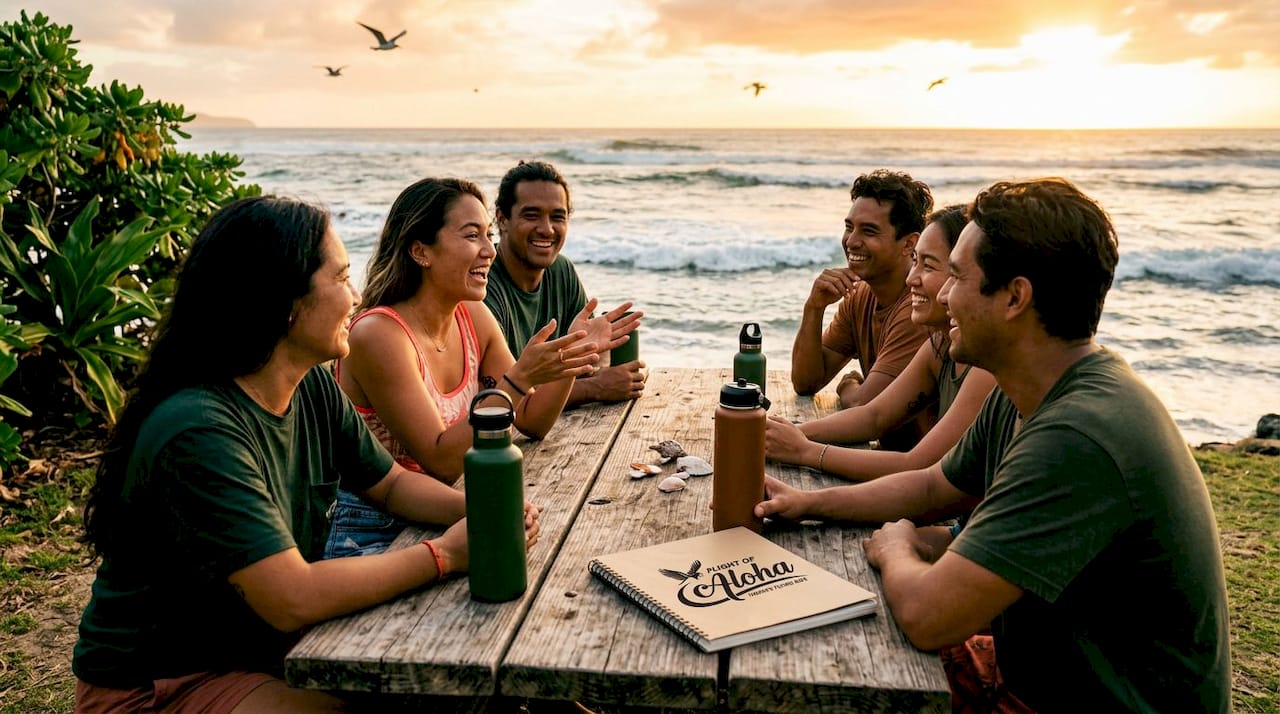
Group experiences are defined as shared activities where participants engage in repeated social interactions that build trust, identity, and lasting bonds. Research from Nature Human Behaviour, Science Advances, and Frontiers in Psychology published in 2026 confirms that choosing group experiences over solo travel produces measurable improvements in mental health, social cohesion, and overall wellbeing. For families and travel groups visiting places like Kailua-Kona on the Big Island of Hawai’i, this is not just a feel-good idea. It is backed by science. Whether you are planning a multigenerational reunion, a family vacation, or a group shore excursion, the benefits of group activities go far deeper than shared logistics.
Why choose group experiences: the psychology behind the bond
The psychological term for what happens inside a well-functioning group is identity fusion. This is the process by which a person’s individual identity becomes deeply linked to the group’s identity, creating a sense of “we” that motivates trust, generosity, and emotional resilience. It is not the same as simply being in the same place as other people.
A meta-analysis of 71 studies covering more than 22,000 participants found that true group participation produces small but significant advantages for functional outcomes like coordination and cooperation. That finding matters because it draws a clear line between groups that are designed for social bonding and groups that are just logistical arrangements.
“Bonding to multiple groups correlates with better mental health outcomes and increased engagement in health-protective behaviors.” — Science Advances, 2026
A global analysis across 122 countries showed that individuals who reported strong bonds to family and several other groups experienced measurably improved wellbeing. This means that a family trip designed around shared activities does more than create memories. It actively strengthens the mental health of every person involved.
Here is what the research identifies as the core psychological drivers:
- Repeated shared moments function as bonding levers, reducing social isolation over time
- In-group rituals like shared meals and guided cultural activities reinforce a sense of belonging
- Multiple group identities (family unit plus travel group, for example) compound wellbeing benefits
- Structured social time builds trust faster than unstructured co-location
The takeaway is clear. The impact of collective experiences comes from design, not just proximity.
How to design group travel itineraries that actually bond people
Knowing why group experiences work is only half the equation. The other half is knowing how to build an itinerary that delivers those benefits. Most group trips fail to maximize bonding because they treat logistics as the product. The research points to a different approach entirely.
A 2026 study in Frontiers in Psychology found that tourism experiences incorporating gratitude journaling and guided appreciation significantly enhanced tourist wellbeing and relationship bonding. Passive sightseeing does not produce the same effect. Reflection does.
Here are the four elements that separate a bonding itinerary from a basic tour:
- Continuity of group members. Rotating participants in and out of activities breaks the social momentum that builds trust. Keep the core group together across key experiences.
- Shared meals with intentional conversation. Meals are one of the most powerful bonding rituals across every culture. Build them into the schedule, not as afterthoughts.
- Guided cultural interpretation. Pairing a local guide’s storytelling with structured reflection deepens shared meaning far beyond what a brochure provides.
- Gratitude practices. Something as simple as asking each person to share one thing they appreciated about the day produces measurable wellbeing gains, according to Frontiers in Psychology.
Pro Tip: For multigenerational groups, design micro-group activities by age or interest cluster, then reunite the full group for a shared highlight experience. Bonding within subgroups plus large-group reunions optimizes cross-generational connection and mental health resilience.
| Itinerary Element | Solo Travel | Structured Group Experience |
|---|---|---|
| Social bonding opportunity | Low | High |
| Cultural depth | Self-directed | Guide-facilitated |
| Wellbeing impact | Moderate | Significantly higher |
| Memory formation | Individual | Shared and reinforced |
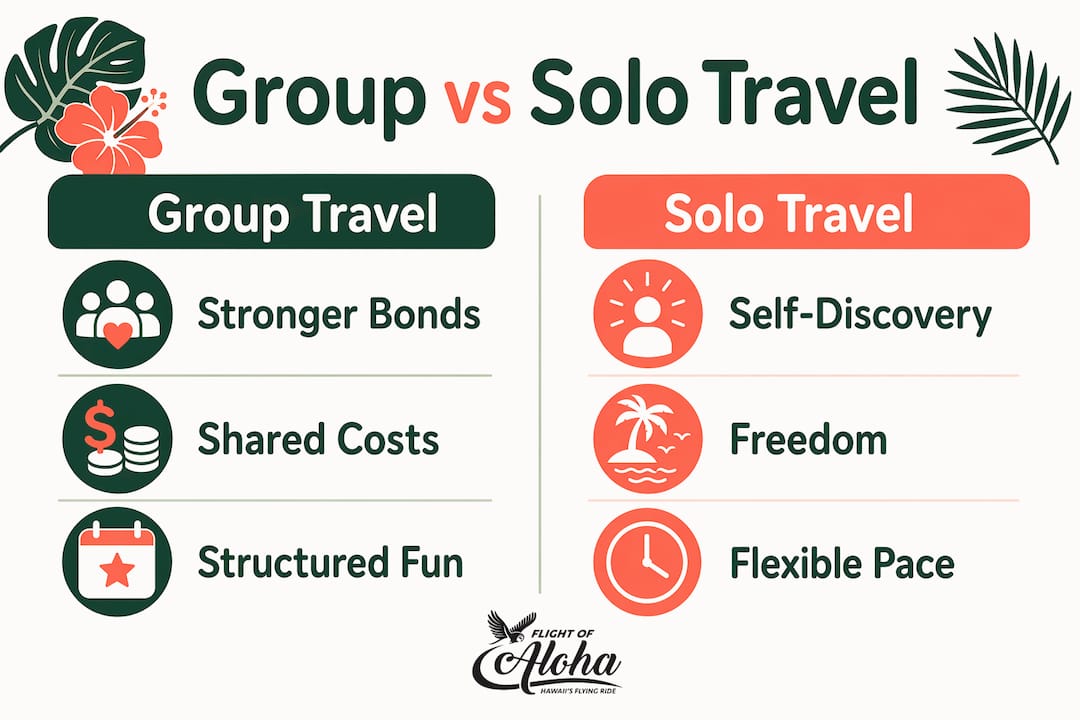
The comparison above reflects what the research consistently shows. Group travel activities in Hawai’i designed around these principles produce a qualitatively different experience than simply visiting the same places with other people nearby.
Group experiences vs solo travel: what the data actually shows
Solo travel has real value. It builds autonomy, self-confidence, and personal reflection. But it has a structural limitation: it cannot replicate the social bonding that group experiences produce. The functional benefits of group participation only emerge when groups function as true social units with designed dynamics, not just shared itineraries.
A survey of 4,634 solo travelers ages 20 to 49 by WeRoad found that 48% made lifelong friends through group backpacking trips, and 7% met romantic partners. The primary motivation for choosing group travel was friendship and social connection, not cost savings or convenience. That tells you something important about what people are actually searching for when they ask why participate in group events.
The advantages of group travel over solo travel break down into three categories:
- Social support. Groups provide emotional backup during travel disruptions, unfamiliar environments, and moments of vulnerability that solo travelers navigate alone.
- Belonging. The sense of being part of something larger than yourself is a documented driver of mental health. Solo travel, by definition, cannot provide this.
- Shared narrative. When you experience something with others, you co-create a story. That story becomes a reference point for the relationship long after the trip ends.
The distinction between a “true group” and a logistical grouping is not semantic. It is the difference between a trip that changes your relationships and one that simply checks destinations off a list. Family bonding through Hawaiian tourism works precisely because the experiences are designed to create that shared narrative.
What practical benefits do families and groups gain from group travel?
Beyond the psychological case, the reasons for group outings include a set of practical advantages that make group travel the smarter choice for families and organized travel groups.
- Cost savings. Group discounts on accommodations, activities, and transportation are standard across the travel industry. Shared expenses and group pricing make premium experiences accessible at a fraction of the solo cost.
- Safety. Traveling with a group means you always have backup. Local guides, organized transportation, and the simple presence of trusted companions reduce risk in unfamiliar places.
- Exclusive access. Many cultural experiences, private tours, and off-the-beaten-path activities in places like Kona are only available to groups. Solo travelers simply cannot access them.
- Built-in memories. A group trip produces shared reference points that become the foundation of long-term relationships. Families who travel together report stronger bonds precisely because they have a shared catalog of experiences to draw from.
- Local guidance. Organized group experiences in destinations like the Big Island connect you with Native Hawaiian cultural knowledge that no guidebook replicates.
What to expect from group experiences, practically speaking, is a trip that costs less per person, feels safer, goes deeper culturally, and produces memories that last far longer than any solo adventure.
Key takeaways
Group experiences produce measurably stronger social bonds, better mental health outcomes, and richer cultural engagement than solo travel when itineraries are intentionally designed around shared interaction, guided reflection, and continuity of group members.
| Point | Details |
|---|---|
| Design beats group size | Itineraries with structured social time produce stronger bonds than large, loosely organized groups. |
| Gratitude practices work | Adding guided reflection or journaling to group travel significantly boosts wellbeing, per Frontiers in Psychology. |
| Multiple group bonds compound | Bonding within subgroups and the larger group together produces the greatest mental health benefits. |
| Solo travel has limits | Group experiences provide social support, belonging, and shared narrative that solo travel structurally cannot. |
| Practical gains are real | Group travel delivers cost savings, safety, exclusive access, and deeper cultural immersion for families. |
What I’ve learned about choosing group experiences that actually matter
I have seen a lot of group trips that look great on paper and fall flat in practice. The itinerary was packed, the destinations were stunning, and everyone came home with photos. But nobody came home with a stronger relationship. That is the gap between group travel as logistics and group travel as a genuine shared experience.
The research from Science Advances and Frontiers in Psychology confirms what I have observed firsthand. The trips that change people are the ones where the group is treated as a social unit, not a booking category. Shared meals matter. A guide who tells you the real story behind a place matters. A moment where everyone stops and reflects on what they just experienced together matters more than any scenic overlook.
My honest advice: stop evaluating group trips by the number of activities and start evaluating them by the quality of the social design. Ask whether the itinerary creates repeated moments of connection. Ask whether there is cultural depth, not just cultural scenery. Ask whether the experience is designed to bring your group closer or just move them from point A to point B.
The best group travel I have encountered in Hawai’i does exactly that. It uses the islands’ stories, landscapes, and culture as the backdrop for genuine human connection. That is what makes it unforgettable. That is what group travel entertainment in Hawai’i can be at its best.
— Ola
Experience the best group activity in Kona with Flight of Aloha
If you are looking for the top things to do in Kona with your family or group, Flight of Aloha belongs at the top of your list. This Native Hawaiian-owned immersive flying theater sits inside King Kamehameha’s Kona Beach Hotel, just a short walk from Kailua Pier and the tender dock, making it perfect for shore excursions Kona visitors love.

Flight of Aloha is the smart alternative to helicopter tours. You get breathtaking aerial views of lush Hawaiian landscapes, volcanic coastlines, and sacred cultural sites through 8K visuals, motion effects, wind, and scent, all without the $400 price tag or motion sickness. It is the best indoor activity on the Big Island, fully climate-controlled and ideal for rainy days in Kona or escaping the heat and vog. Whether you are traveling with kids, grandparents, or a full group, this is a family friendly Kona experience that delivers real cultural storytelling rooted in Hawaiian legends. Book online to secure your seat and give your group a shared memory worth talking about for years.
FAQ
Why choose group experiences over solo travel?
Group experiences produce stronger social bonds, better mental health outcomes, and deeper cultural engagement than solo travel. A global study across 122 countries found that bonding to multiple groups correlates directly with improved wellbeing and health-protective behaviors.
What makes a group travel experience genuinely bonding?
True bonding comes from itineraries designed as social units, not just shared logistics. Structured group programs with shared meals, guided cultural interpretation, and continuity of group members produce significantly better outcomes than unstructured co-location.
How do gratitude practices improve group travel?
Research from Frontiers in Psychology shows that gratitude journaling during tourism significantly enhances tourist wellbeing and relationship bonding beyond simple enjoyment. Even brief daily reflection exercises make a measurable difference.
What are the practical benefits of group travel for families?
Group travel delivers cost savings through shared expenses and group discounts, increased safety through organized support, and access to exclusive cultural experiences unavailable to solo travelers. Families also build a shared catalog of memories that strengthens long-term relationships.
How many solo travelers make lasting friendships through group travel?
A WeRoad survey of 4,634 solo travelers found that 48% made lifelong friends through group backpacking trips, with social connection cited as the primary motivation for choosing group travel over going alone.