
Hawaii family attractions checklist: Immersive & fun 🌺
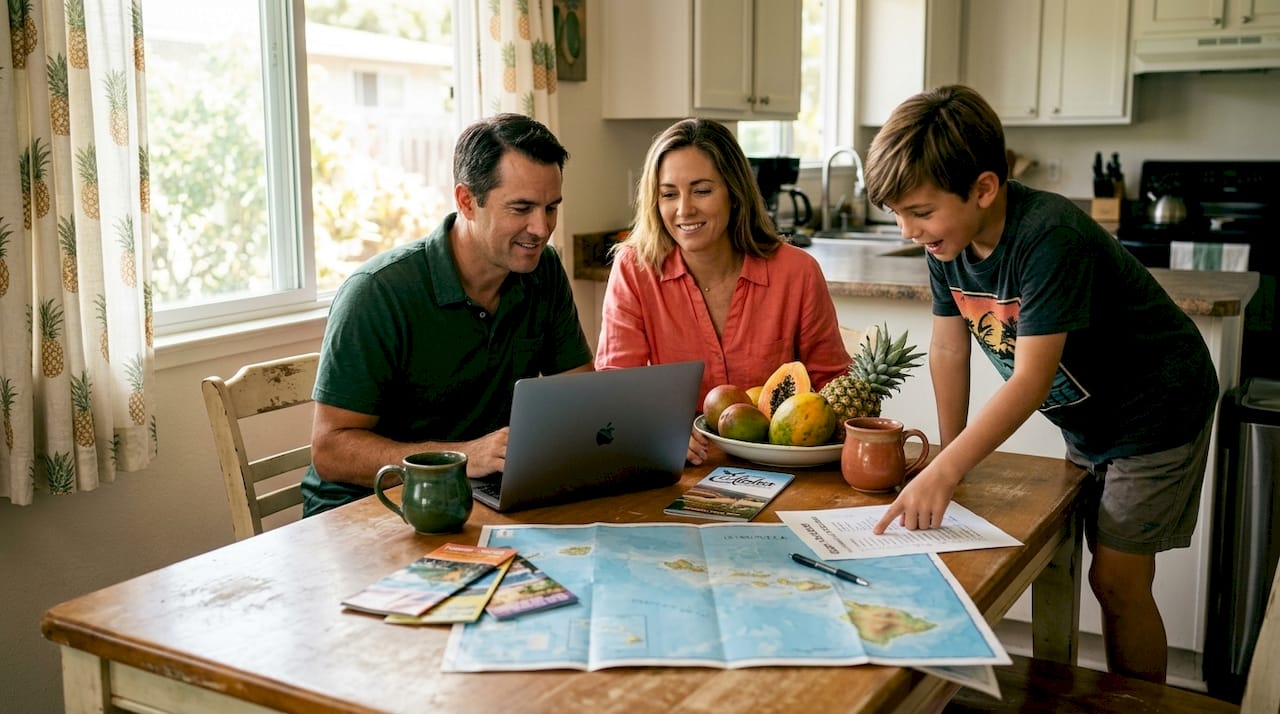
Planning a Hawaii family trip is exciting, but choosing which attractions to visit can feel overwhelming. With dozens of options promising “unforgettable experiences,” how do you pick what actually works for all ages? Many families end up overloaded with passive tours and crowded shows, leaving kids bored and parents exhausted. The secret is building a family cultural tourism checklist rooted in real engagement, hands-on learning, and cultural storytelling. This guide walks you through exactly how to do that, so every stop on your itinerary earns its place.
Key Takeaways
| Point | Details |
|---|---|
| Anchor with immersive attractions | Build your checklist around top cultural destinations like PCC and Bishop Museum for hands-on, story-rich experiences. |
| Add interactive participation layers | Include games, craft stations, and passport activities so children can actively engage rather than just observe. |
| Prioritize comfort and pacing | Schedule breaks and choose climate- and sensory-friendly options to keep everyone happy and energized. |
| Choose connection-based luaus | Pick luaus that offer kid participation and genuine cultural interaction over large, impersonal stage shows. |
| Evaluate by engagement, not just scale | Aim for experiences your family will remember for doing and learning, not just the well-known names. |
How to set your family attractions criteria
With your destination in mind, let’s look at what makes a family attraction checklist genuinely effective.
Not all Hawaii attractions are created equal. Some are visually stunning but completely passive. Others pack in so much stimulation that kids hit a wall by noon. A smart checklist starts with clear criteria, so every experience you add pulls its weight.
Here’s a proven ordering based on the Polynesian Cultural Center Family Guide:
- Choose 1 to 2 “anchor” experiences. These are your big, multi-hour immersive stops, think PCC-style multi-village parks or a museum like Bishop Museum.
- Add 1 to 2 “participation layers.” These are hands-on moments: crafts, games, a family luau where kids can learn basic hula movements or join in.
- Build in scheduled breaks. Hydration stops, shade time, and quiet moments keep energy levels manageable across all age groups.
- Confirm sensory constraints before committing. Darkness, loud animatronics, and long theatrical shows can overwhelm younger kids. Check these details early.
“A great family checklist isn’t a to-do list. It’s a rhythm of immersion, participation, rest, and wonder.”
Hands-on, story-driven attractions consistently outperform passive sightseeing for families. When kids are doing something, touching, building, paddling, or dancing, they stay engaged and absorb culture in a natural, joyful way. Passive tours might look impressive in photos, but they’re rarely what kids remember.
The enhancing family outings approach also means thinking about connection before scale. A smaller luau where your child can dance alongside a performer will always beat a stadium-sized show where they’re row 30 back.
Pro Tip: When comparing luaus, ask the venue directly: “Do kids get to participate, or do they mainly watch?” That single question separates the memorable experiences from the forgettable ones.
Immersive anchor experiences: Polynesian Cultural Center & Bishop Museum
With your core selection criteria set, let’s highlight Hawaii’s top immersive cultural anchors for families.
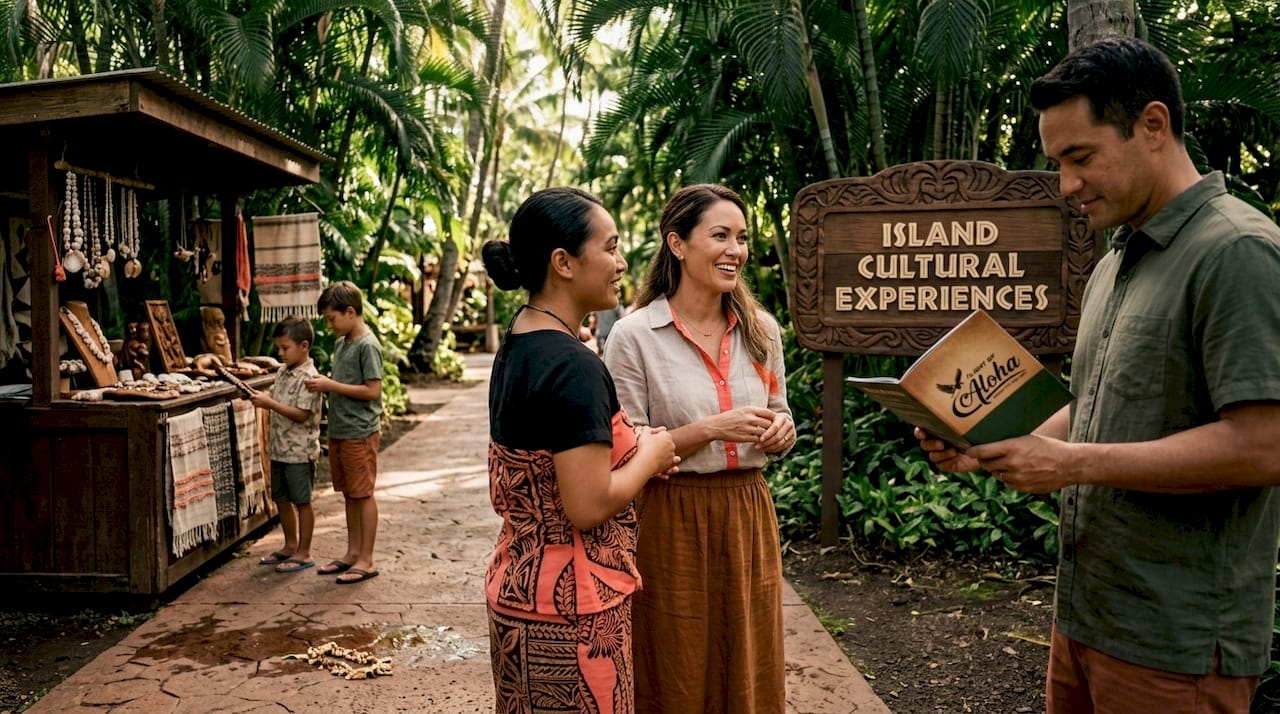
Every strong family checklist needs at least one major anchor. These are experiences designed for deep engagement, not quick photo stops. In Hawai’i, two of the most powerful cultural anchors are the Polynesian Cultural Center (PCC) on O’ahu and Bishop Museum in Honolulu.
Polynesian Cultural Center highlights:
- Six island villages, each offering distinct hands-on activities and cultural storytelling
- Canoe rides through the park connecting all villages in a fun, active format
- Craft and game stations kids can physically participate in, not just observe
- An evening performance that brings Pacific island stories to life through music and dance
- Excellent for families with children ages 5 and up
The PCC is structured around six island villages with hands-on activities plus evening performance storytelling, and a visit is commonly planned as a 6 to 8 hour block. That’s a full day of stories, movement, and culture all in one place. 🌌
Bishop Museum highlights:
- Rich Hawaiian cultural artifacts and natural history exhibits
- Hands-on science exhibits that work well for curious kids of all ages
- Climate-controlled indoor setting, making it a perfect weather buffer for rainy days
- Quiet corners and less crowded galleries suited to families needing a sensory reset
- Strong narrative storytelling running through every exhibit
Bishop Museum serves as an established, family-suitable cultural anchor in Honolulu that delivers narrative cultural storytelling and hands-on science exhibits. Unlike PCC, the museum allows flexible blocks of time, so you can spend 90 minutes or four hours depending on your family’s energy.
| Feature | Polynesian Cultural Center | Bishop Museum |
|---|---|---|
| Best age range | 5 and up | 3 and up |
| Time investment | 6 to 8 hours | 1.5 to 4 hours |
| Interaction level | Very high | Moderate to high |
| Weather dependent | Mostly outdoor | Fully indoor |
| Sensory intensity | High (evening show) | Moderate |
| Cultural storytelling | Strong, performance-based | Strong, exhibit-based |
Statistic callout: PCC = plan 6 to 8 hours. Bishop Museum = plan flexible blocks from 90 minutes to half a day. Both deliver serious cultural value.
Explore more unique Hawaii cultural experiences to round out your itinerary beyond these two anchors. If you’re also looking at multi-destination family travel, there are great comparisons of magical family holiday experiences that can inform how you structure immersive itineraries anywhere in the world.
Add participation and engagement layers
Anchor experiences are just the start. Now, let’s layer interaction and fun so everyone is actively involved.
The biggest mistake families make is stacking too many “watching” experiences. Even beautiful performances lose their magic when kids aren’t involved. Participation layers fix this by giving children something to do at nearly every stop.
Here’s a checklist of hands-on engagement elements to look for and include:
- Canoe rides. Physical, fun, and distinctly Hawaiian. Kids love the movement and the novelty of paddling in a real outrigger canoe.
- Craft stations. Lei making, weaving, or tapa cloth activities let children create something they can take home.
- Cultural game areas. Traditional Hawaiian and Pacific island games teach history through play. Kids don’t even realize they’re learning.
- Stamp passport activities. Moving from station to station with a collectible passport keeps kids motivated and gives them a sense of achievement.
- Ukulele or hula mini-lessons. Short, guided movement or music lessons are usually free at larger cultural centers and are almost universally loved by kids.
PCC’s family mechanics shortlist for kids specifically includes canoe rides, village cultural games and crafts, kid-accessible show elements, and water-stage evening programming. These aren’t add-ons. They’re core to why PCC works so well for families.
When building your checklist, make sure you include kid-engagement mechanics such as interactive passport and stamp activities and hands-on craft and game stations, not just performances. This applies to every stop on your itinerary, not just the big anchor.
Why participation layers matter:
- Kids stay engaged for longer stretches when they’re active participants
- Cultural learning sticks far better through doing than through watching
- Participation reduces the “when are we leaving?” factor by 90%
- It creates natural photo opportunities and shared family memories
- It bridges age gaps, with toddlers and teens often enjoying the same crafts or games
Pro Tip: Mix active options (canoe rides, games) with quieter interactive options (crafts, stamp passports) throughout the day. This balance prevents physical exhaustion while keeping mental engagement high.
Check out more ideas for immersive Hawaii experiences that blend activity and storytelling beautifully. For a broader look at how interactive attractions for families work across different venues, it’s worth seeing what elements translate across the best family-focused experiences globally.
Choosing a family luau: Connection or spectacle?
With the checklist’s anchor and participation layers in place, let’s make sure your luau choice delivers both fun and cultural connection.
A luau is a must for most Hawaii family visits. But there’s a big difference between a luau that invites your family into the experience and one that seats you at a table 50 rows from the stage while performers you can barely see dance at a distance.
“The best luaus don’t just entertain your family. They invite your family into the story.”
Luaus are a key cultural storytelling and entertainment category for families. The expert nuance is to prefer formats with participation and connection rather than purely spectator-heavy, crowd-dense setups. That shift in thinking changes everything about which luaus make the cut.
| Criteria | Connection-first luau | Large-scale spectacle luau |
|---|---|---|
| Kid participation | Hula lessons, lei greets, activities | Mostly watching |
| Visibility | Close to performers | Often far back in large venues |
| Crowding | Smaller, more intimate | Very large groups |
| Food quality | Usually curated, smaller menus | Buffet-heavy, variable |
| Cultural learning | Integrated storytelling | Performance-focused |
Tips for spotting a child-friendly luau:
- Look for lei greeting upon arrival. This is a strong indicator that the experience prioritizes personal connection.
- Ask if hula lessons are offered. Child-specific hula instruction means the event is designed with families in mind.
- Check the seating setup. Assigned seating near performers (rather than open seating in a huge venue) keeps the experience intimate.
- Read reviews from families, not couples. The experience differs significantly, and family reviewers will flag whether kids stayed engaged.
- Confirm the duration. Three hours is the sweet spot for families with young children. Longer shows tend to test patience.
These practical filters help you pick experiences where the expert tips for Hawaii attractions actually pay off in real family enjoyment.
Comfort and logistics: Breaks, climate, and sensory planning
You’re nearly ready to set your itinerary. Don’t forget these comfort strategies to make every stop enjoyable for all ages.
Even the best-planned checklist falls apart without logistics. Hawaii is warm, sunny, and beautiful, but it can also be overstimulating, hot, and physically tiring, especially for younger children. Planning for comfort is just as important as planning for fun.
Must-plan practicalities for your checklist:
- Hydration stations. Identify water stations at each venue before you arrive. Bring reusable bottles and refill often.
- Shade and rest spots. Outdoor venues like PCC have shaded rest areas. Map them out early in your visit.
- Scheduled quiet time. Build in at least one 20-minute rest window mid-morning and one after lunch.
- Weather backup. Always have an indoor option ready, like Bishop Museum, for rainy afternoons.
- Stroller or carrier planning. Large venues cover significant ground. Know the terrain and whether a stroller is practical.
Family-friendly edge cases to plan for include crowding, heat, and sensory overwhelm from darkness or loud sounds in museum exhibits, plus the need for practical breaks and hydration. These aren’t rare situations. They happen to most families who don’t plan for them.
Signs of sensory overload to watch for in kids:
- Sudden irritability or tearfulness after a period of calm
- Covering ears, closing eyes, or requesting to leave a space
- Unusual clinginess or withdrawal from activities they were enjoying
- Physical complaints (headache, stomach ache) that seem to appear mid-attraction
Pro Tip: Insert a mid-day hotel or resort break from noon to 2 PM, especially with children under 8. Use this window for lunch, a quick nap, or quiet pool time. You’ll return to afternoon activities with completely renewed energy. Also bookmark a comfortable family comfort planning checklist to keep your logistics tight across every venue.
For complete Hawaii safety tips for families, it’s worth reading up on how cultural attractions in particular can be navigated with kids of all temperaments and energy levels.
Why the best family checklists emphasize participation, always
After considering all the logistics, it’s worth asking: What truly makes a family trip resonate years later?
Here’s a truth that flies in the face of conventional Hawaii trip-planning advice: seeing more doesn’t mean remembering more. Most families return home with their strongest memories attached to one or two moments of genuine connection, not to the ten attractions they raced through.
Conventional wisdom tells families to maximize their itinerary. Hit as many landmarks as possible. Cover the bucket list. But what we’ve heard consistently from families after visiting Hawaii is that the quieter, hands-on moments are the ones that last. A child learning to strum a ukulele for the first time. A family paddling a canoe together and laughing as they splash. A teenager surprised by how much they enjoyed weaving a basket.
“After gathering feedback from hundreds of Hawaii family visitors, one theme came through every time: the moments kids talked about most were the ones where they got to DO something, not just see something.”
Big-name, crowd-heavy spectacles have their place. But they should support your checklist, not define it. When we evaluate any new attraction for families, we ask one simple question: Would your child rather watch this or do this? If the honest answer is “watch,” it goes lower on the priority list. If the answer is “definitely do,” it earns a spot.
The unforgettable Hawaii experiences that families talk about for years aren’t always the biggest or most expensive. They’re the ones where every family member felt genuinely involved. Build your checklist around that principle and the rest falls into place beautifully. 🌺
Plan your immersive Hawaii getaway with confidence
Armed with this checklist framework, you’re set for something truly special.
Flight of Aloha is here to help your family go beyond the ordinary. Whether you’re searching for the perfect anchor experience, looking for rich cultural storytelling, or want to add something breathtaking to your Kailua-Kona itinerary, our immersive flying theater delivers all of it in one unforgettable ride. Think of it as what you’d get if a helicopter tour and a Disney attraction had a baby, rooted in the aloha spirit. 🌌

From our 8K visuals and motion seats to the scents of Hawaiian flowers carried on the wind, Flight of Aloha is the kind of participation-rich, culturally grounded experience that earns a permanent spot on every family’s Hawaii checklist. Browse our planning guides, explore our ride films like Naupaka and Lahaina, and book your experience at flightofaloha.com. Your family’s most memorable Hawaii moment is waiting.
Frequently asked questions
What is the best way to keep kids engaged at cultural attractions in Hawaii?
Choose places with hands-on activities like crafts, stamp passports, and interactive lessons to keep children involved and interested throughout the visit.
How long should we plan to spend at the Polynesian Cultural Center?
Most families should schedule 6 to 8 hours to experience all villages, hands-on activities, and the evening show at the Polynesian Cultural Center.
What comfort and sensory factors should families consider in their checklist?
Plan for hydration, rest breaks, and check attraction environments for sensory triggers like darkness or loud noises to avoid overwhelm, especially with younger children.
How can we make a Hawaii luau kid-friendly?
Select luaus focused on participation and connection, like hula lessons or lei greetings, instead of larger shows where kids are purely spectators.
Recommended
- Family Adventure Checklist: Unforgettable Hawaii Experiences | Flight Of Aloha
- Hawaii Attraction Safety Tips For Families And Cultural Explorers 🌺 | Flight Of Aloha
- Family-friendly Cultural Tourism Checklist Hawaii 2026 | Flight Of Aloha
- How To Enhance Family Outings For Memorable Hawaiian Adventures | Flight Of Aloha