
10 Hawaiian Crafts Families Can Start Today With Responsible Sourcing
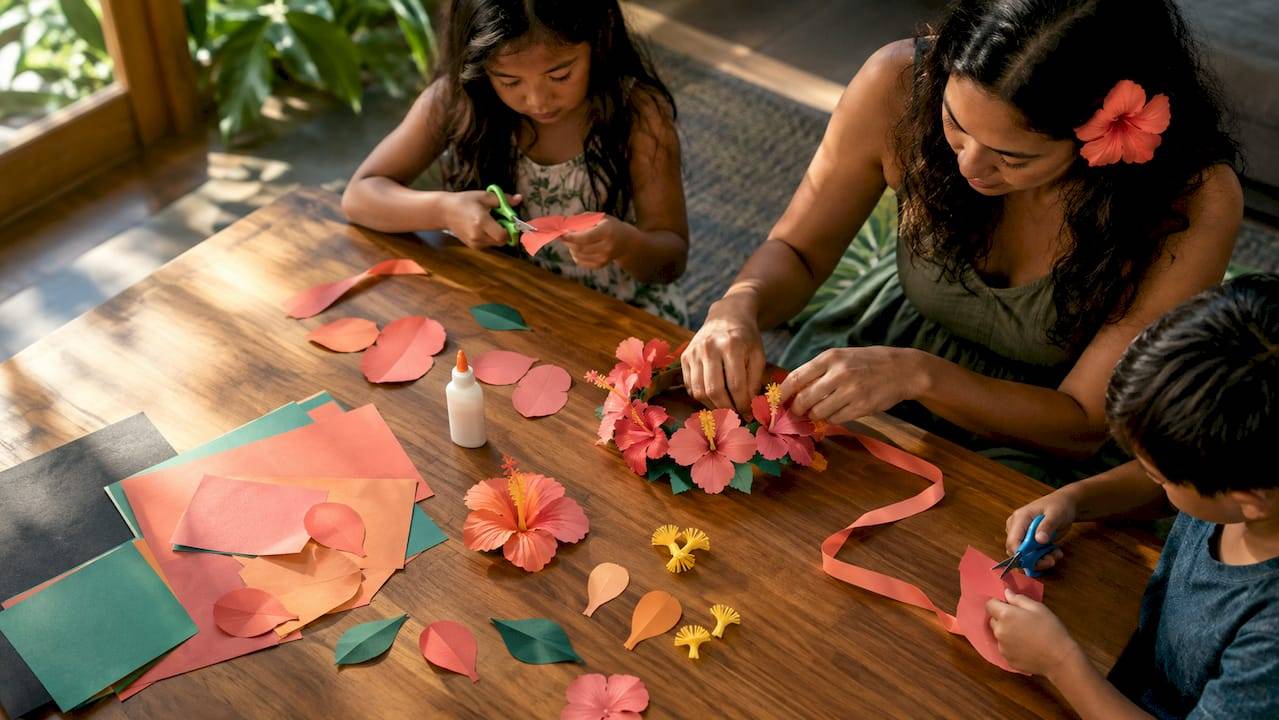
Hawaiian crafts range from a five-minute paper lei for keiki to a fabric-stamped headband adults can wear that evening, and this guide covers both ends along with the materials, sourcing rules, and cultural context that make each project meaningful instead of just decorative. You’ll find a curated project shortlist, step-by-step instructions for five of them, and guidance on where to learn the deeper traditions, like kapa making, through real community workshops rather than a weekend DIY.
TL;DR:
- Using faux flowers and synthetic materials for native Hawaiian crafts prevents environmental strain caused by wild-harvesting native plants.
- Authentic kapa cloth and traditional techniques require years of apprenticeship and should be sourced from Native Hawaiian artisans to preserve cultural integrity.
- Most crafts can be made quickly with common supplies like construction paper, tissue, and paint, making them accessible for children and families.
- Exposure to traditional practices through community workshops deepens understanding beyond simple craft projects, emphasizing respect and cultural protocol.
- The Flight of Aloha offers an accessible, cultural flight simulation over Hawaii that combines visual immersion with storytelling, ideal for rainy days or outdoor plan cancellations.
The Best Hawaiian Craft Ideas for Kids and Adults
Every family has a different comfort level with glue guns and glitter, so this shortlist spans quick keiki projects, weekend family activities, and a couple of adult-level DIYs that hold up as actual home decor. Traditional Hawaiian crafts often take months to master properly, but these versions are designed as approachable entry points, not substitutes for the real thing.
- Hawaiian Lei Craft — Paper or ribbon flowers strung on yarn or twine. Best for keiki ages 4 and up; materials are construction paper, a hole punch, and string.
- Tiki Craft (Crown & Mask Templates) — Printable templates turned into wearable crowns or wall masks with paint and cardstock. Best for families doing a group project; materials are cardstock, brown paper bags, and acrylic paint.
- Design a Hawaiian Shirt — Kids color or paint a shirt-shaped template with tropical patterns. Best for classroom groups or rainy afternoons; materials are printable templates, markers, or fabric paint on a real shirt.
- Tiki Windsock Craft — A rolled paper tube with streamers becomes a tiki-face windsock for a porch or bedroom window. Best for ages 6 and up; materials are construction paper, tissue paper streamers, and a stapler.
- Hibiscus Flower Craft — Layered tissue paper or cardstock petals form Hawaii’s state flower. Best for younger keiki; materials are tissue paper, pipe cleaners, and glue.
- Pineapple Craft — A rolled paper or painted pinecone becomes a tabletop pineapple. Best for toddlers through early elementary; materials are yellow cardstock or a pinecone and green felt.
- Hibiscus Flower Crown Craft — A wearable headband version of the hibiscus project, built on a paper or ribbon base. Best for birthday parties and luau-themed events; materials are cardstock, a stapler, and elastic band.
- Surf Board Craft — A cardboard cutout painted with island patterns, sized for a mini display or door decoration. Best for older kids and tweens; materials are cardboard, acrylic paint, and painter’s tape for stripes.
- Tiki Lantern Craft — A repurposed jar or can wrapped in patterned paper with a tea light inside. Best for adult crafters or supervised teens; materials are a glass jar, patterned paper, and battery tea lights.
- End of the Year Hawaiian Lei Craft (3D) — A dimensional paper lei built from folded flower shapes, often used as a classroom keepsake. Best for elementary classrooms wrapping up a themed unit; materials are colored paper, glue dots, and yarn.
Group these by skill level and you get a natural progression: hibiscus and pineapple crafts for the youngest crafters, lei and windsock projects for elementary kids, and tiki lanterns or the surfboard build for anyone ready to handle paint and cardboard cutting.
Gathering Hawaiian Craft Supplies the Responsible Way
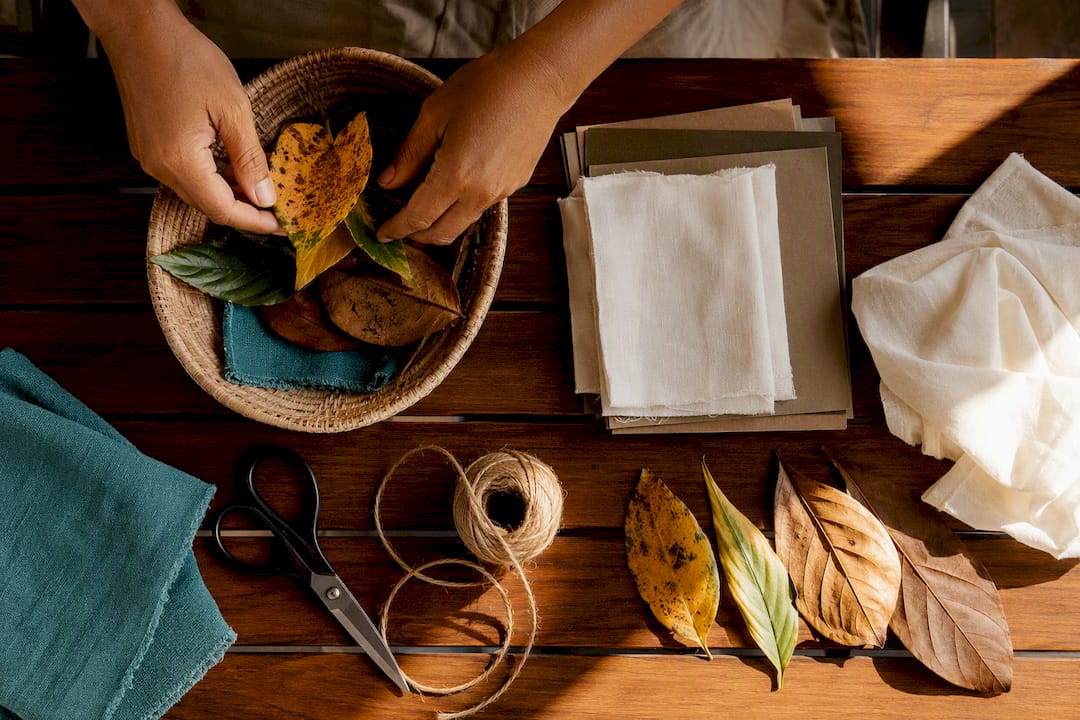
Most of what you need for these Hawaiian craft supplies sits in a standard craft drawer: construction paper, tissue paper, cardstock, pipe cleaners, glue, and acrylic paint. Faux flowers and silk lei materials from a craft store work fine for nearly every project on this list, and they’re the right choice for anything kids will handle repeatedly.
Where people run into trouble is native plant material. Wild-harvesting maile, ʻilima, or other native lei plants puts real pressure on ecosystems that are already stressed, and growing your own lei plants or supporting growers protects wild populations far better than a one-off harvest does. A few ground rules keep any DIY Hawaiian decoration project on the right side of that line:
- Use faux or silk flowers, paper, or ribbon for anything you’re making at home for practice or play.
- If you want the real plant experience, buy cuttings from a commercial grower rather than picking from the wild.
- For authentic native materials in a finished piece, buy from a credited Native Hawaiian artisan instead of sourcing them yourself.
- Printable templates from education sites cut down on material waste and give kids a consistent starting shape.
Pro Tip: Keep a small “craft kit” box with cardstock, a hole punch, yarn, and washable glue on hand. Half these projects are ready to start the moment a rainy afternoon hits, with zero shopping trip required.
5 Hawaiian Craft Tutorials You Can Start Today
Here’s how to actually build five of the projects above, sorted by who they fit best.
1. Paper Hibiscus Flower Crown (kids, 20 minutes, easy). Cut five to six petal shapes from cardstock or use tissue paper layered for texture. Overlap the petal bases and glue them into a circle, then glue a yellow pom pom or paper circle in the center. Staple the finished flower to a paper strip or elastic band sized to the child’s head. Substitution tip: skip cutting entirely and use a printable hibiscus template for kids under six.
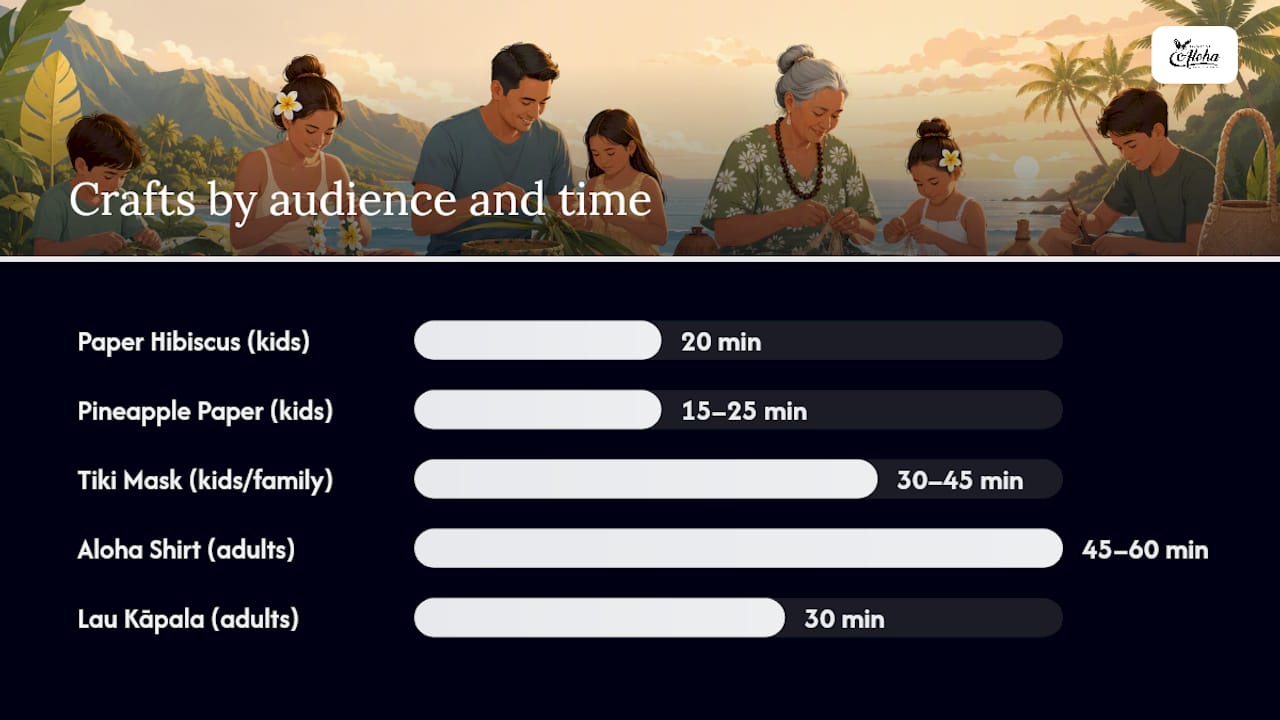
2. Pineapple Paper Craft (kids, 15 to 25 minutes, easy). Roll a sheet of yellow cardstock into a tube and secure with tape, then cut diagonal slits around the top edge to create the “leaves” look, or glue on separate green felt leaves for a sturdier build. Add crisscross lines with a black marker for the pineapple texture. Substitution tip: a real pinecone painted yellow with green felt leaves glued to the top makes a more durable version for a mantel display.
3. Tiki Mask From a Printable Template (kids and families, 30 to 45 minutes, medium). Print a tiki mask template onto cardstock or a brown paper bag. Cut out the eye holes first, before painting, so the edges stay clean. Paint the base color and let it dry fully before adding detail lines in a second color. Punch holes on both sides and thread string or elastic for wearing. Safety note: adult supervision is recommended for the eye-hole cutting step with kids under 8.
4. Aloha Shirt Fabric Painting (adults, 45 to 60 minutes, medium). Lay a plain cotton shirt flat with cardboard inside to prevent bleed-through, then sketch a simple hibiscus or leaf pattern in pencil before committing to fabric paint. Work light colors first, dark outlines last, and heat-set with an iron once fully dry per the paint label. Substitution tip: fabric paint pens give more control than a brush for beginners.
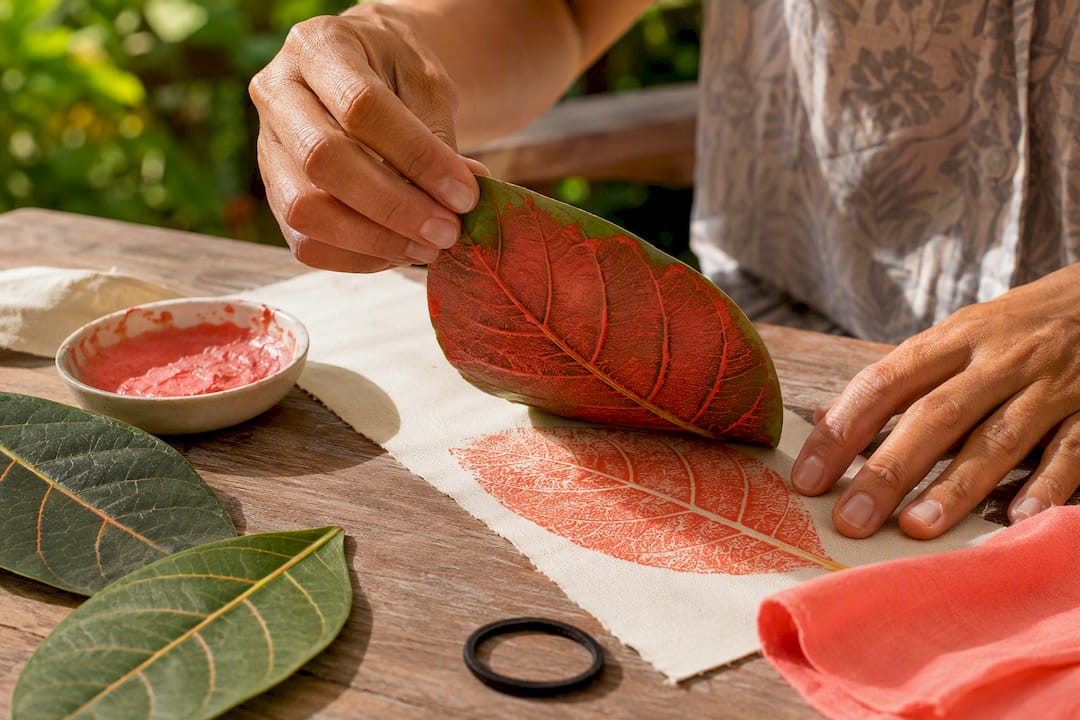
5. Lau Kāpala Plant-Stamped Headband (adults, 30 minutes, easy to medium). This technique uses real leaves to print natural patterns onto fabric or paper, following the lau kāpala plant-stamping method developed for family craft sessions. Coat the underside of a leaf with fabric paint, press it firmly onto a ribbon or fabric strip, then peel back carefully to reveal the vein pattern. Repeat with different leaf shapes for variation, let dry, and attach to an elastic band. This is one of the more genuinely traditional Hawaiian art projects on this list, since it borrows a real plant-printing technique rather than a purely decorative craft.
Crafting With Respect: Lei, Kapa, and What to Leave to the Experts
A lei is a gesture of aloha before it’s an object, which is exactly why the paper and ribbon versions above are appropriate for kids. Kapa is a different story. This Hawaiian barkcloth comes from the bark of the paper mulberry plant, known as wauke, which can take up to two years to mature before it’s ready to harvest. Making kapa involves repeated soaking and beating stages with a carved wooden tool called an iʻe kuku, and a single finished piece can take a skilled practitioner months to complete.
That’s why kapa, and the related tattooing practice of kākau, aren’t projects to simplify into a weekend craft. Both carry protocols passed down through apprenticeship, and a shortcut version risks flattening a living tradition into a souvenir. A few recommendations keep any Hawaiian cultural craft respectful:
- Use introduced or synthetic materials for practice pieces, and say so if you display them.
- Credit the tradition a project draws from instead of presenting it as generic “tropical” decor.
- Buy authentic kapa or lei work directly from Native Hawaiian makers when you want the real thing.
- Treat crafts as an entry point into ʻike, the deeper knowledge behind the symbol, not the finish line.
Community programs built around whole practices, like poi pounding, laulau preparation, and shoreline lawaiʻa fishing demonstrations, give families a hands-on way to go further. Some events, including Papahana Lawaiʻa, even send families home with starter kits like bamboo fishing poles so the learning continues past a single afternoon.
Why We Turned a Craft Table Into a Genealogy Lesson
Teaching a child to fold a paper lei is really an opening question: where does this pattern come from, and whose story does it carry? Practitioners describe the real substance of these arts as protocol and place, not the object itself, and that framing changed how our family approached craft night. A finished pineapple craft on the fridge is nice. A kid who can explain why hibiscus matters to this place is the actual goal.
That’s part of why we pair craft sessions with real cultural attractions for families when we travel to Hawaii. A story that starts on paper at the kitchen table lands differently once a child sees it told through motion, wind, and sound on the islands themselves.
— Ola
Skip the Helicopter Line, Not the Aerial Views
If the craft table got your family excited about seeing Hawaii from above, Flight of Aloha gets you there without the $400 price tag or the motion sickness that comes with a helicopter tour. This Native Hawaiian-owned flying theater uses 8K visuals, wind, and scent to simulate flight over the islands, paired with the same kind of cultural storytelling behind the lei and kapa traditions covered above.

It’s genuinely one of the most accessible attraction’s in Kona and Maui: the Kailua-Kona location sits within walking distance of distance from Kailua Pier and the cruise tender dock](https://flightofaloha.com/blog/tips-for-family-attractions-hawaii), making it a natural quick stop for shore excursions, while the Whalers Village Kaanapali location puts the same experience within easy reach on Maui. On a rainy day in Kona, a smoky vog day, or any afternoon you just want the best air conditioning in town, it’s a reliable answer when outdoor plans fall apart, and it fits neatly into any family-friendly Hawaii itinerary. VIP packages and annual passes are available for repeat visitors. Book online to secure your seat.
Sources
- Iʻe kuku and Kapa Making Workshop — National Park Service
- Kapapaolelohawaii
- Lau-Kapala Instructions (Three Mountain Alliance)