
Avoid Ticket Service Fees: FTC All In Rule and Box Office Script for Travelers

The most reliable way to buy tickets without a service fee is to walk up to a box office and pay in person, but that option is disappearing fast for mobile-only events. Your backup plan: use presales, buy every seat in one order, choose electronic delivery, and compare the full all-in price across sellers before you pay. A 2025 FTC rule now forces most sellers to show you that total price upfront, which makes comparison shopping actually work.
TL;DR:
- Purchasing tickets directly at the box office can eliminate service fees, but this option is increasingly unavailable for mobile-only events.
- Most mandatory fees must now be disclosed upfront under FTC rules, making price comparisons more accurate and straightforward.
- Grouping multiple tickets into one order, choosing electronic delivery, and buying on lower-demand days can significantly reduce total costs.
- Comparing the full all-in price, including fees and taxes, across multiple sellers before purchase prevents unexpected expenses.
- Booking in advance through presales or directly at the venue typically offers the best chance to avoid or minimize service fees.
What Are Ticket Service Fees, and Why Do They Exist?
Service fees are not one flat charge. They are usually a stack of separate line items, each covering a different part of getting your ticket into your hand.
- Service fee: pays the ticketing platform for running the transaction and website.
- Facility fee: goes to the venue for maintenance, staffing, and upkeep.
- Order fee: a flat charge per transaction, regardless of how many tickets you buy.
- Delivery fee: covers mailing a physical ticket, printing at will call, or mobile transfer.
Venues and promoters negotiate these rates directly with ticketing companies, and the venue typically keeps the largest share of the facility fee. That is why fees swing wildly between a 500-seat theater and a 20,000-seat arena. Since 2025, the FTC’s rule on unfair or deceptive fees requires sellers to disclose the full price, including nearly all mandatory fees, before you’re asked to pay. Only government charges, shipping, and truly optional add-ons can sit outside that headline number. That single rule is the reason “compare the final total” now actually works as a strategy instead of a guessing game.
What Are the Best Ways to Buy Tickets Without a Service Fee?
Fee avoidance is not one trick. It’s a priority list, and the tactics near the top work more often than the ones near the bottom.
- Call or visit the box office first. In-person and phone purchases sometimes skip online service fees entirely, especially for cash transactions. Ask directly whether the show is mobile-only, because box-office windows are shrinking as more events move to app-only entry.
- Get into a presale. Fan clubs, venue mailing lists, and credit card presales open before the general public sale, when demand (and dynamic pricing) is lower. Sign up a week or two ahead through the venue’s own site.
- Put every ticket in one order. Order fees are usually charged once per transaction, not per seat. Buying four tickets in one order beats buying two orders of two.
- Choose electronic delivery. Mobile transfer or e-ticket options often carry a smaller fee than mailed or courier delivery, sometimes none at all.
- Pick a lower-demand date. Weeknight shows and off-season events see less dynamic pricing pressure than weekend or holiday dates, which keeps both face price and fees closer to baseline.
- Treat “no-fee” resale listings with suspicion. Some resale marketplaces skip a separate buyer fee but build that cost into the listed price instead. A “$0 fee” badge on a $150 ticket that a competing site sells all-in for $120 is not actually cheaper.
- Pay with a credit card, not a wire transfer or gift card. Credit cards give you dispute and chargeback rights if a seller never delivers, which consumer protection guidance consistently recommends over less traceable payment methods.
Pro Tip: Run the same math every time: face price plus every mandatory fee plus delivery plus tax equals the number that actually matters. Ignore the sticker price a seller leads with and go straight to that total.
For a deeper dive into venue-specific discount timing, these tactics for saving on Hawaii attraction tickets walk through seasonal booking windows that stack on top of the strategies above.
Not every tactic pays off equally. Buying directly from a venue when a box office is available and grouping seats into a single order are the two moves with the most consistent payoff, according to consumer finance reporting on event ticket costs.
How Do You Compare the Final All-In Price Before You Buy?
Run a five-line checklist before you enter payment information on any site:
- Face price of the ticket itself.
- Mandatory service and facility fees.
- Delivery charge, if any.
- Applicable taxes.
- Whether the fee is charged per ticket or per order.
Most checkout pages let you add tickets to a cart and reach the final payment screen without submitting a card number, so you can see the true total before committing. Do this on two or three sellers for the same seats and compare the bottom-line number, not the price shown on the search results page.
Delivery method changes the math more than people expect. Mailed physical tickets and courier delivery usually cost more than mobile transfer or will-call pickup, and will call is frequently free. If a seller only offers mobile transfer and you’re worried about phone battery or signal at the venue, ask whether a screenshot or PDF backup is allowed before the show.
Box-Office Call and Walk-Up Checklist
A two-minute phone call can save you the entire service fee, but only if you ask the right questions.
- Ask the total first. “What’s the full price for two tickets, including any fees, if I buy at the window?”
- Ask about delivery and mobile-only status. “Do you sell physical tickets, or is this event mobile-transfer only?” Some venues have gone fully digital, which removes the box-office option entirely.
- Confirm accepted payment. Cash sometimes avoids a card-processing surcharge; ask before you arrive.
- Arrive early for walk-ups. Box offices near showtime get backed up, and popular shows can sell out the walk-up allotment fast.
Watch for red flags anywhere outside an official box office: a private seller asking for gift cards or a wire transfer, no stated refund policy, vague promises to “hold” seats without payment, or pressure to skip a platform’s buyer protections. Legitimate sellers, per BBB guidance on reseller purchases, post clear refund terms and never discourage credit card payment.
Flight of Aloha: Booking Tips That Minimize Fees for Island Visitors
Flight of Aloha’s immersive flying theater experiences run in two spots: Kailua-Kona on the Big Island and Whalers Village Kaanapali on Maui, with both online and walk-in booking available. Booking online ahead of time locks in your preferred showtime, and group or VIP packages bundle handling into one simpler per-group charge instead of stacking a per-ticket fee on every seat in your party.
For cruise passengers, the Kona location’s proximity matters: it sits within walking distance of a nearby pier and tender dock, making it a convenient option for shore excursions when your ship time is tight and you don’t want to book a bus tour. Compared to a helicopter tour running upward of $400 with real motion-sickness risk, Flight of Aloha delivers the aerial sweep over the islands from a stable seat, at a fraction of the cost. It’s also one of the smartest calls on a rainy Kona afternoon or a heavy vog day, since it runs indoors with strong air conditioning, rain or shine.
What Legal Protections Do You Have Around Ticket Fees?
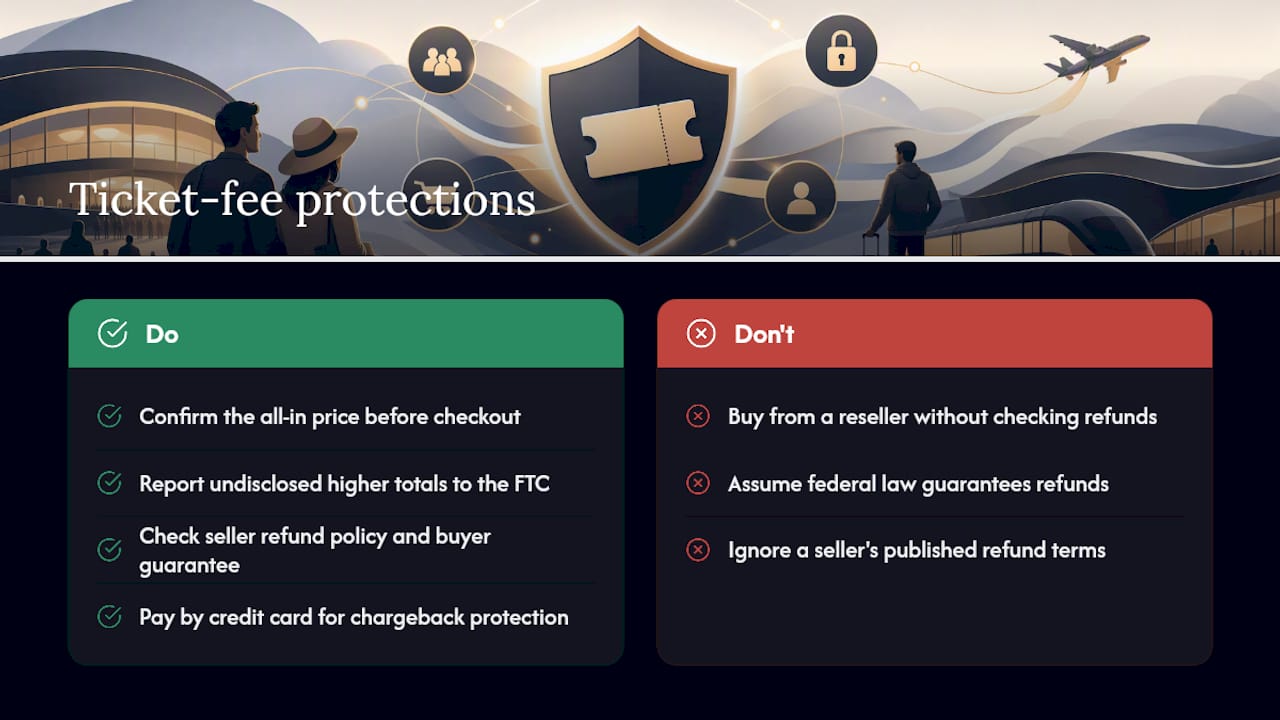
The single biggest legal shift for ticket buyers arrived with the FTC’s all-in pricing rule, which took effect in 2025. It requires sellers of live-event tickets to show the total price, including nearly every mandatory fee, before you’re asked to pay. Sellers can still list government charges, shipping, and genuinely optional extras separately, but the core service and facility fees have to be baked into the number you see up front.
That rule gives you a concrete tool: if a seller advertises one price and charges a different, higher total at checkout without disclosing it earlier, that’s the exact behavior the rule targets. You can report deceptive pricing practices directly to the FTC, and many state attorneys general accept similar consumer complaints.
Refund rights depend heavily on the seller, not federal law. Primary ticketing platforms and venues typically publish their own refund and exchange policies, and resale marketplaces vary even more. Before buying from any secondary seller, check the stated refund policy and buyer guarantee, because BBB guidance on ticket resellers treats a clear, published refund policy as one of the strongest signs a reseller is legitimate. Paying by credit card adds a second layer of protection: if a ticket never arrives or turns out to be fake, a chargeback dispute through your card issuer is often faster and more reliable than chasing a refund from the seller directly.
Can Mobile Apps or Digital Wallets Help You Skip Service Fees?
Mobile apps rarely eliminate a service fee outright, but the payment method you choose inside them sometimes trims the total. Digital wallets like Apple Pay or Google Pay process through the same backend as a card payment, so they don’t bypass a platform’s service fee structure on their own. What they can do is speed up presale entry, since a saved payment method means less time fumbling through checkout when high-demand tickets sell out in minutes.
Where mobile really pays off is delivery. Choosing in-app mobile transfer instead of mail-order or courier delivery usually drops or eliminates the delivery-fee line item entirely, since there’s no physical ticket to produce or ship. If an event offers both a mobile app and a browser checkout, run the same all-in price check on both. Occasionally an app-exclusive presale or app-only discount code shaves a few dollars off before fees are even calculated.
One caution: mobile-only entry means no backup plan if your phone dies or loses signal at the gate. Screenshot your ticket and download any wallet pass in advance, and check whether the venue accepts a printed screenshot if the live app transfer fails. For events near tender docks or remote areas with unreliable signal, that backup matters more than usual.
Do Promo Codes or Credit Card Offers Actually Waive Service Fees?
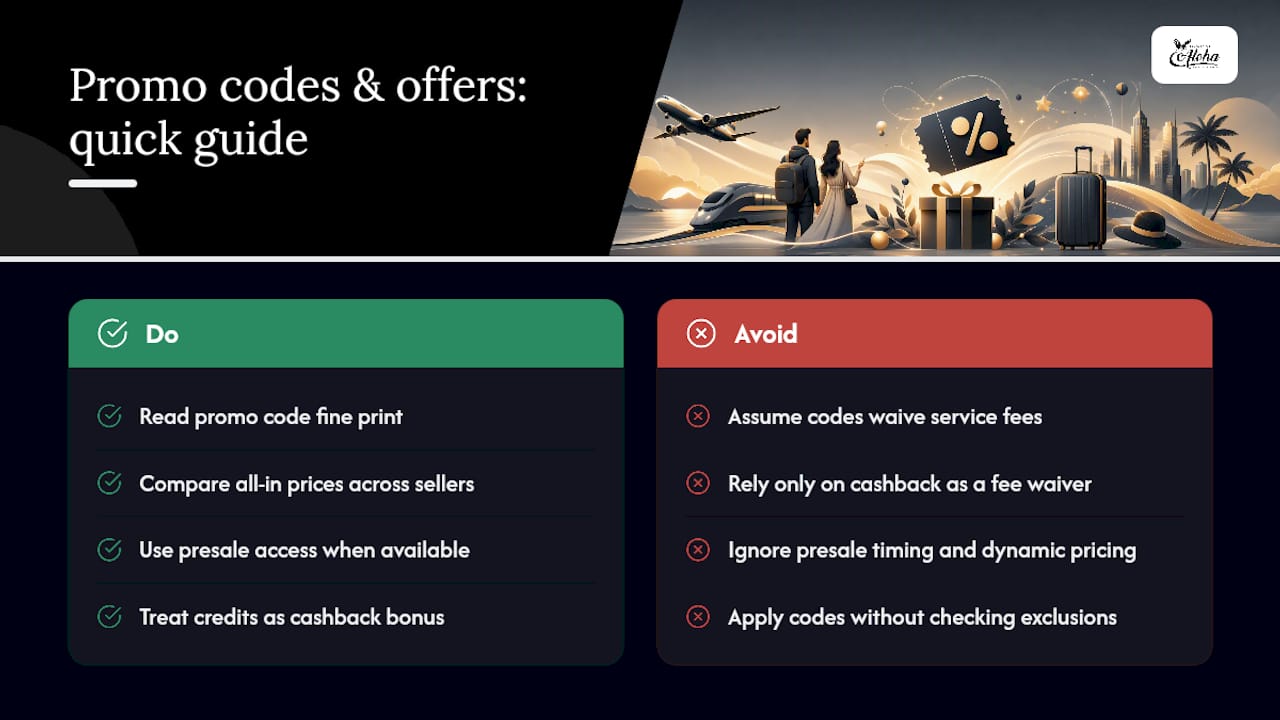
Promo codes reduce the total price you pay, but they rarely target the service fee specifically, since most codes apply as a percentage or flat discount off the pre-fee total or the whole order. Read the fine print on any code before assuming it cuts fees directly. Some codes exclude fees entirely and only discount the face price.
Credit card issuers occasionally run presale access or fee-reduction promotions tied to specific card networks, giving cardholders early entry to a presale window before dynamic pricing kicks in. That early access is often worth more than a small percentage discount, since presale prices tend to sit below general public pricing once resale markups and demand-based pricing take effect.
Retail loyalty programs and entertainment credit cards sometimes bundle in ticket credits or statement rebates equivalent to the fee amount, though the promotion is structured as cash back rather than a fee waiver. Treat any of these as a bonus layered on top of the core strategy, not a replacement for it: comparing all-in prices across sellers still matters more than chasing a specific discount code. For current ticket-specific offers, this walkthrough on discounted attraction tickets covers how to stack a promo code with an already-low base price.
The Real Gap Between Fee-Avoidance Advice and What Works
Most fee-avoidance advice online treats service fees like a hack to defeat, some secret code or loophole. That framing wastes your time. The honest picture is closer to this: fees are structural, negotiated between venues and ticketing platforms long before you ever open a checkout page, and no code or trick removes them universally.
What actually works is boring and repeatable: check the box office, group your order, compare the all-in total, and pay with a card that protects you if something goes wrong. The FTC’s disclosure rule is the biggest structural change in years precisely because it stops sellers from hiding the real number until the last screen. That transparency is the leverage point, not some workaround.
Where Flight of Aloha fits into this conversation is straightforward rather than clever: walk-in booking at a fixed, disclosed price removes the fee-guessing game entirely for visitors who’d rather not spend their vacation comparing checkout screens. That’s not a hack. It’s just a simpler transaction.
— Ola
Book a Fee-Free Kona or Maui Experience Directly
Flight of Aloha skips the fee-comparison headache altogether: the price you see when you book is the price you pay, whether you reserve online or walk up at the counter in Kailua-Kona or Whalers Village Kaanapali. That’s the real advantage over chasing box-office hours or running the all-in-price math on five different reseller sites. As a Native Hawaiian-owned attraction, it also gives visitors something helicopter tours can’t: the same soaring aerial views of the islands, delivered through 8K visuals, wind, and scent effects, without without the $400 price tag or the motion sickness.

It’s a recommended option for rainy Kona afternoons, vog-heavy days on Maui, and cruise passengers docking nearby who want a real experience without using much shore excursion time on transportation. Check showtimes and reserve your seats directly through Flight of Aloha before your travel dates fill up. Book online to secure your seat.
Sources
- Rule on Unfair or Deceptive Fees: Frequently asked questions | FTC
- What to know about buying tickets from an online reseller | BBB
- How to avoid event ticket fees | NerdWallet
- How to get tickets with no service fees | TickPick blog