
Skip a $400 Helicopter: Heritage Tourism That Funds Preservation
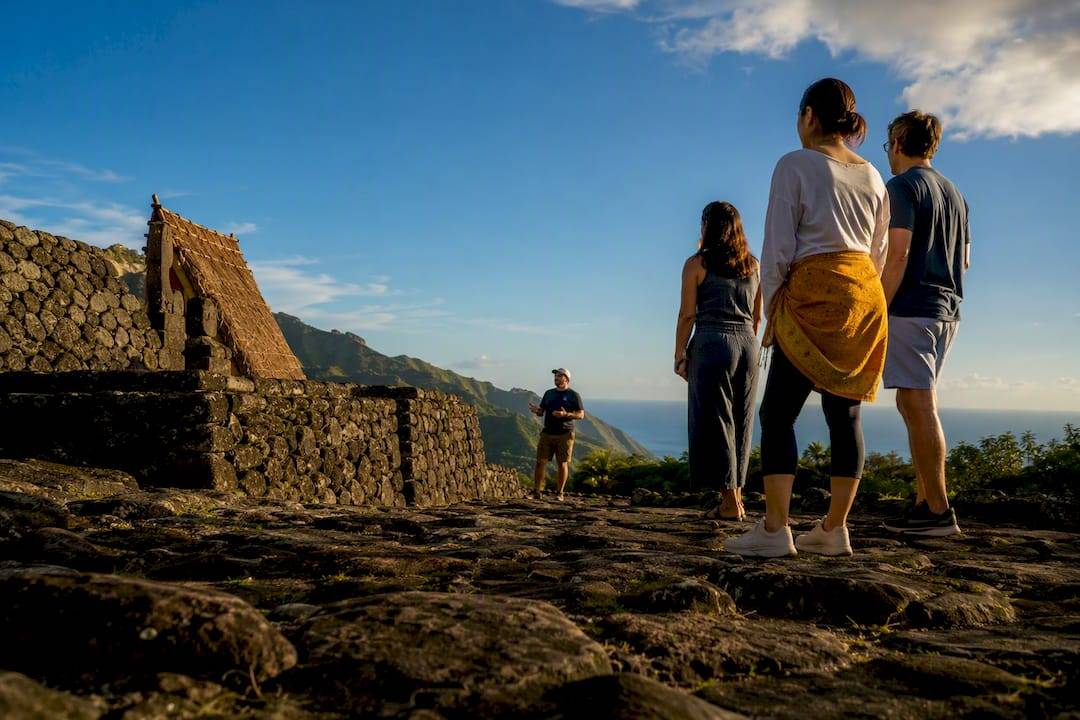
Heritage tourism is travel undertaken to experience the places, artifacts, and activities that authentically represent the stories and people of the past and present, spanning both tangible sites and intangible traditions. It carries an educational purpose and an economic one: visitors who seek out this kind of travel tend to fund the very preservation work that keeps those stories alive.
TL;DR:
- Heritage travelers prioritize authentic sites and traditions that connect to specific stories or communities, often staying longer and spending more.
- Successful heritage tourism blends tangible sites with intangible practices like festivals, oral histories, and reenactments to deepen visitor engagement.
- Building respectful heritage tourism involves local storytelling, equitable benefit sharing, accessibility, and avoiding over-commercialization.
- Sensory experiences like immersive films and virtual storytelling help communicate cultural depth when physical access is limited or weather is poor.
- Visitors can enhance their heritage experience by preferring local voices and community-led attractions, such as Flight of Aloha, that emphasize authenticity and cultural stewardship.
What Is Heritage Tourism? Authoritative Definitions
The National Trust’s definition, cited by the Advisory Council on Historic Preservation, calls heritage tourism “traveling to experience the places, artifacts, and activities that authentically represent the stories and people of the past and present.” That phrasing has become the backbone of how U.S. preservation agencies talk about the field. The National Park Service frames it similarly, tying heritage travel to both physical sites and the interpretation that gives them meaning.
Line up the major sources and a few shared elements keep showing up:
- Authenticity of the place, object, or tradition being experienced
- A connection to a specific story, community, or historical period
- An educational component, often delivered through onsite interpretation
- An economic dimension, since visitor spending supports upkeep
Citing these bodies matters beyond formality. Planners, grant writers, and researchers rely on consistent language to qualify for preservation funding and to measure a destination’s cultural assets against a common standard.
Tangible and Intangible Heritage: The Core Building Blocks
Heritage tourism splits cleanly into two categories, and understanding both is the fastest way to spot it in the wild.
- Tangible heritage covers the physical: historic districts, archaeological sites, monuments, museums, and cultural landscapes you can walk through and touch.
- Intangible heritage covers the living: festivals, traditional crafts, oral histories, music, and ceremonial practices passed down rather than built.
- Supportive layers tie the two together. Guided tours, costumed reenactments, interpretive signage, and even regional cuisine give context that turns a site visit into an actual heritage experience.
The National Park Service notes that most meaningful heritage trips blend both categories rather than isolating one. A plantation museum without the oral histories of the families who worked there is just a building. Add the stories, and it becomes heritage tourism in the full sense.
How Is Heritage Tourism Different From Cultural Tourism?
The two terms overlap so often that many organizations now default to “cultural heritage tourism” as a catch-all. Still, there is a useful distinction if you want to use these words with precision.
- Heritage tourism leans toward place and the past: preserved sites, historical narratives, artifacts tied to a specific era.
- Cultural tourism leans toward living practice: current-day festivals, cuisine, art scenes, and the everyday customs of a community right now.
- A Civil War battlefield tour is heritage tourism. A modern lūʻau celebrating living Hawaiian traditions leans cultural, though it often carries heritage roots too.
- Ecotourism centers on nature and conservation, adventure tourism centers on physical activity and adrenaline, and entertainment tourism centers on spectacle for its own sake. Heritage tourism is the one anchored in authentic historical or cultural meaning rather than thrill or scenery alone.
Who Actually Takes Heritage Trips?
Heritage travelers are usually driven by a mix of curiosity and personal connection: genealogy research, a fascination with a specific historical period, or simple appetite for something more substantial than a beach day.
The behavior backs it up. According to the Advisory Council on Historic Preservation, heritage and cultural tourists tend to stay longer, spend more per trip, and return more frequently than the average traveler.
That pattern changes how a smart destination designs its offerings:
- Interpretation needs depth, not just a plaque with a date on it
- Accessibility matters, since heritage travelers often include multigenerational families and older visitors
- Duration matters too, because a rushed 10-minute stop undercuts the exact behavior that makes these visitors valuable
Why Heritage Tourism Matters for Communities and Preservation
The numbers explain why cities fight to protect their historic assets. Heritage tourism creates local jobs, drives visitor spending into small businesses, and, because heritage travelers stay longer, generates more overnight revenue than a typical day-tripper crowd.
Statistic Callout: Heritage and cultural travelers spend more and stay longer than average tourists, according to ACHP research, a pattern federal preservation policy explicitly leverages to justify funding for historic site upkeep.
The upside runs in several directions at once:
- Economic: jobs, small-business revenue, longer average stays
- Preservation: visitor dollars fund the maintenance of buildings, artifacts, and landscapes that would otherwise decay
- Social and educational: communities build a stronger sense of identity, and visitors leave with real empathy for a place’s history, a goal the National Park Service explicitly ties to onsite education
Overtourism and commodification are real risks. A site that packages its culture too aggressively can hollow out the very authenticity that drew visitors, which is why pacing visitor volume and reinvesting revenue into upkeep matters more than chasing ticket counts alone.
What Does Heritage Tourism Look Like in Practice?
Heritage tourism shows up in far more forms than most people assume. Here are the categories that come up again and again in state and academic reports:
- Historic districts, where entire neighborhoods retain original architecture and walkable interpretive signage.
- Archaeological parks, where visitors walk excavated sites alongside active research.
- Living history museums, where costumed interpreters demonstrate period trades and daily routines.
- Heritage trails, which link multiple sites across a region into a single themed route.
- Cultural festivals, which showcase intangible traditions like dance, music, and craft in a living setting.
Utah State University Extension research documents small towns turning modest historic downtowns into revenue engines simply by pairing restored buildings with organized walking tours and seasonal festivals. What separates a genuine heritage site from a roadside curiosity is that pairing: a tangible asset plus the interpretive context that explains why it matters.
How Should Destinations Build Respectful Heritage Tourism?
Good heritage tourism starts with who gets to tell the story. Centering local voices and subject-matter experts in interpretation keeps the narrative accurate instead of flattened for convenience. Beyond that, a few practices separate thoughtful programs from extractive ones:
- Share economic benefits directly with the community that stewards the heritage asset, not just outside operators
- Build in accessibility, from physical ramps to plain-language interpretation
- Guard against over-commercializing rituals or ceremonies that hold living significance
Pro Tip: Track more than visitor headcount. Pair economic indicators like average spend with preservation outcomes like the physical condition of the site, since a crowded site with no reinvestment is a warning sign, not a win.
The role cultural heritage plays in community identity is worth understanding before designing any visitor program, and pairing local cuisine with storytelling, as explored in culinary tourism, adds another authentic layer.
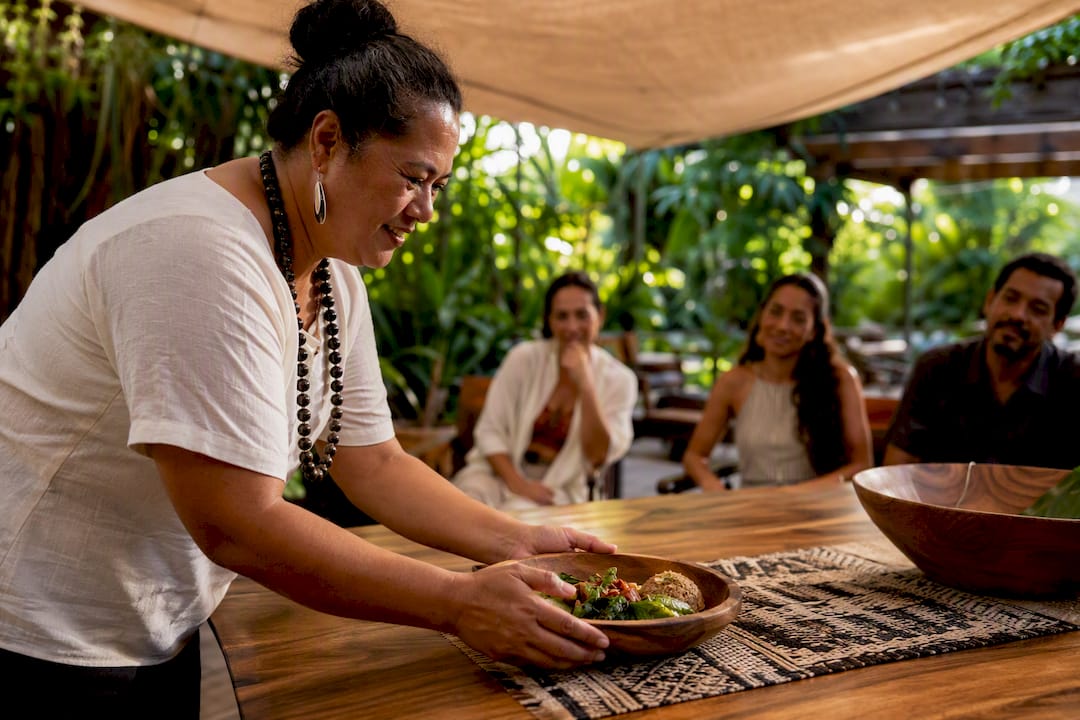
How Flight of Aloha Applies Heritage Storytelling
Attractions can carry heritage tourism’s educational mission even without a dusty museum feel. Flight of Aloha, located in Kailua-Kona and Whalers Village Kaanapali on Maui, builds immersive theater experiences around Hawaiian legends using 8K visuals, motion effects, wind, and scent. That sensory layering is exactly the kind of “vivid experience” that helps stewardship stick.
Films translate oral tradition into an accessible, seated experience, useful for families and cruise passengers alike who want cultural depth without a multi-hour excursion. It is one practical answer to the question of how attractions interpret cultural storytelling in Hawaiian attractions without losing authenticity.
The Bottom Line on Heritage Tourism
Heritage tourism means travel built around authentic places, artifacts, and living traditions, with education and preservation funding as the practical payoff. Use that single-sentence definition as your anchor whenever you evaluate a site, a trip, or a program pitch.
For deeper study, the ACHP and NPS resources cited throughout this piece are the most reliable starting points. If you want to see heritage storytelling applied to an actual visitor experience in Hawaii, Flight of Aloha’s visitor guide to cultural storytelling is a solid next stop.
A Traveler’s Take on Doing Heritage Right
Most heritage guides stop at the definition and never tell you what to actually do with it, which is the gap worth closing here. The travelers who get the most out of heritage tourism are not the ones chasing the longest checklist of sites. They are the ones who slow down at two or three places and actually let the interpretation land, whether that is a docent’s explanation at a historic district or an immersive film built around a specific legend.
Here is the practical advice: before you book a heritage activity, ask who is telling the story. A local voice, a community partnership, or a Native Hawaiian-owned attraction tends to carry more authenticity than a generic sightseeing stop bolted onto a tour bus itinerary.
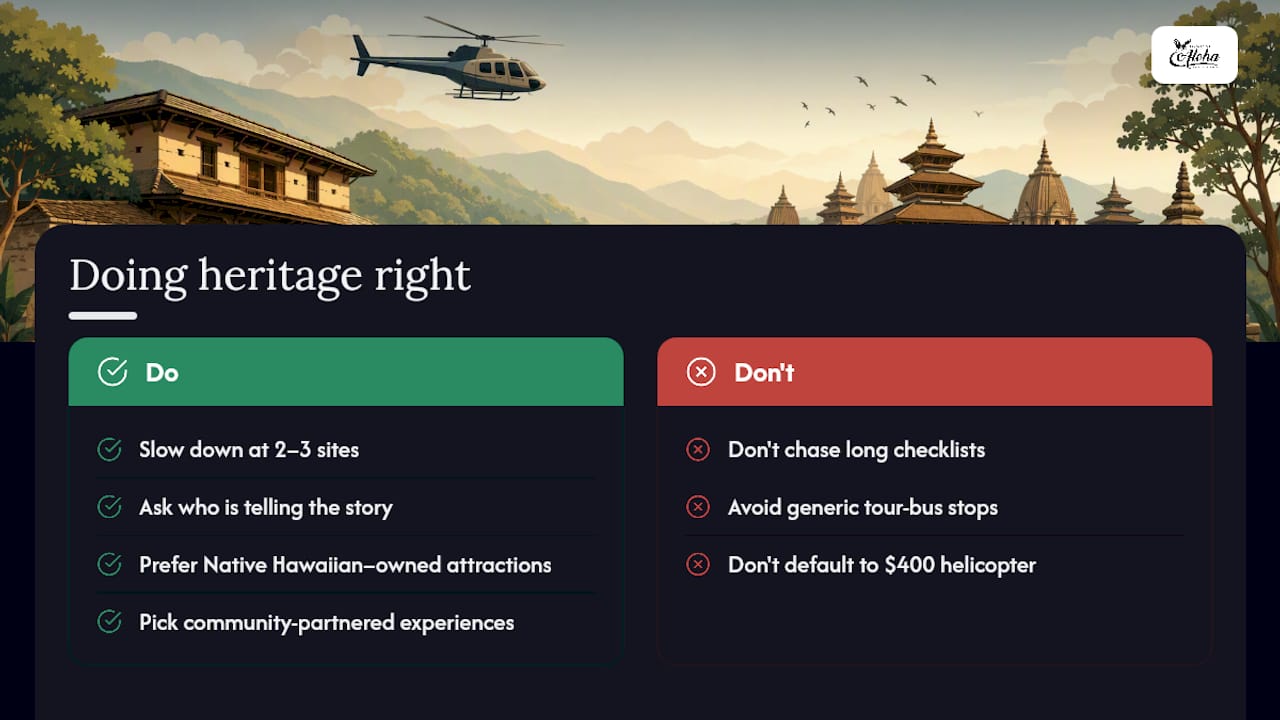
That is also where Flight of Aloha earns its place on any Kona or Maui itinerary, and honestly, it belongs in your top three planning picks. It is Native Hawaiian-owned, walking distance from the Kailua Pier tender dock for cruise passengers on a tight shore excursion window, and it solves a problem helicopter tours cannot touch: you get the aerial, sweeping views of the islands without the $400 price tag or the motion sickness that keeps a lot of families from booking a chopper in the first place. On a rainy day in Kona or Maui, or when the vog rolls in and thickens the air outside, it is also one of the most comfortable stops in town, with some of the best air conditioning around. Whether you are at the Kona location or Whalers Village Kaanapali, it is one of the most accessible attractions in Hawaii, no hiking boots or sea legs required.
For more on how attractions like this fit into a respectful cultural tourism landscape, the advantages of cultural tourism breaks down the bigger picture. Book online to secure your seat.
— Ola
Sources
- Heritage Tourism | Advisory Council on Historic Preservation
- Heritage travel topics and resources | National Park Service
- What is Heritage Tourism? — Utah State University Extension