
5 Responsible Travel Habits for Hawaii Visitors Backed by GSTC

Responsible travel means taking personal ownership of the impact your trip has on the places and people you visit, a principle formalized by the Cape Town Declaration in 2002. In practice, it looks simple: research your destination before you go, book operators with real sustainability credentials, and follow local cultural norms once you land. Those three habits do more good than any single souvenir purchase ever could.
TL;DR:
- Choose operators with recognized sustainability certifications and request their annual sustainability reports to verify genuine commitment.
- Prioritize longer, fewer trips and direct flights to reduce overall travel emissions, especially the fuel-intensive landing and takeoff cycles.
- Practice on-the-ground habits like following posted rules, avoiding wildlife contact outside certified programs, and supporting local vendors to ensure responsible tourism impacts.
- After returning, support community projects, write detailed reviews, and continue buying from artisans to sustain positive effects of travel.
- Be wary of vague “eco-friendly” claims and demand clear accreditation, published reports, and written wildlife policies to avoid greenwashing.
What Is Responsible Travel? Definition and Origin
The Cape Town Declaration named the goal plainly: tourism that creates “better places for people to live in and better places for people to visit.” Drafted in 2002, it put the burden on everyone at once, operators, governments, host communities, and tourists, rather than letting any one group carry the weight alone.
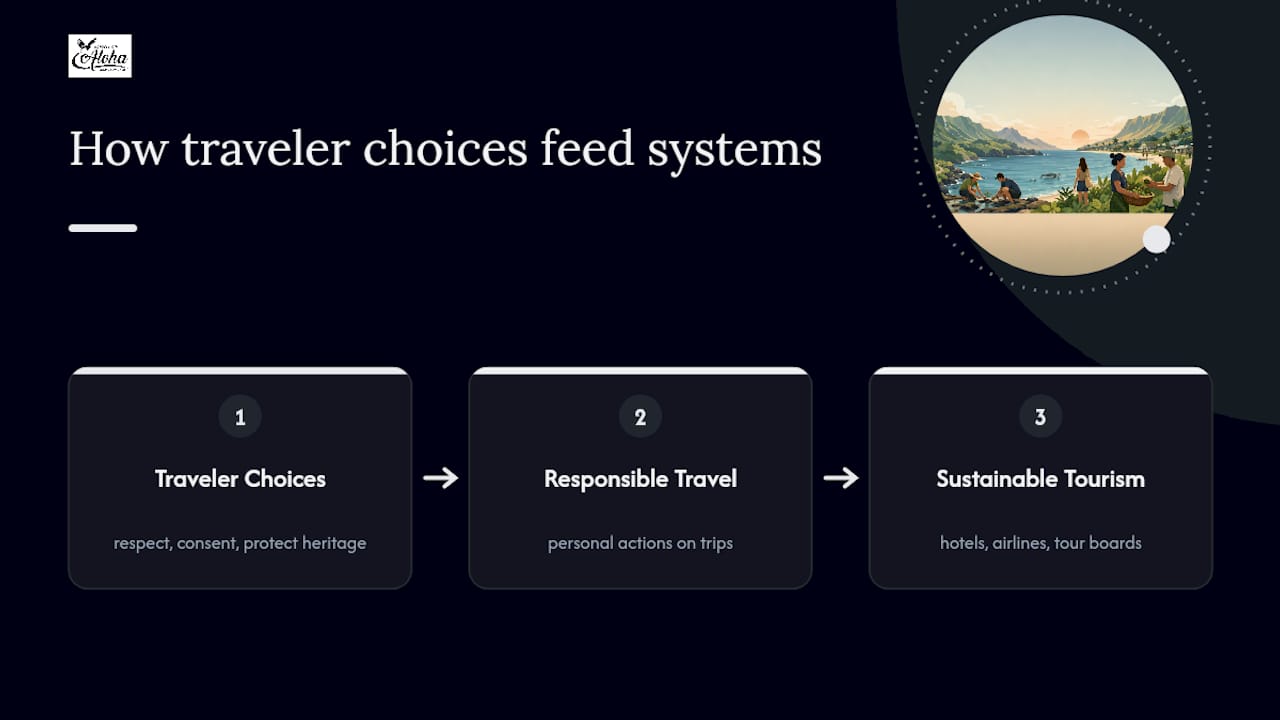
The Global Code of Ethics for Tourism built on that idea with practical guidance: respect local cultural values, get informed consent before photographing people or ceremonies, and protect heritage sites from wear and misuse.
Here’s the distinction worth keeping straight: responsible travel is what you, personally, choose to do on a trip. Sustainable tourism is the industry-wide system, hotels, airlines, tour boards, working toward long-term environmental and economic balance. Your choices as a traveler feed that larger system every time you book.
Core Principles Behind Responsible Tourism
Every credible responsible tourism definition boils down to a handful of repeatable habits. None of them require special gear or a bigger budget, just attention.
- Minimize your footprint. Cut down on waste, water use, and carbon output wherever you have a choice.
- Put money into local hands. Favor family-run guides, restaurants, and shops over large chains that route profits elsewhere.
- Respect culture and consent. Ask before photographing people or sacred spaces, and follow posted rules at cultural sites without exception.
- Choose conservation-positive wildlife encounters. Skip any activity that lets you touch, ride, or feed wild animals for a photo.
- Push operators toward transparency. Ask what they actually do for the community and hold them to it.
None of these principles work in isolation. A traveler who buys locally but ignores wildlife welfare guidelines is only halfway there.
Why Responsible Travel Matters More Than You’d Think
Tourism accounts for roughly 10% of the global economy, which sounds like an abstract statistic until you consider what that share of economic activity does to a small island or a fragile reef.
By the Numbers: Tourism drives about one in ten dollars of global economic activity, according to WWF, supporting jobs and protected areas worldwide, but also placing real pressure on the same coastlines, forests, and cultural sites travelers come to see.
That scale is exactly why individual choices add up fast. A reef-safe sunscreen swap or a decision to book a local guide instead of a chain tour doesn’t fix the whole picture, but multiplied across millions of trips, it shifts outcomes for the destinations bearing the load.
Planning Your Trip the Responsible Way
The decisions you make before you ever pack a bag carry more weight than anything you do once you land.
- Choose fewer, longer trips. Multiple short hops burn more fuel per day than one extended stay, and transport typically drives the majority of a trip’s emissions.
- Book non-stop flights when they exist. Layovers add takeoff and landing cycles, which are the most fuel-intensive parts of any flight.
- Vet your operator’s credentials. Look past marketing language for actual GSTC-recognized certification rather than a vague “eco-friendly” badge.
- Book accommodations and tours that keep money local. Family-owned lodging and community-run tours tend to return more revenue to the place you’re visiting.
- Pack smart. Reef-safe sunscreen, a refillable water bottle, and a reusable bag cut down on waste before you even reach the beach.
Pro Tip: Search an operator’s name alongside “sustainability report.” If nothing comes up, that silence usually tells you more than any claim on their homepage.
On-the-Ground Habits That Actually Help
Good intentions fall apart without follow-through once you’re actually on vacation. These habits keep you on track:
- Follow posted rules at parks, temples, and cultural sites, even when nobody’s watching.
- Ask before photographing people, ceremonies, or private property.
- Skip any wildlife encounter that lets you touch, feed, or ride an animal outside a certified, supervised program.
- Walk, bike, or use public transit instead of renting a car for short distances.
- Buy from local vendors and artisans rather than mass-produced souvenir shops.
Small daily choices, where you eat, how you get around, whether you linger by a “no entry” sign, add up to the actual texture of responsible travel. A strong grasp of cultural tourism before you land makes these calls easier in the moment.
After You Return: Making Your Trip Count Twice
The impact of a trip doesn’t end at the airport. What you do afterward can multiply the good, or quietly undo it.
- Write honest, detailed reviews that call out operators doing things right, not just star ratings.
- Follow up with any conservation or community project you visited, and consider a direct donation if it left an impression.
- Keep buying from the artisans and small businesses you met, many now sell online.
How to Spot Greenwashing Before You Book
Vague words like “eco-friendly” or “green” mean nothing without evidence behind them. Genuine sustainability claims come with documentation, and industry reporting has flagged widespread greenwashing across hundreds of self-issued labels that carry no real accreditation.
Run any operator or hotel through this quick check before you commit:
- Ask for accreditation. Is it recognized by the GSTC criteria, or is it a label the company invented itself?
- Request a sustainability report. A credible operator publishes one annually; a hollow one has nothing to show you.
- Ask how tourism dollars reach the community. Vague answers are a red flag.
- Confirm wildlife welfare policies in writing, not just verbally from a tour guide.
Pro Tip: If a hotel’s “eco” claim can’t survive a five-minute email asking for specifics, treat it as marketing, not fact. A quick greenwashing check before booking saves you the disappointment later.
Why We Build Our Shows Around Cultural Respect, Not Just Spectacle
Flight of Aloha exists because Hawaiian stories deserve more than a backdrop role in someone else’s vacation photo. Every film we run, from Naupaka legends to Lahaina’s history, comes from Native Hawaiian storytelling traditions, built and owned by Native Hawaiian creators. Visiting responsibly can mean choosing entertainment that channels your dollars straight to local artists and cultural stewards instead of a generic attraction with no ties to the islands.
— Ola
The Comfortable Way to See Hawaii From Above
Helicopter tours run upward of $400 a seat and leave more than a few passengers queasy over open water. Flight of Aloha gives you that same soaring, over-the-island sensation, wind, scent, motion, 8K visuals, without the price tag or the motion sickness, making it the smart alternative for families and cruise passengers alike.

It’s also the easiest activity to reach on either island. Our Kailua-Kona location sits walking distance from the Kailua Pier and tender dock, ideal for a quick, satisfying excursion between ship calls. Our Whalers Village Kaanapali location gives Maui visitors that same immersive lift without a long drive. And when Kona’s afternoon rain rolls in, or Vog thickens the air over Maui, we’re the rainy-day answer with the best air conditioning in town, a fully indoor, weatherproof way to spend an hour that still feels like an adventure. Every ticket supports the culture the films portray. Book online to secure your seat.
Sources
- What Is Responsible Tourism? Definition & 7 Core Principles
- The GSTC Criteria (GSTC standards and guidance)
- Responsible Travel Tips | WWF
- Sustainability standards assurance in travel & tourism — the GSTC criteria