
Cultural Storytelling in Attractions: Hawaiian Impact
{
“@type”: “Article”,
“image”: {
“url”: “https://csuxjmfbwmkxiegfpljm.supabase.co/storage/v1/object/public/blog-images/organization-5115/1772152510917_image.png”,
“@type”: “ImageObject”,
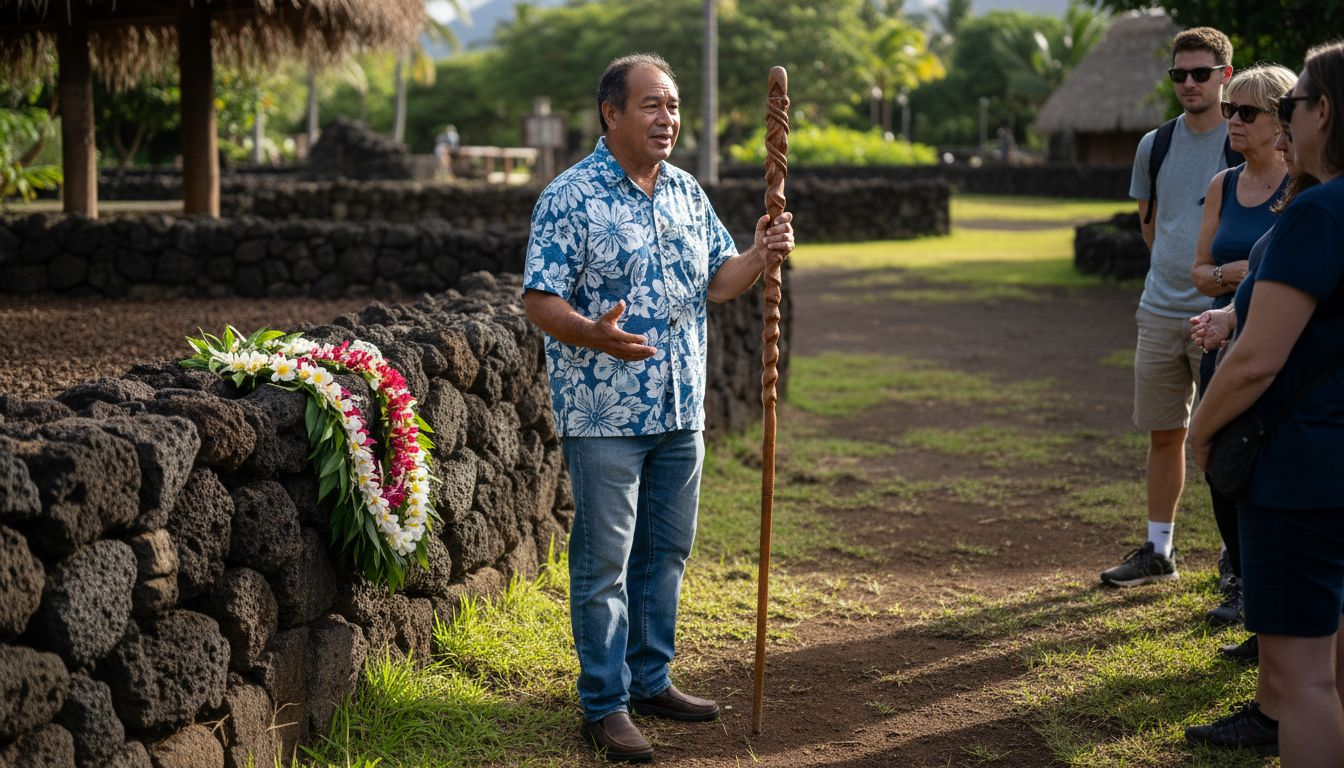
“caption”: “Hawaiian guide storytelling at attraction”
},
“author”: {
“url”: “https://flightofaloha.com”,
“name”: “Flightofaloha”,
“@type”: “Organization”
},
“@context”: “https://schema.org”,
“headline”: “Cultural Storytelling in Attractions: Hawaiian Impact”,
“publisher”: {
“url”: “https://flightofaloha.com”,
“name”: “Flightofaloha”,
“@type”: “Organization”
},
“inLanguage”: “en-US”,
“articleBody”: “Cultural storytelling in attractions elevates Hawaiian visitor experiences—explore legends, immersive tech, sensory effects, and risks for families.”,
“description”: “Cultural storytelling in attractions elevates Hawaiian visitor experiences—explore legends, immersive tech, sensory effects, and risks for families.”,
“datePublished”: “2026-02-27T00:35:51.431Z”
}
Every family faces the challenge of finding experiences that entertain curious kids and inspire adults alike while on vacation. In Kailua-Kona, attractions are moving far beyond static displays, offering ways for visitors to truly connect with Hawaiian culture through immersive, interactive storytelling. Families discover more than fun—they gain a deeper understanding as cultural storytelling brings history and values to life, blending tradition with high-tech sensory adventures for memories that last well beyond the trip.
Table of Contents
- Cultural Storytelling In Attractions Explained
- Types Of Immersive Narrative Experiences
- Key Elements Of Authentic Hawaiian Storytelling
- Sensory Technologies And Family Engagement
- Common Pitfalls And Misrepresentations To Avoid
Key Takeaways
| Point | Details |
|---|---|
| Cultural Storytelling Preserves Heritage | It connects visitors to places and communities, creating meaningful experiences that resonate beyond their visit. |
| Effective Immersive Experiences | Incorporating emotional connections, education, and respect for source communities enhances visitor engagement. |
| Types of Immersion Matter | Understanding fictional, sensory, and systemic immersion can enrich the visitor experience and make it memorable. |
| Authenticity is Key | Authentic stories are told by knowledgeable cultural guardians, ensuring accurate representation and community connection. |
Cultural storytelling in attractions explained
Cultural storytelling in attractions is far more than entertainment. It’s a method of preserving heritage, connecting visitors to place and community, and creating experiences that resonate long after the visit ends.
At its core, cultural storytelling preserves heritage while bridging the past and present through immersive narratives. This approach integrates historic events, cultural practices, and local values into visitor experiences. It’s not about displaying artifacts behind glass—it’s about bringing stories to life.
What Makes Cultural Storytelling Effective
Great cultural storytelling in attractions does several key things:
- Creates emotional connection — Visitors don’t just learn facts; they feel something genuine about the place and its people
- Respects the source community — Authentic stories told with reverence build trust and understanding
- Blends education with experience — Immersive formats make learning memorable without feeling like a lecture
- Honors place and time — Stories are grounded in specific locations and historical contexts that matter
Authentic cultural storytelling transforms casual visitors into engaged learners who leave with deeper understanding and respect for the communities they’ve experienced.
When attractions use local legends effectively, they create multi-sensory experiences that stick. Visitors remember not just what they saw, but how the story made them feel.
How It Works in Practice
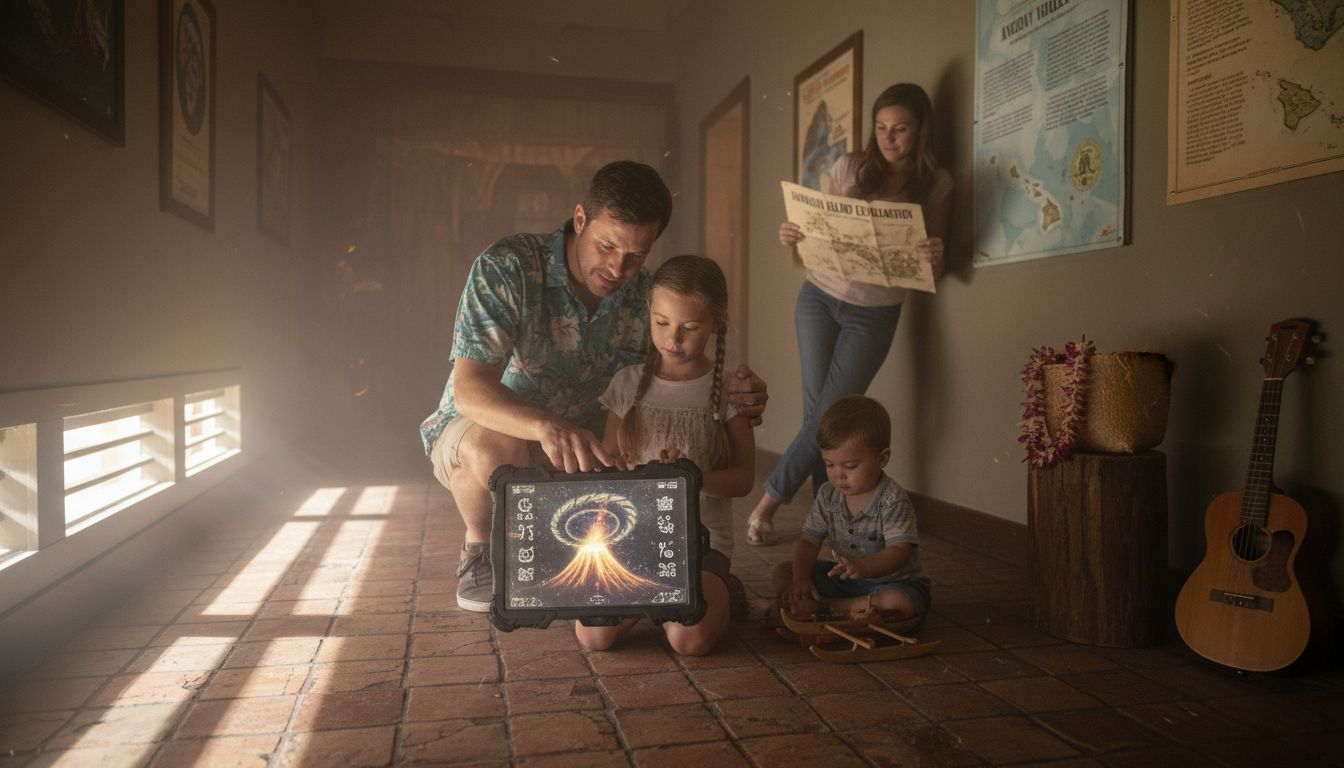
Cultural storytelling operates differently than traditional tours or displays. Instead of passive observation, visitors become part of the narrative. They might experience a story through visuals, sound, movement, scent, and wind—all working together to create genuine immersion.
The goal is simple: foster connection and understanding through shared stories. When done well, visitors leave feeling like they’ve actually been part of something meaningful, not just consumed content.
Experiences that combine Hawaiian cultural immersion with modern technology show how storytelling can honor tradition while engaging contemporary audiences.
Pro tip: When visiting cultural attractions, look for stories that explain not just what happened, but why it matters to the community today—that’s the mark of authentic cultural storytelling.
Types of immersive narrative experiences
Not all immersive experiences work the same way. Understanding the different types helps you recognize what kind of experience you’re getting and why it feels so engaging.
The Three Core Types
Fictional, sensory, and systemic immersion form the foundation of most immersive narrative experiences. Each creates engagement through a different mechanism.
Fictional immersion pulls you into a narrative or invented world. You’re not observing a story—you’re stepping into it. When you watch a ride film that transports you across Hawaiian landscapes, you’re experiencing fictional immersion.
Sensory immersion activates your senses to create physical experiences. Wind on your skin, scents in the air, vibrations beneath your feet—these elements make stories feel real. Your body becomes part of the experience, not just your mind.
Systemic immersion involves following rules or completing interactive challenges. You participate in the experience, making choices that affect what happens next. This type turns visitors into active participants rather than passive observers.
To better understand the differences among immersive experience types, here is a side-by-side comparison:
| Immersion Type | Main Engagement Method | Visitor Role | Example in Attractions |
|---|---|---|---|
| Fictional Immersion | Narrative and world entry | Story participant | Ride films with local legends |
| Sensory Immersion | Multi-sensory stimulation | Physical explorer | Attractions using wind, scent, motion |
| Systemic Immersion | Interactive challenges | Active decision-maker | Games with choices affecting outcomes |
Real-World Combinations
Most effective attractions blend multiple types together. A single experience might layer fictional narrative with sensory triggers and interactive elements, creating deeper emotional involvement.
The result? Visitors remember the experience for years. They don’t just recall facts—they remember how they felt, what they smelled, and the choices they made.
The most memorable immersive experiences combine storytelling, sensory stimulation, and meaningful participation into one cohesive journey.
Beyond the Basics
The immersive experience landscape extends further. Location-based virtual reality, live-action role-playing, immersive theater, and theme attractions each offer unique ways to engage audiences.
When attractions use immersive technology effectively, they transport visitors across physical and digital dimensions simultaneously. This creates moments that feel genuinely transportive.
Hawaii-focused attractions leverage these types to tell cultural stories that honor tradition while captivating modern audiences. The combination of narrative, sensory elements, and interactivity makes cultural storytelling stick.
Pro tip: Pay attention to which immersion type dominates an experience—fictional storytelling, sensory engagement, or interactive participation—to understand what will resonate most with your travel style.
Key elements of authentic Hawaiian storytelling
Authentic Hawaiian storytelling isn’t just entertainment—it’s a sacred way of preserving culture, identity, and connection to the land. Understanding its core elements reveals why these stories matter so deeply.
Foundation: Oral Tradition and Land Connection
Hawaiian storytelling preserves genealogy and history through moʻolelo, which are histories and legends that bind past and present communities. The stories are rooted in ʻāina (the land itself), making geography inseparable from narrative.
This connection runs deep. The land isn’t just a backdrop—it’s a character in the story, holding ancestral memories and spiritual significance.
The Language and Forms
Authentic storytelling uses multiple mediums to convey layered meanings:
- ʻōlelo Hawaiʻi — Hawaiian language carries cultural nuances impossible to fully translate
- Mele — Songs that weave emotion and memory into narratives
- Oli — Chants that invoke ancestors and spiritual presence
- Hula — Dance as a physical expression of the story itself
These aren’t separate elements. They work together, with each form reinforcing the others.
Authentic Hawaiian storytelling combines language, music, chant, and movement into a unified cultural experience that honors both past and present.
The Role of Cultural Guardians
Kūpuna (respected elders) serve as storytellers and cultural guardians. Their role isn’t simply to recite—it’s to transmit cultural values, uphold sacredness, and ensure authenticity across generations.
This requires deep cultural knowledge. Why Hawaiian stories matter for travelers and locals is rooted in this guardian tradition, which maintains the integrity of the narratives.
Here’s how authentic Hawaiian storytelling elements contribute to a meaningful experience:
| Element | Contribution to Storytelling | Example Impact at Attractions |
|---|---|---|
| ʻŌlelo Hawaiʻi | Conveys cultural nuance | Deeper audience understanding |
| Mele & Oli | Adds emotion and spiritual meaning | Guests feel ancestral connection |
| Hula | Physical embodiment of stories | Engaged and memorable presentation |
| Kūpuna involvement | Ensures authenticity and respect | Stories taught accurately to visitors |
Repetition, Metaphor, and Interconnection
Hawaiian storytelling emphasizes interconnectedness between land, people, and spirit. Repetition and metaphor aid memory and engagement, making stories stick in listeners’ minds.
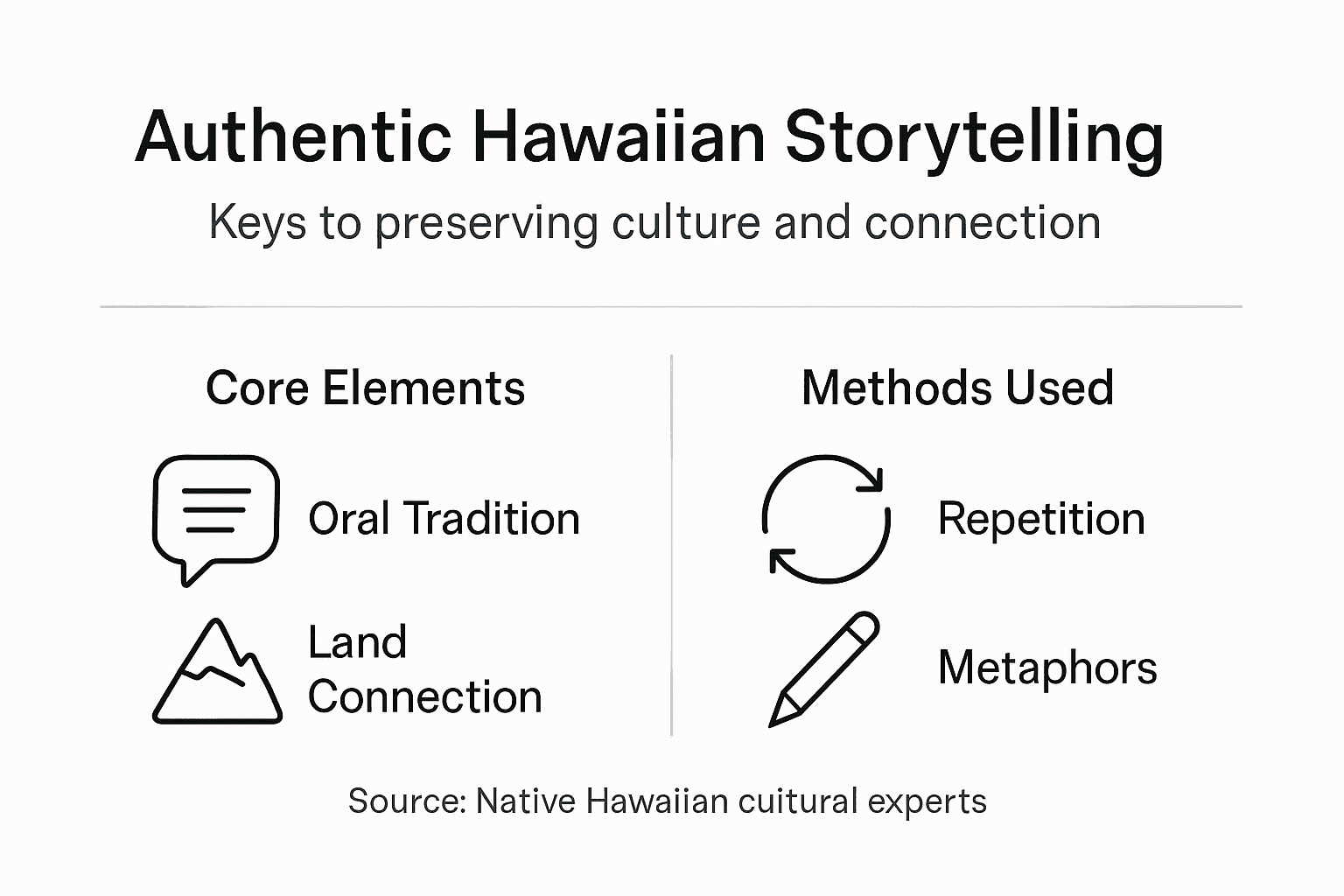
The stories teach practical knowledge alongside cultural values—how to live in harmony with nature, respect community, and honor ancestral wisdom.
Pro tip: When experiencing Hawaiian stories, listen for the land references and spiritual elements—they’re what make the narrative authentically Hawaiian, not just a good story.
Sensory technologies and family engagement
Families visiting attractions today expect more than static displays. Sensory technologies transform how families experience stories together, creating moments that engage everyone from toddlers to grandparents.
How Sensory Tech Works for Families
Visitor apps and augmented reality technologies boost engagement by offering personalized, interactive, and multisensory content. Wind, scent, motion, and visuals activate multiple senses simultaneously, making stories unforgettable.
For families, this means nobody gets bored. Kids experience adventure. Parents appreciate the cultural depth. Grandparents enjoy the immersive storytelling.
What Makes These Technologies Work
Sensory technologies succeed because they address real family needs:
- Language translation — Multi-generational families can experience stories together regardless of language background
- Gamified interactions — Children stay engaged through interactive challenges, not passive watching
- Multimedia storytelling — Audio, visuals, and physical sensations reinforce the narrative
- Accessibility features — Families with different abilities can all participate fully
- Inclusive design — Experiences work for visitors across age groups and demographics
These elements work together. A child experiences the adventure while a parent discovers cultural meaning—simultaneously.
Sensory technologies bridge generational and accessibility gaps, allowing entire families to experience cultural stories in ways that resonate with each person individually.
Practical Family Benefits
When sensory attractions enhance visitor emotion, families create shared memories that last. Kids remember the wind on their skin. Parents remember their child’s wonder.
The experience also supports environmental sustainability. Digital storytelling replaces printed materials. Interactive features reduce the need for physical attractions spread across large areas.
Families visiting Kona appreciate attractions that respect both Hawaiian culture and modern family dynamics. Sensory technologies make this possible.
Pro tip: Before visiting with your family, check if the attraction offers language options and accessibility features—these sensory enhancements work best when everyone can fully participate.
Common pitfalls and misrepresentations to avoid
Not all Hawaiian storytelling is created equal. Understanding what to avoid helps you recognize authentic experiences and support businesses that genuinely respect Hawaiian culture.
The Core Problems
Cultural appropriation, misrepresentation, and commodification are the biggest threats to Hawaiian cultural integrity. These practices lead to erasure of true meaning, perpetuation of stereotypes, and economic exploitation of Native Hawaiian communities.
When stories are stripped of their sacred context and repackaged for profit, everyone loses. The culture gets distorted, and visitors miss the real depth of Hawaiian heritage.
Red Flags to Watch For
Superficial portrayals in tourist contexts often fail to respect the sacredness and depth of Hawaiian stories. Look for these warning signs:
- No Native Hawaiian involvement — Stories told without Indigenous voices present lack authenticity
- Missing cultural context — Stories presented without explaining their significance to Hawaiian people
- Stereotypical imagery — Hula dancers in coconut bras or exaggerated tropical clichés
- No attribution — Stories presented without crediting their origins or cultural sources
- Profit-only focus — Attractions that commercialize culture without community benefit
Authentic experiences acknowledge cultural protocols and involve kūpuna (elders) in storytelling decisions.
Respectful Hawaiian storytelling prioritizes Indigenous voices, contextual accuracy, and community engagement over entertainment convenience.
What Authentic Looks Like
Authentic attractions share common traits. They invest in education, demonstrate cultural sensitivity, and involve Native Hawaiian leadership in decision-making. Stories are presented with proper context, explaining not just what happened but why it matters spiritually and culturally.
Native Hawaiian-owned or Native Hawaiian-led businesses show genuine commitment to cultural preservation. These attractions don’t just tell stories—they protect them.
When choosing where to spend your time and money, prioritize attractions that employ Hawaiian cultural experts and share profits with Native Hawaiian communities.
Pro tip: Ask attractions directly: Who created these stories? Are Native Hawaiians on your team? How do you contribute to Hawaiian cultural preservation? Their answers reveal their genuine commitment to authenticity.
Experience Authentic Hawaiian Cultural Storytelling Like Never Before
The article highlights key challenges in cultural storytelling such as preserving authentic Hawaiian heritage, creating immersive sensory experiences, and fostering meaningful connections between visitors and the land. At Flight of Aloha, we address these challenges head-on by blending storytelling deeply rooted in Native Hawaiian legends with cutting-edge immersive technology that engages all your senses. Our attraction goes beyond typical displays by inviting you to fly over Hawaii through 8K visuals, motion effects, scents, and wind—creating the type of sensory immersion and fictional storytelling described in the article.

Discover the unique magic of Hawaiian culture through our distinct ride films like ‘Naupaka’ and ‘Lahaina,’ which honor the traditions of kūpuna and the ʻāina while delivering a captivating experience the whole family can enjoy. Don’t miss out on our VIP experiences and annual passes that allow deeper exploration of Hawaiian stories told with respect and authenticity. Book direct today at Flight of Aloha to secure your place on this unforgettable journey that respects culture, excites the senses, and creates lasting memories.
Frequently Asked Questions
What is cultural storytelling in attractions?
Cultural storytelling in attractions is a method of preserving heritage and connecting visitors to a place and community through immersive narratives that resonate long after a visit.
How does cultural storytelling create emotional connections for visitors?
Cultural storytelling creates emotional connections by allowing visitors to feel genuine sentiments about a place and its people, moving beyond mere facts to foster deeper understanding and respect.
What are the types of immersive narrative experiences in attractions?
The three core types of immersive narrative experiences are fictional immersion, sensory immersion, and systemic immersion, which engage visitors through narrative, physical sensations, and interactive challenges, respectively.
Why is authentic Hawaiian storytelling important in cultural attractions?
Authentic Hawaiian storytelling is crucial as it preserves the culture, identity, and connection to the land while educating visitors about the values and practices that shape the Hawaiian community.
Recommended
- Visitor Guide Cultural Storytelling: Hawaiian Immersion Impact | Flight Of Aloha
- Cultural Storytelling Experiences In Kailua-Kona | Flight Of Aloha
- 7 Hawaiian Storytelling Highlights Every Family Can Enjoy | Flight Of Aloha
- Understanding Hawaiian History In Themed Attractions | Flight Of Aloha
- Importance of Bavarian Culture at Corporate Events