
What Is an Immersive Ride Film? A Simple Guide
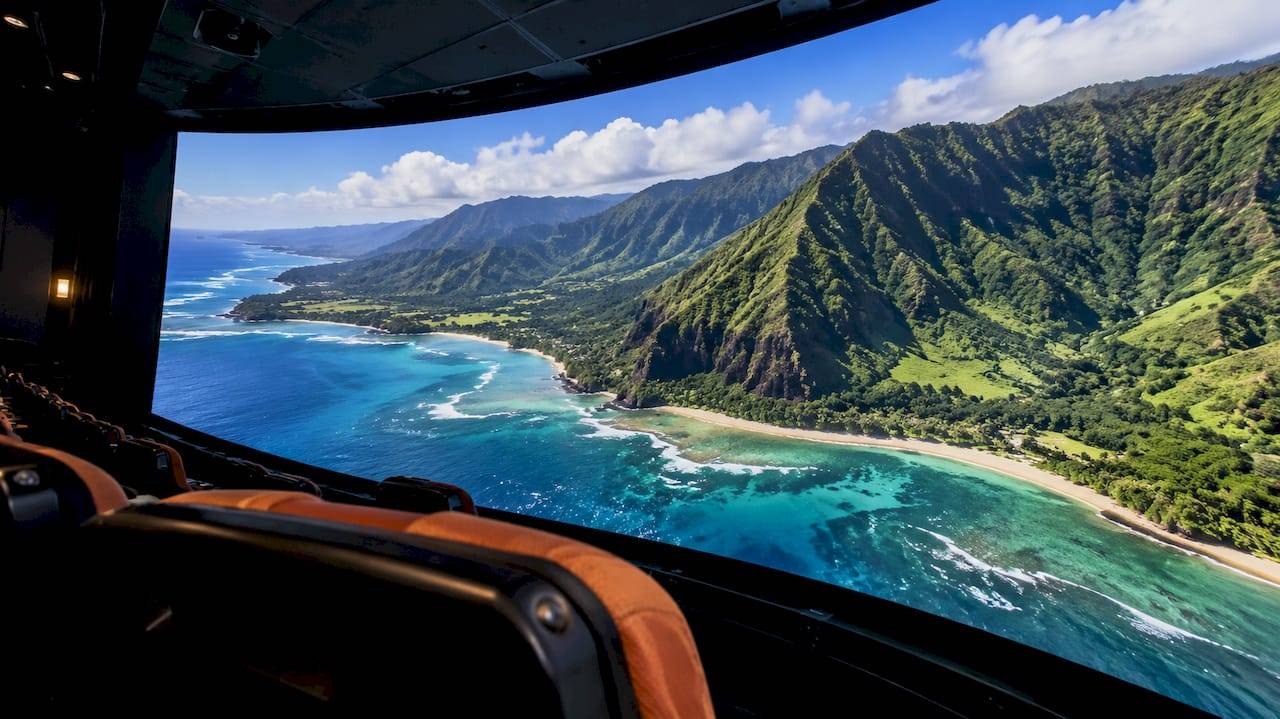
An immersive ride film is a short movie you feel with your whole body. You sit on a seat or platform that moves in sync with the picture, while sound, and often wind, mist or scent, are timed to the story. The goal is simple: you stop watching a screen and feel like you are inside the scene. In Hawaii, that can mean soaring over a valley or a coastline without ever leaving your seat. That is what we do at Flight of Aloha in Kailua-Kona and at Whalers Village in Kaanapali, Maui.
TL;DR
- A ride film is a short, story-driven movie paired with a moving seat or platform, plus sound and other sensory effects, all timed to the picture.
- “Immersive” means your attention is fully inside the film world. The more senses the ride engages, the stronger the feeling.
- Ride films are close cousins of 4D cinema, motion simulators and dark rides, but each one mixes the ingredients differently.
- A flying theater is a ride film where you are lifted and “flown” over landscapes, an indoor, air-conditioned way to see Hawaii from above.
- Flight of Aloha is Native Hawaiian-owned, with locations in Kailua-Kona and Whalers Village Kaanapali. Book online to secure your seat.
The short definition
Start with the film half. Animation writers in the 1990s described the most common theme park format as a roughly four-minute motion-simulator film, also called a ridefilm. The same article notes that practitioners think of these films as linear minidramas, with a backstory and material that connects viewers to real-world experience. So a ride film is not just a camera swooping around. It has a beginning, a middle and an end.
Now the ride half. The seat, floor or whole platform moves in step with what is on the screen. When the camera dips, you dip. When the camera banks around a cliff, your body feels the lean. Add sound that surrounds you, and effects like air movement or a hint of fragrance, and the screen stops feeling like a window and starts feeling like a place.
The word “immersive” is worth a closer look. In one academic study of film and spatial audio, immersion is described as placing your full attention within the film world. A ride film pushes that further by adding the body to the equation.
What does “immersive” really mean?
Researchers split immersion into two kinds. One is cognitive: you are caught up in the narrative and the emotions. The other is physical: your senses and balance are being directly engaged by motion and sensation. A recent academic analysis of immersive cinema also points out that true immersion often involves a kind of double awareness. You know it is a made experience, and you still feel carried away by it.
That is why a great ride film feels different from a great regular movie. A regular movie asks you to imagine yourself in the scene. A ride film hands you the sensation and lets your imagination do the rest. It is also why a good story matters so much. Technology without a reason to care is just a bumpy chair.
How the pieces work together
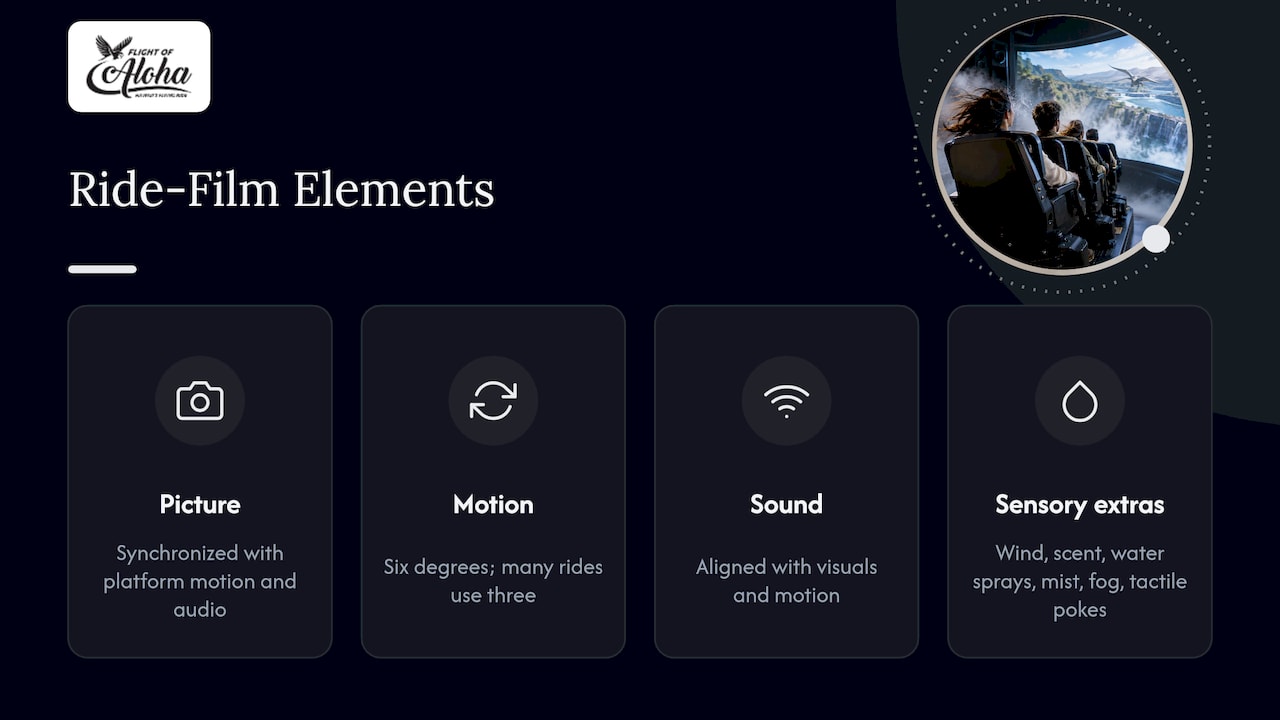
Three things have to happen at once for the magic to land: the picture, the motion and the sound.
Synchronization. The team behind a large installation in Malta described using media servers and frame-by-frame, high-speed network synchronization to align the visuals, motion platform and audio. Designers on that project also stressed that the best technology only works when it serves a compelling story. If the motion arrives even slightly late, your brain notices and the spell breaks.
Motion. Engineers describe motion in terms of six degrees of freedom: heave, pitch, roll, surge, sway and yaw. According to a film critic’s explainer on simulator rides, most simulator rides offer only three of those: pitch, heave and roll. Even with a limited set of movements, clever film design can make you feel like you are banking, climbing and diving.
Sensory extras. This is where ride films get playful. According to a Disney-focused travel planning blog, 4D attractions can add scent, water sprays, mist, fog, wind and tactile “pokes” that are synchronized with the film, going beyond traditional 3D. Wind on your face during a flight scene, or the smell of a rainforest as you glide over it, does more for the illusion than another few million pixels.
We go deeper on the engineering in our explainer on dynamic ride technology.
Ride film, 4D cinema, simulator, dark ride: what is the difference?
These terms overlap, and attractions often borrow from each other. Here is a practical way to tell them apart.
| Format | What it is | What you do | Typical extras |
|---|---|---|---|
| Ride film | A short story-driven film synced to a moving seat or platform | Sit and travel through the story | Motion, surround sound, sometimes wind or scent |
| Flying theater | A ride film where riders are lifted before a huge curved screen | Hang or sit “in flight” over landscapes | Wind, scent, big-screen aerial imagery |
| 4D cinema | A film with in-theater effects | Sit in a seat that vibrates or tilts | Sprays, fog, scent, seat pokes |
| Motion simulator | A platform that mimics a vehicle | Pilot or ride along | Motion tied to a vehicle’s movement |
| Dark ride | A themed journey through built scenes | Ride a vehicle past sets and screens | Lighting, triggered sound, physical props |
Dark rides are the grandparents of the family. One academic history notes that the dark ride format originated in US amusement parks in the early 20th century, and describes the classic design as having six components: a themed journey, 360-degree imagery, triggered sound, mediated lighting, perspectival illusion and haptic feedback. Modern ride films keep that DNA, but swap most of the physical sets for giant, high-resolution screens.
Researchers who study the 4D boom also trace it to ride films. One paper argues that 1990s theme park ride films influenced mainstream 4D cinemas in the 2010s, and that is a good reminder of how much the cinema world borrows from the theme park world.
If you want to see how theme parks and flying theaters stack up for a Hawaii trip, we compare them in Theme Parks vs. Flying Theaters.
What it actually feels like to ride one
Picture the whole thing in order.
- You settle in. You are seated and secured, and the lights come down.
- The film begins. The story sets the scene, often in the first few seconds, so you know where you are and why you are there.
- The motion kicks in. Your seat lifts, tilts or glides with the camera. Your stomach notices before your brain does, in a fun way.
- The extras arrive. Air moves across your face. A scent drifts in. Sound moves around you.
- The finale lands. Great ride films build to a moment, a reveal or an emotional beat, and then ease you back down.
Because the film is short, the whole experience is quick and easy to fit into a day. That makes ride films a natural pick for families with mixed ages and for travelers on a tight schedule. Our guide to multisensory rides for families shows what to look for, and our post on why immersive rides are so popular with tourists explains the appeal.
Our perspective: why Hawaii is made for ride films
We think the ride film format is a perfect match for these islands. Hawaii has landscapes that are hard to reach, stories that deserve to be told with care, and weather that does not always cooperate with a beach plan. A flying theater lets you see all of it comfortably.
Here is how we think about it at Flight of Aloha:
- Story first. Our ride films are rooted in Hawaiian legends and culture, developed with local advisors and storytellers. The motion, wind and scent are there to serve the story, never the other way around.
- Native Hawaiian-owned. The people telling these stories are from the place the stories come from. We believe you can feel that difference.
- Accessible by design. We want to be the most accessible activity in the islands: indoors, comfortable, and welcoming to all ages and abilities.
- Aerial views without the aerial risk. Our ride is designed to give you the feeling of a scenic flight over the islands, with no weather delays outside and no motion-sickness worries about open skies.
A ride film done well is a way of sharing a place, not just showing it. That is the whole idea behind the name.
— Ola
Flight of Aloha: a ride film you can try in Kona and Maui
Flight of Aloha is a Hawaiian immersive flying theater with two locations: Kailua-Kona on the Big Island and Whalers Village in Kaanapali, Maui. You are lifted before an enormous screen showing 8K visuals, while motion effects, wind and scents carry you through each film. Think of it as part helicopter tour, part theme park ride, all rooted in aloha.
Our films include:
- Naupaka, a flight built around a beloved Hawaiian legend.
- Lahaina, a journey through a place that holds deep meaning for Maui and for Hawaii.
- Europe, a flight across the continent for riders who want a different horizon.
We also feature films such as Whale Song and a Merrie Monarch-themed ride. Not every title plays at every location, so check the official site for what is showing where.
For a deeper look at what these stories draw from, read Hawaiian ride themes explained and how ride film tech transforms Hawaii. If you want a full primer on the format, our post on what is a ride film covers the basics for families.
Why it works as a helicopter alternative
Aerial tours are a bucket-list item, but they come with a high price tag, weather-dependent flights and, for some riders, motion sickness. A ride film gives you the sweeping, bird’s-eye feeling at a fraction of the cost, in a seat with no turbulence. We built our experience to be the smart alternative: soaring views, comfortable footing, and a price families can plan around.
Rainy days, heat and vog
Plans change in Hawaii. A passing shower can wash out a beach morning, and on some days the heat or vog (volcanic haze) makes outdoor sightseeing feel like a chore. Flight of Aloha is indoors and air-conditioned, which makes it an easy go-to for a rainy day in Kona, a rainy day in Maui, or any afternoon when you want to cool off. Many guests use it as the anchor of a flexible day.
Cruise day? We are close to the pier
If your ship is in Kona, our Kailua-Kona location is within walking distance of Kailua Pier and the tender dock, so you can step off, enjoy a ride, and still have time for shave ice and shopping. The short film length is ideal for quick shore excursions. In Maui, Whalers Village in Kaanapali is an easy stop between the beach and lunch.
Tickets and prices at a glance
Prices below are as published on our site, and a range reflects different showtimes or ticket types. Check the page for the exact price when you book.
| Experience | Price (USD) |
|---|---|
| Single flight: Naupaka, Lahaina or Europe | $29.99 to $34.99 |
| Double Feature Flying Ride | $49.99 to $59.99 |
| VIP Package | $69.99 to $79.99 |
| Annual Pass | $200 per year |
The annual pass is a nice fit for residents who want to bring visiting friends and family, or for anyone who likes to watch a favorite film again. A gift card is also available through our homepage.
Ready to fly?
If you have been wondering what a ride film feels like, the quickest way to find out is to try one. Pick a single flight if you are short on time, a double feature if you want two stories, or the VIP package for a premium visit. Group rates are available, so ask when you book.

See every flight and pick your showtime on our flights page, or learn more about the experience on flightofaloha.com.
Before you ride: comfort, motion and accessibility
Motion is part of the fun, but it is worth knowing what to expect. Ride films move you in gentle to moderate ways, and designers work to keep movement and picture in step. One flying theater manufacturer says tightly matched motion and visuals help reduce motion sickness, which is a good reason to choose a well-built attraction.
Some guidance from other formats applies here too. A cinema chain’s safety page for its 4DX shows advises against attending for guests with heart, back or neck conditions, epilepsy, sensory sensitivities or pregnancy. That guidance is for a different venue, so if any of those apply to you, talk with your doctor first and ask the attraction about its own guidelines before you buy tickets.
Height and age limits are another planning point. Many theme park rides set minimums, as you can see from Disney ride height requirements when families plan park days. We aim to welcome all ages and abilities, and if you are traveling with young children or a rider with mobility needs, our team can talk through your visit before you arrive.
A few simple tips make for a smoother ride:
- Eat a light meal beforehand rather than a big one.
- Look at the horizon of the screen, not down at your lap.
- Tell the crew about any sensitivities to scents or wind.
- Arrive a little early so everyone is settled before the lights go down.
FAQ
What does it mean if a movie is immersive?
It means the film draws your full attention into its world so that you feel part of it rather than outside it. Researchers describe this as both a mental engagement with the story and, in rides, a physical one through motion and other sensations. Ride films aim for both at once.
How long is a ride film?
Classic theme park ride films have often run around four minutes, according to animation industry writing. Lengths vary by attraction, so check the show page for current run times. A double feature at Flight of Aloha gives you two stories back to back.
Is a ride film the same as a 4D movie?
They are close relatives. A 4D movie adds in-theater effects like seat motion, mist or scent to a film, while a ride film is built around a specific story and a motion platform designed for it. Flying theaters like ours are a ride film with a lift-and-fly experience.
Is an immersive flying theater a good rainy day activity?
Yes. Our attraction is indoors and air-conditioned, so rain, heat and vog do not affect your visit. It works well in both Kailua-Kona and Whalers Village Kaanapali.
Where can I try a ride film in Hawaii?
You can visit Flight of Aloha in Kailua-Kona on the Big Island and at Whalers Village in Kaanapali, Maui. Our Kona location is within walking distance of Kailua Pier. Book online to secure your seat.
Sources
- Understanding Immersion in the Context of Films with Spatial Audio
- Decoding Immersive Cinema: An Integrated Analysis
- Something’s Wrong With Our Ship: Animated Motion-Simulator Films in Theme Parks
- Odyssey Malta at Mercury Towers: teamwork delivers
- Film, motion give illusion of ‘reality’
- Disney in a Minute: What is a 4D attraction?
- Dark rides and the evolution of immersive media
- What are the 4DX Safety Guidelines?