
Indoor 8K Flying Theater: Environmental Storytelling in Hawaii
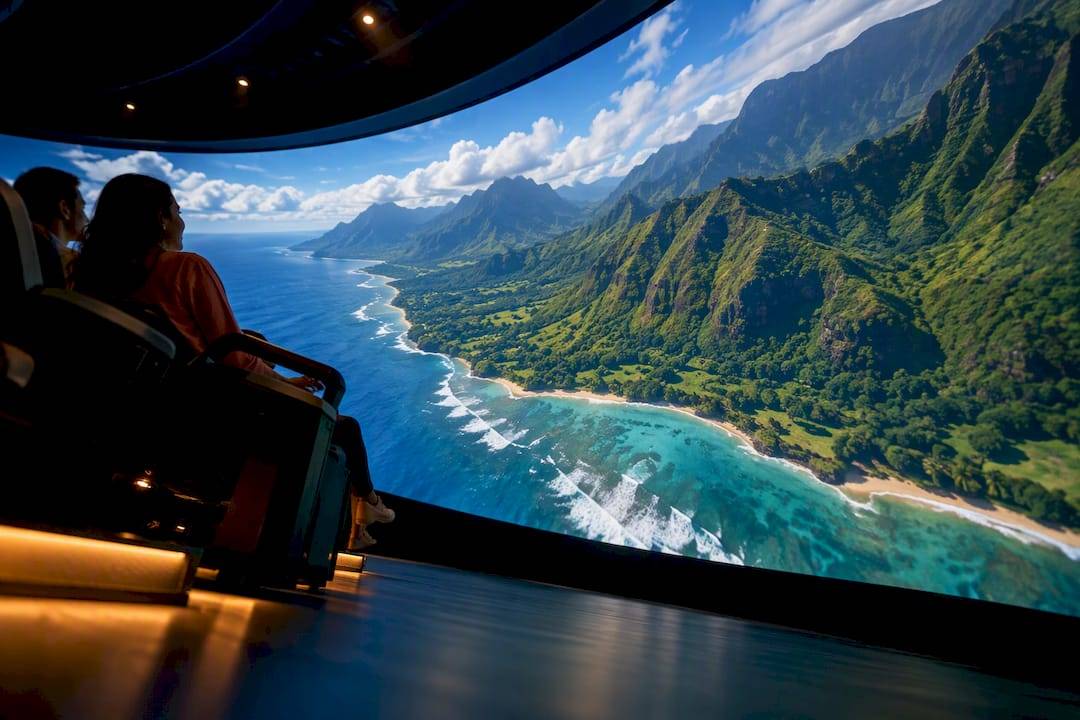
Environmental storytelling is the practice of using layered sensory details, 8K visuals, motion, scent, sound, and set design, to place visitors inside a story rather than just showing it to them. In Hawaiian attractions, it means every gust of wind, ambient tone, and background detail works together to convey a legend, a place, or a mood. Flight of Aloha in Kailua-Kona builds its flying theater shows around exactly this idea, turning a seat into a vantage point over real Hawaiian stories.
TL;DR:
- Environmental storytelling relies on sensory cues like visuals, sound, scent, and motion to immerse visitors in Hawaiian legends and landscapes authentically.
- The approach uses technology such as 8K projection, scent triggers, wind, and motion sequencing to create layered, emotionally resonant experiences that appeal to all ages.
- For cruise visitors, indoor, weatherproof attractions like Flight of Aloha provide reliable, accessible entertainment within walking distance of tender docks in Kona and Maui.
- The technique demands complex coordination among design teams but delivers memorable, community-grounded stories that foster shared experiences and repeat visits.
- Visitors can enhance their experience by noticing recurring motifs, timing scent and sound cues, and choosing show formats to match their group’s interests and schedules.
The Definition of Environmental Storytelling for Hawaiian Attractions
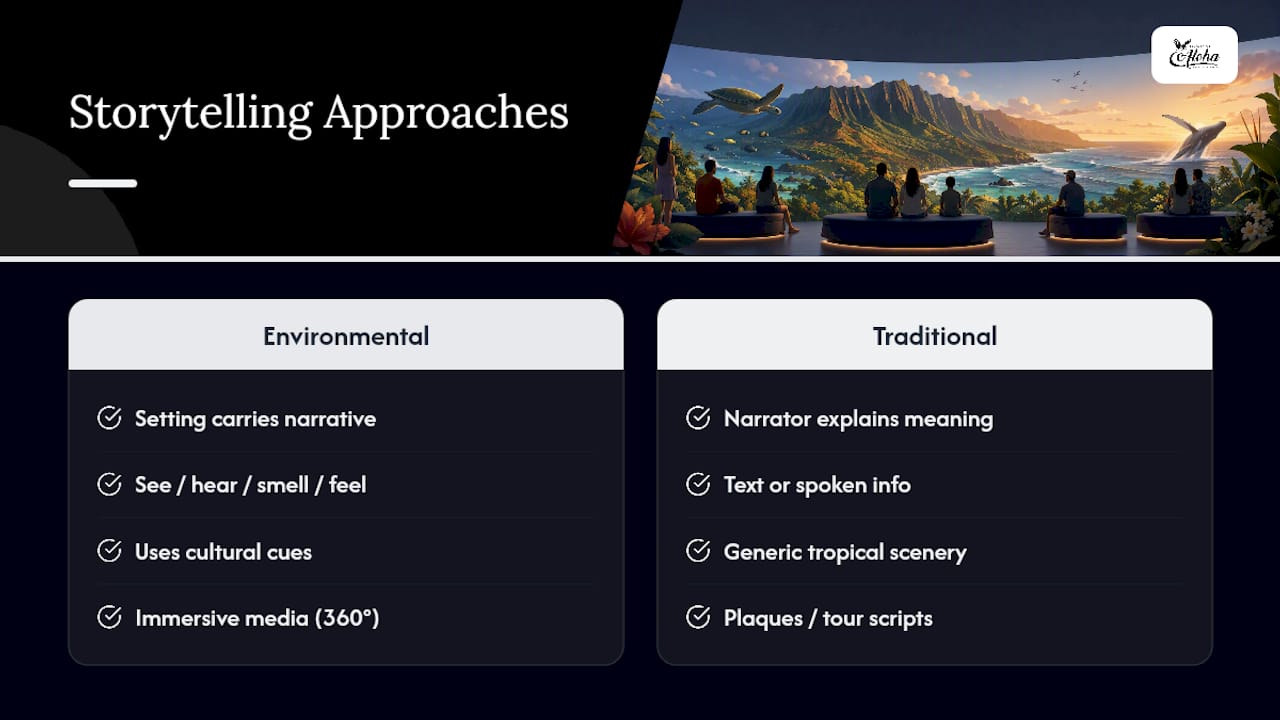
Environmental storytelling means designing a physical or simulated space so the setting itself carries the narrative. Instead of a narrator explaining what a place means, the room, the ride, or the theater tells you through what you see, hear, smell, and feel. This is different from a museum plaque or a tour guide’s script. It is closer to walking into a story and letting the details do the talking.
For Hawaiian attractions, this usually means recreating the mood of a specific legend or landscape using cultural cues instead of generic tropical scenery. Sensory design like this is what separates a forgettable ride from something guests still talk about weeks later, and it is the same principle museum designers use when building immersive historical exhibits with original scores and 360-degree projection, as seen in the National Cowboy & Western Heritage Museum’s recent immersive exhibition. The medium changes. The principle of letting environment carry meaning does not.
How Designers Build Layered Meaning Into an Attraction
Great environmental storytelling rarely starts with a script. It often starts with a piece of technology, motion, wind, or a visual system, and the story gets built around what that technology can make you feel. Practitioners in themed entertainment describe this as a cross-disciplinary hand-off: an idea born in a motion simulator or a flight system gets picked up by writers and concept artists who translate the physical sensation into a narrative arc, a technique described in detail by immersive-experience designer Margaret Kerrison.
The layers that make this work usually include:
- Hero visuals that establish the world in the first few seconds
- Small, easy-to-miss set details that reward attentive guests
- Ambient sound that shifts with the story’s mood
- Scent cues timed to specific visual moments
- Motion and sequencing that mirror the emotional arc of the story
Cultural authenticity gets built the same way theme parks research real communities before designing a fictional one. Teams behind large-scale themed lands often ground their work in cultural and architectural research, working directly with local artists rather than guessing at what “feels right,” a process Imagineer Joe Rohde and designer Joan Hartwig describe in detail.
Pro Tip: Watch for the moment scent and sound shift together. That’s usually the exact second a designer wants your brain to register “new scene,” even before your eyes catch up.
What Visitors Feel and Why It Matters for Families and Cruise Guests
Layered design does not just look good. It creates the kind of memory that brings guests back for a second visit, and it lets a family of four with wildly different attention spans enjoy the same twelve minutes. A five-year-old notices the color and motion. A teenager catches the cultural references. Grandparents feel the emotional pull of a legend they may already know.
That layering matters even more when Hawaii’s weather does not cooperate. Indoor, climate-controlled attractions solve a real problem for:
- Rainy days in Kona or Maui when outdoor tours get canceled
- Vog-heavy afternoons when visibility and air quality drop
- Cruise guests with a tight window who need a reliable, weatherproof plan
- Families managing strollers, mobility devices, or younger kids who tire fast
A well-paced, accessible show also raises the value of a group outing, since nobody has to sit out because of a physical limitation or a short attention span.
Flight of Aloha’s Approach to Environmental Storytelling in Kona and Maui
Flight of Aloha builds its show around layered sensory design, combining visuals, motion effects, scent triggers, and wind to simulate the feeling of soaring over Hawaiian landscapes. Films like Naupaka and Lahaina are rooted in actual Hawaiian legends, so the sensory layers are not decoration. They are the story.
What ties the experience together is a defining culinary experience of sensory design that combines visuals, motion effects, scent triggers, and wind to simulate the feeling of soaring over Hawaiian landscapes.
- 8K projection paired with wind and motion timed to match the terrain on screen
- Scent cues tied to specific moments, like salt air over open ocean or forest scent near Naupaka’s mountain scenes
- Films grounded in real Hawaiian legends rather than invented tropical fantasy
- Locations in Hawaiian destinations, both of which are easy to reach on foot
- Local ownership, which shapes how these stories get told
For cruise guests, geography works heavily in Flight of Aloha’s favor. Tenders into Kailua-Kona land passengers directly at Kailua Pier on Alii Drive, putting the theater within an easy walk of the tender dock instead of requiring a shuttle or rental car. That single detail makes it one of the few Kona experiences you can genuinely fit into a short shore excursion without watching the clock the whole time.
How to Get the Most Out of Environmental Storytelling on Your Visit
You do not need any special knowledge to enjoy environmental storytelling, but knowing what to look for turns a good show into a great one.
- Watch for recurring motifs. A specific color, sound, or wind pattern that repeats usually signals a returning character or theme.
- Notice scent timing. If a smell changes right as the scene does, that is a deliberate cue, not a coincidence.
- Pick your show format based on your group. A single feature suits shorter attention spans and tight cruise schedules; a double feature or VIP package fits families who want the full experience.
- Time your visit around tender schedules. If you are on a ship, book the earliest available slot so weather delays or line changes do not eat into your window ashore.
- Engage with the cultural material respectfully. These are real legends tied to real places, not generic theming, so treat the story the way you would a story told by a local elder.
Pro Tip: If you’re traveling with a group that has mixed interests, book the double feature. One film usually lands harder with kids, the other with adults, and you get both without picking sides.
Environmental Storytelling vs. Other Attraction Storytelling Methods
Attractions generally rely on one of three storytelling approaches: guided narration, static exhibits with placards, or environmental storytelling. Guided narration works well for historical accuracy but depends entirely on the guide’s delivery and pacing, which varies visit to visit. Static exhibits give visitors control over pacing but ask them to supply their own emotional connection, since a placard cannot simulate wind or motion.
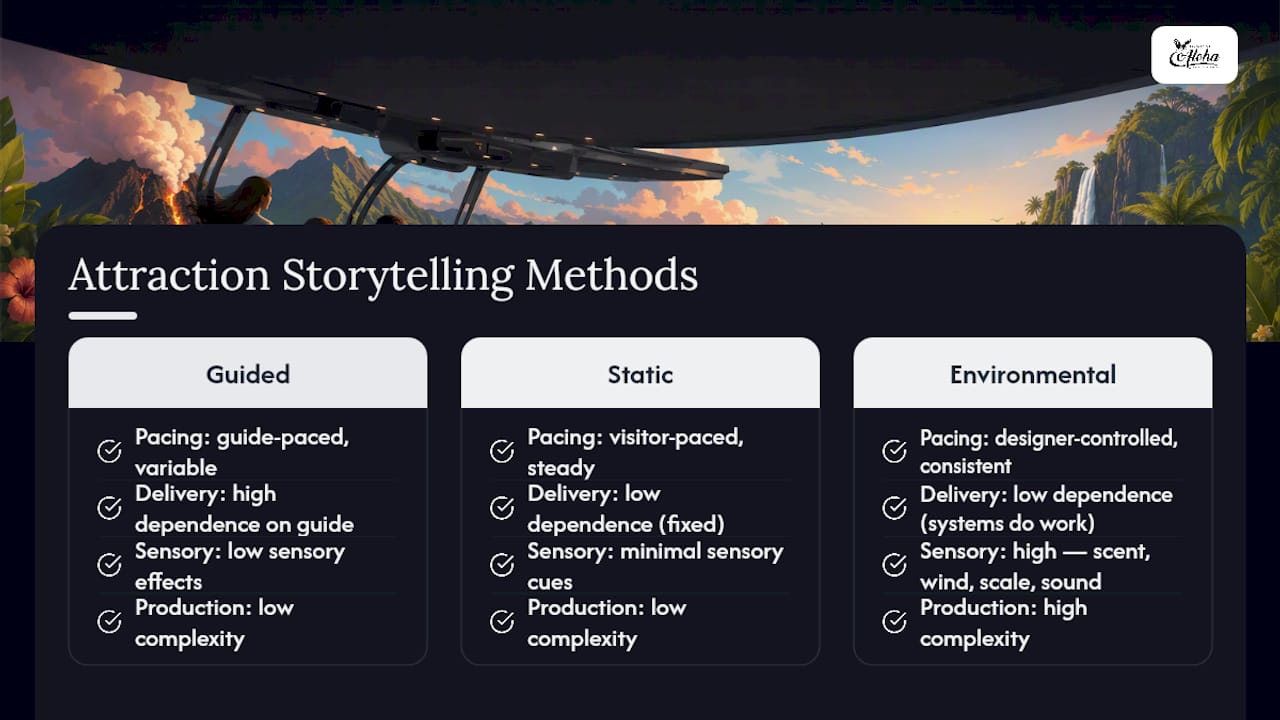
Environmental storytelling sits apart because it does not ask guests to imagine anything. The scent, the wind, the visual scale, and the sound design do the imaginative work for you. Museums have adopted a version of this approach too, building immersive exhibits with original music, first-person artifacts, and 360-degree projection to make history feel present rather than archived, as shown in a recent immersive western exhibition at the National Cowboy & Western Heritage Museum.
The tradeoff is production complexity. Environmental storytelling requires far more coordination between visual, mechanical, and sensory teams than a guided tour or a plaque ever will. But for visitors, the payoff is bigger: you leave with a felt memory instead of a memorized fact. That difference is exactly why flying theaters and immersive exhibits have grown as a category, especially in destinations like Hawaii where the landscape itself is already part of the story worth telling. For a deeper look at how this shift plays out across Hawaiian tourism, see why immersive attractions in Hawaii create richer experiences.
Why Environmental Storytelling Matters to Me
Story is one of the fastest ways strangers become a shared audience. Watching a wave crest on an 8K screen while wind hits your face, you are not alone in that moment. You are experiencing something with everyone in the theater. Designers describe community as one of the most underused opportunities in immersive design, and I think that is exactly right.
Hawaiian legends deserve to be told with real cultural grounding, not tropical wallpaper. When that respect shows up in the details, the result is both entertaining and meaningful. Come feel it for yourself.
— Ola
Experience It Yourself at Flight of Aloha
Flight of Aloha offers a flying theater experience that provides aerial views over Hawaii’s coastlines and valleys as a more accessible alternative to helicopter tours. You get the story and the scenery from a comfortable, climate-controlled seat.
That indoor comfort makes Flight of Aloha the go-to answer for rainy days in Kona, rainy afternoons in Maui, or anytime vog rolls in and outdoor plans fall apart. The attraction has locations within walking distance of key areas, including one near a pier convenient for cruise guests with tight schedules. It emphasizes ownership rooted in local culture and films built around genuine legends rather than generic island themes.
Choose a single feature like Naupaka or Lahaina, go bigger with the double feature, or upgrade to the VIP Package for a premium visit. Frequent visitors and locals can save with the Annual Pass. Book online to secure your seat.
Sources
- Margaret Kerrison — The four elements of transformative experience (case study)
- Joe Rohde and Joan Hartwig explain the creative philosophy behind Tropical Americas at D23
- Joe Rohde on why theme parks are art (Attractions Magazine interview)
- National Cowboy & Western Heritage Museum debuts immersive western exhibition
- Kona Cruise Port Guide 2026: Tender and Town | Deep Arrival
FAQ
What Is Environmental Storytelling in Simple Terms?
Environmental storytelling is when a physical space uses visuals, sound, scent, and motion to tell a story without narration. This approach is applied by blending film with sensory cues tied to cultural legends.
How Is Environmental Storytelling Different From a Guided Tour?
A guided tour depends on a narrator’s script and pacing, while environmental storytelling builds the narrative into the setting itself through sensory cues. This lets visitors of different ages absorb the story at their own depth of attention, a benefit noted by designers who emphasize layering for repeat engagement.
Why Is Flight of Aloha a Good Rainy-Day Activity in Kona?
This attraction runs entirely indoors in climate-controlled theaters, making it a reliable option when weather cancels outdoor plans. Multiple locations offer weatherproof comfort.
How Much Does Flight of Aloha Cost?
Single flight films like Naupaka and Lahaina run 29.99 to 34.99 USD, while the double feature runs 49.99 to 59.99 USD and the VIP Package runs 69.99 to 79.99 USD. An Annual Pass is available for 200 USD per year for frequent visitors.
Is Flight of Aloha Close to the Kailua-Kona Cruise Tender Dock?
Yes. Tenders land passengers at Kailua Pier on Alii Drive, putting Flight of Aloha’s Kona location within easy walking distance for shore excursion guests working on a tight schedule.