Why Interactive Rides Succeed for Hawaii Tourists
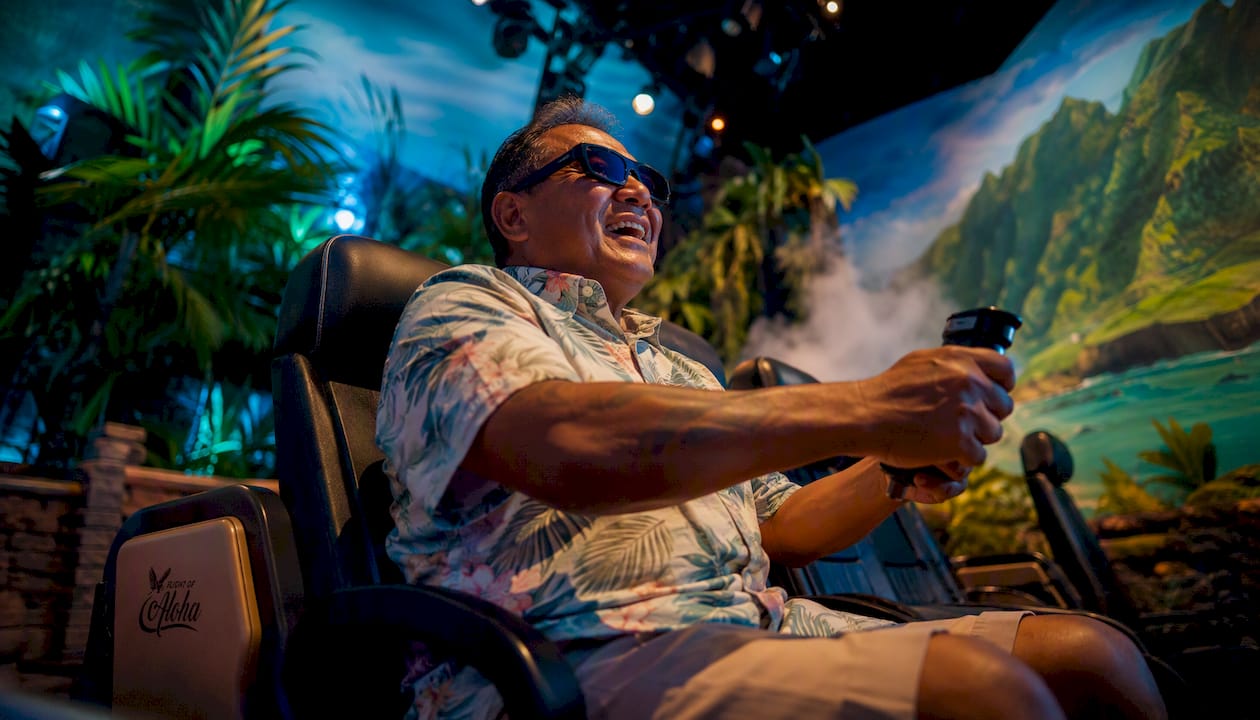
Interactive rides succeed because they pair emotionally resonant storytelling with low-barrier physical thrills that scale to wide audiences. Three forces drive that outcome every time: narrative that satisfies a deep human need for connection, sensory technology that makes the story feel real, and accessibility broad enough to include grandparents and toddlers in the same row. Research from Self-Determination Theory (SDT) backs this up, and Flight of Aloha in Kailua-Kona and Whalers Village Kaanapali puts all three to work in one 8K, motion-synced experience.
TL;DR — the four top drivers:
- Narrative and relatedness: cultural storytelling satisfies the SDT need for connection, the strongest lever in heritage settings
- Sensory orchestration: synchronized motion, wind, scent, and visuals create genuine presence
- Accessibility: gentle motion means families, seniors, and motion-sensitive guests all ride together
- Operational economics: high-capacity shows and low-cost content refreshes keep the experience evergreen
Why the psychology of interactive ride design actually works
Autonomy, competence, and relatedness — the SDT triad — are the real engine behind guest satisfaction. A Springer immersive-theater study using 363 participants found that those three factors predicted perceived interaction (R² ≈ 0.307) and emotional engagement (R² ≈ 0.300), and that immersion was the strongest single predictor of satisfaction (β = 0.486; R² ≈ 0.232). In plain terms: when a ride makes you feel like you belong in the story, satisfaction follows almost automatically.
Relatedness is the strongest lever in cultural heritage contexts. When the narrative is rooted in a place’s actual legends and people, guests don’t just watch — they feel recognized. That emotional hook is why cultural storytelling in Hawaiian attractions consistently outperforms generic spectacle.
Narrative pacing matters just as much as the story itself. Research on XR heritage experiences shows that early emotional arousal and cultural value identification form the quickest routes to behavioral intention after a short session. A strong opening hook, coherent middle, and meaningful closure — a final image that lingers, a cultural phrase that lands — convert a five-minute ride into a memory that drives revisit intent.
| Design element | Psychological effect | Visitor signal to look for |
|---|---|---|
| Cultural narrative | Satisfies relatedness (SDT) | Named legends, local language |
| Role cues and micro-achievements | Satisfies autonomy and competence | Seat choice, pre-show briefing |
| Sensory sync (motion + visuals) | Deepens immersion | Smooth frame-rate, no lag |
| Meaningful closure | Converts immersion to satisfaction | Recap moment, cultural send-off |
Pro Tip: Check whether the attraction credits local cultural consultants or storytellers in its ride description. Named advisors signal content-first design — the single biggest predictor of lasting satisfaction.
How technology amplifies the story — and why content still leads
Technology is an amplifier, not the product. The MDPI mixed-reality tourism review found that content quality is the primary driver of tourist experience, with a substantial part of that impact transmitted through the adoption of mixed reality. Remove the strong content, and the technology delivers very little on its own.
The sensory elements visitors actually experience in a flying theater each serve a specific purpose:
- 8K film resolution eliminates pixelation at large screen sizes, keeping the brain convinced the vista is real
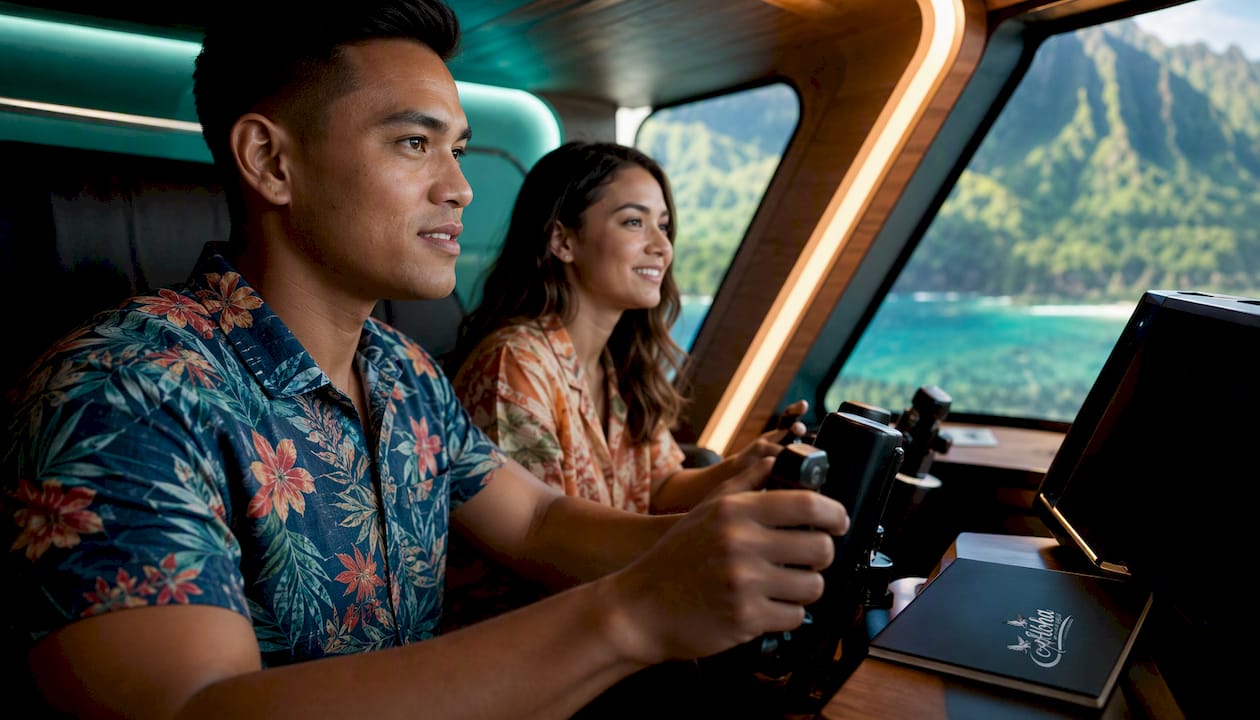
- 6DOF motion platforms tilt, pitch, and roll in sync with the camera, triggering the vestibular system without the jarring forces of a roller coaster
- Surround audio places environmental sound directionally, reinforcing the sense of spatial presence
- Wind effects are the single most commented-on sensory detail — guests feel the breeze before their brain processes the image
- Scents (ocean salt, tropical flowers) activate memory pathways that visuals alone cannot reach
Where technology fails is when it outruns the story. Usability friction — laggy controls, confusing pre-show instructions, mismatched audio — creates cognitive overload that plateaus experiential gains and can even trigger motion sickness. The best operators keep the tech invisible.
Pro Tip: Look for attractions that update their film content seasonally. Seasonal storytelling through technology signals that the operator treats content as the living core of the experience, not a one-time installation.
Why flying theaters work especially well for tourists in Hawaii
For visitors in Kona and Maui, the practical benefits of a flying theater stack up fast. The experience is fully indoors with air conditioning — the best escape from afternoon heat or vog on the Big Island. Rain cancels a snorkel trip; it does nothing to a flying theater show. That weather immunity alone makes it the go-to plan-B (and often plan-A) for families on a tight shore-excursion clock.
Motion comfort is a genuine differentiator. Gentle, synchronized movement means guests who get queasy on boats or helicopters typically ride without issue. Families with young children, seniors, and anyone who skipped the helicopter tour for comfort reasons all find a seat here. That broad demographic reach is why flying theaters maintain steady attendance across seasons and visitor profiles.
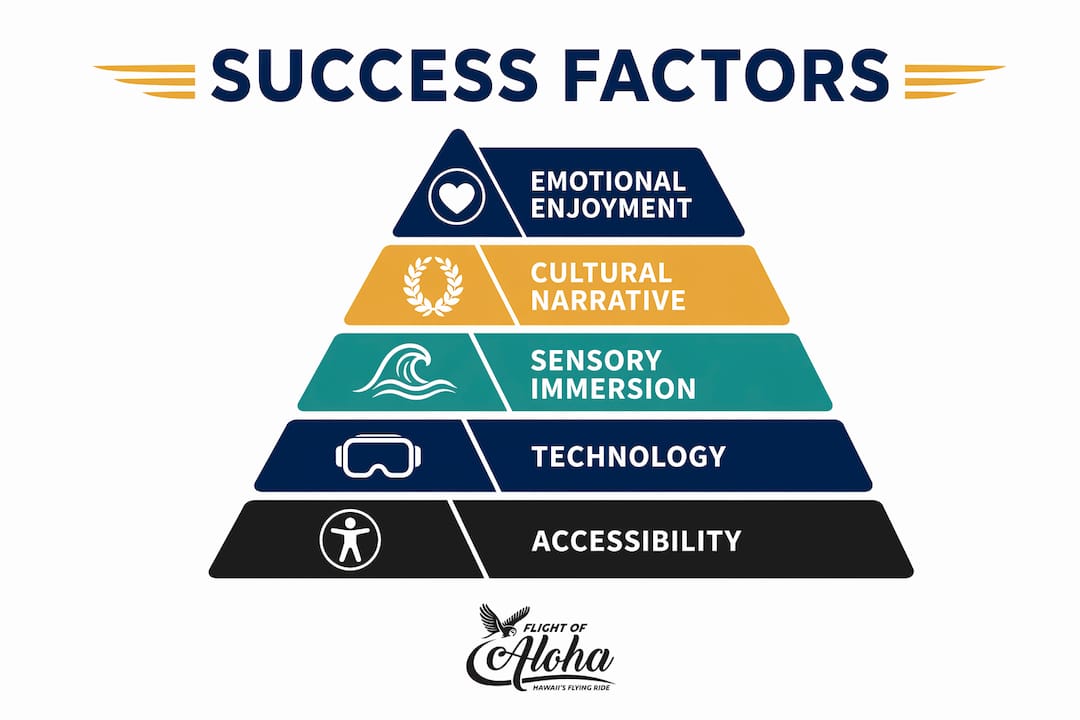
A key research finding: enjoyment is a significant predictor of positive attitudes and revisit intentions in ride simulators — more so than telepresence or flow in short, scripted ride contexts. Design that prioritizes emotional enjoyment over technical novelty wins repeat visitors.
Practical timing notes for Hawaii visitors: shows at Flight of Aloha run on a set schedule with multiple sessions daily, so walk-up waits are typically short outside peak cruise-ship days. The Kailua-Kona location is walking distance from Kailua Pier and the tender dock, making it one of the few shore excursions you can complete comfortably in a short period. Whalers Village Kaanapali in Maui puts the experience right inside a major shopping and resort hub. Ticket options include single admission, family packs, VIP upgrades, and annual passes for repeat visitors.
What to check before you book a flying theater in Hawaii
Seven things worth confirming before you buy:
- Duration — confirm total show time including pre-show orientation (most sessions run 10–20 minutes)
- Motion intensity — ask whether the film is rated for motion-sensitive guests; most flying theaters offer low-motion seating
- Accessibility — verify elevator access, transfer seating, and whether mobility aids are accommodated
- Language options — check for English narration or subtitles if traveling with non-English-speaking family members
- Child and family policies — confirm minimum age or height requirements and whether lap children are permitted
- Package deals — compare single tickets against family packs, VIP add-ons, and annual passes before checkout
- Refund and transfer rules — know the cancellation window, especially for cruise passengers with unpredictable port schedules
Questions worth asking at the ticket desk:
- “Is this film suitable for guests who get motion sickness?”
- “Are there lower-motion seats available?”
- “Is there an express line for cruise passengers?”
First-time rider tips:
- Choose a center seat at mid-height for the most balanced motion experience
- Eat lightly beforehand — a full stomach amplifies any motion sensitivity
- Fix your gaze on the horizon line in the film if you feel any unease; it reorients your vestibular system within seconds
Flight of Aloha: how a Hawaii flying theater puts these principles together
Flight of Aloha is a Native Hawaiian-owned flying theater operating at two locations: Kailua-Kona on the Big Island and Whalers Village Kaanapali in Maui. It sits in the top three most accessible activities on either island, and it’s the only attraction of its kind rooted in authentic Hawaiian legend.
What the experience includes:
- 8K ride films including Naupaka, Lahaina, Whale Song, and Europe Merrie Monarch
- Synchronized motion, wind, and scent effects that place you above Hawaii’s coastlines, valleys, and reefs
- Cultural storytelling drawn from Native Hawaiian legends, not generic tropical imagery
- VIP packages, annual passes, and online booking for groups and families
Practical visitor notes:
- Kailua-Kona location is walking distance from Kailua Pier and the tender dock — ideal for cruise passengers with two to three hours ashore
- Whalers Village Kaanapali puts the experience steps from Maui’s resort strip
- Both locations offer full air conditioning — the best rainy-day or vog-day option in town
- No height minimums that exclude young children; seniors and mobility-limited guests are accommodated
- Combining a flying theater visit with a beach afternoon or luau makes for a full, weather-resilient day
Flying theaters are operationally evergreen because content updates refresh the experience without structural changes. Flight of Aloha’s rotating film slate means repeat visitors get something new each season.
Pro Tip: Book online before your cruise docks. Shore-excursion windows fill quickly on busy port days in Kona, and an online reservation skips the walk-up line entirely.
Key Takeaways
Interactive rides succeed when emotional enjoyment, cultural narrative, and sensory immersion work together — and Flight of Aloha delivers all three in Hawaii’s most accessible format.
| Point | Details |
|---|---|
| Enjoyment predicts revisit intent | Research shows enjoyment significantly shapes attitude and revisit intention in ride simulators. |
| SDT drives satisfaction | Autonomy, competence, and relatedness predicted perceived interaction (R² ≈ 0.307) and emotional engagement (R² ≈ 0.300); immersion was the strongest single predictor of satisfaction (β = 0.486; R² ≈ 0.232). |
| Content leads, tech amplifies | About 41% of content’s impact on tourist experience is transmitted through mixed-reality adoption. |
| Weather immunity matters in Hawaii | Indoor AC and weather-proof shows make flying theaters the top rainy-day and vog-day option in Kona and Maui. |
| Flight of Aloha | Native Hawaiian-owned, walking distance from Kailua Pier, with 8K films, VIP packages, and annual passes. |
Why Flight of Aloha’s approach to Hawaiian storytelling matters
Hawaiian legends carry weight that generic tropical imagery simply cannot replicate. When an attraction is built by people who grew up with those stories, the relatedness that SDT identifies as a core human need gets satisfied in a way that no amount of projection resolution can fake. Flight of Aloha’s films — Naupaka, Whale Song, Lahaina — aren’t just beautiful visuals. They carry cultural memory.
What most visitors underestimate is how much that authenticity shapes the emotional aftertaste of an experience. You can forget the frame rate within a week. You don’t forget the feeling of flying over a place whose story you just heard told by the people who belong to it. That’s the gap between spectacle and meaning, and it’s why locals love this experience as much as first-time tourists do.
Ready to fly over Hawaii without the helicopter price tag?
Flight of Aloha is the smart alternative to a helicopter tour: the same sweeping aerial views of Hawaii’s coastlines, valleys, and reefs, without the $400+ cost, weather cancellations, or motion sickness risk. It’s fully indoors, family friendly, and walking distance from Kailua Pier and the tender dock in Kona — perfect for cruise passengers and resort visitors alike.
Both locations, Kailua-Kona and Whalers Village Kaanapali, offer VIP packages, annual passes, and flexible online booking. Native Hawaiian-owned and rooted in real cultural storytelling, it’s the most accessible attraction on the island. Book online to secure your seat.
Useful sources and references
The claims in this article draw from peer-reviewed research, industry analysis, and Flight of Aloha’s own published content. Key sources include:
- Psychological drivers of attitude and revisit intentions in virtual reality rides — DOI study on enjoyment and revisit intent in ride simulators
- Virtual reality and immersive theatre experiences: an internal motivation study — Springer SDT and immersion study (363 participants)
- Mixed Reality and Its Content Developed to Enhance the Tourist Experience — MDPI review on content quality as primary driver
- Modeling immersion pathways in XR-based cultural heritage IP narrative experiences — Frontiers paper on emotional arousal and behavioral intention
- Why Flying Theaters Remain a Timeless Attraction Format — DOF Robotics industry analysis
- What is a ride film — Flight of Aloha cultural framing and film descriptions
- Why immersive rides are so popular with tourists — Flight of Aloha visitor-facing overview