Top Cultural Enrichment Tips for Immersive Hawaii Experiences 🌺
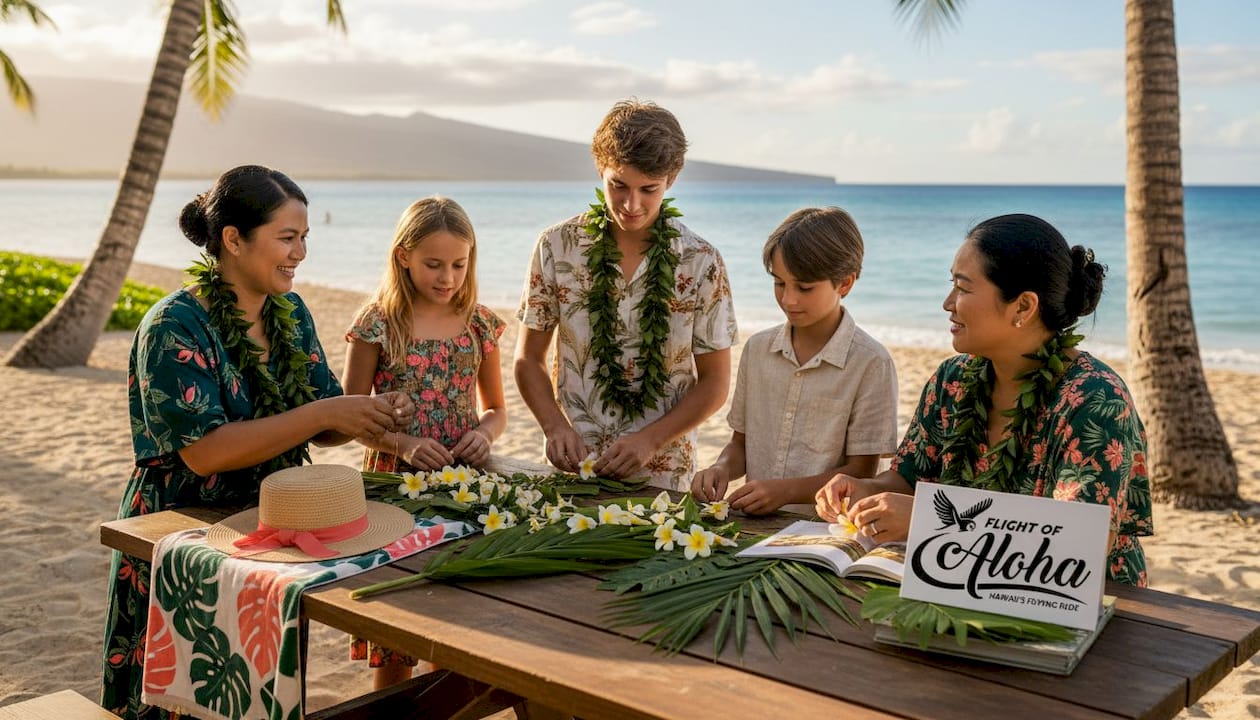
Hawaii draws millions of visitors every year, but finding truly authentic cultural experiences can feel like searching for a rare flower in a rainforest. So many activities promise “authentic Hawaiian culture” yet deliver a polished show designed primarily for entertainment. For families and cultural enthusiasts, this gap matters. The right experience can spark a lifelong connection to the islands. The wrong one leaves you feeling like you just watched a performance rather than genuinely touched something real. This guide breaks down exactly what to look for, which activities deliver genuine enrichment, and how to engage respectfully so you walk away transformed, not just entertained.
Key Takeaways
| Point | Details |
|---|---|
| Choose authenticity first | Select Native Hawaiian-led, community-based programs for genuine enrichment. |
| Respect protocol | Always follow language and cultural protocols as advised by local authorities. |
| Go beyond entertainment | Favor educational experiences over commercial shows for deeper understanding. |
| Language as gateway | Introductory language programs offer meaningful immersion for all ages. |
| Compare before joining | Use checklists or tables to assess authenticity, engagement, and accessibility. |
How to identify authentic cultural enrichment in Hawaii
Now that you know the stakes, let’s break down what to look for when evaluating cultural experiences in Hawaii.
Not every luau, hula show, or guided walk is created equal. The single strongest indicator of an authentic experience is Native Hawaiian leadership. When community members shape the content, set the curriculum, and guide the storytelling, you can trust what you’re learning. When a marketing team packages culture for mass appeal, you’re often getting a highlight reel.
The Hawaiʻi Tourism Authority’s destination-stewardship funding sets a clear benchmark: community-based, Native Hawaiian-led programs that offer genuine educational experiences for both residents and visitors. This is what “established” cultural enrichment looks like in practice, not a resort stage show.
“Prefer organizations that emphasize community-based authenticity and education.” When you apply this lens to your search, the field narrows quickly, and that’s a good thing.
Here’s what separates enriching experiences from tourist entertainment:
- Educational focus: The activity teaches something real, whether it’s the history of an ahupuaʻa (a traditional land division), the meaning behind a chant, or the protocols of a sacred site.
- Cultural protocols: Respected programs follow clear ceremonial guidelines. You’ll be asked to listen before you speak, observe before you participate.
- Intergenerational learning: Look for programs involving Kūpuna (elders) passing knowledge to younger generations. That transmission of wisdom is the heartbeat of living culture.
- Community stewardship: The best programs serve local families, not just tourists. If the activity runs year-round for residents, that’s a strong sign it’s rooted in something real.
- Absence of spectacle for its own sake: Programs that lean heavily on dramatic lighting, scripted performances, and merchandise upsells without cultural oversight are more entertainment than enrichment.
When choosing cultural entertainment, ask directly: who designed this program? Who leads it? Is there a relationship with a recognized Hawaiian cultural authority or institution? These questions aren’t rude. They show respect.
Pro Tip: Always check if the program is supported by local stewardship organizations or respected institutions like the Hawaiʻi Tourism Authority. That backing signals accountability and genuine community investment.
Understanding why cultural experiences matter goes beyond personal enjoyment. It shapes how tourism either supports or erodes a living culture. You have the power to vote with your time and money for the programs that truly deserve it.
Top activities for deep cultural engagement
Once you know what authentic enrichment looks like, it’s time to choose the right activities and opportunities.
Hawaii offers a remarkable range of genuinely immersive experiences. The key is picking ones that put cultural integrity first. Here are five types of activities that consistently deliver deep engagement:
-
Introduction to Hawaiian language courses: Language is the doorway to culture. Short, beginner-friendly classes offered by community organizations let you learn basic greetings, names for natural features, and the stories behind words. The Kukulu Ola program funds exactly this kind of visitor-facing, introduction-level Hawaiian language immersion, connecting visitors with community educators who carry the language authentically.
-
Storytelling and legend sessions: Oral tradition is foundational to Hawaiian culture. Find sessions led by practiced storytellers who share moʻolelo (stories) and kaʻao (legends) in their proper context. These aren’t fairy tales. They’re maps of the land, the sea, and the stars passed down through generations.
-
Chant and song learning workshops: Mele (song) and oli (chant) carry spiritual and historical meaning. Workshops that teach even a single oli open your understanding of how Hawaiians have preserved knowledge without written text for centuries. The experience is genuinely moving.
-
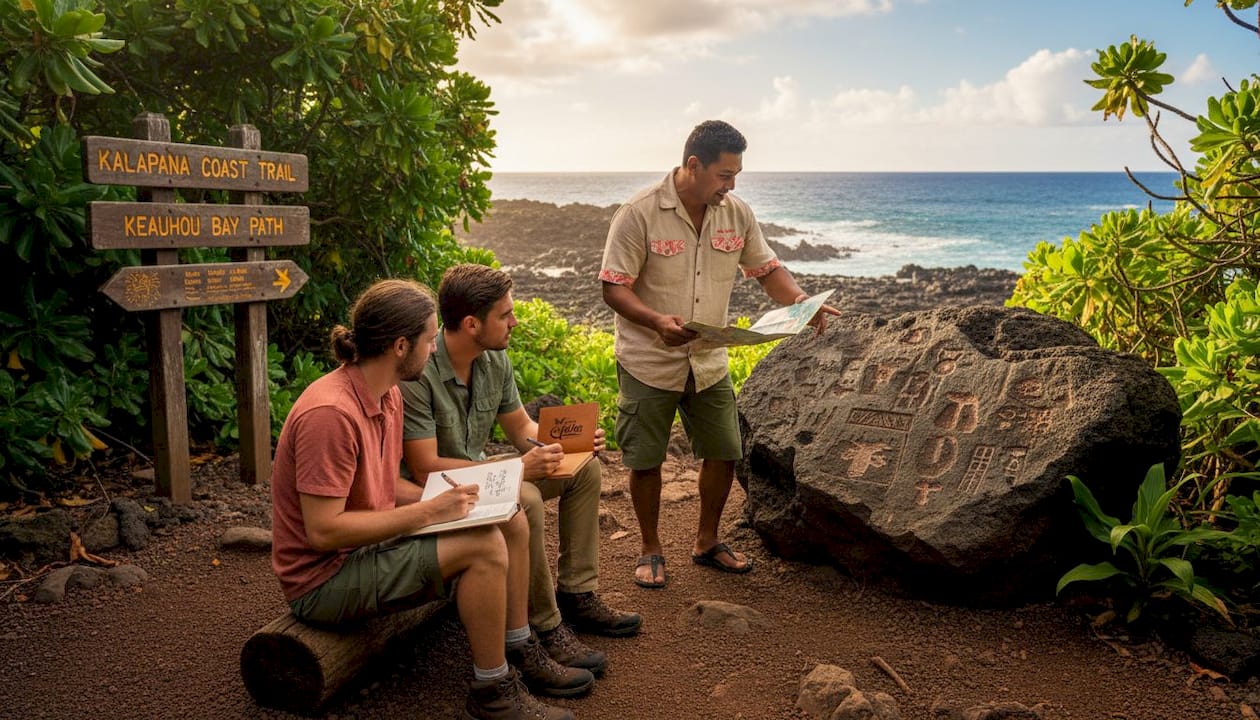
Community-led cultural site visits: Walking through a heiau (sacred site) or fishpond with a Native Hawaiian guide who grew up connected to that place is incomparable. You’ll learn not just the facts, but the feeling of the land. These visits often include protocol education so you know how to behave with appropriate reverence.
-
Traditional craft and skill demonstrations: Lauhala weaving, kapa cloth making, and canoe building are living arts. Attending a demonstration or hands-on workshop with a master practitioner connects you to daily life in ways that no museum exhibit can.
Our Hawaii cultural experiences list covers even more options across the islands if you want to dig deeper.
| Activity type | Authenticity level | Family suitability | Language component | Led by community |
|---|---|---|---|---|
| Language intro course | Very high | All ages | Primary focus | Yes |
| Storytelling session | Very high | All ages | Moderate | Yes |
| Chant/song workshop | High | Ages 6+ | High | Yes |
| Cultural site visit | Very high | Ages 8+ | Moderate | Yes |
| Traditional craft demo | High | All ages | Low | Yes |
This quick overview, combined with the cultural attractions for families guide, helps you match the right activity to your family’s ages, interests, and schedule.
Pro Tip: Ask the activity provider directly whether they receive HTA funding or are partnered with a recognized cultural preservation program. This one question can save you from a disappointing experience.
Comparing cultural activities: Authenticity, engagement, and accessibility
With options on the table, here’s a quick guide to comparing which experiences suit your needs and values best.
One standout piece of context: the Kūkulu Ola program awarded $980,000 to 26 community-based organizations in 2025 to 2026, supporting Hawaiian cultural practices, educational programming, cultural site preservation, and intergenerational mentoring. That investment represents the scale of credible, community-rooted cultural programming happening across the islands right now.
Use that as your benchmark. Here’s a breakdown of the pros and cons of common activity types:
Guided cultural site tours
- ✅ High authenticity when Native Hawaiian-led
- ✅ Contextual, place-based learning
- ⚠️ Quality varies widely depending on the guide
- ⚠️ Some tours prioritize volume over depth
Community cultural classes (language, chant, craft)
- ✅ Strong educational focus
- ✅ Typically intergenerational, involving Kūpuna
- ⚠️ May require advance registration or limited availability
- ⚠️ Not always marketed to tourists, so harder to find
Resort-based cultural programs
- ✅ Convenient and accessible
- ✅ Often family-friendly with structured timing
- ⚠️ Risk of commercialization and surface-level content
- ⚠️ May lack community consultation or Native Hawaiian leadership
Immersive cultural entertainment experiences
- ✅ Engaging for all ages, including young children
- ✅ Can combine storytelling, visuals, and cultural education powerfully
- ⚠️ Must be grounded in genuine cultural collaboration to avoid spectacle
- ⚠️ Look for cultural advisory roles credited in the program
Check out our family-friendly cultural tourism checklist to evaluate any program against a clear set of criteria before you book.
Language immersion with cultural respect
One core element of Hawai’i’s culture is its language, but participating respectfully requires a few extra steps.
Hawaiian is not just a communication tool. It is a living expression of worldview, genealogy, and place. Approaching it with humility is not optional. It is the foundation of genuine engagement.
Language immersion should always be approached with cultural respect and community consultation, using Hawaiian language protocols that defer to the appropriate Hawaiian authorities. This principle protects the language and honors those who have kept it alive.
Here are practical etiquette guidelines for joining language programs:
- Ask before you record: Never record chants, songs, or ceremonial language without explicit permission from the instructor or leader.
- Follow the pace of the group: Don’t rush ahead or show off. Deference to the teacher and Kūpuna is the expected norm.
- Defer to Kūpuna Council authority: The highest authority in matters of proper cultural treatment within an ahupuaʻa (land division) rests with the Kūpuna Council. Their guidance takes precedence over your personal interpretation.
- Never disturb sacred items or spaces: If you are near a heiau or other sacred site during a language program, follow all protocols exactly. This is non-negotiable.
- Learn the correct pronunciation first: Mispronouncing Hawaiian words, especially place names or sacred terms, can carry unintended disrespect. Ask for guidance early and often.
“Linguistic sovereignty and community consultation are not obstacles to learning. They are the learning itself.”
For families bringing children, this is a remarkable teachable moment. When kids see adults asking for guidance, deferring to elders, and treating language as sacred rather than casual, they absorb a model of respectful curiosity that lasts a lifetime. Fluency is not the goal here. Respect is the goal. Fluency, if it comes, arrives as a gift from that respect.
Our Hawaiian language in tourism guide goes deeper on how visitors can engage with the language responsibly without overstepping.
The real value of cultural enrichment: Insights you won’t find in guidebooks
Here’s a perspective most travel guides won’t give you: the majority of visitors to Hawaii never actually experience Hawaiian culture. They experience a version of it that has been smoothed, staged, and simplified for easy consumption. And they often leave satisfied, not knowing what they missed.
That’s the quiet problem with cultural tourism as it’s commonly practiced. When entertainment takes priority over education, when spectacle replaces protocol, the visitor feels like they engaged but the community feels unseen. Those two realities existing simultaneously is worth sitting with.
The most immersive Hawaii experiences we’ve ever encountered share one quality: they make you work a little. You have to arrive early, follow instructions, ask questions carefully, and sometimes simply sit in silence. That effort is the point. It signals that you’re a guest in something living, not a customer at a performance.
Here’s the contrarian truth: the best cultural experiences in Hawaii are often the hardest to find online. They don’t advertise aggressively. They fill through word of mouth, through trusted local connections, through showing up consistently. The polished, highly-marketed programs are not automatically the richest ones.
Seeing Hawaiian culture in modern entertainment done right shows something important. When cultural stories are told with genuine care and community partnership, the entertainment becomes education without feeling like a lesson. That balance is rare and worth seeking out intentionally.
Think of protocol not as a barrier, but as an invitation into deeper learning. Every rule you follow in a cultural setting is the community saying, “We trust you enough to bring you inside.” Honor that.
Explore Hawaii with authentic, family-friendly cultural experiences 🌺
Ready to plan your own journey? Find trusted activity ideas and further reading below.
At Flight of Aloha, we believe that cultural storytelling should be both breathtaking and deeply respectful. Our immersive flying theater in Kailua-Kona brings Hawaiian legends to life through 8K visuals, motion effects, scents, and wind, all grounded in real cultural collaboration. Think of it as what happens when a helicopter tour and a Disney ride have a baby rooted in aloha. It’s the kind of experience that complements the deeper cultural programs you find in the community by giving you a vivid, emotionally powerful entry point into the islands’ stories.

Explore our destination entertainment options for curated ideas that pair well with community-based cultural programs. Whether you’re planning a family trip or a solo deep dive into Hawaiian traditions, we’re here to help you find the experiences that honor the culture and stay with you long after you leave the islands. 🌌
Frequently asked questions
What are the best ways for families to find authentic Hawaiian cultural programs?
Choose community-based activities led by Native Hawaiians and look for programs supported by credible institutions like the Hawaiʻi Tourism Authority, which awarded $980,000 to 26 community organizations through its Kūkulu Ola program for 2025 to 2026. Asking providers directly about their cultural leadership and institutional backing is the fastest way to gauge authenticity.
How do I know if a cultural activity respects Hawaiian protocol?
Respected programs consult Hawaiian authorities, follow language protocols, and emphasize protocol before participation. A clear sign of genuine respect is when the program credits specific cultural advisors or Kūpuna by name.
Are there language immersion programs suitable for visitors and beginners?
Yes, the Kukulu Ola program funds beginner-level language immersion through community organizations, offering activity-based learning designed to be accessible for all ages and experience levels. These programs are specifically structured to welcome curious visitors without requiring any prior knowledge.
Why is protocol so important in Hawaiian cultural enrichment?
Protocol ensures activities align with community values, tradition, and respect for local knowledge holders. The highest cultural authority within an ahupuaʻa rests with the Kūpuna Council, and following their guidance keeps the experience honest and respectful.
What makes a Hawaiian enrichment program credible?
Programs that are Native Hawaiian-led, supported by recognized stewardship organizations, and focused on education over entertainment are considered the most credible. Look for transparency about who leads the program and how it connects to the broader community.