
Examples of Interactive Exhibits, From Museums to Hawaii
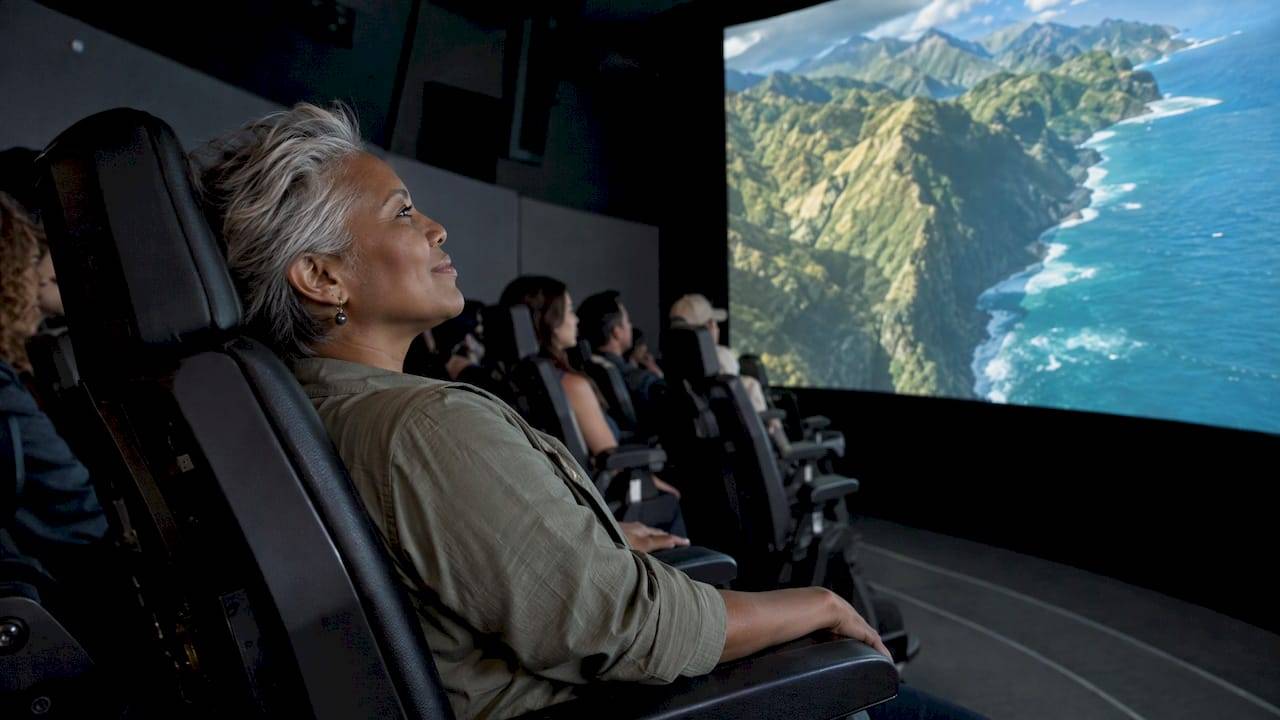
An interactive exhibit is one that responds to you: you press, touch, scan, lean or move, and it changes. The best-known examples are touch tables, augmented reality apps and gesture-tracked projections in museums. If you are visiting Hawaii, the easiest one to step into is Flight of Aloha, our Native Hawaiian-owned flying theater in Kailua-Kona and at Whalers Village in Kaanapali, Maui, where wind, scent, motion and 8K film carry you over the islands.
Below you will find what the term means, a ranked list of examples worth knowing, and how to pick the right kind of experience for a rainy day, a hot afternoon or a few hours off a cruise ship.
TL;DR
- Interactive exhibits invite visitors to act, and the exhibit responds. Think touch tables, AR overlays, gesture-tracked projections and motion theaters.
- Museums worldwide use touchscreens, projection mapping, QR codes, VR and AR to do this.
- In Hawaii, Flight of Aloha is the most accessible example: an indoor flying theater in Kona and Kaanapali with wind, scent and motion, no helicopter needed.
- Single flights run $29.99 to $34.99, a double feature $49.99 to $59.99, and the Annual Pass is $200 per year.
- Kona location is walking distance from Kailua Pier, so it fits a short shore excursion.
What counts as an interactive exhibit?
The simplest definition comes from science education: interactive exhibits invite visitors to act and respond to those actions, whether that means lifting a flap to reveal information or pushing a button to start a mechanical process.
There is a useful distinction here. Exhibit-design guidelines separate plain hands-on elements, such as touching or climbing something, from interactive exhibits that change state in response to visitors, while noting that people often use the two terms interchangeably. In practice, a good test is simple: if you walk away and the exhibit looks exactly the same as when you arrived, it was probably just something to look at. If it reacted to you, it was interactive.
That covers a wide range, from a child pressing a button at a science center to a full-body ride that moves, blows air and releases scent. We wrote more about this idea in our piece on the role of interactive experiences in attractions.
The main types of interactive exhibits
Researchers who surveyed contemporary art museums list touchscreens, digital audio, projection mapping, QR codes, VR, AR, mixed reality and artificial intelligence as the interactive technologies museums rely on. Grouped by what you actually do, they look like this:
| Type | What you do | What responds |
|---|---|---|
| Touch tables and walls | Tap, swipe, sort | Images, data, stories |
| Augmented reality | Point a phone or tablet | Animated overlays |
| Gesture and tracking | Move your hands or body | Projections, games |
| Mechanical hands-on | Push, pull, turn | A physical process |
| Immersive flight and motion | Sit back and take part with your whole body | Motion, wind, scent, film |
The last row matters most for travelers. You do not need to read a label or hold a device. The experience does the work and you simply feel it.
Examples of interactive exhibits worth knowing
Here is our ranked list, starting with the one you can visit in Hawaii. Each entry says what you do and what the exhibit does back.
1. Flight of Aloha, Kailua-Kona and Whalers Village, Kaanapali
This is the example closest to a Hawaii itinerary. Flight of Aloha is a Hawaiian immersive flying theater. You are seated and lifted into a film, and the experience combines 8K visuals with motion effects, scents and wind so that it feels like flying over the islands. The films are rooted in Hawaiian legends and culture, including Naupaka, Lahaina, Whale Song and Europe Merrie Monarch.
What makes it interactive in the fullest sense is that your whole body is part of the exhibit. The wind on your face, the scent in the air and the movement of your seat respond to what is happening on screen, so you are inside the story rather than looking at it. If a helicopter tour and a theme park ride had a baby, rooted in aloha, that would be us.
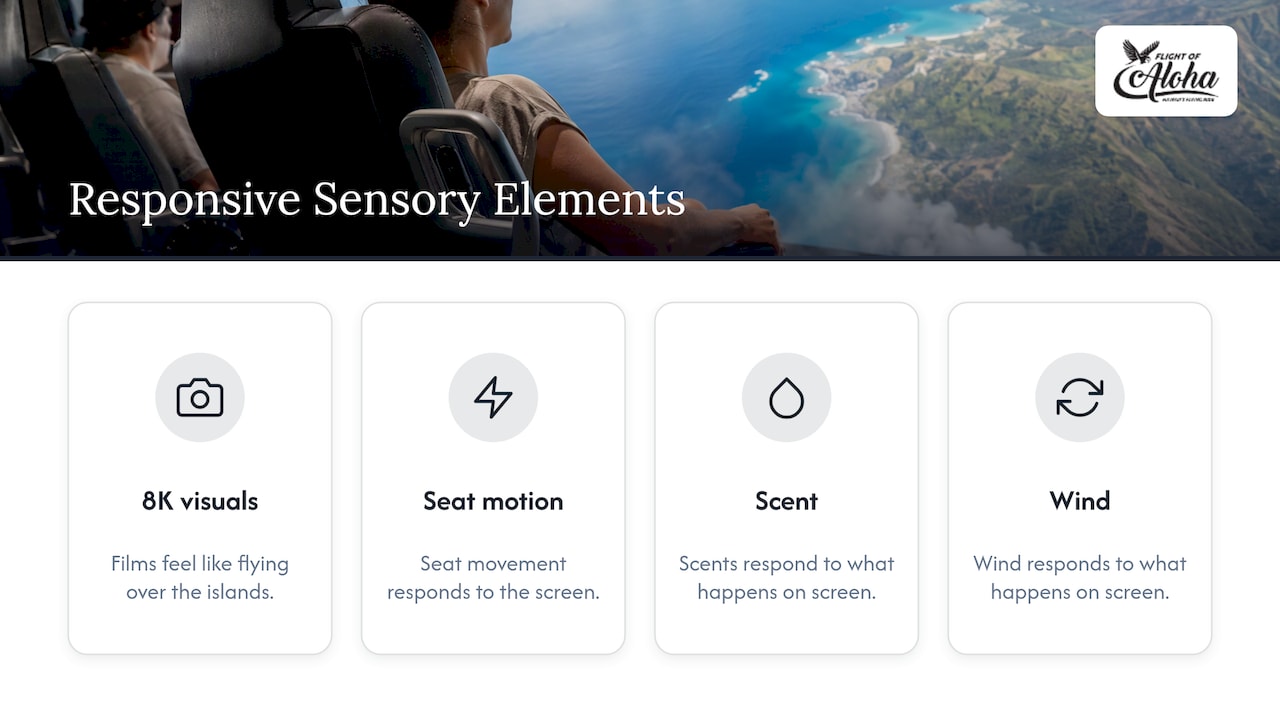
It is also the most accessible option in the islands. It is indoors, comfortable for all ages and abilities, and you get the feeling of an aerial tour without leaving the ground. Read more in our guide to how Flight of Aloha uses 8K, motion and scent.
2. A touch table that turns data into stories
The European Space Agency’s Earth from Space exhibit in Prague is a good example of the touch-table idea. Its four interactive installations include a touch table that turns satellite data into stories and a spherical projection of satellite data called The Half Globe. You touch, the data answers.
3. A 40-meter wall of art you can sort
The Cleveland Museum of Art’s ArtLens Wall is a case of scale. According to the 2020 study of art museums, the 40-meter wall displays 4,200 to 4,500 collection artworks and lets visitors group them by theme and save favorites through an app.
4. Augmented reality that brings a story to life
Tate Britain’s 2019 Instagram AR experience worked like a treasure hunt. According to the same study, scanning a museum tag activated animated stories for eight selected artworks, plus a map to guide visitors to them.
A 2022 peer-reviewed prototype for a Chinese ink painting goes further: visitors scan the painting with a tablet, see animated 3D elements, and touch objects such as a ship to reveal, zoom and rotate them.
5. A walk-through installation with an app
The National Museum of Singapore’s Story of the Forest, as reported in 2023, animates 69 natural-history drawings in a walk-through space, and an app lets visitors photograph animals for more information and save them to a personal collection.
6. A book you can physically turn
Also from that 2023 report, the National Library of Korea’s Digital Book lets visitors touch and turn a book-like object while projections display a protected historical text. The physical gesture keeps a fragile document safe and still gives people the feeling of reading it.
7. Gesture-tracked cinema
According to a 2024 trade report, the Samurai Museum in Berlin uses an interactive cinema where laser tracking recognizes hand and arm gestures and triggers projections about Japanese folklore characters, mixing a multiplayer game with history.
8. Multi-touch timelines
The same report says the Berlin Museum of Communication’s 2023 pandemic exhibition used a multi-touch table and a 360-degree rotating multi-touch screen to present a timeline and scientific findings.
Why a flying theater belongs on this list
Most of the examples above ask you to hold a device, read a screen or stand in a queue at a table. They are wonderful, but they are built mostly for the eyes and hands. A flying theater adds the rest of your senses.
That is why immersive rides are a natural fit for a mixed group. A grandparent, a toddler and a teenager can all take the same seat and have the same experience, with no app to download and no controls to learn. For families, our article on the role of interactivity in family attractions explains why shared sensation works so well.
It also carries culture. Our films are built on Hawaiian legends and made in collaboration with local advisors and storytellers, so the flight is also a story. That is covered in our visitor guide to cultural storytelling.
The smart alternative to a helicopter tour
Many visitors look for “interactive” experiences because they want to see Hawaii from above without committing to a full aerial tour. A helicopter ride is a big spend, and some people find the motion hard on the stomach. Flight of Aloha gives you an aerial perspective at a fraction of the cost, indoors, with a seat and a belt rather than a cabin and a headset.
The ticket prices published on our site are:
| Experience | Price |
|---|---|
| Single flight: Naupaka, Lahaina or Europe | $29.99 to $34.99 |
| Double Feature Flying Ride | $49.99 to $59.99 |
| VIP Package | $69.99 to $79.99 |
| Annual Pass | $200 per year |
If you are staying for a while, or you live on the islands, the annual pass is built for repeat visits.
Rainy days, heat and vog: pick the indoor option
Hawaii’s weather changes plans. A passing shower in Kona or a soaked afternoon in Lahaina can wipe out a beach day, and a hot, hazy day with vog (volcanic haze) makes long walks less appealing. An interactive exhibit that happens indoors solves all of it.
Flight of Aloha is our answer for rainy days in Kona and Maui, and for escaping the heat. The theater is indoors and air-conditioned, so you can cool off, sit down and still feel like you are out exploring. It is a good move for families with young children who need a break from the sun.
Cruise day in Kailua-Kona
Shore time is short, and tender boats add their own wait. Our Kona location is walking distance from Kailua Pier and the tender dock, so you can step off, take a flight, and be back with time to spare. A single flight is a quick stop, and the double feature suits a longer layover.
For the bigger picture, see our guide to immersive experiences in Kailua-Kona, and the Kona flying ride page for the location itself.
On Maui: Lahaina and Kaanapali
Our Maui location is at Whalers Village in Kaanapali. It is an easy add-on to a beach day, a shopping stop or a family afternoon, and the Lahaina film gives visitors a story rooted in a place that matters deeply to Maui. If you are searching for things to do in Kaanapali or Lahaina activities for the family, a flight here fits between meals and swims.
How to choose an interactive experience
Use these questions to decide:
- Who is going? If the group spans ages and abilities, pick something where everyone has the same seat and no skill is needed.
- What is the weather? Rain, heat and haze favor indoor options.
- How much time do you have? A single flight is short. A double feature or VIP package stretches the visit.
- Do you want culture, not just thrills? Look for stories told with local voices.
- Does it use a device? Augmented reality can be wonderful, but prolonged device framing and poorly aligned overlays can be uncomfortable for some visitors. A seated ride with no device to hold keeps things simple.
For the planning side, our pieces on visitor workflow for tourists and top immersive experiences in Hawaii for families can help.
Ready to fly? Our flying theater
We offer single flights, a double feature, a VIP package and an annual pass at both locations, with online and walk-in booking. Pick a film, or start with the Double Feature Flying Ride if you want to see more than one story. Gift cards are available through our home page too.

If you want to compare films first, the Naupaka, Lahaina and Europe pages describe each one.
Our perspective
We built Flight of Aloha on a simple belief: the best interactive exhibit is one that makes you feel something, and that includes everyone in the room.
A touch table is great for one person at a time. A flight carries the whole family together, from a first-time visitor to a kupuna, and nobody needs instructions. That is what we mean by the most accessible activity in the islands.
We are Native Hawaiian-owned, and we work with local advisors and storytellers so that the wind, scent and motion serve the story and the place. Technology is the vehicle. The aloha is the reason.
When the rain comes in or the day gets hot, we want you to know there is a cool, comfortable seat waiting in Kona and in Kaanapali.
Ola
FAQ
What is an example of an interactive exhibit?
A touch table that turns satellite data into stories is one example, and an AR app that animates a painting is another. In Hawaii, Flight of Aloha is an example where wind, scent, motion and 8K film respond to the story you are watching. You take part with your whole body.
What are interactive exhibits?
They are exhibits that invite you to act and then respond to what you do, from lifting a flap to operating mechanical or digital components. The point is two-way exchange rather than just looking.
What interactive things can I do in Kona or Maui on a rainy day?
Flight of Aloha is an indoor option at both of our locations, in Kailua-Kona and at Whalers Village in Kaanapali. It is air-conditioned and comfortable for all ages, so it works when showers or heat change your plans.
Can I visit from a cruise ship?
Yes. Our Kona location is walking distance from Kailua Pier and the tender dock, which makes a single flight or a double feature easy to fit into shore time. You can book online or walk in.
How much does a flight cost?
Single flights are $29.99 to $34.99, the double feature is $49.99 to $59.99, the VIP Package is $69.99 to $79.99, and the Annual Pass is $200 per year, as published on our site.
Sources
- Interactive Exhibits, Springer Encyclopedia of Science Education
- Suggested Guidelines for Designing Interactive Exhibits
- Digital Interactive Experiences in Contemporary Art Museums
- ESA’s Earth from Space exhibit lands in Prague
- Augmented Reality (AR) as a Tool for Engaging Museum Visitors
- Museums of the future: Making exhibitions more interactive with technology
- Special report: Interacting with history and art
Book online to secure your seat.