
Kona vs Hilo Attractions: Which Side of the Big Island Wins?
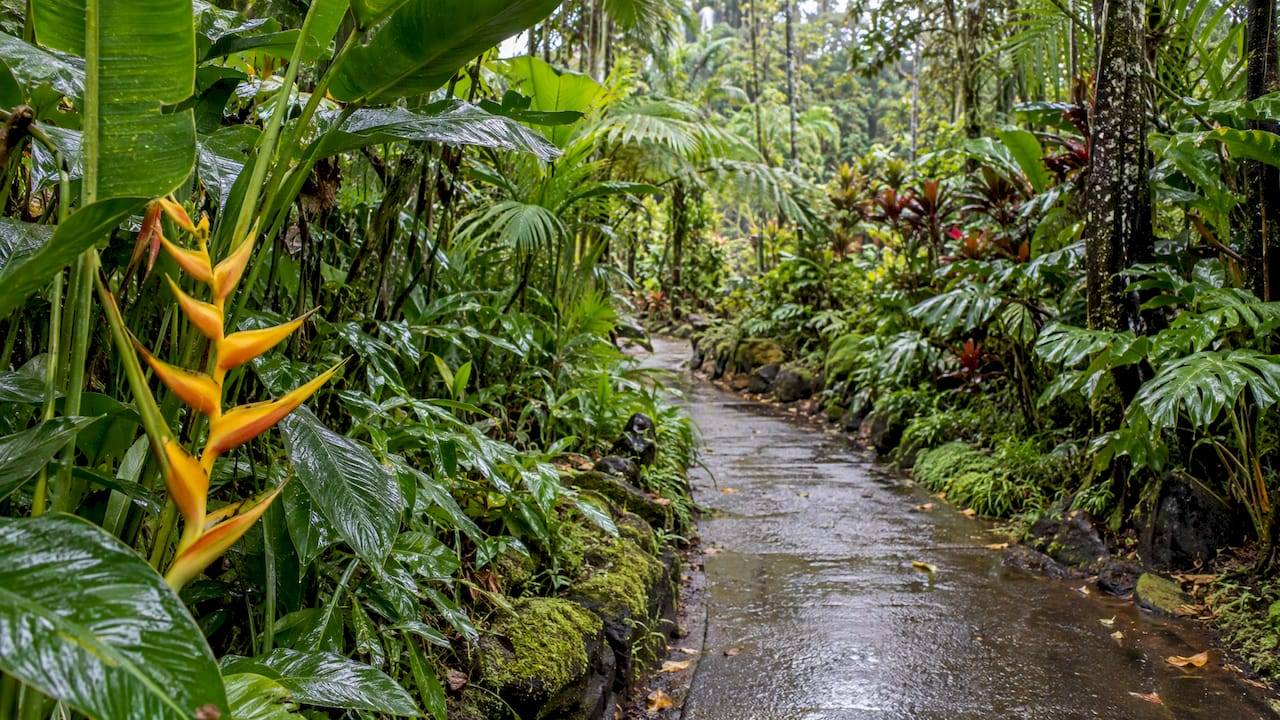
For most first-time visitors, Kona is the better side for attractions: sunshine, beaches, snorkeling, historic sites and easy things to do within a few minutes of each other. Hilo wins if your trip is built around waterfalls, gardens and the volcano. The two sides are so different that many travelers split their time. If you land on the Kona side, one of the most memorable stops is Flight of Aloha, our Native Hawaiian-owned flying theater in Kailua-Kona, walking distance from Kailua Pier and the tender dock. It’s air-conditioned, it’s dry, and it flies you over Hawaii without a helicopter’s price tag.
TL;DR
- Kona is the sunny, dry, beach-and-ocean side: snorkeling, manta rays, historic Kailua Village, coffee farms and the most dining and shopping.
- Hilo is the green, rainy, small-town side: waterfalls, gardens, farmers market and the shortest drive to Hawaiʻi Volcanoes National Park.
- Rainy day, hot afternoon or vog? Kona’s indoor options are the easy fix, and Flight of Aloha sits at the top of that list.
- Cruise day in Kona? Everything in Kailua Village is close to the pier, and our theater is a short walk away.
- Staying five days or more? Base in Kona and add a night or two in Hilo or Volcano.
Kona vs Hilo at a glance
One travel guide frames the Big Island’s two sides as two different islands: sunshine and sea on the Kona side, rain and fire on the Hilo side. Here is how that plays out for visitors.
| Kona (west side) | Hilo (east side) | |
|---|---|---|
| Feel | Resort coast, sunny, lively waterfront | Old-time Hawaii town, green, slow pace |
| Best for | Beaches, snorkeling, manta rays, history, dining | Waterfalls, gardens, volcano, farmers market |
| Weather | Dry and sunny most days | Frequent rain, lush scenery |
| Volcano access | Long drive | Shortest drive |
| Rainy-day options | Easy, with indoor attractions close together | Fewer, you plan around showers |
| Cruise ships | Anchor off Kailua-Kona, tender to the pier | Fewer calls, farther from the beaches |
What to do in Kona
Kona is where most visitors spend their beach days. The Go Hawaiʻi Kona guide describes calm, clear waters that are ideal for snorkeling, diving, sailing and spotting dolphins and honu (green sea turtles), with manta ray boat tours among the most memorable experiences. It also points to 100% Kona coffee tastings in the Hōlualoa uplands.

Historic Kailua Village
The waterfront walk along Aliʻi Drive packs a lot of history into a few blocks. Hawaiʻi Magazine notes that Huliheʻe Palace was built in 1838 as a summer home for Hawaiian royalty, that Mokuʻaikaua Church, built in 1820, was the first Christian church in Hawaiʻi, and that Ahuʻena Heiau, the temple of Kamehameha the Great, is visible beyond Kailua Pier. You can cover all of it on foot, which is why Kona suits cruise visitors and families with kids who tire quickly.
Snorkeling and sacred places
Kealakekua Bay, about 12 miles south of Kailua-Kona, is a Marine Life Conservation District popular for snorkeling and scuba diving. Nearby, Puʻuhonua o Hōnaunau National Historical Park was once a place of refuge where lawbreakers could be absolved. North of town, Kaloko-Honokōhau National Historical Park has restored hale, ancient fishponds and petroglyphs. Entry details change, so check each park’s official page before you go.
Flying over the islands, indoors
Helicopters are the classic way to see Hawaii from above, but they cost hundreds of dollars a seat and not everyone enjoys the motion. Our Kailua-Kona theater gives you the sensation of flight with 8K visuals, motion, scents and wind, rooted in Hawaiian stories. A single film such as Naupaka or Lahaina is $29.99 to $34.99. It is built to be accessible for all ages and abilities, so grandparents and little ones can ride together.
What to do in Hilo
Hilo is the Big Island’s rainy, green side, and its attractions reward that. Locals and visitors alike describe it as a snapshot of old Hawaii, with a walkable downtown and a lively farmers market.
- Liliʻuokalani Gardens. Frommer’s describes a 30-acre Japanese garden dedicated in 1917, with stone lanterns, koi ponds and a moon-gate bridge, free and open around the clock.
- Waterfalls. The New York Times recommends Rainbow Falls, which has accessible trails and rainbows in the mist. ʻAkaka Falls State Park, on the Hāmākua Coast, has a short loop through tropical forest to 442-foot ʻAkaka Falls, according to Discover Hawaii’s Hilo guide.
- ʻImiloa Astronomy Center. Frommer’s says it connects Hawaiian voyaging with Mauna Kea astronomy through about 300 exhibits.
- Food. Poke from the fish market, pancakes, mochi: Hilo is a town for eating small and local.
What Hilo lacks is the beach scene. Its shoreline is mostly black rock with sheltered parks, so Kona is where you’ll find swimming and snorkeling days.
Weather: the real dividing line
This is the biggest difference between the sides. Kona and the Kohala coast sit in a dry rain shadow, while Hilo is one of the rainiest places in the United States, per Love Big Island’s weather guide. The same guide notes that elevation cools the air about 3 to 4 degrees per thousand feet, so the volcano area at around 4,000 feet is far cooler than the coast. Pack a rain jacket for Hilo and for Volcano, and sunscreen for Kona.
Planning around weather is the practical way to choose. Beach and snorkeling days belong on the Kona side, ideally in the morning when skies are clearest. Waterfalls and gardens look best in the damp, so Hilo’s rain is part of the scenery rather than a spoiler.
Rainy days, hot afternoons and vog
Even sunny Kona has days when you want to be indoors: a hot midafternoon, a stretch of hazy vog from the volcano, or a cloudy day after a long snorkel. This is where we think Flight of Aloha earns its place. The theater is air-conditioned, you sit in comfort for the whole ride, and nothing depends on sky or sea conditions. It works the same on a brilliant day and a gray one, and on Maui it does the same job at Whalers Village in Kaanapali.
The volcano question
Hawaiʻi Volcanoes National Park is the main reason people lean toward Hilo. How To Live in Hawaii puts the drive at about 30 miles and 45 minutes from Hilo, versus about 96 miles and 2 to 2.5 hours from Kona. A Kona-based day trip is doable, but it is a long day, so plan it for a day with nothing else booked.
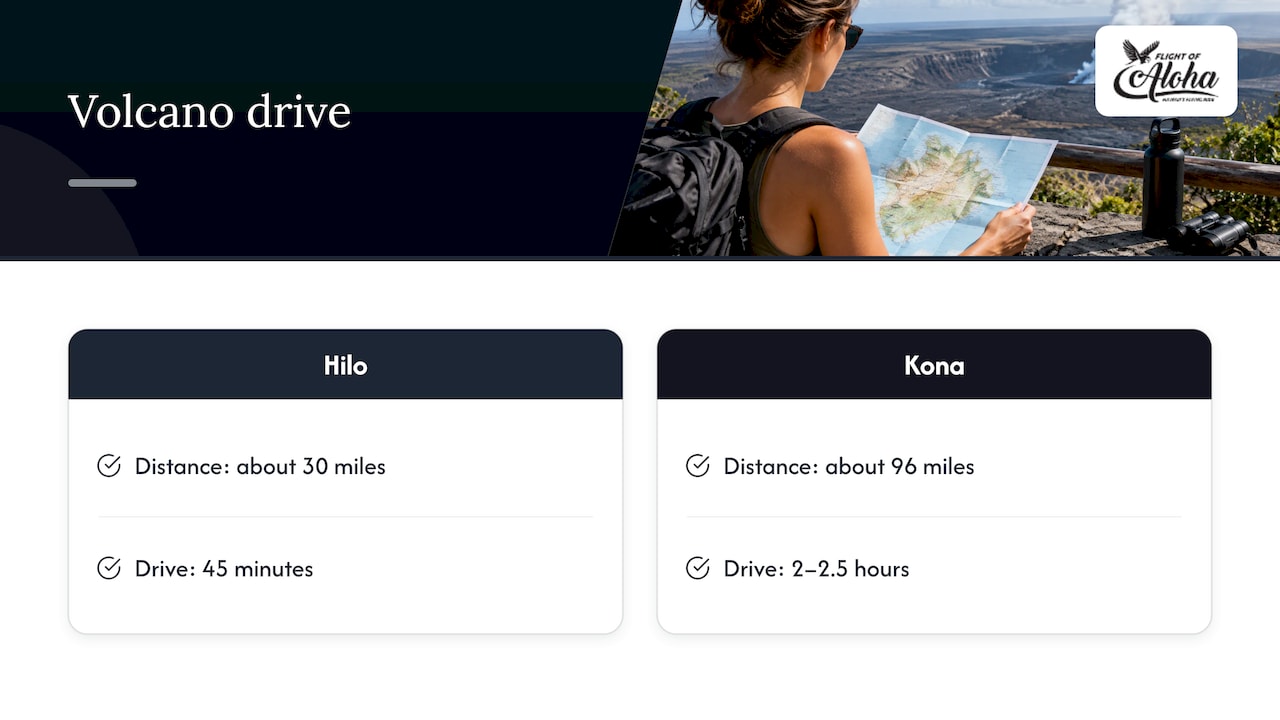
If the volcano is your top priority and you only have a few days, Hilo is the smarter base. If it is one highlight among many, stay in Kona and make it a single outing.
Which side should you choose?
Travel Weekly’s interview with a Big Island expert recommends exploring the island in two parts, with time on both the Kona and Hilo sides. Roamvale’s guide suggests most first-time visitors stay on the Kona side for beaches and dry weather, and that trips of five days or more add one or two nights in Hilo or Volcano to save driving.
Here is how we’d sort it:
- Beach and ocean trip, 3 to 4 days: stay in Kona.
- Volcano and waterfalls trip: stay in Hilo.
- Five days or more: start in Kona, then move to Hilo or Volcano for the last nights.
- Family with young kids or grandparents: Kona, for the short distances and the indoor options.
- Cruise day: Kona, because the attractions cluster around the pier.
A cruise day in Kailua-Kona
Ships anchor off Kailua-Kona and tender passengers to the pier. Historic Kailua Village starts right there, and Flight of Aloha is within walking distance of Kailua Pier and the tender dock, which makes it a tidy shore excursion when you have a few hours and want to skip taxis and tour buses. Our guide to the Kona cruise port lays out more ways to fill a port day. For the cultural side of your walk, see our list of top cultural experiences in Kona.
Our top three for Kona
- Snorkeling or a manta ray night trip. The signature ocean experience on this coast. Book early in your stay in case conditions cancel a trip.
- Historic Kailua Village on foot. Huliheʻe Palace, Mokuʻaikaua Church and Ahuʻena Heiau, all along the waterfront.
- Flight of Aloha. The most accessible activity in Kona: no hiking, no boat, no weather risk, and a Native Hawaiian-owned telling of island stories. It suits every age, from a toddler to a grandparent.
Flight of Aloha: the Kona and Maui flying theater
We have two locations: Kailua-Kona and Whalers Village in Kaanapali, Maui. Pick a single film or go bigger:
- Single films, including Naupaka, Lahaina and Europe: $29.99 to $34.99.
- Double Feature Flying Ride: $49.99 to $59.99.
- VIP Package: $69.99 to $79.99.
- Annual Pass: $200 per year, a good fit for local residents who want to return.
Gift cards are also available through our home page. You can book online or buy at the venue counter.

Want the story behind the films? Read how we approach Hawaiian storytelling traditions.
Our point of view
Hilo and Kona are both worth your time, and we love sending visitors to both. But when someone asks us where the Big Island’s easiest, most welcoming activities are, we point to Kona’s west coast, where the sun, the sea and the history are all close together.
The best Big Island days mix a big outdoor adventure with something comfortable. Snorkel at Kealakekua, then cool off with a flight over the islands. Drive to the volcano, then take a seat that needs no hiking boots. We built Flight of Aloha to be Native Hawaiian-owned, rooted in our legends and shaped with local advisors and storytellers, and open to every age and ability.
A helicopter gives you a view from above. We give you that feeling of flight, the wind, the scents and the stories, at a fraction of the cost, in air conditioning, with no motion sickness worries. If you are in Kona or Kaanapali and the weather turns, or the day gets too hot, this is the plan that always works.
Ola
FAQ
Which is better, Kona or Hilo?
For beaches, snorkeling, sunshine, dining and an easy first visit, Kona is better. For waterfalls, gardens and the quickest trip to the volcano, Hilo is better. If you have five days or more, do both.
Is Hilo larger than Kona?
Hilo is the island’s county seat and a real working town, while Kailua-Kona is the visitor hub with more resorts and restaurants. The Kona side also has the busier airport, so most visitors arrive there. Which feels bigger depends on whether you count visitor services or everyday town life.
What are fun things to do on the Kona side?
Snorkel Kealakekua Bay, look for manta rays, walk historic Kailua Village, visit Puʻuhonua o Hōnaunau and taste Kona coffee in Hōlualoa. For a comfortable indoor option, Flight of Aloha in Kailua-Kona offers immersive flights over Hawaii with cultural storytelling.
What should I do in Kona on a rainy or hot day?
Choose something indoors and close to town. Our air-conditioned theater in Kailua-Kona is built for exactly that, and the Maui location at Whalers Village in Kaanapali does the same on that island.
Can I visit the volcano from Kona?
Yes, but it is about 2 to 2.5 hours each way by car. Leave early and treat it as a full-day outing.
Book online to secure your seat.
Sources
- Go Hawaiʻi: Kona
- Go Hawaiʻi: Kona regions guide
- Hawaiʻi Magazine: 12 Reasons to Love Kona
- Frommer’s: Hilo
- The New York Times: 36 Hours in Hilo
- Discover Hawaii: Hilo Travel Guide
- Discover Hawaii: Kona vs Hilo
- Love Big Island: Big Island Weather by Month
- How To Live in Hawaii: Volcanoes National Park day trip
- Travel Weekly: Big Island travel tips
- Roamvale: Things to do in Big Island