
Why Location-Based Entertainment Transforms Big Island Visits
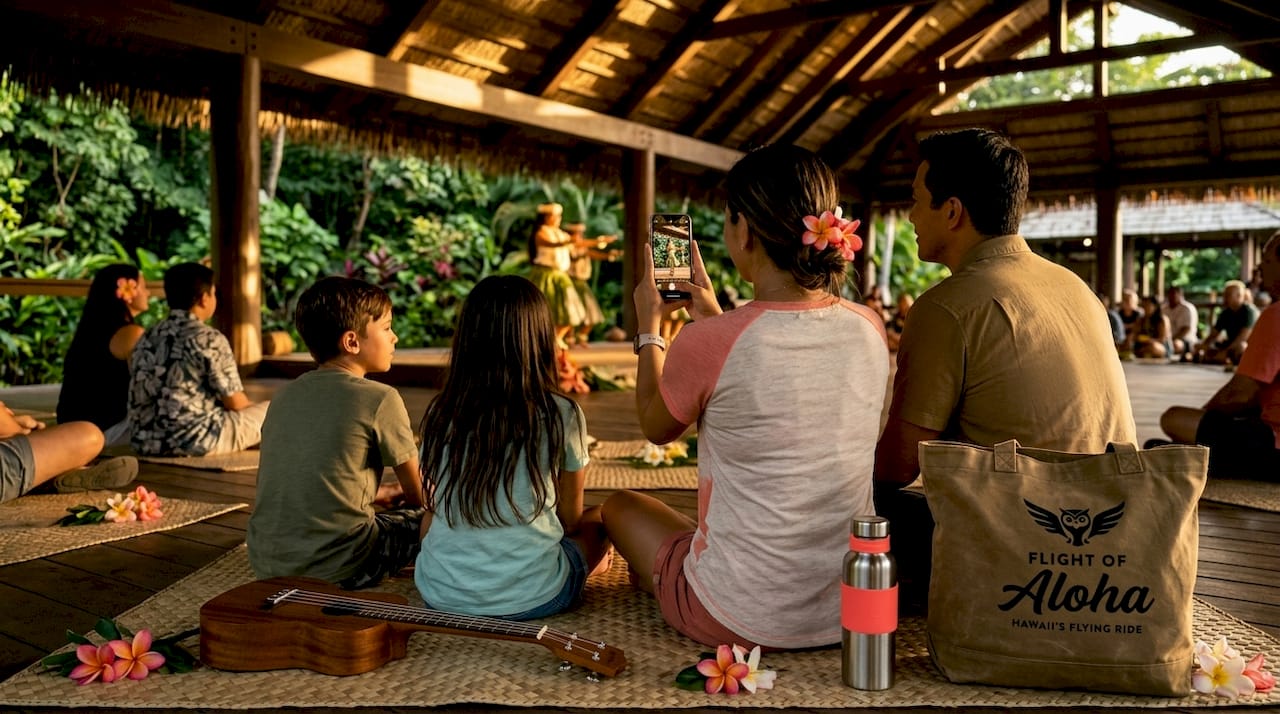
Most visitors to the Big Island of Hawai’i spend their trip rotating between the same handful of spots: a quick lava viewing, a generic luau, maybe a snorkel tour. It’s a perfectly pleasant trip. But it’s rarely the one they talk about for years afterward. What actually creates those life-changing travel memories is immersive, location-based entertainment rooted in real culture and place. And the Big Island, with its breathtaking landscapes, living legends, and layered history, is one of the best places on earth to find it. This guide breaks down why it matters and how to choose it wisely. 🌺
Key Takeaways
| Point | Details |
|---|---|
| Authentic engagement matters | Location-based entertainment creates lasting family memories beyond basic sightseeing. |
| Economic benefits | Local cultural sites and hands-on activities drive job creation and support the Big Island economy. |
| Choose sustainability | Regenerative and low-impact entertainment options help preserve Hawaii’s culture and environment. |
| Tailor experiences to your group | Selecting the right experiences for your family’s ages and interests leads to deeper immersion and fun. |
What is location-based entertainment?
Location-based entertainment (LBE) is exactly what it sounds like: experiences designed around and inseparable from a specific place. It’s not something you can replicate at home or stream on a screen. The location itself is part of the story.
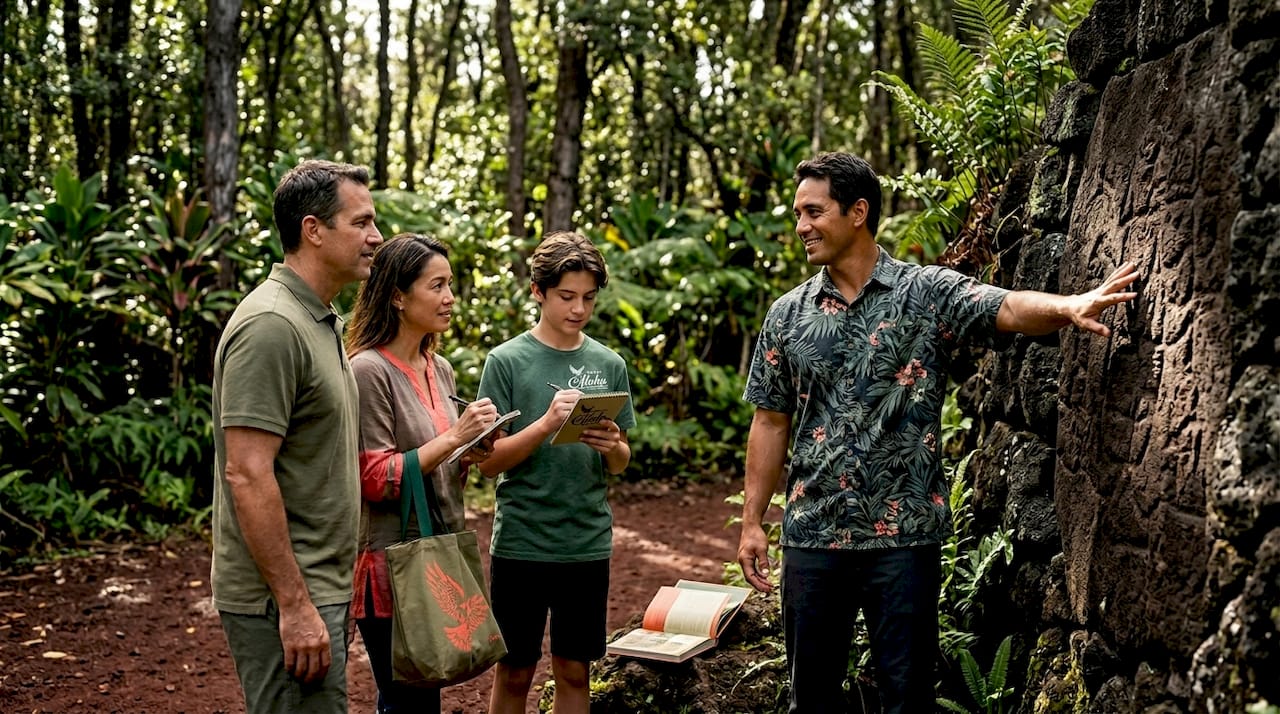
On the Big Island, that could mean standing inside a volcano’s shadow and learning chants that ancient Hawaiians used to honor Pele. It could mean watching a master canoe carver shape a hull while explaining the spiritual significance of each stroke. Or it could mean strapping into a motion theater seat and feeling the wind and scent of plumeria as you “fly” over waterfalls you just hiked near that morning.
What makes LBE different from standard sightseeing? Here’s a clear breakdown:
- Standard sightseeing: You observe from a distance. You take a photo and move on.
- Location-based entertainment: You participate, feel, and connect. The experience stays with you.
- Generic tourist shows: Designed for crowds, not cultures. Often scripted for the broadest appeal.
- Authentic LBE: Tied to real traditions, real places, and real stories passed down through generations.
Choosing cultural entertainment over passive sightseeing isn’t just about preference. It’s about the quality of memory you bring home. Research supports the idea that location-based entertainment elevates a Big Island visit from simple sightseeing into meaningful cultural immersion, especially for families looking for unique, memory-making experiences.
Pro Tip: Look for activities tied to local tradition, not just performances staged for tourists. Ask if Hawaiian cultural practitioners are directly involved in the experience.
How location-based entertainment shapes family experiences
Real talk: traveling with family is complicated. You’ve got toddlers who need naps, teens who need to feel cool, and grandparents who want meaningful moments. The magic of well-chosen location-based entertainment is that it can genuinely work for all of them at once.
Here’s how different family members typically respond to LBE:
- Young kids (ages 4 to 8): They thrive in sensory-rich environments. Experiences with sights, sounds, and movement, like a flying theater or interactive cultural demo, hold their attention and spark imagination.
- Tweens and teens: They want to feel engaged and avoid anything that feels “babyish.” Hands-on or adventure-oriented experiences, like culturally guided ATV tours or immersive film rides, deliver that excitement.
- Adults and grandparents: They often want depth and meaning. A site like Pu’uhonua o Honaunau, with cultural demonstrations of ancient Hawaiian traditions, offers exactly that.
- Groups with mixed interests: Immersive theaters and multi-sensory experiences tend to satisfy everyone at once because they operate on multiple levels simultaneously.
Here’s a comparison of standard tourist shows versus authentic cultural LBE to help you decide:
| Feature | Standard tourist show | Authentic cultural LBE |
|---|---|---|
| Cultural connection | Surface level | Deep and practitioner-led |
| Age appeal | Often narrow | Broad, multi-generational |
| Sensory engagement | Low to moderate | High (touch, scent, motion, sound) |
| Memory-making potential | Moderate | Very high |
| Local economic benefit | Mixed | Direct community support |
| Replicability | Can find similar elsewhere | Unique to Hawai’i |
Families who check out our family-friendly cultural tourism checklist often say the same thing: they wish they had prioritized immersive experiences earlier in their trip instead of saving them for the last day. Some of the most powerful examples of cultural attractions for families are right in Kona and the surrounding region.
Pro Tip: Before your trip, have a quick family meeting about what you each want to remember most. Use that to filter your activity list. It sounds simple, but it completely changes how you plan.
Economic impact of immersive experiences on the Big Island
Here’s something worth knowing: when you choose authentic, location-based entertainment on the Big Island, you’re not just having a better time. You’re directly supporting local families, educators, artisans, and communities.
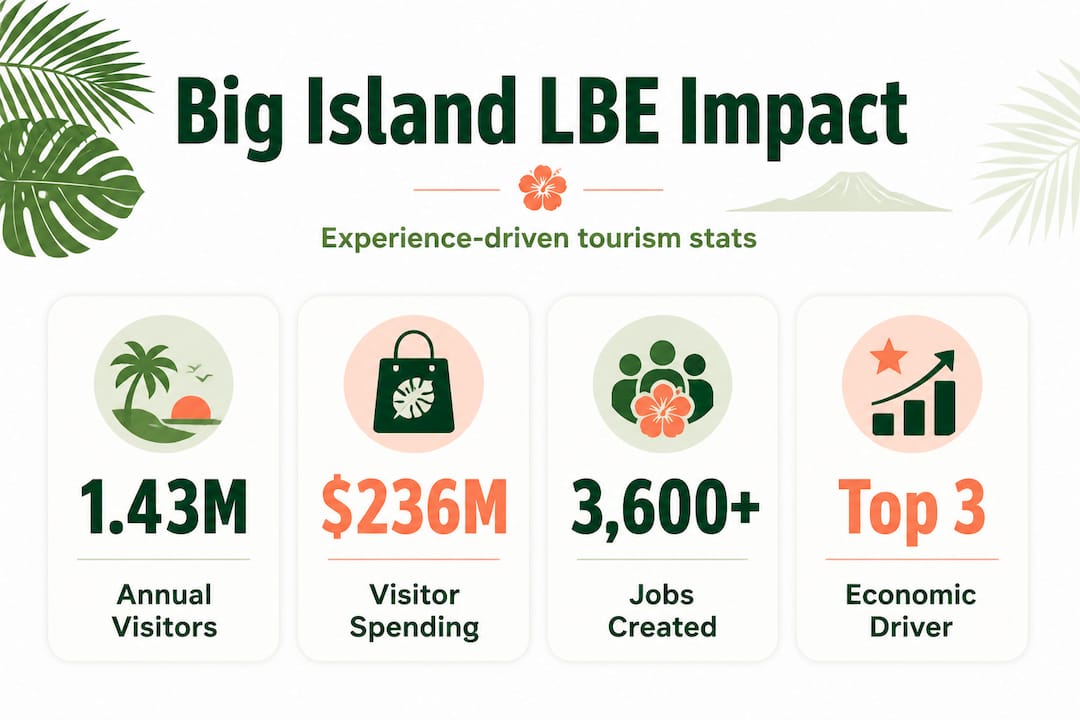
The numbers are striking. Hawaii Volcanoes National Park alone welcomed 1.43 million visitors in 2024, who collectively spent $445 million, supported 3,605 local jobs, and generated $571 million in total economic output. That is one site. In July 2025, the Big Island hosted roughly 160,000 visitors who spent approximately $285 million during their stay.
“Every dollar spent at a locally-rooted attraction circulates through the community in ways that generic entertainment simply cannot match. Artisans get commissioned, schools get funded, and cultural knowledge stays alive.” 🌌
These entertainment trends in Hawaii tell a clear story: immersive, experience-based attractions are not just trendy. They are economic engines for the entire island.
| Attraction/metric | Figure |
|---|---|
| Hawaii Volcanoes NP visitors (2024) | 1.43 million |
| Visitor spending at HVNP (2024) | $445 million |
| Jobs supported by HVNP visitors | 3,605 |
| Total economic output from HVNP | $571 million |
| Big Island visitors (July 2025) | ~160,000 |
| Big Island visitor spending (July 2025) | ~$285 million |
The methodology behind measuring this impact combines visitor surveys, spending diaries, and regional economic modeling. Experts have confirmed high ROI in visitor spend when experiences include sensory tech, hands-on learning like traditional imu cooking, and practitioner-led storytelling. These are not abstract benefits. They show up as real wages, real school programs, and real preservation of endangered cultural practices.
Why does this matter to you as a visitor? Because choosing an authentic LBE experience over a mass-produced tourist activity sends a powerful signal. It tells the local economy what you value. And it keeps the heart of Hawaiian culture beating strong.
Sustainability and the future of location-based entertainment in Hawaii 🌺
The Big Island is stunning. But that beauty is under pressure. Over-tourism can quietly erode the very things that make a destination special: natural sites wear down, local residents get priced out, and cultural traditions become diluted into performances rather than living practices.
Heavy tourism reliance carries real economic risks, including a concept economists call “Dutch disease,” where one booming sector crowds out the growth of others, causing economic stagnation and outmigration of local residents. That’s not the Hawai’i anyone wants to visit or leave behind.
The good news? Innovative solutions are emerging. Extended reality (XR) experiences, which blend virtual reality, augmented reality, and immersive film technology, are creating new ways for visitors to engage deeply with Hawaiian landscapes and stories while reducing foot traffic at fragile natural sites. Think: flying over a sacred coastal valley through an 8K motion theater instead of hiking through protected land with 500 other tourists.
“The future of Hawaiian tourism isn’t about getting more people to the same places. It’s about creating more meaningful connections while protecting what makes this place sacred.”
Here’s how your family can make intentional, low-impact choices during your Big Island trip:
- Choose small-group or practitioner-led tours over large-bus operations whenever possible.
- Support attractions that reinvest in the community, such as those that hire local cultural educators or fund preservation projects.
- Opt for immersive Hawaii experiences that use XR or sensory technology to reduce strain on natural sites.
- Ask questions: Does this activity give back to local families? Is it designed with cultural input from Native Hawaiian practitioners?
- Limit repeat visits to the most crowded natural sites and discover lesser-known cultural experiences instead.
- Share your experiences thoughtfully on social media by tagging local businesses and crediting cultural practitioners by name when appropriate.
Visitor arrivals and spending on the Big Island have shown slight fluctuations recently, which experts see as a moment to redirect tourism toward more regenerative models. The shift is already happening. Attractions that blend authentic storytelling with sensory innovation are leading the way.
What most families miss about Big Island entertainment
We’ve seen the itineraries. They’re packed with beautiful things. Snorkeling at Two Step, watching the sunrise, visiting coffee farms. All wonderful. But here’s the honest truth: most families return home without ever touching the soul of this island.
The biggest missed opportunity is almost always the same: choosing passive experiences over participatory ones. It’s easy to default to what’s popular on travel sites. But popular doesn’t always mean powerful. A show performed nightly for busloads of tourists is not the same as sitting with a Native Hawaiian storyteller as she explains what the stars meant to her ancestors navigating across open ocean.
The families who come back to Hawai’i year after year? They found something real. They asked a local guide what they would do with one afternoon. They said yes to something a little unfamiliar. They chose unique family experiences over the safe, familiar options.
Common pitfalls we see all the time:
- Booking over-commercialized luaus without checking whether cultural practitioners are actually involved
- Treating every activity like a checkbox rather than a genuine encounter with a living culture
- Skipping immersive or technology-based experiences because they seem “not Hawaiian enough” (when in fact some of the most culturally accurate storytelling on the island happens inside an immersive theater)
Here’s our practical advice: before you book anything, call or email and ask two questions. First, “Who designed the cultural content?” Second, “Are any Native Hawaiian practitioners involved?” The answers will tell you everything you need to know about whether an experience is built for you or built for profit.
The Big Island rewards curiosity. It rewards the families who slow down, ask questions, and choose depth over breadth. Those are the trips that get retold at Thanksgiving dinner for the next decade.
Ready to experience the best of the Big Island?
You now know what location-based entertainment really is, why it matters for your family, and how your choices directly shape the island’s culture and economy. The next step is putting that knowledge into action.
At Flight of Aloha, we’ve built something that sits at the sweet spot of all of this: cultural authenticity, sensory immersion, and family accessibility, all in one experience in Kailua-Kona. Imagine a helicopter tour and a Disney ride had a baby rooted in aloha. That’s us. 🌺 Our films like Naupaka and Lahaina weave Hawaiian legends into breathtaking 8K visuals, with motion, wind, and scent bringing every moment to life. Whether you’re planning your first Big Island trip or your tenth, we’d love to be part of the memories you bring home. Browse our experiences, check out VIP packages, and book your flight today at flightofaloha.com.
Frequently asked questions
What are examples of location-based entertainment for families on the Big Island?
Interactive cultural demonstrations at Pu’uhonua o Honaunau and adventure options like local-led ATV cultural tours offer authentic, hands-on experiences that work for multiple age groups and interests.
How does location-based entertainment help preserve local culture?
It keeps cultural knowledge alive by supporting local educators and artisans directly, while immersing visitors in real traditions rather than staged performances, which strengthens both community identity and cultural continuity.
Does location-based entertainment impact the Big Island economy?
Absolutely. Visitor spending at major sites like Hawaii Volcanoes National Park supported over 3,600 jobs and generated more than $570 million in economic output in 2024 alone.
How can visitors choose sustainable entertainment options?
Look for experiences that partner directly with local communities, involve Native Hawaiian practitioners, and offer low-impact alternatives like small-group tours or XR-based immersive attractions that reduce pressure on fragile natural sites.
Recommended
- Discover Destination Entertainment: Immersive Hawaii Experiences | Flight Of Aloha
- Why Try New Attractions: Enrich Your Kona Vacation | Flight Of Aloha
- Understanding Entertainment Trends In Hawaii 2025 | Flight Of Aloha
- How Local Legends Transform Hawaii’s Tourism Experience | Flight Of Aloha
- Where to Live in Hawaii: Complete Guide to Choosing the Right Island and Lifestyle