The Role of Scent Marketing in Tourism: 2026 Guide

Scent marketing in tourism is the strategic use of fragrances to shape visitor experiences, strengthen destination identity, and drive emotional brand loyalty. Known in academic circles as olfactory marketing, this practice has moved well beyond hotel lobbies and spa corridors. The hotel sector alone accounts for over 20% of the $3 billion global investment in scent marketing as of 2026. That figure signals a clear industry consensus: smell is no longer a soft amenity. It is a core brand tool. This guide breaks down how scent influences tourist behavior, how to implement it well, and why authenticity makes or breaks the strategy.
How does scent marketing influence tourist behavior and perceptions?
Scent is the only sense with a direct neural pathway to the brain’s limbic system, the region governing emotion and memory. That biology gives fragrance branding for tourism a power that visual or audio advertising simply cannot replicate.
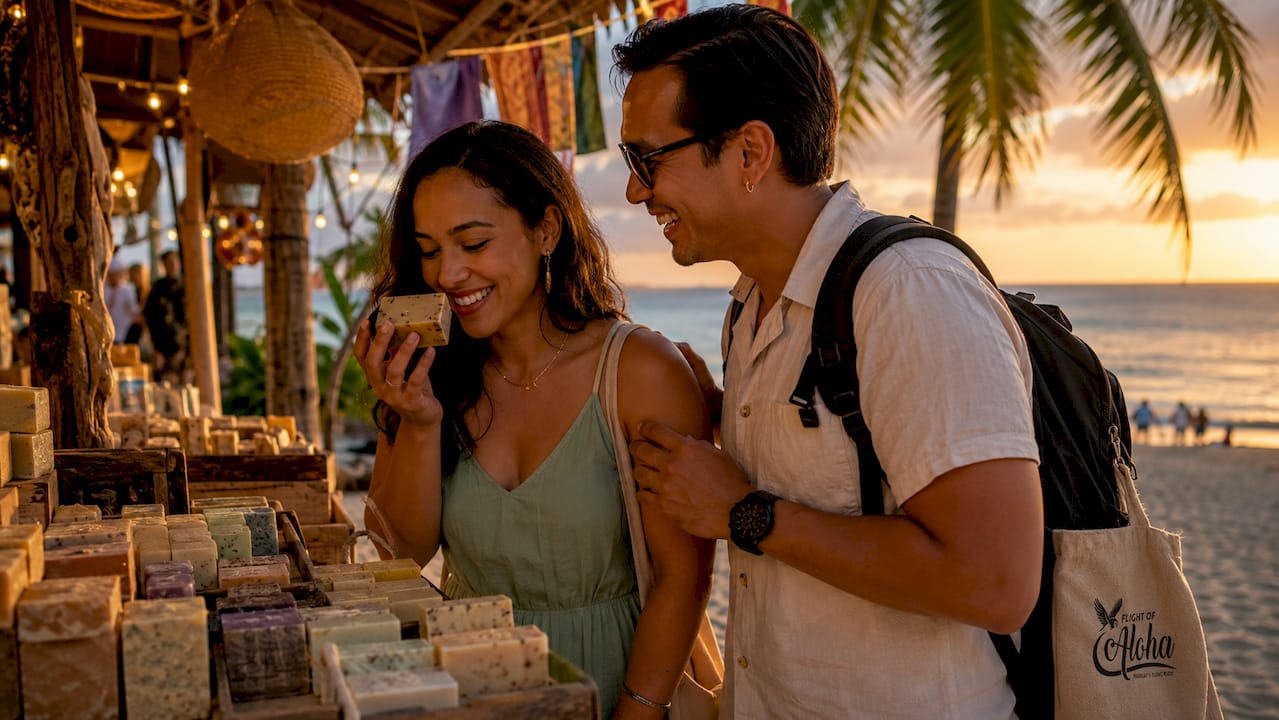
A well-crafted hotel scent acts as an olfactory bookmark, a memory trigger so potent it can pull a guest back to a specific moment years later. Think about how the smell of sunscreen instantly transports you to a beach vacation. Hotels and attractions that own a signature scent own a piece of that guest’s memory.
The behavioral effects go beyond nostalgia. Research consistently shows that ambient scent improves mood, raises perceived quality, and increases time spent in a space. Here is what that looks like in practice:
- Mood elevation: Pleasant ambient scents reduce stress responses in guests arriving after long travel days, improving first impressions before a single staff interaction occurs.
- Perceived quality: Guests in scented environments rate service quality higher than guests in identical unscented environments, even when service delivery is identical.
- Dwell time: Retail and hospitality research shows scented spaces keep visitors longer, which correlates directly with higher spend per visit.
- Repeat visitation: A 2025 community-based tourism pilot in Indonesia found that signature scent strategies significantly improved participant satisfaction scores and intention to revisit.
“Scent bypasses rational thought. By the time a guest consciously notices a fragrance, it has already shaped their emotional state and their perception of the space around them.”
The loyalty impact is particularly compelling for tourism marketers. Guests who associate a destination or property with a specific scent are more likely to book again and more likely to recommend the experience to others. Sensory marketing in tourism works because it creates emotional anchors that outlast the trip itself.
What are effective scent marketing strategies for tourism venues?
Practical implementation separates properties that benefit from scent from those that waste budget on it. The most effective approach combines spatial planning, technical delivery, and brand-aligned fragrance selection.
-
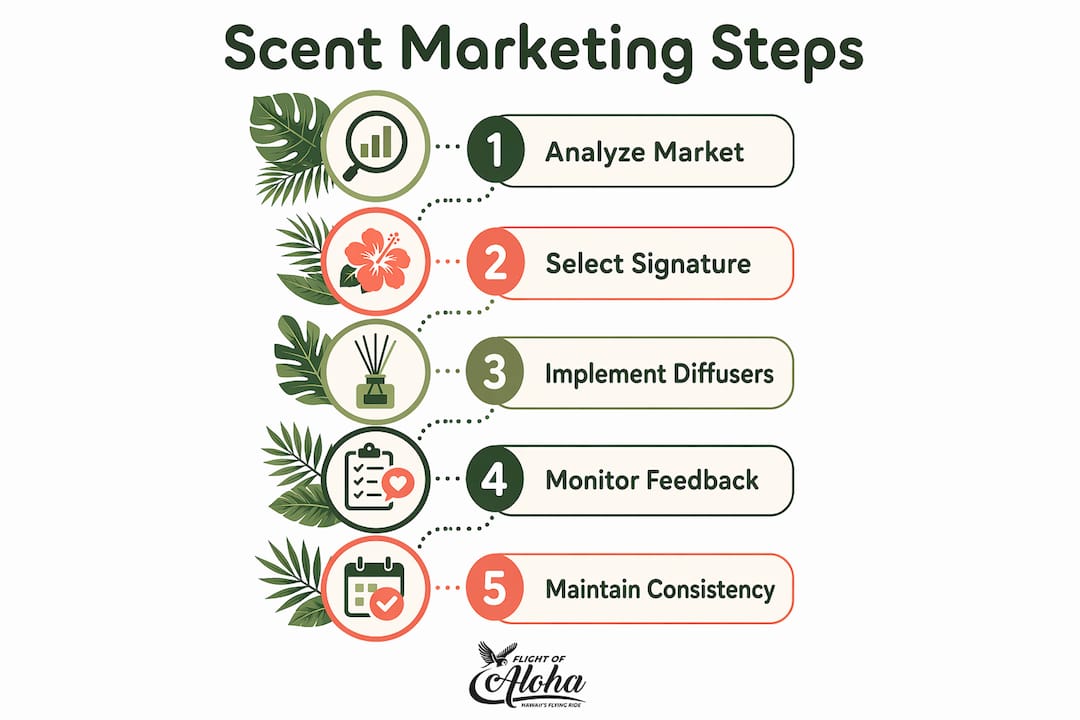
Map your olfactory zones. Olfactory zoning means applying distinct fragrance profiles to functional areas of a property. A lobby scent should feel welcoming and memorable. A spa scent should feel calming and restorative. A restaurant entrance should stimulate appetite. Using one scent across an entire property flattens the experience and misses the opportunity to guide guest emotion through each stage of their visit.
-
Integrate with your HVAC system. HVAC and micro-nebulization systems are the gold standard for large tourism venues. Micro-nebulization converts fragrance oil into dry particles that disperse evenly without leaving residue, maintaining indoor air quality and eliminating fire risk from candles or reed diffusers. Portable diffusers work for smaller spaces but cannot deliver consistent coverage across a 200-room hotel.
-
Anchor your scent to brand identity. Generic fragrances like “clean linen” or “fresh citrus” are forgettable. The most effective tourism scents are proprietary blends developed specifically for the property. The Westin Hotels & Resorts signature White Tea scent is a widely cited example of a fragrance so tied to brand identity that guests purchase it as a retail product.
-
Calibrate intensity by space and audience. High-traffic areas like lobbies need lighter diffusion to avoid overwhelming guests. Enclosed spaces like elevators or spa treatment rooms can carry a slightly stronger presence. Families with young children and guests with sensitivities respond better to subtle, clean profiles.
-
Test before you commit. Run a 30-day pilot in one zone, gather structured guest feedback, and adjust concentration before rolling out property-wide.
Pro Tip: Avoid seasonal or trend-driven fragrances for your signature scent. Your brand scent needs to be consistent across every property and every year. Guests who return after 18 months should recognize it immediately.
Why does scent authenticity matter in tourism marketing?
Authenticity is the single biggest variable between scent strategies that build loyalty and those that backfire. Tourism is inherently place-based. Guests arrive with expectations shaped by destination imagery, cultural associations, and personal travel history. A scent that contradicts those expectations creates cognitive dissonance.
Research on millennial travelers in Ireland demonstrates that scent effectiveness depends on place-congruence. A tropical resort that smells like a European department store loses credibility. A heritage property that uses a synthetic “old book” scent without any connection to its actual history feels manufactured. Mismatched scents reduce perceived authenticity and can actively harm brand perception.
The cultural dimension matters especially in destinations with strong indigenous or regional identity. Guests traveling to Hawai’i, Kyoto, or Marrakech arrive with sensory expectations rooted in those places. A scent program that draws on local botanicals, traditional practices, or regional ingredients signals respect and deepens the experience. One that ignores place entirely signals that the property treats fragrance as a generic amenity rather than a storytelling tool.
Transparency also plays a role. Authentic scent branding grounded in local heritage builds traveler trust. Synthetic scents presented without context erode it. Properties that share the story behind their fragrance, where the botanicals come from, what cultural meaning they carry, generate stronger emotional responses and higher loyalty scores.
Here is what authentic scent strategy looks like in practice:
- Source locally where possible. Hawaiian plumeria, Provençal lavender, or Balinese frangipani connect guests to the destination through smell before they even step outside.
- Involve cultural stakeholders. For destinations with indigenous heritage, co-developing a scent with community members adds legitimacy and avoids appropriation.
- Tell the scent story. A small card in the room or a note from the concierge explaining the fragrance transforms a passive sensory experience into a memorable brand moment.
What measurable impacts does scent marketing have on tourism businesses?
The business case for tourism and olfactory marketing is no longer theoretical. The numbers are clear and the adoption curve is accelerating.
Approximately 46% of luxury hotels have adopted signature scents to strengthen brand identity and increase guest loyalty as of April 2026. That adoption rate reflects a competitive reality: in the luxury segment, scent has become a baseline expectation rather than a differentiator.
| Metric | Finding |
|---|---|
| Global scent marketing investment | $3 billion, with hotels representing over 20% |
| Luxury hotel adoption rate | 46% have implemented signature scents as of 2026 |
| Guest satisfaction impact | Indonesia pilot showed significant Likert-scale improvement in satisfaction and revisit intention |
| Memory and recall | Olfactory bookmarking outperforms visual advertising for brand recall |
| Loyalty driver | Place-congruent scents increase repeat booking intention among millennial travelers |
The Indonesia community-based tourism pilot is particularly instructive for mid-market and independent operators. The study used standardized Likert-scale assessments and found that scent strategies improved revisit intention significantly among participants. This matters because it demonstrates measurable ROI outside the luxury segment, where scent marketing has historically been concentrated.
Beyond satisfaction scores, immersive scent initiatives that incorporate workshops and storytelling generate deeper engagement and increase repeat bookings. Perfume tourism experiences in destinations like Grasse, France, show that scent can become the attraction itself, not just an ambient backdrop. That shift from background element to headline experience represents the next frontier for fragrance branding in tourism.
Key takeaways
Scent marketing in tourism delivers measurable gains in guest satisfaction, brand recall, and repeat visitation when it is grounded in authentic, place-congruent fragrance strategy.
| Point | Details |
|---|---|
| Scent drives memory and loyalty | Olfactory bookmarking creates brand recall that visual advertising cannot match. |
| Olfactory zoning maximizes impact | Apply distinct fragrance profiles to lobby, spa, and dining zones for targeted emotional effect. |
| Authenticity is non-negotiable | Mismatched or synthetic scents reduce perceived authenticity and harm brand perception. |
| Luxury adoption is at 46% | Nearly half of luxury hotels now use signature scents, making it a competitive baseline. |
| Storytelling amplifies scent ROI | Sharing the cultural story behind a fragrance transforms a passive sense into a brand moment. |
My take on where scent marketing in tourism is heading
I have watched scent move from a niche luxury amenity to a mainstream marketing channel in the span of a few years. The trajectory is clear: the properties winning on guest experience are the ones treating scent as a narrative tool, not a deodorizer.
What I find most underused is the combination of scent with other sensory elements. The benefits of sensory attractions research shows that layering scent with sound, motion, and visual storytelling produces emotional responses far stronger than any single sense alone. Most tourism operators are still deploying scent in isolation. That is a missed opportunity.
The authenticity question is where I see the most risk. As scent adoption accelerates, the temptation to grab an off-the-shelf “tropical” or “ocean breeze” blend and call it a brand scent will grow. Guests, especially younger travelers, will see through it. The properties that invest in genuinely place-rooted fragrances now will build loyalty that generic scents simply cannot generate.
My practical advice: start with one zone, develop a scent with a real story behind it, and measure guest response before scaling. Scent done right is one of the highest-ROI sensory investments in tourism. Scent done lazily is just noise.
— Ola
Experience the power of scent at Flightofaloha in Kona
Flightofaloha, the Native Hawaiian-owned immersive flying theater inside King Kamehameha’s Kona Beach Hotel, puts every principle in this article into practice. The attraction blends 8K visuals, motion effects, wind, and real Hawaiian scents to simulate soaring over the islands. It is the closest thing to a helicopter tour without the $400 price tag or motion sickness, and it is walking distance from Kailua Pier for cruise guests on shore excursions.
Whether you are a marketing professional studying real-world scent experiences or a visitor looking for the best indoor activities on the Big Island, Flightofaloha delivers a fully sensory, culturally grounded experience that stays with you long after you leave. Book online to secure your seat.
FAQ
What is the role of scent marketing in tourism?
Scent marketing in tourism uses strategically selected fragrances to shape visitor emotions, strengthen brand identity, and increase guest loyalty. It functions as an olfactory bookmark, creating memory associations that outlast the visit and drive repeat bookings.
How does scent affect travel choices and hotel perception?
Ambient scent improves mood, raises perceived service quality, and increases time spent in a space. Research shows guests in scented environments rate their overall experience higher than guests in identical unscented environments.
What makes a scent authentic for a tourism destination?
Place-congruence is the key factor. A scent is authentic when it draws on local botanicals, cultural heritage, or regional ingredients that match guest expectations for that destination. Mismatched or generic scents reduce perceived authenticity and can harm brand loyalty.
How do hotels technically deliver scent marketing?
Large hospitality venues use HVAC-integrated micro-nebulization systems to disperse fragrance evenly across spaces. These systems maintain indoor air quality, eliminate fire risk, and allow precise control of scent intensity by zone.
Is scent marketing only viable for luxury hotels?
No. A 2025 community-based tourism pilot in Indonesia demonstrated that signature scent strategies significantly improved satisfaction and revisit intention outside the luxury segment. The investment scales to property size, making it accessible for mid-market operators and independent attractions.