
Why Families Choose Attractions for Lasting Memories

Over 65 percent of American families say shared experiences are their top priority when choosing vacation destinations. For those exploring Kailua-Kona with children, the challenge is finding entertainment that excites kids, sparks curiosity, and connects everyone with authentic Hawaiian culture. This guide shows how modern attractions fuse technology with rich storytelling, turning every family outing into a chance for discovery and genuine connection.
Table of Contents
- Defining Family-Friendly Attractions And Experiences
- Types Of Attractions Families Prefer Most
- How Immersive Experiences Influence Choices
- Cultural Storytelling And Educational Value
- Costs, Value, And Booking Convenience
Key Takeaways
| Point | Details |
|---|---|
| Focus on Inclusion | Family-friendly attractions should cater to all age groups, ensuring everyone can participate and enjoy shared experiences. |
| Immersive Interactions | Attractions that leverage immersive technologies and interactive storytelling facilitate deeper engagement among family members. |
| Value and Convenience | Families prioritize attractions offering clear pricing, flexible bookings, and overall value beyond just ticket costs. |
| Cultural Education | Destinations that emphasize cultural storytelling enrich learning experiences, fostering empathy and understanding among visitors. |
Defining Family-Friendly Attractions and Experiences
Family-friendly attractions represent more than just entertainment destinations—they are carefully designed environments that prioritize the collective experience of every family member. At their core, these spaces are intentionally crafted to provide engaging, safe, and inclusive experiences that accommodate diverse age groups and interests. Comprehensive urban design research suggests that truly family-friendly environments must consider multiple dimensions beyond simple amusement.
The hallmarks of exceptional family attractions include thoughtful spatial design, age-appropriate activities, and environments that simultaneously entertain children while offering meaningful engagement for adults. Unlike traditional entertainment venues that might cater exclusively to one demographic, family-friendly attractions create multilayered experiences where grandparents, parents, teenagers, and young children can discover enjoyment together. These destinations understand that memorable family experiences emerge from shared moments of discovery, learning, and collective excitement.
Key characteristics of outstanding family attractions typically encompass several critical elements. Urban planning studies highlight that successful family-friendly spaces prioritize safety, accessibility, and interactive opportunities. This means providing clear sightlines for parental supervision, wheelchair and stroller accessibility, clean restroom facilities, diverse activity zones, and programming that naturally encourages intergenerational interaction. Attractions that excel in these areas transform simple outings into cherished memories, creating environments where families can connect, explore, and build lasting bonds.
Pro tip: When selecting a family attraction, prioritize venues that offer varied activity levels and engagement opportunities for different age groups to ensure everyone feels included and excited.
Types of Attractions Families Prefer Most
When selecting attractions, families seek experiences that transcend simple entertainment, searching for destinations that offer meaningful interactions and memories for every generation. Family structure studies/09%3A_Family_and_Marriage/9.05%3A_Families_and_Households) reveal that attractions which accommodate diverse familial compositions and age ranges are most successful in creating lasting impressions.
The most preferred family attractions typically fall into several compelling categories. Interactive museums offer hands-on learning experiences where children can explore scientific concepts, historical narratives, and cultural traditions through engaging exhibits. Theme parks provide thrilling adventures with age-appropriate rides and entertainment zones that cater to different energy levels and interests. Cultural heritage sites and living history museums allow families to step back in time, offering immersive experiences that educate while entertaining multiple generations simultaneously.
Beyond the attraction type, families prioritize destinations that provide comprehensive amenities and thoughtful design. This includes clean and accessible facilities, designated rest areas, dining options that accommodate various dietary needs, and programming that naturally encourages family bonding. Attractions that offer flexible experiences allowing family members to engage at their own pace—whether through guided tours, self-directed exploration, or interactive workshops—consistently receive high ratings from multi-generational groups.
Here’s a concise comparison of common family attraction types and the unique benefits each offers:
| Attraction Type | Distinctive Benefit | Typical Audience Served |
|---|---|---|
| Interactive Museum | Hands-on learning experiences | Kids, teens, adults, grandparents |
| Theme Park | Thrilling rides and adventures | All ages, especially children & teens |
| Cultural Heritage Site | Immersive historical lessons | Multigenerational groups |
| Living History Museum | Active participation in stories | School-age children, families |
Pro tip: Research attractions beforehand and look for venues offering diverse activity zones and flexible engagement options to ensure every family member finds something enjoyable.
How Immersive Experiences Influence Choices
Immersive technologies are fundamentally transforming how families select and engage with attractions, creating powerful multi-sensory experiences that go far beyond traditional entertainment models. Modern families seek destinations that offer more than passive observation—they want interactive environments that actively involve every family member in a shared, memorable journey. These experiences leverage cutting-edge technologies like Virtual Reality (VR), Augmented Reality (AR), and Mixed Reality (MR) to craft engaging narratives that captivate participants across different age groups.
The core appeal of immersive attractions lies in their ability to transform learning into an adventure. Interactive storytelling becomes a powerful mechanism for engagement, allowing families to not just observe historical or cultural narratives, but to actively participate in them. Whether exploring ancient civilizations, understanding scientific concepts, or experiencing cultural traditions, these attractions create multidimensional experiences that stimulate curiosity and foster deeper connections between family members. Educational content becomes seamlessly integrated with entertainment, making the learning process both enjoyable and profound.

Beyond technological innovation, immersive learning practices emphasize social interaction and shared discovery. Attractions that successfully design experiences encouraging collaborative exploration tend to receive higher satisfaction ratings from families. This means creating environments where grandparents, parents, and children can collectively solve challenges, share discoveries, and create meaningful memories. The most successful immersive attractions understand that technology should serve as a bridge connecting family members, not a barrier that isolates individuals.
Pro tip: When evaluating immersive attractions, prioritize experiences that offer multiple interaction levels and encourage active participation from all family members.
Cultural Storytelling and Educational Value
Cultural storytelling represents a powerful mechanism for transforming family attractions from mere entertainment venues into profound educational experiences. By weaving intricate narratives that explore heritage, traditions, and human experiences, these attractions create immersive journeys that transcend traditional learning models. Families increasingly seek destinations that offer more than passive observation, valuing experiences that actively engage participants in understanding diverse cultural perspectives.
The narrative approach to cultural education goes far beyond simple information transmission. Interactive exhibits that incorporate storytelling techniques help families explore complex historical and cultural concepts through engaging, emotionally resonant experiences. Children learn about different societies not through dry facts, but through compelling stories that spark curiosity and empathy. Museums, cultural centers, and heritage sites that master this approach create environments where learning becomes an adventure, allowing family members to collectively discover and interpret cultural nuances.
Storytelling techniques serve as powerful pedagogical tools that support values education and emotional intelligence development. By presenting authentic, multilayered narratives, attractions can help families navigate complex social concepts, understand diverse perspectives, and build deeper connections with global cultural heritage. The most effective cultural storytelling experiences challenge preconceptions, encourage critical thinking, and provide opportunities for intergenerational dialogue and shared reflection.
Pro tip: Choose attractions that prioritize authentic, multi-perspective storytelling over simplified historical narratives to ensure a rich, nuanced learning experience for your entire family.
Costs, Value, and Booking Convenience
Economic research on attractions reveals that modern families approach entertainment spending with strategic precision. Today’s consumers are not simply looking for the cheapest option, but seeking experiences that deliver exceptional value across multiple dimensions. This means evaluating attractions not just by ticket price, but by the quality of engagement, educational potential, and overall family enjoyment they provide.
The pricing landscape for family attractions has become increasingly sophisticated, with smart travelers looking beyond surface-level costs. Savvy families now analyze total experience value, considering factors like duration of entertainment, interactive opportunities, learning potential, and the potential for creating lasting memories. Many attractions respond by offering tiered pricing models, family packages, and bundled experiences that provide flexibility and perceived economic advantage. Online platforms have further transformed this dynamic, allowing families to compare prices, read reviews, and make informed decisions with unprecedented ease.
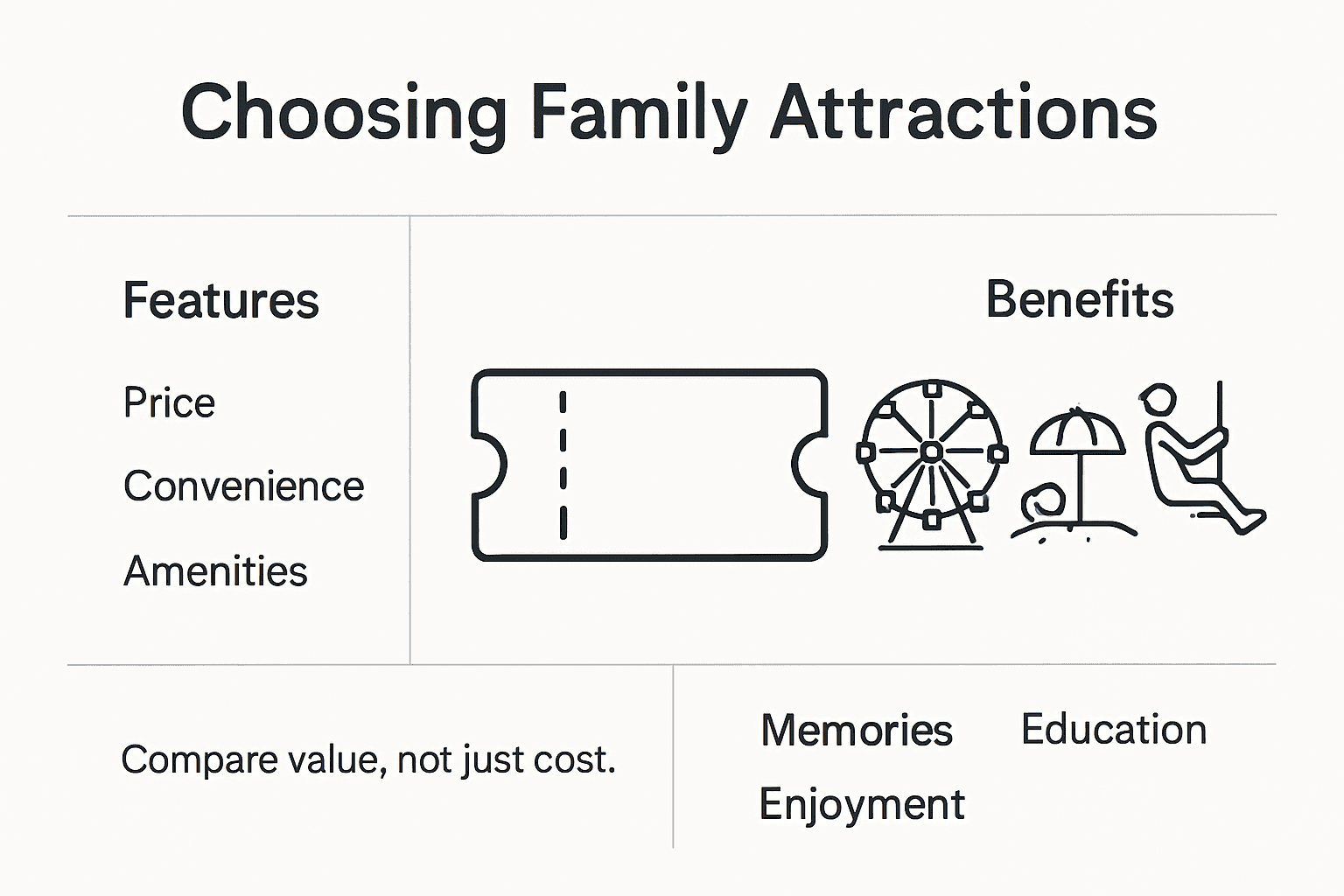
Visitor attraction data demonstrates that booking convenience has become as crucial as pricing itself. Modern families prioritize attractions with transparent pricing, user-friendly reservation systems, and flexible cancellation policies. Digital technologies have revolutionized this process, enabling families to plan complex outings with minimal friction. Features like mobile-responsive booking platforms, instant confirmation, and the ability to modify reservations provide peace of mind that significantly influences attraction selection. The most successful destinations understand that convenience is not a luxury, but an expected standard in contemporary travel experiences.
To help families evaluate cost and convenience, see how modern booking features improve overall value:
| Feature | How It Enhances Value | Why It Matters for Families |
|---|---|---|
| Tiered Pricing Packages | Allows budget and preference choices | Families can select best-fit deals |
| Online Reservation Systems | Simplifies planning and payment | Reduces stress, saves time |
| Flexible Cancellation Policy | Adjusts to changing plans | Provides peace of mind |
| Transparent Pricing Display | Prevents hidden fees and surprises | Supports informed spending choices |
Pro tip: Always compare total package value rather than just ticket prices, and look for attractions offering transparent pricing with flexible booking options.
Create Lasting Family Memories with an Unforgettable Hawaiian Adventure
Families today seek attractions that offer immersive experiences, meaningful cultural storytelling, and activities that engage every generation. The challenge is finding destinations that blend education with entertainment while providing convenience and safety for all ages. At Flight of Aloha, we understand these family goals. Our Hawaiian flying theater uses stunning 8K visuals, motion effects, scents, and wind to bring Hawaiian legends like “Naupaka” and “Lahaina” to life in a way that fosters shared discovery and lasting connections.

Experience how modern immersive attractions transform simple outings into cherished family adventures. With Flight of Aloha, you can enjoy the perfect combination of cultural storytelling and multi-sensory thrills in Kailua-Kona. Take advantage of our convenient online booking system to secure your tickets now, explore our unique VIP packages, and create memories that your entire family will treasure for years. Don’t wait to experience a Hawaiian attraction that truly brings families together with aloha spirit.
Frequently Asked Questions
What characteristics define family-friendly attractions?
Family-friendly attractions prioritize safety, accessibility, and engaging interactions for all ages. They feature thoughtful design, clear sightlines for supervision, various activity zones, and programming that encourages intergenerational bonding.
Why are immersive experiences important for family attractions?
Immersive experiences leverage technologies like VR and AR to create engaging narratives that involve every family member in shared adventures, enhancing learning and connection through active participation rather than passive observation.
How can families choose attractions that provide lasting memories?
Families should look for attractions that offer diverse activity levels, flexible engagement options, and meaningful interactions that appeal to different age groups, ensuring every member feels included and excited to participate.
What factors should families consider when evaluating the cost of attractions?
Families should assess the overall value of experiences beyond just ticket prices. This includes evaluating engagement quality, educational potential, duration of entertainment, and available amenities to ensure a memorable outing.
Recommended
- Why Family Attractions Matter For Vacation Fun | Flight Of Aloha
- Role Of Family-Friendly Attractions – Impact On Travel | Flight Of Aloha
- Family-Friendly Attractions: Complete Guide For Visitors | Flight Of Aloha
- Story-Driven Tourism: Transforming Family Travel | Flight Of Aloha
- 5 gode idéer til efterårsferien 2025 fra København – Flightfinder