
Why Immersive Experiences Matter for Cruisers in Hawaii
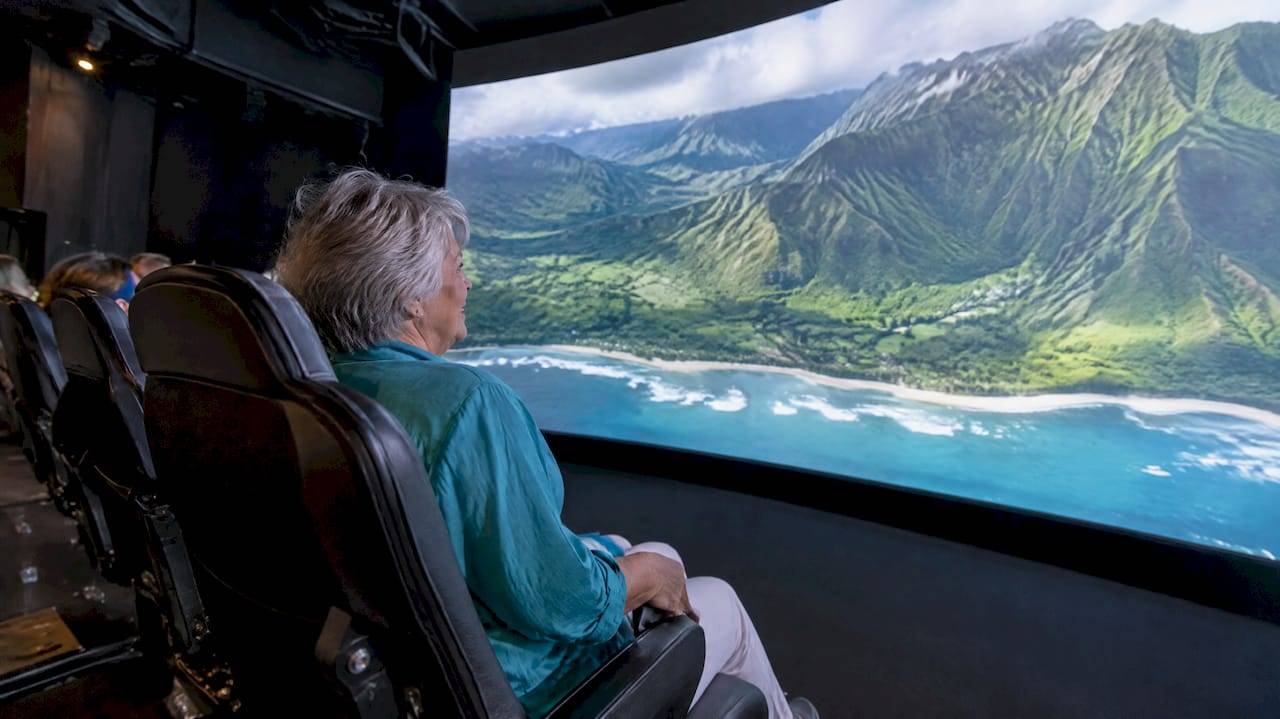
A cruise port day in Hawaii gives you a few hours to understand a place that took centuries to shape. Immersive experiences matter because they close that gap: instead of looking at a island from a bus window, you step inside its stories, its landscapes and its people’s way of seeing the world, and you do it without losing half the day to logistics. For cruisers in Kailua-Kona and on Maui, that means choosing activities that are close to the ship, comfortable in the heat, and rooted in real Hawaiian voices.
We are Flight of Aloha, a Native Hawaiian-owned flying theater in Kailua-Kona and at Whalers Village Kaanapali on Maui, so we have a stake in this question. We also see it every week from the other side of the ticket counter. Here is what we have learned, and what the research says.
TL;DR
- Port days are short, so the best experiences are the ones that deliver depth fast, close to the pier, with no big transfer.
- Cruise lines now bring local culture on board, but a ship can only imitate a place. Standing on the island, with Hawaiian storytellers behind the work, is a different thing.
- Visitors increasingly want culture that is respectful and led by Native Hawaiians, and a University of Hawaiʻi study found most U.S. travelers would pay extra for it.
- Kona’s pier area is hot and exposed, and tender operations can shift your schedule. An air-conditioned, walkable plan is a smart backup and a smart first choice.
- Our flying theater is a short walk from the Kailua Pier tender dock. Book online to secure your seat.
What “immersive” actually means on a port day
The word gets stretched. A lanyard, a lei greeting and a gift shop are not immersion. Real immersion has three ingredients: it engages more than your eyes, it tells you something true about the place, and it asks you to be part of the story rather than an audience for it.
That is a high bar for a half day ashore. A traditional shore excursion often means a long coach ride, a narrated stop or two, and a rushed return. You collect photos. You may not collect understanding.
An immersive experience flips that. Think of the difference between reading about a legend and being carried through it. Our own flights use 8K visuals, motion seats, wind and scents so your whole body takes part, and the stories come from Hawaiian legend and history. If you want the technical side, we explain how we use 8K, motion and scent in more detail.
Why the old sightseeing model falls short for cruisers
Cruisers have a particular problem: time. You have a hard all-aboard deadline, and you pay for the privilege of arriving in the morning and leaving in the evening. Every hour spent in transit is an hour not spent with the island.
Travel writers and cruise executives have noticed that travelers are moving away from drive-by touring. In Condé Nast Traveler’s look at cruise ships bringing the destination on board, experts describe a shift toward locally rooted experiences that feel like an investment in the community, not just a box ticked. That sense of mutual benefit is what makes a ticket price feel worth it.
The expedition side of the industry says much the same. At a Seatrade Europe panel, HX Expeditions COO Iain McNeill argued that storytelling holds travel experiences together, turning facts into emotional connection (Seatrade Cruise). Facts about a volcano are interesting. A story about why a place matters to the people who live beside it stays with you.
Cruise lines are bringing culture on board. Here is what ships cannot do
Cruise lines have invested heavily in onboard immersion. Celebrity’s newest ship, for example, carries more than 75 resident performers, part of a wider trend of bringing ports’ food, music and character onto the vessel.
That is a good sign: it tells us guests want more than a buffet and a pool. But a ship can only echo a destination. Three things are hard to replicate at sea:
- Real place. The air, the light on the lava coast, the neighborhood outside the door.
- Real people. Hawaiian storytellers and cultural advisors with a personal connection to the legends being told.
- Real comfort on land. A cool, seated refuge from tropical sun after you have been walking in it.
Onboard programs and shore experiences are not rivals. They work best together. But if you only have one stop in Hawaii, spend it ashore.
Why Hawaiian ownership and voice matter
Hawaii has a name for the kind of visit many travelers now want: travel pono, meaning to travel with care and respect. The Hawaii Tourism Authority’s fall 2025 conference material on Hawaiʻi’s cruise industry notes that residents and visitors alike expect local cultural authenticity and the preservation of heritage, while also flagging concerns such as overuse of some ports and strain on local infrastructure.
There is demand behind that expectation. The University of Hawaiʻi study found that more than 75% of U.S. travelers surveyed were willing to pay extra for authentic Hawaiian cultural experiences, and over 35% would pay more than 10% above standard activity costs for experiences that are culturally respectful and facilitated by Native Hawaiians.
In practice, this gives cruisers a simple filter when choosing what to do ashore:
- Who owns it? Is it owned and run by people from here?
- Who tells the stories? Are local advisors and storytellers involved?
- Where does your money go? Does it stay in the community?
Flight of Aloha is Native Hawaiian-owned, and our films are built around Hawaiian legend and culture with local advisors and storytellers. We think that is what makes an immersive experience worth your limited hours, and we say more about it in our guide to cultural storytelling in Hawaiian attractions.
The practical case: heat, tenders and a short clock
Immersion is not only about meaning. It is also about logistics, because a day that falls apart is not immersive in any way.
Kona is a tender port
Cruise ships at Kailua-Kona anchor offshore and ferry passengers in by tender boat to the pier. The pier itself is a state facility run by the Division of Boating and Ocean Recreation, which lists a cruise ship port, mooring area and loading areas among its features. Tender service depends on sea conditions, so the timing of your day can shift. If you want to check which ships are in town, a Kailua-Kona cruise schedule lists the calendar by date.
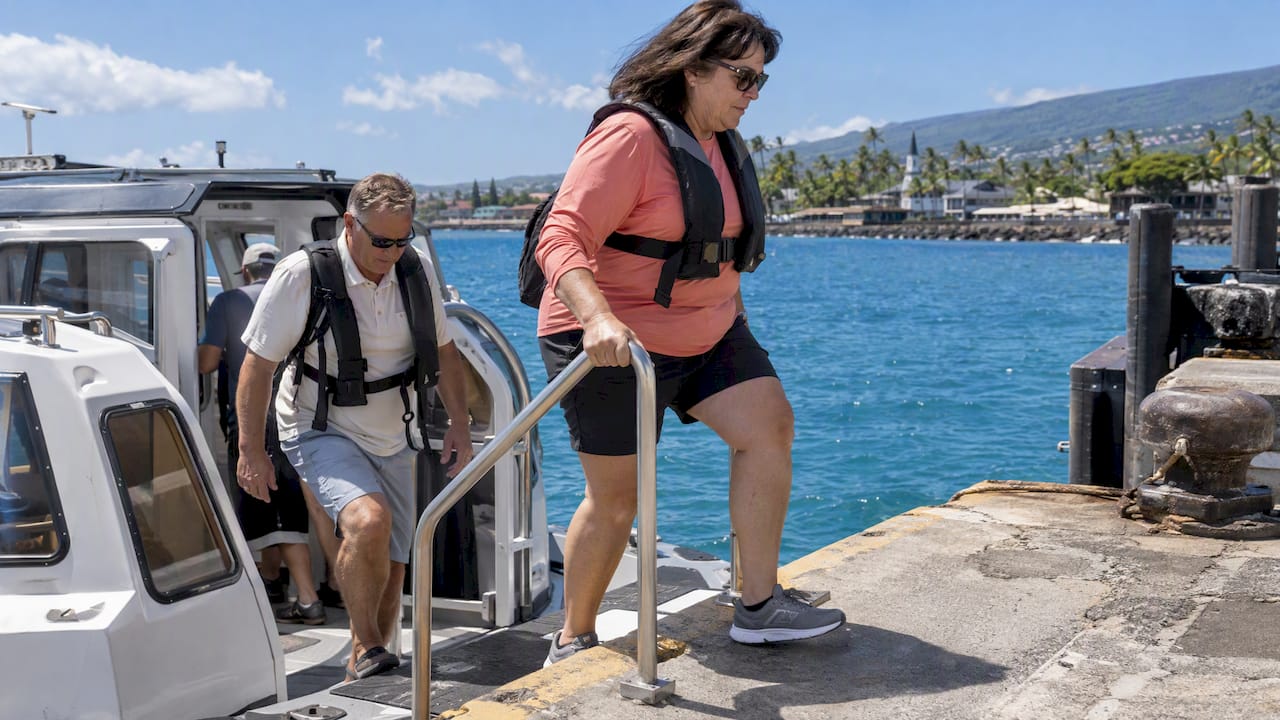
The lesson: keep your plans close. Anything that needs a long drive is a gamble when you may be waiting on a tender line. Our Kailua-Kona theater is within walking distance of the Kailua Pier tender dock, so you can step off the tender, enjoy a flight and be back with time to spare.
Heat and vog are real
The pier area has limited shade, and the Kona sun is strong. Add the occasional vog (volcanic haze) and a humid walk, and a cool, indoor, seated activity suddenly feels like a gift. Our theaters are fully air-conditioned, and guests tell us the cool-down is part of the appeal. If you are traveling with grandparents, small children or anyone who tires in the heat, that matters.
Rain happens, too
Rainy days in Kona and on Maui are the moments when beach plans collapse. An indoor attraction that takes you over the whole coastline, rain or shine, turns a washed-out stop into a highlight. The same goes for Kaanapali, where Whalers Village sits in the middle of a beachfront shopping center, so you can pair a flight with lunch and a look around without getting in a car.
Immersion without the helicopter price tag
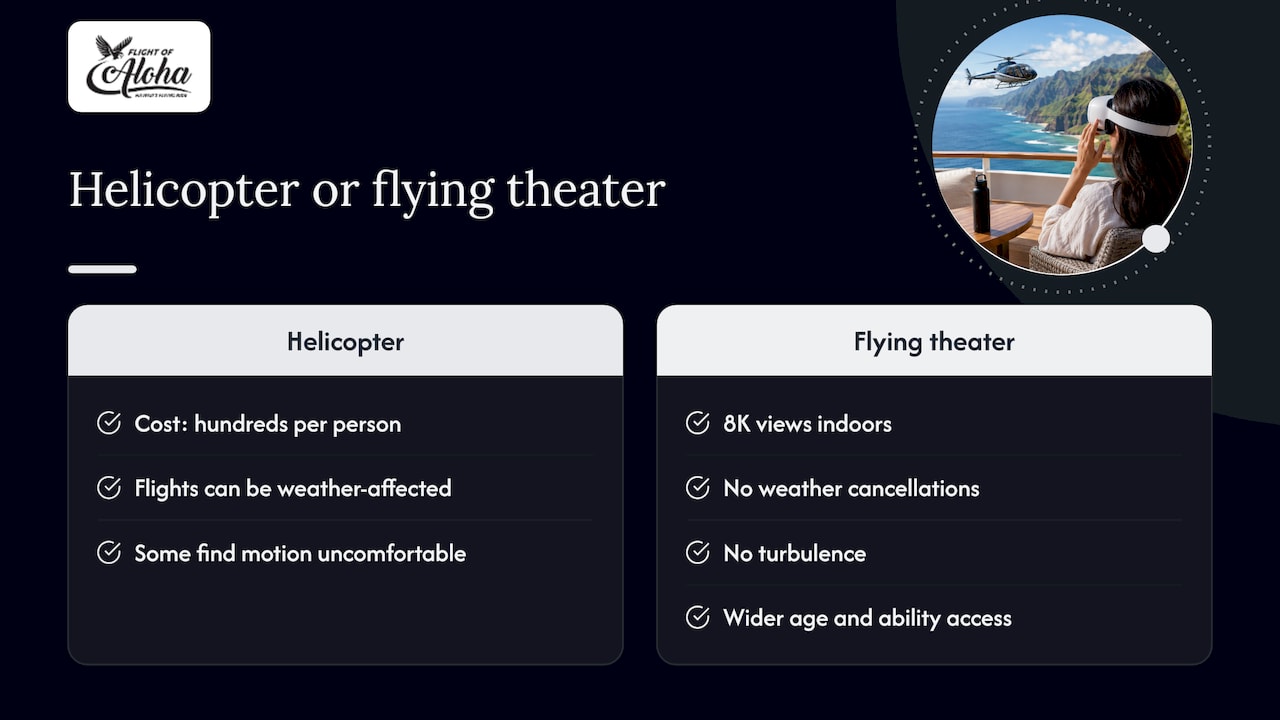
Many cruisers consider a helicopter tour because they want to see Hawaii from above. It is a legitimate bucket-list item, and it can cost hundreds of dollars per person. Some travelers also find the motion uncomfortable, and flights can be affected by weather.
Our flying theater is the smart alternative. You get the sweep of cliffs, valleys and coastlines in 8K, with wind, scent and motion, while sitting comfortably indoors. There is no weather cancellation to worry about at the door and no turbulence. Compared with a helicopter, it is also open to a wider range of ages and abilities, which is why we call ourselves the most accessible activity in Kona and Maui. If you are weighing the two, our post on what interactive storytelling is and how it saves you money lays out the comparison.
If you are a family with a toddler or a multigenerational group with a grandparent who cannot manage a rugged trail, that accessibility is not a small thing. Everyone in your party shares the same moment.
Which flight fits your port day
We offer several films. Each runs as its own experience, with prices as published on our site:
| Experience | What it is | Price |
|---|---|---|
| Naupaka | A flight through a Hawaiian legend of love and separation | $29.99 to $34.99 |
| Lahaina | A look at Lahaina’s history and spirit from above | $29.99 to $34.99 |
| Europe | A flight over European landscapes, including the Merrie Monarch story | $29.99 to $34.99 |
| Double Feature Flying Ride | Two films back to back | $49.99 to $59.99 |
| VIP Package | A premium way to fly | $69.99 to $79.99 |
| Annual Pass | Repeat flights all year | $200 per year |
A few ways to choose:
- One short stop, first time in Hawaii: Naupaka is a heartfelt introduction to Hawaiian storytelling.
- Maui day in Kaanapali: Lahaina is a good choice when you want to understand the place you are standing near.
- Extra time to fill: The double feature gives you two films in a single visit.
- Celebrating something: The VIP Package adds a special touch for anniversaries and family milestones.
- Local residents: The annual pass is built for people who live here and want to bring visitors back.
Always check the film schedule at your location before you go, since showtimes and availability can vary.
A sample Kona port day
Here is how a tender-port day can look when you prioritize immersion and keep it close:
- Tender in and walk the waterfront. Take in the pier and the historic seaside town before the heat builds.
- Book a flight. Walk to our theater and cool off while you soar over the islands.
- Lunch nearby. Grab local food, such as poke or musubi, within easy reach.
- Browse and stroll. Leave a buffer for the tender line back to the ship.
Nothing in that plan requires a rental car, a bus or a long wait. That is the point. Immersion works best when it is easy.
Our perspective: what we hear from cruisers
We see cruisers walk in tired, hot and a little skeptical, and walk out quiet. Often they tell us the story landed in a way they did not expect. We think it is because the experience asks nothing of you except to look, listen and feel.
We built Flight of Aloha on the idea that the best way to introduce a visitor to Hawaii is to start with its stories. Hawaiian legends are not decoration. They explain why a place looks the way it does and why people care for it. When you see the coastline through the story of Naupaka, you stop seeing scenery and start seeing home.
So our advice to cruisers is simple. Choose one thing that gives you depth, keep it close to the pier, and let the people from here tell you the story. You will carry that home far longer than a photo from a bus window. Read more about how Hawaiian storytelling traditions shape the way we make our films.
— Ola
Book your flight
Ready to fit an immersive experience into your port day? Choose a film at Flight of Aloha in Kailua-Kona, or see all of our flying ride options for both Kailua-Kona and Whalers Village Kaanapali on Maui. We are happy to help you plan around your ship’s schedule.
FAQ
Is an immersive experience worth it on a short port day?
Yes, if it is close to the pier and does not eat your clock. A walkable experience gives you cultural depth without a long transfer, which is the main risk on a short call. Our Kona theater is within walking distance of the Kailua Pier tender dock.
Why choose a Native Hawaiian-owned attraction?
Because the stories are told by people with a real connection to them, and your ticket supports the local community. Hawaii’s tourism leaders describe respect and authenticity as central to visiting well, and a University of Hawaiʻi study found strong traveler interest in culturally respectful experiences.
What can I do in Kona or on Maui on a rainy day?
Choose an indoor, air-conditioned option so the weather does not decide your plans. Our flying theaters in Kailua-Kona and at Whalers Village Kaanapali run indoors, so a rainy stop can still end with a view of the whole coastline.
Is a flying theater a good alternative to a helicopter tour?
For many travelers, yes. You get the aerial perspective and the cultural storytelling without the helicopter price or the motion, and the experience is accessible to a wide range of ages and abilities. If you specifically want to leave the ground, a helicopter is a different thing, but it is not for everyone.
Sources
- U.S. visitors willing to pay more for authentic, sustainable experiences, University of Hawaiʻi System News
- These Cruise Ships Are Bringing the Destination On Board, Condé Nast Traveler
- Beyond the landing: Redefining expedition experiences, Seatrade Cruise
- Celebrity Xcel’s new entertainment lineup, Seatrade Cruise
- Hawaiʻi’s Cruise Industry, Hawaii Tourism Authority
- Kailua-Kona, Division of Boating and Ocean Recreation
- Kailua Kona Cruise Ship Schedule
Book online to secure your seat.