Accessibility Workflow for Guests: Ensuring Inclusive Visits
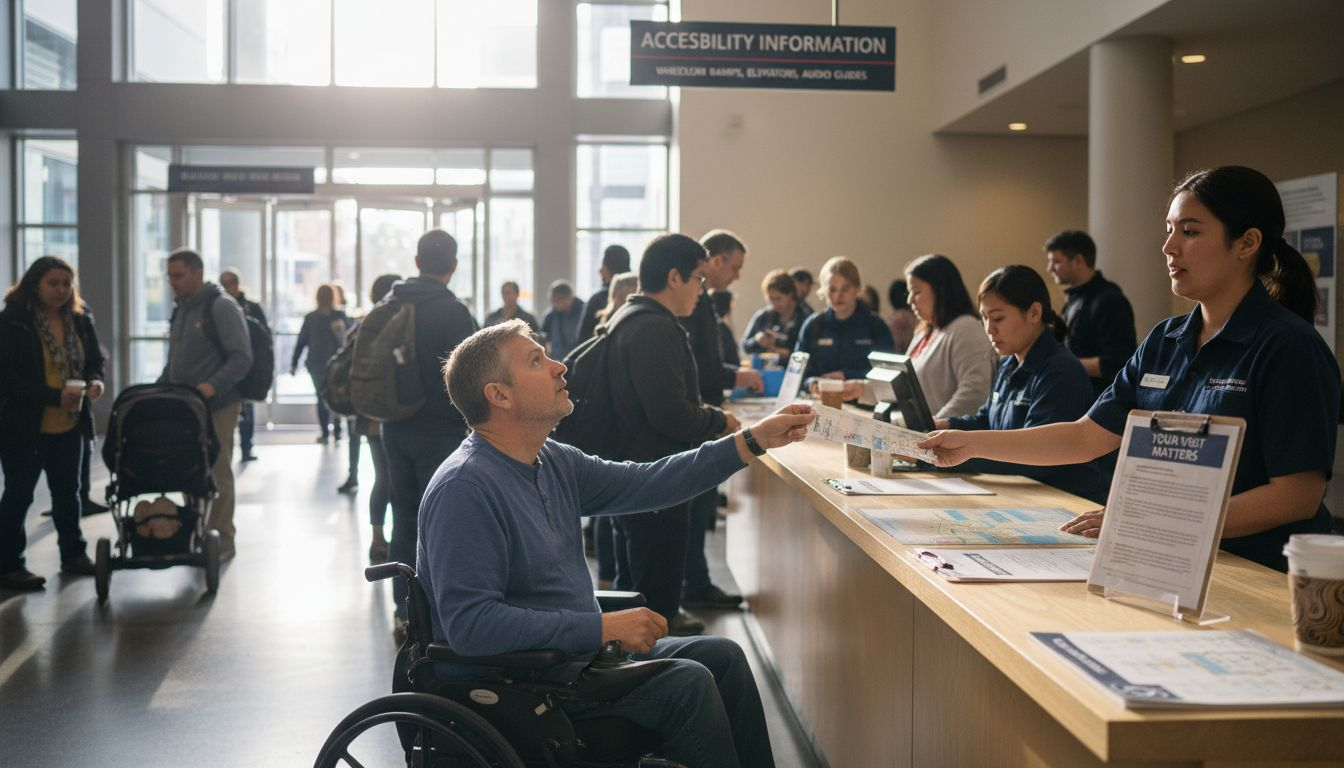
Every family dreams of sharing adventures in places that are truly welcoming to everyone. For those planning an accessible trip to Kailua-Kona, understanding how attractions like Flight of Aloha address a wide range of visitor needs can make all the difference. Inclusive design and smart technology are reshaping travel, ensuring every guest can fully engage with immersive experiences without barriers. This guide reveals how comprehensive accessibility strategies help create memorable, barrier-free journeys on the Big Island.
Table of Contents
- Defining Accessibility Workflow For Attractions
- Types Of Guest Accessibility Needs Addressed
- Key Features Of Our Inclusive Approach
- How Staff Facilitate Accessible Experiences
- Legal Standards And Ada Compliance In Hawaii
- Common Accessibility Pitfalls And Solutions
Key Takeaways
| Point | Details |
|---|---|
| Comprehensive Accessibility Planning | A robust accessibility workflow is essential for accommodating visitors with diverse abilities, addressing physical, sensory, and cognitive needs. |
| Technology Integration | Innovative digital tools enhance visitor experiences, providing navigation aids and customized information to bridge accessibility gaps. |
| Staff Training and Engagement | Staff play a crucial role in facilitating inclusive experiences through effective communication and personalized assistance. |
| Legal Compliance | Adhering to ADA and state-specific regulations is fundamental to ensuring that tourism attractions are inherently inclusive for all visitors. |
Defining Accessibility Workflow for Attractions
Accessibility in tourism represents a comprehensive approach to designing experiences that welcome and accommodate all visitors, regardless of their physical abilities or mobility limitations. Conceptual frameworks for inclusive tourism demonstrate that accessibility is not merely a compliance requirement, but a fundamental strategy for creating meaningful, equitable travel experiences.
A robust accessibility workflow involves several critical components that transform traditional attraction designs:
- Comprehensive visitor assessment
- Adaptive infrastructure planning
- Sensory experience modifications
- Technology-enabled navigation supports
- Staff training on inclusive interaction
The core objective of an accessibility workflow is to systematically deconstruct potential barriers that might prevent individuals with diverse abilities from fully engaging with an attraction. Inclusive design means proactively identifying and eliminating obstacles before they impact visitor experiences.
Sustainable tourism development increasingly recognizes accessibility as a key driver of social inclusion. This approach goes beyond physical accommodations, addressing psychological and emotional aspects of visitor engagement. Modern attractions are reimagining experiences to create environments where every guest feels genuinely welcomed and valued.
Technological solutions play a pivotal role in contemporary accessibility workflows. Digital tools like interactive maps, assistive audio guides, and real-time captioning transform how visitors with different abilities navigate and enjoy attractions. These innovations represent a paradigm shift from traditional accommodation models to truly integrated experiences.
This table summarizes how smart technology enhances accessibility in modern tourism attractions:
| Technology Solution | Accessibility Benefit | Typical Use Case |
|---|---|---|
| Interactive maps | Simplifies navigation | Wayfinding for mobility devices |
| Audio guides | Supports vision impairments | Descriptive, on-demand information |
| Real-time captioning | Aids guests with hearing loss | Live translation and instructions |
| Adaptive interfaces | Customizes user experience | Personalized app or kiosk access |
| Contextual notifications | Reduces confusion and stress | Alerts for sensory-sensitive users |
Pro tip: Conduct periodic accessibility audits to continuously improve and identify emerging visitor needs and technological solutions.
Here’s a concise comparison of traditional attraction design versus an inclusive accessibility workflow:
| Aspect | Traditional Design | Inclusive Accessibility Workflow |
|---|---|---|
| Visitor Assessment | Generic | Comprehensive and individualized |
| Physical Adaptations | Minimal ramps/paths | Adaptive infrastructure for all needs |
| Sensory Considerations | Rarely addressed | Proactively modified and enhanced |
| Technology Usage | Limited or absent | Integrated digital assistance tools |
| Staff Preparedness | Basic customer service | Specialized, empathetic training |
Types of Guest Accessibility Needs Addressed
Accessibility in tourism encompasses a wide range of visitor needs that extend far beyond physical mobility. Comprehensive accessibility frameworks reveal the complex landscape of individual capabilities and potential barriers that travelers encounter across different experience dimensions.
The primary categories of accessibility needs include:
- Physical accessibility for mobility-impaired guests
- Sensory accommodations for vision and hearing variations
- Cognitive support for neurodivergent visitors
- Communication adaptations for diverse language and comprehension levels
- Emotional and psychological comfort considerations
Physical accessibility remains a foundational requirement, addressing challenges like wheelchair navigation, proximity to amenities, and adaptive equipment integration. These considerations go beyond simple ramp installations, requiring holistic environmental design that enables seamless movement and interaction.
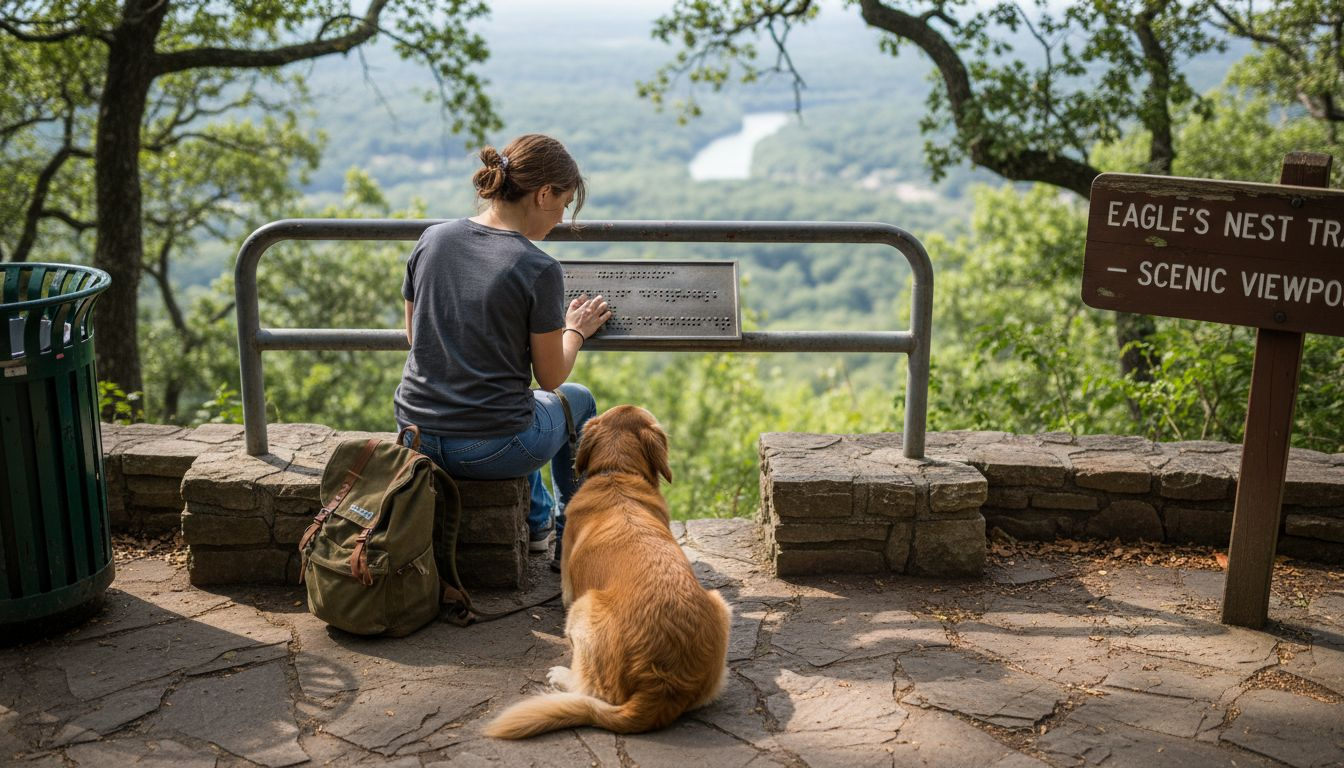
Technological integration in tourism experiences plays a crucial role in addressing accessibility challenges. Innovative digital tools can provide real-time navigation assistance, personalized experience modifications, and contextual information that bridges potential communication or comprehension gaps for visitors with diverse needs.
Cultural sensitivity represents another critical dimension of accessibility. This involves creating experiences that respect and accommodate different communication styles, sensory preferences, and cognitive processing methods across various visitor backgrounds and abilities.
Pro tip: Develop a flexible, personalized pre-visit consultation process that allows guests to communicate their specific accessibility requirements in advance.
Key Features of Our Inclusive Approach
Universal design transforms visitor experiences by creating environments that naturally accommodate diverse needs without requiring specialized adaptations. Collaborative tourism strategies demonstrate that inclusivity is not just an accommodation, but a fundamental approach to creating meaningful travel experiences.
Our inclusive approach encompasses several key features:
- Proactive accessibility planning
- Comprehensive staff training
- Adaptive technology integration
- Personalized visitor support systems
- Continuous feedback and improvement mechanisms
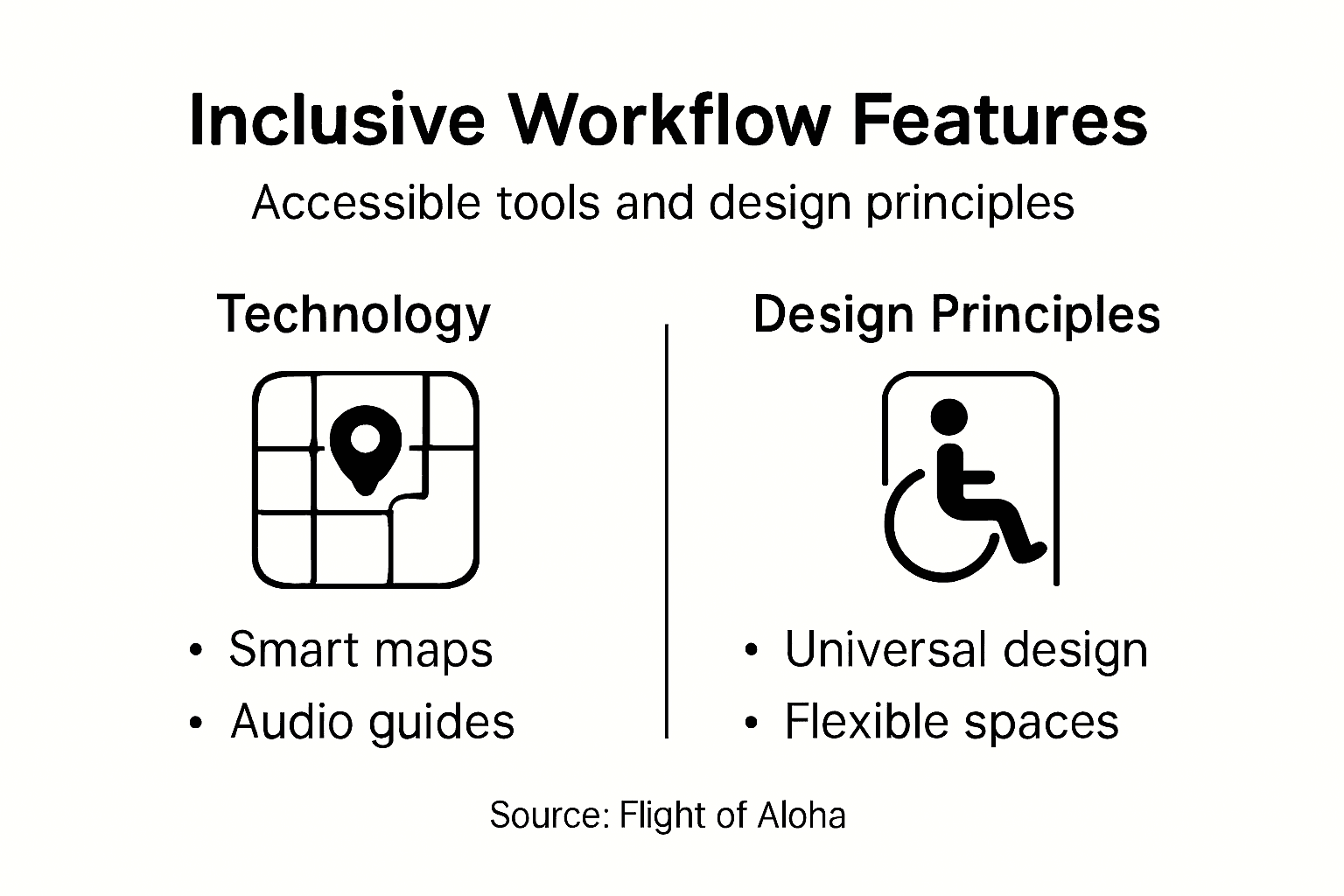
Technology plays a critical role in our inclusive strategy. Smart tourism technologies enable real-time accommodations, providing personalized navigation, communication support, and contextual information that breaks down traditional barriers to full participation.
Universal design principles guide our approach to creating seamless experiences. This means designing spaces, services, and interactions that are inherently accessible to people with varying abilities, rather than treating accessibility as an afterthought or additional service.
Cultural sensitivity is deeply embedded in our inclusive approach. We recognize that accessibility extends beyond physical accommodations, encompassing emotional, cognitive, and cultural dimensions that make every visitor feel genuinely welcomed and valued.
Pro tip: Implement a pre-visit consultation process that allows guests to communicate their specific accessibility requirements and preferences in advance.
How Staff Facilitate Accessible Experiences
Inclusive hospitality goes far beyond physical accommodations, requiring staff to become active facilitators of meaningful experiences for all guests. Staff training in accessibility transforms customer service from a transactional interaction to a personalized, empathetic engagement that anticipates and responds to diverse visitor needs.
Key staff responsibilities in creating accessible experiences include:
- Providing clear, patient communication
- Offering personalized navigation assistance
- Demonstrating active listening and adaptability
- Understanding diverse accessibility requirements
- Proactively identifying potential barriers
Professional training equips staff with critical skills to support guests with varying abilities. Communication strategies are particularly crucial, involving nuanced approaches like using plain language, offering multiple information formats, and maintaining a respectful, non-patronizing tone.
Adaptive service techniques enable staff to dynamically modify interactions based on individual guest requirements. This means being prepared to offer alternative explanations, provide additional context, or adjust communication methods in real-time.
Technology and human compassion intersect in creating truly accessible experiences. Staff serve as critical intermediaries, bridging technological solutions with genuine human understanding, ensuring that every guest feels welcomed, respected, and fully supported throughout their visit.
Pro tip: Develop comprehensive scenario-based training modules that simulate diverse accessibility scenarios to enhance staff responsiveness and empathy.
Legal Standards and ADA Compliance in Hawaii
Accessibility legislation in Hawaii extends beyond federal guidelines, creating a comprehensive framework that protects the rights of individuals with disabilities across tourism and public spaces. Hawaii vacation planning must consider the nuanced legal requirements that ensure inclusive experiences for all visitors.
Key legal standards for accessibility in Hawaii include:
- Full compliance with Americans with Disabilities Act (ADA) requirements
- State-specific accessibility regulations
- Mandatory accommodations for physical and sensory disabilities
- Non-discrimination provisions in public and private facilities
- Specific guidelines for tourist attractions and hospitality services
The Americans with Disabilities Act provides a foundational framework for accessibility, requiring businesses to make reasonable modifications to policies, practices, and procedures. In Hawaii, these federal standards are often augmented by state-level protections that provide even more comprehensive coverage for individuals with diverse abilities.
Hawaiian legal standards recognize accessibility as a fundamental right, not merely a compliance checkbox. This approach means that attractions, like Flight of Aloha, must proactively design experiences that are inherently inclusive, considering the diverse needs of visitors across physical, sensory, and cognitive spectrums.
Technology and design play crucial roles in meeting these legal standards, with attractions increasingly using innovative solutions to create seamless, barrier-free experiences that go beyond minimum legal requirements.
Pro tip: Consult with local disability rights organizations to ensure your accessibility approach meets both legal standards and community expectations.
Common Accessibility Pitfalls and Solutions
Accessibility challenges are complex and multifaceted, requiring a proactive and nuanced approach to truly create inclusive experiences. Comprehensive accessibility strategies reveal that most barriers emerge from systemic oversights rather than intentional exclusion.
Common accessibility pitfalls include:
- Insufficient staff disability awareness training
- Inconsistent physical infrastructure adaptations
- Limited communication alternatives
- Technology interfaces with limited adaptability
- Lack of comprehensive sensory experience design
The root causes of these challenges often stem from a narrow understanding of disability. Organizations frequently approach accessibility as a checklist exercise, rather than recognizing it as a dynamic, person-centered approach that requires continuous learning and adaptation.
Multidimensional accessibility approaches demonstrate that effective solutions go beyond physical accommodations. This means creating environments that are inherently flexible, offering multiple ways for guests to engage, interact, and enjoy experiences based on their unique abilities and preferences.
Technology plays a pivotal role in bridging accessibility gaps. Advanced tools like adaptive interfaces, real-time translation services, and personalized navigation systems can transform potential barriers into opportunities for seamless, inclusive interactions.
Pro tip: Conduct regular accessibility audits with direct input from individuals with diverse abilities to identify and proactively address potential experience barriers.
Experience True Accessibility at Flight of Aloha
The article highlights the challenges many attractions face in creating comprehensive accessibility workflows that fully embrace diverse guest needs. From physical mobility to sensory accommodations and cognitive support, many visitors encounter barriers that diminish their experience. At Flight of Aloha, we understand that accessibility is not just about meeting standards but about delivering inclusive, immersive experiences that engage every visitor with respect and aloha spirit. Our attraction incorporates innovative technology, such as personalized sensory effects and adaptive support, paired with a well-trained staff ready to assist you with empathy and care.
Ready to enjoy an unforgettable journey flying over Hawaii that welcomes everyone regardless of ability? Discover our unique combination of 8K visuals, motion effects, and cultural storytelling designed with universal design principles in mind. Plan your visit to Flight of Aloha today and explore how we bring accessibility to life in ways that exceed expectations. Book now to create memories that truly include everyone in the magic of Hawaiian adventure.
Frequently Asked Questions
What is an accessibility workflow for attractions?
An accessibility workflow for attractions is a systematic approach designed to create inclusive experiences for all visitors, addressing potential barriers for individuals with diverse physical abilities and mobility limitations.
How can technology enhance accessibility in tourism?
Technology enhances accessibility by providing tools like interactive maps, assistive audio guides, and real-time captioning, which help visitors navigate and enjoy attractions regardless of their abilities.
What types of accessibility needs are addressed in inclusive tourism?
Inclusive tourism addresses various accessibility needs, including physical mobility impairments, sensory accommodations for vision and hearing, cognitive support for neurodivergent visitors, communication adaptations, and emotional comfort considerations.
Why is staff training important for creating accessible experiences?
Staff training is crucial for creating accessible experiences as it equips employees with the skills to effectively communicate, provide personalized assistance, and understand diverse accessibility requirements, fostering a welcoming environment for all guests.