Discover why authenticity elevates Hawaiian attractions
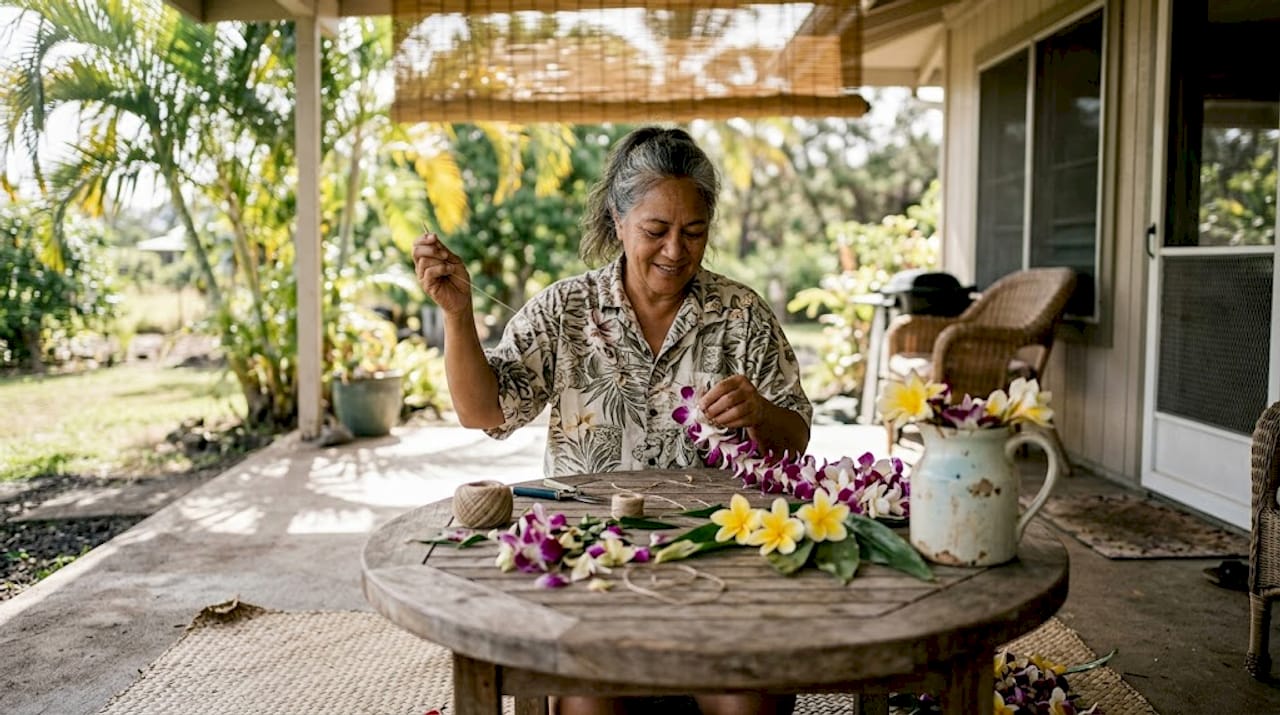
TL;DR:
- Authentic, community-rooted experiences in Hawaii lead to higher visitor satisfaction and lasting memories.
- Genuine attractions foster deeper emotional connections, better education, and increased repeat visits.
- Supporting local culture through responsible tourism benefits communities and enhances family travel experiences.
Most visitors assume that a great attraction needs to be carefully staged to be truly entertaining. But research tells a different story. Authentic, locally driven experiences consistently deliver higher satisfaction and more lasting memories than polished, over-commercialized alternatives. And 73% of travelers want their spending to genuinely benefit local communities. For families and tourists visiting Hawai’i, this is powerful news. It means the most unforgettable experiences you can find on the islands are also the ones rooted in real culture, real stories, and real people. 🌺 This article breaks down exactly what authenticity means, why it matters, and how you can find it.
Table of Contents
- What makes an attraction authentic?
- The impact of authenticity on visitor experience
- Authenticity, community, and sustainable tourism in Hawaii
- How to spot and enjoy authentic attractions in Hawaii
- A fresh lens: The real value of authenticity in Hawaii
- Experience authentic Hawaii with Flight of Aloha
- Frequently asked questions
Key Takeaways
| Point | Details |
|---|---|
| Authenticity boosts satisfaction | Authentic attractions provide deeper, more lasting satisfaction and positive memories for tourists and families. |
| Supports sustainable tourism | Choosing genuine experiences helps preserve Hawaii’s culture and contributes to local economies and community well-being. |
| Families benefit from participation | Hands-on, immersive, and co-created activities lead to improved family well-being and more meaningful travel. |
| Spotting real experiences | Look for community-led, locally-rooted attractions to avoid staged or over-commercialized venues. |
What makes an attraction authentic?
Building on the importance of destination ethics, let’s unpack what authenticity actually means and how it transforms family visits.
Authenticity in tourism is not just a buzzword. It has two meaningful forms that researchers have studied closely.
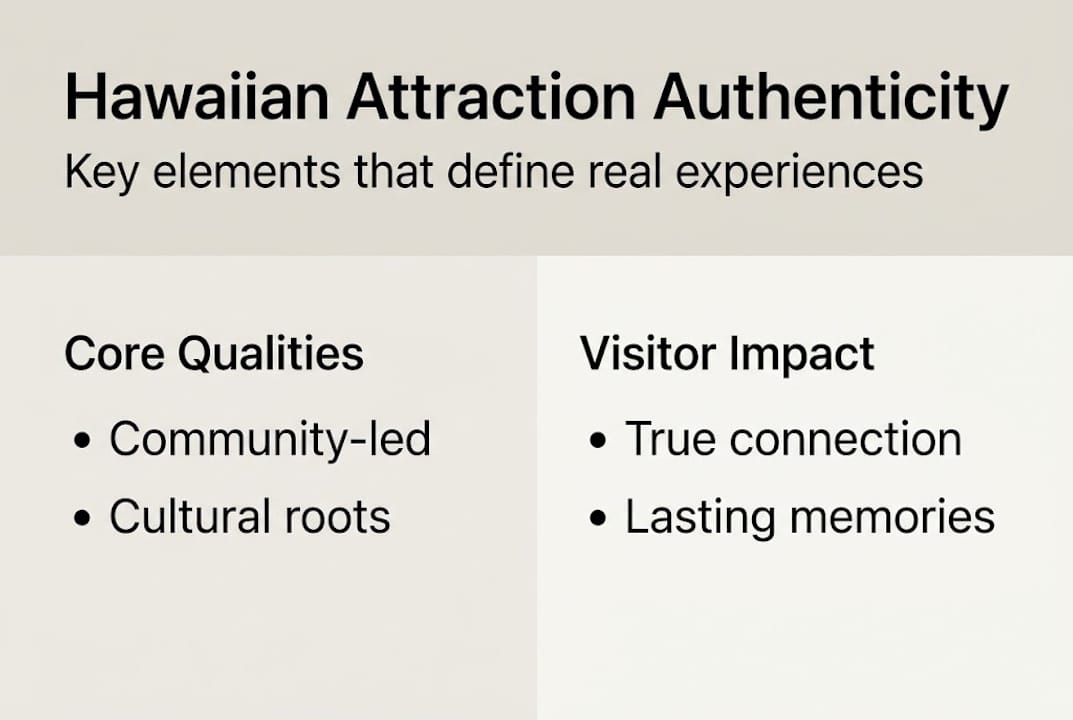
- Object-related authenticity refers to the genuine, original nature of the attraction itself. Think traditional Hawaiian chants performed by Native Hawaiian practitioners, or a cultural site that has remained untouched by commercial renovation.
- Existential authenticity refers to how you feel during the experience. It’s that moment when you stop being a tourist and start feeling truly connected to a place and its people.
Both types matter deeply. Object-related and existential authenticity positively affect place identity and dependence, which then leads to outcomes like loyalty and sustainable tourism. In plain terms: when an attraction feels real, visitors come back, recommend it, and care about protecting it.
Here’s a quick comparison to make this crystal clear:
| Feature | Staged attraction | Authentic attraction |
|---|---|---|
| Cultural content | Manufactured for tourists | Rooted in living tradition |
| Local involvement | Minimal or decorative | Central and community-led |
| Visitor emotional impact | Surface-level fun | Deep, lasting connection |
| Long-term loyalty | Lower | Significantly higher |
| Benefit to local economy | Often limited | Directly flows to community |
For families, this difference is enormous. A staged luau might look impressive in photos. But an experience grounded in real Hawaiian legends, performed or created by people who carry those stories in their families, leaves children and adults with something far more powerful: a genuine memory.
“The best souvenir a family can bring home from Hawai’i isn’t something you buy. It’s a story you lived.”
Exploring the Hawaiian themed attraction history helps you understand how deeply rooted culture has shaped the island’s best experiences. And when you look at modern Hawaiian cultural entertainment, you can see how that history is being honored and reimagined today.
The impact of authenticity on visitor experience
With the foundations clear, let’s see how authenticity tangibly shapes visitor experiences and family memories.
Researchers have measured the effect of authenticity on tourism outcomes with real numbers, and the results are striking. Perceived authenticity significantly enhances visitor experience quality across four dimensions: entertainment (R²=0.141), esthetics (R²=0.349), education (R²=0.278), and escapism (R²=0.212). Most impressively, it accounts for overall satisfaction at R²=0.650. That means authenticity alone explains more than 65% of how satisfied a visitor feels.
For families, this plays out across all four experience dimensions:
- Entertainment: A genuinely performed traditional dance or a flying theater experience grounded in real Hawaiian legends is simply more exciting than a scripted tourist show.
- Esthetics: Authentic environments, from volcanic landscapes to traditional architecture, are more visually stunning and emotionally resonant than manufactured backdrops.
- Education: Children absorb cultural lessons far more readily when those lessons are alive, not displayed behind glass. Stories told by people who believe them become memories that last.
- Escapism: True immersion in a living culture lets families genuinely step outside their everyday lives, which is exactly what a great vacation should do.
Existential authenticity is especially important here. When you personally connect with a place, your well-being improves. You feel more present, more alive, and more grateful. That’s not a vague feeling. Research backs it up.
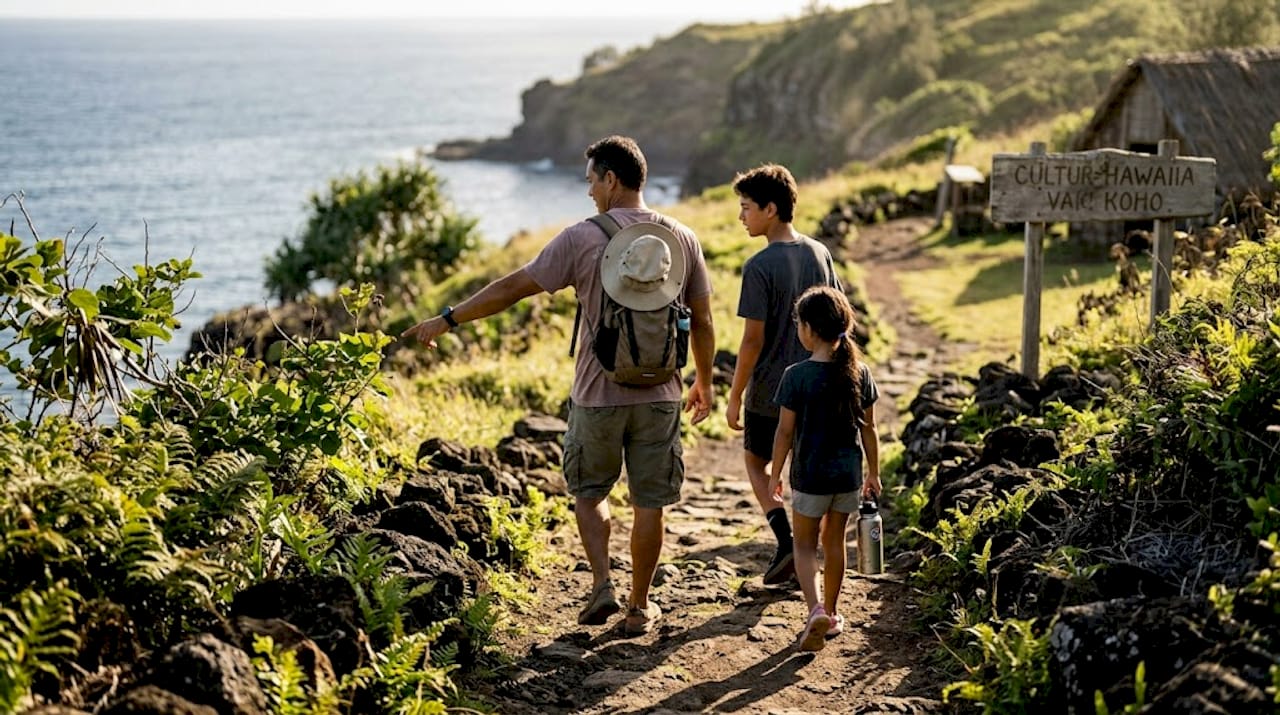
Pro Tip: When choosing family-friendly cultural attractions in Hawai’i, ask whether local community members are directly involved in the experience. That single question will guide you toward the most rewarding options every time.
Attractions that score high on authenticity also tend to offer better visitor immersion tips and richer cultural storytelling, making every dollar of your travel budget feel well spent.
Authenticity, community, and sustainable tourism in Hawaii
Let’s connect authenticity’s personal value to its broader community impact and see how Hawaii leads by example.
Authenticity is not just good for your vacation. It is good for Hawai’i itself. When visitors seek out genuine, community-rooted experiences, their spending flows directly to local families, artists, cultural practitioners, and small businesses. This creates a cycle of sustainability that benefits everyone.
73% of travelers want their spending to benefit local communities. That number shows just how much modern tourists care about making a positive impact. Hawai’i has responded with some forward-thinking approaches:
- Community control: Many of Hawaii’s most authentic cultural experiences are owned and operated by Native Hawaiian families and organizations, keeping cultural knowledge and economic benefit within the community.
- Pono pledges: Visitors are encouraged to travel pono, which means righteously or responsibly in Hawaiian. This includes respecting sacred sites, buying local, and engaging with culture humbly.
- Local storytelling: The most respected Hawaiian attractions prioritize cultural storytelling that reflects real traditions, real histories, and real people, not a sanitized tourist version.
When you choose authentic experiences, you also enjoy real benefits of community events that go far beyond entertainment. You strengthen local economies, preserve endangered cultural practices, and show your children what responsible travel looks like.
Pro Tip: Before booking any attraction in Hawai’i, check whether the business is locally owned or affiliated with a Native Hawaiian cultural organization. This simple step ensures your vacation dollars support the people whose culture you’re celebrating.
Stat to know: The majority of global travelers in 2026 actively prioritize community benefit when choosing where to spend, making authentic tourism one of the fastest-growing travel categories worldwide.
How to spot and enjoy authentic attractions in Hawaii
Now, let’s get practical: here’s how you can find and fully enjoy Hawaii’s authentic attractions as a family.
Co-creation behaviors, like hands-on participation, significantly improve family tourists’ well-being and satisfaction. In other words, the more actively your family engages with an experience, the more you’ll get out of it. Here’s how to find and maximize that kind of experience:
- Look for community-led programming. Authentic attractions are typically created and run by people from the culture they represent. If the staff and storytellers are local, that’s a great sign.
- Prioritize hands-on participation. Activities where your family gets to do something, weave, chant, create, or interact directly with cultural elements, deliver far greater satisfaction than passive observation.
- Read the story behind the experience. Genuine attractions can tell you exactly where their cultural content comes from. If the background is vague or purely commercial, be cautious.
- Avoid attractions that feel like theme parks with a Hawaiian veneer. Flashing lights and generic island music are not the same as authentic culture. Look for depth, not decoration.
- Ask locals for recommendations. Residents know which experiences truly respect Hawaiian culture and which ones are built purely for profit.
“Authenticity isn’t about perfection. It’s about truthfulness. The best experiences in Hawai’i are honest about where they come from.”
Exploring family Hawaiian storytelling highlights is a wonderful starting point. You’ll also find rich options among Kona visitor cultural experiences that blend genuine tradition with family-friendly adventure. And for ideas on how to make family event value tips work for your trip planning, a little research goes a long way. 🌌
A fresh lens: The real value of authenticity in Hawaii
With practical steps in hand, let’s consider a deeper perspective on what authenticity truly means for visitors and families.
Here’s something most travel guides won’t tell you: staged entertainment doesn’t fail because it’s fake. It fails because it’s finished. It has no room for you. Authentic experiences, on the other hand, are alive. They grow and shift with every person who participates in them.
This is why authenticity is not a fixed tourist product. It is an evolving local reality. When families participate actively in a cultural experience, they become part of the story, not just spectators of it. That’s a profound shift. Your children don’t just watch a Hawaiian legend. They feel it, ask questions about it, and carry a piece of it home.
We also think specificity in marketing matters enormously here. Attractions that vaguely claim to be “authentic Hawaiian” without explaining how or why are often the ones that fall short. Look for places that can tell you specifically whose traditions they honor, which legends they draw from, and how cultural entertainment choices connect to living Hawaiian communities. That specificity is the real signal of integrity.
Authenticity is not a checkbox. It’s a relationship between a place, its people, and the visitors brave enough to show up with genuine curiosity.
Experience authentic Hawaii with Flight of Aloha
Ready to apply what you’ve learned? Here’s how you can actually experience authenticity in Hawaii.
At Flight of Aloha, we’ve built something that honors everything this article explores. Think of us as what happens when a helicopter tour and a Disney ride have a baby, rooted in aloha. Our immersive flying theater in Kailua-Kona blends breathtaking 8K visuals, motion effects, island scents, and wind to carry you over Hawai’i’s most stunning landscapes. 🌺 But what sets us apart is the heart behind every frame: real Hawaiian legends, real cultural storytelling, and a deep respect for the traditions that make these islands sacred.

Whether you’re visiting for the first time or you’ve been coming to Kona for years, Flight of Aloha offers an experience that is genuinely immersive, culturally grounded, and unforgettable for the whole family. Come soar with us.
Frequently asked questions
How can families identify authentic attractions in Hawaii?
Families can look for community-led events, hands-on participation, and clear connections to local culture. Co-creation behaviors like active participation are proven to moderate satisfaction and well-being for family tourists, making involvement the clearest sign of a genuinely authentic experience.
What are the main benefits of authentic attractions for tourists?
Authentic attractions increase satisfaction, create meaningful memories, support local economies, and enhance well-being. Perceived authenticity explains over 65% of overall visitor satisfaction, and travelers prioritize experiences where spending benefits local communities.
How does Hawaii promote authenticity in its attractions?
Hawaii promotes authenticity through community ownership, pono pledges encouraging responsible travel, and prioritizing local cultural storytelling. Community control and pono pledges are key strategies Hawaii uses to counter the erosion of authenticity that comes with over-commercialization.
What is ‘existential authenticity’ and why does it matter?
Existential authenticity is the personal, immersive feeling of genuine connection you experience at a meaningful attraction. Existential authenticity improves family tourists’ well-being and is especially powerful when visitors participate actively rather than observe passively.
Recommended
- How Local Legends Transform Hawaii’s Tourism Experience | Flight Of Aloha
- Understanding What Makes Hawaii Immersive Experiences Special | Flight Of Aloha
- Cultural Storytelling In Attractions: Hawaiian Impact | Flight Of Aloha
- How To Combine Attractions For A Unique Hawaiian Adventure | Flight Of Aloha
- Set Sail with Confidence: Boat Insurance in Hawaii by DiamondBack Insurance – Diamondback Insurance – Solutions with Instant Online Quotes