
Step-by-Step Sensory Ride Guide for Flight of Aloha
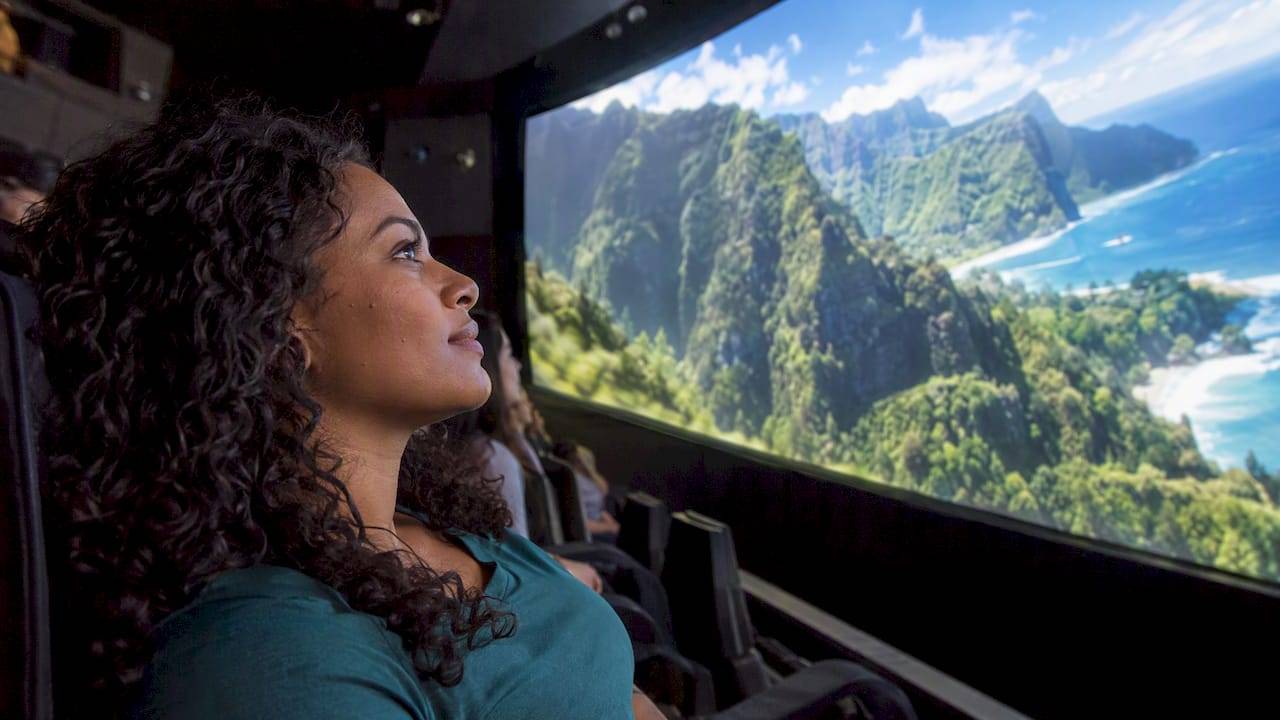
A sensory ride guide answers one question before you buy a ticket: what will my body actually feel? Here is the short version for Flight of Aloha. You sit in a climate-controlled theater, the seat moves gently, and you feel wind, catch island scents and watch 8K views of Hawaii fill your sight. Below, we walk you through every step, from prep at home to the moment you step back outside, so nobody in your group gets a surprise.
We are a Native Hawaiian-owned flying theater with two homes: Kailua-Kona on the Big Island and Whalers Village in Kaanapali, Maui. Families, cruise visitors and sensory-sensitive guests ask us the same thing all the time: is this going to be too much? This guide is our honest answer.
TL;DR
- Flight of Aloha is an indoor, air-conditioned, seated flying ride with motion, wind, scent and 8K film. Nobody climbs, drops or spins.
- Preview first. Tell your child or sensitive guest what they will see, hear, feel and smell, because that preparation is the single biggest help.
- Pick your film by mood. Single features run $29.99–$34.99, the Double Feature $49.99–$59.99.
- Our Kona location is walking distance from Kailua Pier, so it fits a cruise tender day. Kaanapali is at Whalers Village.
- Book online to secure your seat.
What a sensory ride actually means
A sensory ride engages more than your eyes. Ours layers five things: giant 8K imagery, sound, a moving seat, a breeze on your face and island scents. The point is that your body believes, for a few minutes, that you are gliding over a ridgeline or a waterfall.
For most guests that is pure joy. For some, it is a lot. Sensory processing differences are estimated to affect roughly 5 to 16 percent of the general population and are common among people with autism or ADHD. If you are traveling with a child who covers their ears at fireworks, or an adult who dislikes sudden gusts, planning ahead matters more than any ride rating.
We built this guide around three plain ideas:
- Know what is coming.
- Choose what suits your group.
- Keep an exit plan, even if you never use it.
Step 1: Preview the experience at home
The research is consistent on this point. Occupational therapy work on theme park stress describes pre-visit preparation, such as watching videos and rehearsing the day, as a core way to help children cope with overwhelming stimulation. Clear expectations about what they will see, hear and feel lower anxiety.
Here is a simple prep routine for the week before:
- Show the film topic. Look at photos of the island scenery with your child. Naupaka, for instance, follows a Hawaiian legend, so you can tell the story at bedtime.
- Make a visual schedule. Draw or print four boxes: walk to the theater, sit down, fly, come outside for a treat.
- Practice the vocabulary. “Wind on my face.” “The seat moves a little.” “It smells like flowers.”
- Agree on a signal. A raised hand or a squeeze means “I need a break.”
We also keep a longer walkthrough in our step-by-step immersive ride prep guide if you want a checklist to print.
Step 2: Decide whether the ride fits your guest
The most useful accessibility advice in amusement research is simple: clear communication about what a ride requires lets guests choose for themselves. So here are our facts, plainly.
- Setting: fully indoors and climate-controlled.
- Seating: you ride seated, the whole time.
- Motion: gentle flying motion that matches the film, not a coaster.
- Effects: wind, scents and, at our Maui location, ocean mist.
- Age: the Maui location lists ages 3 and up. Check with our team about your specific Kona visit.
- Time: the core visit at Maui runs about 25 to 45 minutes, including arrival.
If a family member has a height or body-size question about rides in general, it helps to learn how other parks set limits. This explainer on ride height requirements shows how those numbers shape a family’s day, and it is a good habit to ask about any attraction before you queue.
For wheelchair users, guests with mobility needs or cognitive differences, read our accessibility workflow for guests. When in doubt, call ahead. A short conversation beats a stressful guess.
Step 3: Pick the film that matches the mood
Not every flight feels the same. Here is how we would match them to your group.
| Film | Feel | Best for | Price |
|---|---|---|---|
| Naupaka | Legend-driven, emotional, island scenery | Families who like a story | $29.99–$34.99 |
| Lahaina | Cultural and place-focused | Guests curious about Maui history and beauty | $29.99–$34.99 |
| Europe | Sweeping scenery beyond the islands | Travelers who want something different | $29.99–$34.99 |
| Double Feature | Two films back to back | Thrill seekers and repeat visitors | $49.99–$59.99 |
Our advice for sensory-sensitive guests: start with a single feature. If everyone loves it, you can always return, and the Annual Pass at $200 per year makes repeat visits easy for locals and long-stay guests. A first Double Feature is a big commitment if you do not yet know how your child handles wind and motion.
Step 4: Plan your arrival
A calm arrival sets up a calm ride. Think about three things.
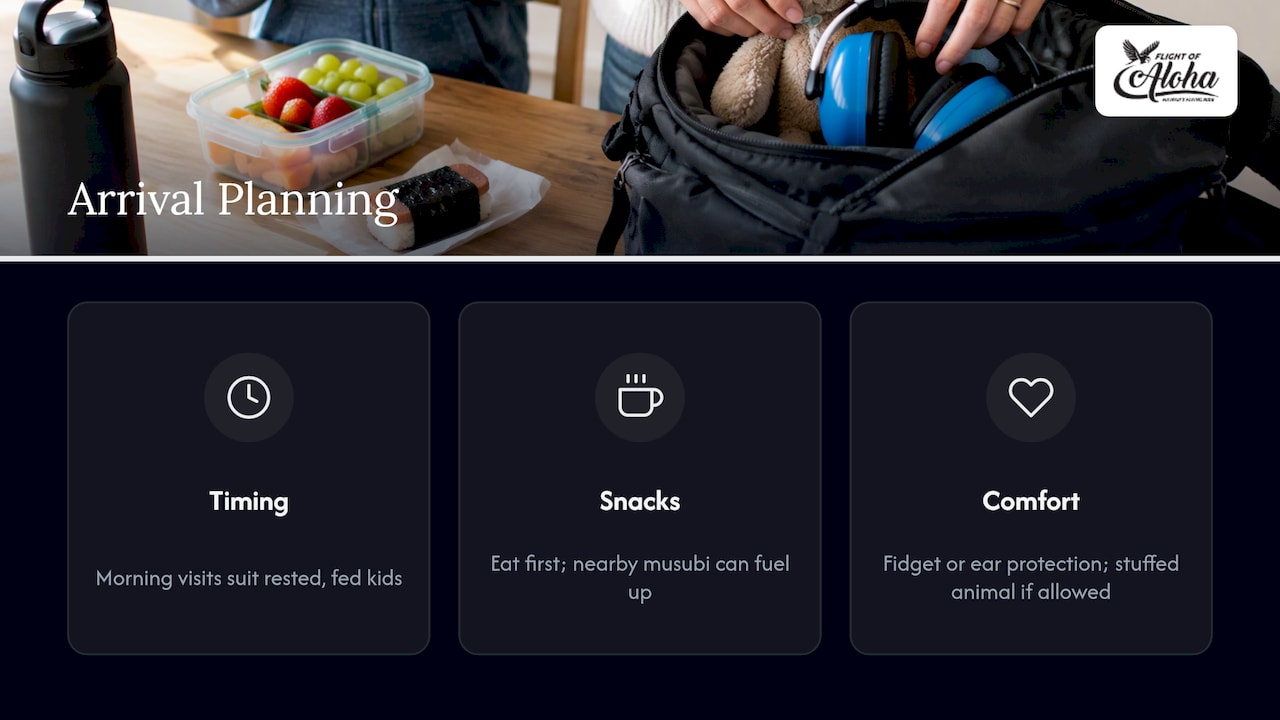
Timing. Morning visits tend to feel easier for most kids, who are rested and fed. Avoid scheduling your flight right after a long, hot beach session when everyone is tired.
Energy and snacks. Eat first. A hungry child has less patience for anything new. A musubi from a nearby shop is a very Hawaii way to fuel up.
Comfort items. Bring what soothes: a small fidget, a favorite stuffed animal if the seat allows it, or ear protection if loud sound bothers your guest. Guidance for families visiting parks often lists a favorite device or comforting activity among the things to pack, plus visual schedules and a meeting spot.
In Kailua-Kona
Our Kona theater is walking distance from Kailua Pier, the tender landing in the middle of town. Ships anchor in Kailua Bay and tender passengers to the pier, right next to Ali’i Drive, so a short stroll gets you from the dock to a cool seat. That makes us a natural quick shore excursion. Leave a comfortable buffer for tender lines, which get long on multi-ship days.
In Kaanapali
Our Maui location sits on the upper level of Whalers Village, 2435 Kaanapali Parkway, Suite H-14, toward the beachwalk. Parking is validated for two hours. Because the Maui location has been in an opening phase, confirm hours and availability on our site before you head over.
Step 5: The ride, moment by moment
Here is what your body will go through, in order. Read this aloud to your child if it helps.
- Settling in. You sit down and your seat is secured. The room is cool and the lights are low. This is a good time for a deep breath.
- The film begins. The screen fills your whole view with 8K imagery of Hawaii. Sound comes up with it. If the visuals feel too wide, looking slightly down at your lap for a few seconds gives your eyes a rest.
- First movement. The seat starts to tilt and sway with the camera. It is a flying feeling, much smoother than a carnival ride.
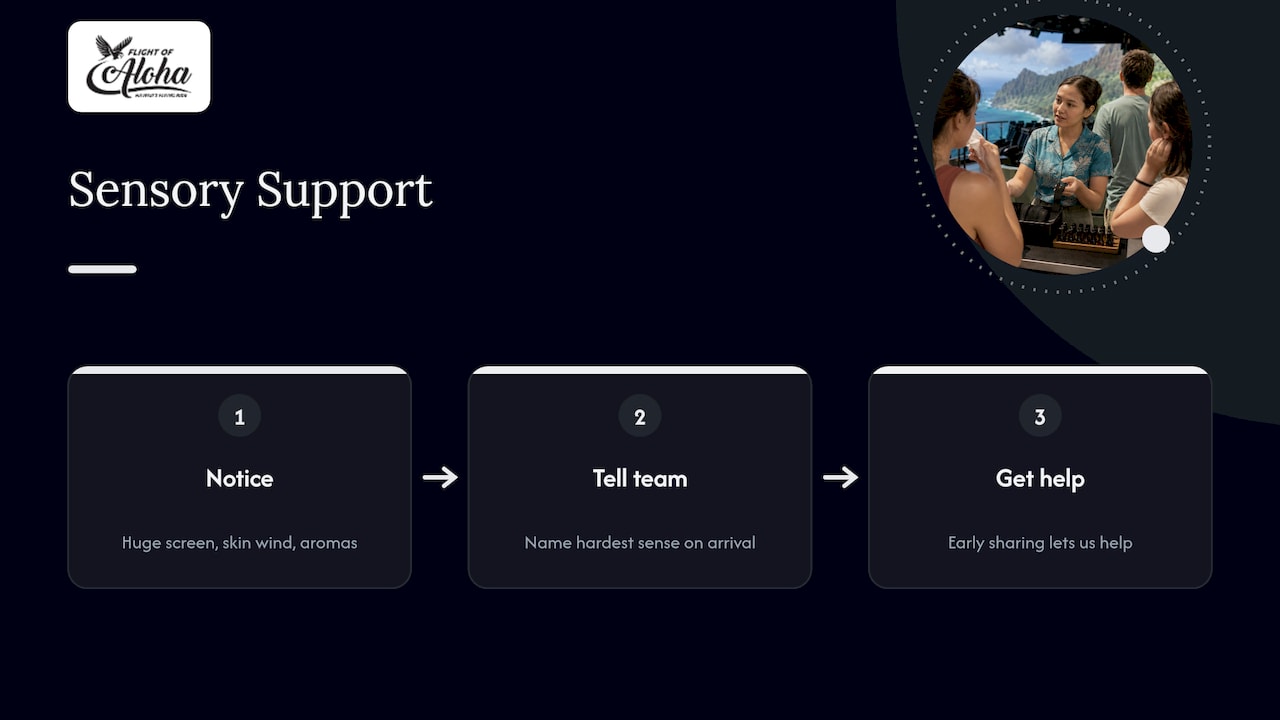
- Wind and scent. A breeze touches your face as you glide over ridgelines and coastline. Scents arrive at story moments, such as ocean air or flowers. These are the most unusual sensations for first-timers, so mention them in your preview.
- Quiet stretches. Films move between big views and calmer moments. Tell your child there will be slow parts too.
- Landing. The film ends, the lights come up and the seat settles. Give everyone a minute before standing.
Which sense is the loudest?
For most guests it is sight, because the screen is huge and sharp. For guests who dislike air on their skin, it is the wind. For guests with scent sensitivities, it is the aromas. Know which sense your person finds hardest and tell our team when you arrive. Speaking up early lets us help you.
Step 6: Recover and reflect
After the ride, plan something low-stimulation. Sit in the shade, drink water, and talk about the best part. Kids often want to relive it, and describing the moment in their own words builds confidence for next time.
Here are good after-ride ideas for each location:
- Kona: a slow walk along Ali’i Drive and a shave ice in the shade.
- Kaanapali: a stroll along the beachwalk, which is steps from Whalers Village.
If the ride was a hit, our post on benefits of sensory attractions explains why these experiences resonate so strongly with visitors.
Why we are the smart alternative to a helicopter tour
Many visitors tell us they wanted a helicopter tour but worried about price or motion sickness. A helicopter flight can cost around $400 per person. A single Flight of Aloha ticket costs $29.99–$34.99. You see sweeping island views, feel the wind and stay seated indoors, with no weather cancellations to worry about. For sensory-sensitive guests, the predictability of a seated, indoor ride is a real advantage over a small cabin with engine noise and vibration.
A rainy day, a hot day or a vog day
Hawaii weather changes fast. If it is pouring in Kona or Kaanapali, or the heat and vog are making the beach miserable, we are your cool, dry plan. The theater is air-conditioned, and we think it is the best AC in town. Sensory-sensitive kids often struggle in heat, so a cool room can make a big difference to the whole day.
Perspective: what we have learned about sensory guests
We built Flight of Aloha so that anyone could feel what it is like to soar over these islands. We are Native Hawaiian-owned, and we work with local advisors and storytellers, so every film begins with a story that matters. We believe aloha means making room for everyone.
That is why we talk so openly about what the ride feels like. Guests who know what is coming almost always enjoy it more. We would rather you read this guide, decide the ride is not right for today, and come back another time than push through a hard moment. Ask our team anything. Most questions we get are about wind, scent and motion, and we are glad to answer every one.
— Ola
Make your flight
Ready to pick your film? Our single features start at $29.99, the VIP Package runs $69.99–$79.99 for guests who want a more special visit, and our Gift Card is a lovely present for a family planning a Hawaii trip. For more ideas on kid-friendly options, see our picks for enjoying rides with children and multisensory rides for families.
FAQ
Is Flight of Aloha too intense for a child with sensory sensitivities?
It depends on the child, which is why we suggest previewing. The ride is seated, indoors and gentle compared with a coaster, but it does include wind, scent, sound and motion. Start with a single feature and talk through each effect beforehand.
Does the ride make you motion sick?
The motion is a smooth tilt and sway that follows the film, and you stay seated. Many guests who avoid helicopters because of motion sickness enjoy it. If you are prone to nausea, eat lightly beforehand and look slightly down if you need a break.
Is it a good option for a cruise stop in Kona?
Yes. Ships tender passengers to Kailua Pier, and our Kona theater is walking distance away. A single feature fits comfortably into a short shore visit, as long as you allow time for tender lines.
Where are your locations?
We are in Kailua-Kona on the Big Island and at Whalers Village in Kaanapali, Maui, on the upper level toward the beachwalk. Check our site for current hours at each location.
Book online to secure your seat.
Sources
- Sensory processing prevalence, SOAR at the University of St. Augustine
- Helping Children Cope With Sensory Overstimulation at Theme Parks
- Disability and participation in amusement attractions
- Accessibility in theme parks: how well are theme parks across America accommodating individuals with disabilities?
- Kailua-Kona Cruise Port Guide
- Ride height requirements explainer