
What Is Dynamic Ride Technology? 🌺 A Full Explainer
Dynamic ride technology is defined as an adaptive suspension system that continuously adjusts damping forces in real time to improve vehicle stability, comfort, and safety based on changing road or terrain conditions. The industry standard term for this is active damping control, and it powers everything from Ferrari sports cars to immersive flying theater attractions. At its core, the system reads sensor data hundreds to thousands of times per second and responds faster than any human reflex. Whether you’re researching how theme parks create breathtaking ride sensations or how modern vehicles handle rough terrain, understanding dynamic ride systems unlocks the engineering magic behind both.
What is dynamic ride technology and how does it work?
Dynamic ride technology works by combining magnetorheological (MR) fluid dampers, high-speed sensors, and real-time software to adjust suspension behavior in milliseconds. Think of it as a suspension system that thinks for itself, reading the road ahead and reacting before you even feel a bump.
Here’s what makes up the core system:
- Magnetorheological fluid dampers: These contain iron particles suspended in oil. When a magnetic field is applied, the fluid stiffens almost instantly, changing the damper’s resistance. MR fluid changes viscosity in milliseconds with no mechanical wear, which is a major reliability advantage over older hydraulic systems.
- Sensor fusion: Modern systems pull data from wheel accelerometers, inertial measurement units (IMUs), radar, and cameras simultaneously. BWI Group’s MagneRide uses this multi-sensor approach to anticipate road conditions rather than simply react to them.
- Real-time processing: The onboard electronic control unit (ECU) processes all incoming data and sends adjustment commands continuously. Leading systems like 4th-gen MagneRide adjust damping up to 1,000 times per second, meaning the system recalibrates faster than a human blink.
- Software calibration: The suspension’s behavior is tuned entirely through software. Fully software-controlled suspension allows engineers to update ride characteristics without changing a single physical component.
The system balances two competing demands at once: controlling large body motions like pitch and roll during cornering, and absorbing small, rapid wheel vibrations from road texture. Getting both right simultaneously is what separates a great dynamic ride system from a basic one.
Pro Tip: When evaluating any dynamic ride system, ask how many sensor types it fuses. A system using only wheel accelerometers is reactive. One combining IMU, radar, and cameras is predictive. Predictive systems deliver noticeably smoother experiences.
How dynamic ride systems compare across automotive, off-road, and marine uses
The same core principles apply across very different environments. Here’s how three major application domains stack up:
| Application | System | Adjustment Speed | Key Benefit |
|---|---|---|---|
| Automotive | BWI Group MagneRide | 1,000 times/second | Balances comfort and handling on paved roads |
| Off-road | Polaris Dynamix DVS | 200 times/second | Adapts to unpredictable terrain in real time |
| Marine | Seakeeper Ride | 100 times/second | Eliminates up to 70% of pitch and roll underway |
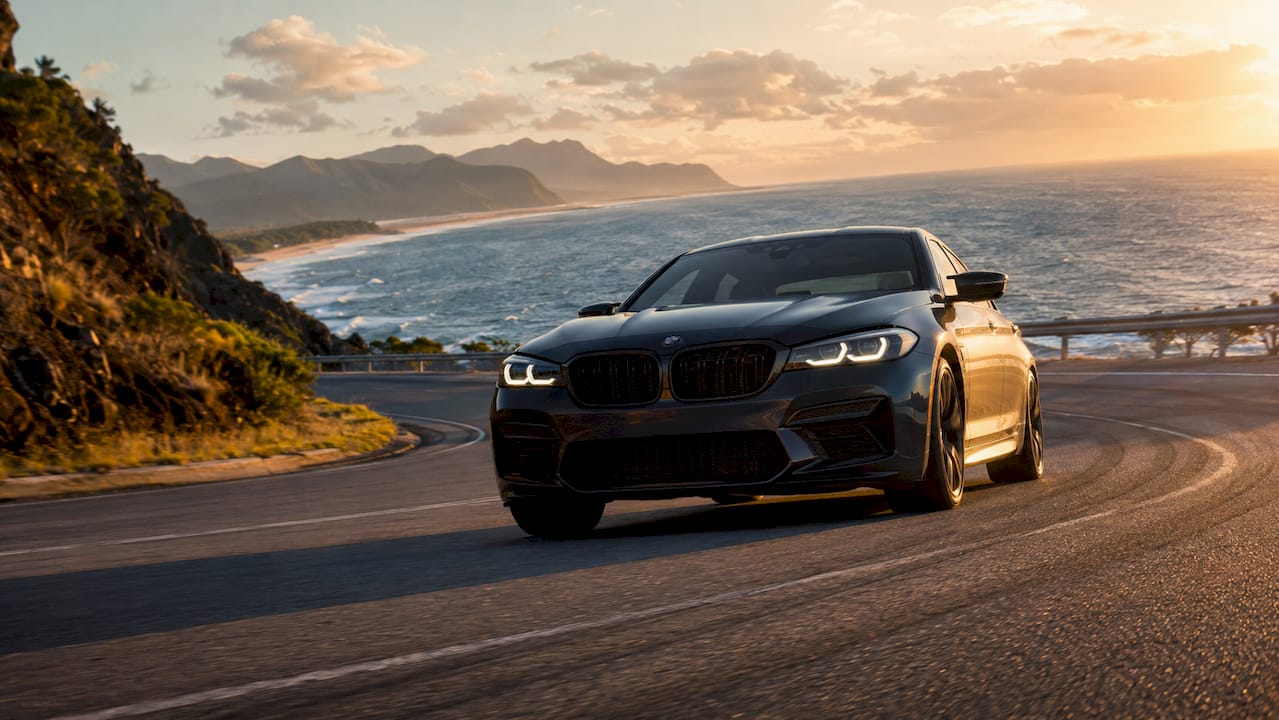
Automotive: Audi’s Dynamic Ride Control and BWI Group’s MagneRide are the most widely deployed examples. MagneRide has been licensed to Ferrari, Chevrolet, and Cadillac, making it one of the most influential suspension technologies in automotive history. The system’s ability to shift between a soft, comfortable setting and a firm, sporty one within a single wheel rotation is what makes it so versatile.
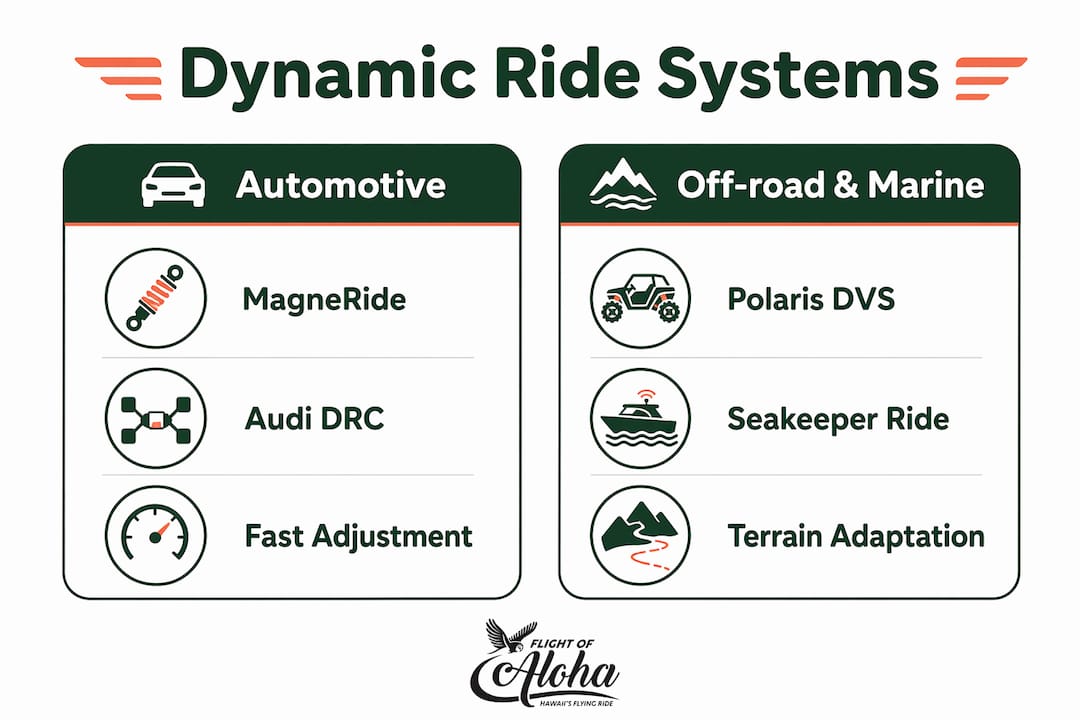
Off-road: Polaris Dynamix DVS adjusts damping 200 times per second based on real-time driver input and terrain feedback. That speed matters enormously on rocky trails where conditions change every fraction of a second. The system also reads throttle position and steering angle, so it anticipates aggressive driving inputs before the chassis reacts.
Marine: Seakeeper Ride takes a different mechanical approach. Instead of fluid dampers, it uses sensor-driven rotary blades. Seakeeper Ride’s blades deploy at 300mm per second, eliminating up to 70% of pitch and roll while the boat is underway. This is predictive motion control applied to an entirely different physics problem, and it works remarkably well.
What are the advantages of dynamic ride systems for safety and comfort?
The dynamic ride technology benefits go well beyond a smoother drive. Here is what these systems actually deliver:
- Active safety: By stiffening dampers during hard cornering or emergency braking, the system keeps the vehicle body flat and tires in firm contact with the road. This directly improves steering response and reduces rollover risk.
- Comfort without compromise: Traditional suspension design forces engineers to choose between a soft, comfortable ride and a firm, responsive one. Dynamic systems eliminate that trade-off entirely by switching modes in real time.
- Reduced fatigue: Passengers in vehicles with active damping report significantly less physical fatigue on long trips, because the system absorbs micro-vibrations that rigid suspensions transmit directly to the seat.
- Immersive entertainment applications: Dynamic ride tech enhances immersive attractions by coordinating motion with visual media to increase realism and reduce motion sickness. When the motion platform moves in sync with an 8K screen showing a sweeping aerial view, the brain accepts the experience as real.
- Accessibility: Smoother, controlled motion makes ride experiences accessible to guests who might otherwise struggle with aggressive mechanical thrills, including older visitors and families with young children.
The entertainment application deserves special attention. When motion is synchronized precisely with visual content, the human vestibular system and visual cortex align, creating a sensation of genuine movement. This is why immersive ride films feel so convincing. The technology does not just add excitement. It removes the discomfort that breaks immersion.
What are the latest innovations in dynamic ride technology?
The industry is moving fast, and the direction is clear: from reactive systems to fully predictive architectures. Here are the most significant developments shaping the next generation of dynamic ride experiences:
- Predictive sensor fusion: Modern systems integrate data from IMUs, radar, and cameras to build a real-time model of the road ahead. Sensor fusion and digital twin concepts allow the ECU to act on conditions before the wheel even contacts them.
- Elimination of mechanical complexity: Magnetorheological dampers eliminate mechanical flow channel complexity, which dramatically improves durability. Fewer moving parts means fewer failure points and longer service intervals.
- Software-first development: Engineers now tune suspension behavior through software updates rather than physical hardware swaps. This speeds up development cycles and allows manufacturers to push performance improvements to existing vehicles over the air.
- Autonomous vehicle integration: Self-driving platforms need suspension systems that respond to navigation data, not just road feel. Dynamic ride systems are being integrated with route planning software so the car can pre-stiffen dampers before a known curve.
- Entertainment and themed attraction expansion: Motion platforms in theme parks are adopting the same sensor fusion and predictive control principles used in automotive systems, creating ride sensations that feel genuinely physical rather than mechanical.
Pro Tip: Watch for the term “digital twin” in suspension technology announcements. When a manufacturer uses it, they’re describing a system that models the vehicle’s dynamics in real time inside the ECU. That’s the clearest signal that a system is truly predictive, not just fast-reactive.
How dynamic ride technology powers immersive theme park experiences
The connection between automotive suspension engineering and theme park attractions is more direct than most people realize. Both solve the same problem: how do you create a physical sensation that matches what a person sees and expects to feel?
In immersive flying theaters and ride film attractions, dynamic ride systems generate the physical sensations that make aerial footage feel like actual flight. The motion platform reads the film’s content frame by frame and adjusts pitch, roll, and heave in sync. When the screen shows a banking turn over a volcanic coastline, the seat tilts to match. The result is a full-body experience that no screen alone can replicate.
Key ways dynamic ride technology shapes the theme park experience:
- Synchronized motion: Platforms adjust hundreds of times per second to match on-screen movement, eliminating the lag that causes motion sickness.
- Scent and wind integration: Advanced attractions layer wind speed changes and scent releases on top of motion cues, creating multi-sensory immersion that reinforces the physical sensation.
- Thrill calibration: Software control means operators can dial the intensity up or down for different audiences, from families with young children to thrill-seeking adults.
- Accessibility by design: Smooth, controlled motion profiles make experiences available to guests who cannot handle traditional roller coasters, broadening the audience significantly.
Flightofaloha’s attraction in Kailua-Kona is a vivid example of these principles in action. The experience blends 8K visuals with motion effects, scents, and wind to simulate soaring over Hawai’i. Ride films like Naupaka and Lahaina use precisely timed motion to place guests inside the story, not just in front of it. You can learn more about how themed Hawaiian ride attractions use this technology to honor real cultural stories.
Key takeaways
Dynamic ride technology is most powerful when it combines predictive sensor fusion with magnetorheological dampers and software-controlled calibration, delivering real-time comfort, safety, and immersive experiences across automotive, off-road, marine, and entertainment applications.
| Point | Details |
|---|---|
| Core mechanism | MR fluid dampers adjust viscosity in milliseconds using magnetic fields, with no mechanical wear. |
| Processing speed | Leading systems like MagneRide recalibrate damping up to 1,000 times per second for optimal response. |
| Predictive control | Sensor fusion from IMUs, radar, and cameras lets systems act before passengers feel any motion. |
| Entertainment impact | Synchronized motion platforms use the same principles to create immersive, nausea-free ride film experiences. |
| Software advantage | Suspension behavior is tuned via software updates, enabling rapid refinement without hardware changes. |
Why dynamic ride tech changed how I think about immersive experiences
From Ola, Flightofaloha
I spent years thinking about ride technology purely through the lens of vehicles. Smoother highways, better handling on mountain roads. Then I started paying attention to what was happening inside immersive attractions, and it reframed everything.
The real insight is this: the engineering challenge in a Ferrari with MagneRide and a flying theater in Kona is identical. Both systems ask the same question. How do you make a body feel exactly what it should feel, at exactly the right moment? The answer in both cases is the same. Predictive control, sensor fusion, and software that moves faster than human perception.
What strikes me most is how the shift from reactive to predictive systems changes the human experience. A reactive system catches up to reality. A predictive system creates it. That difference is everything in entertainment. When a motion platform anticipates the next frame of a film and adjusts before you consciously register the image, your brain stops analyzing and starts believing.
The attractions that get this right, like what Flightofaloha has built in Kailua-Kona, are not just rides. They are physical storytelling. The technology disappears, and what remains is the feeling of soaring over a volcanic coastline with the wind in your face and the scent of plumeria in the air. That’s what good dynamic ride engineering actually delivers.
— Ola
Experience dynamic ride technology at Flightofaloha

Flightofaloha is a Native Hawaiian-owned immersive flying theater located inside King Kamehameha’s Kona Beach Hotel, just a short walk from Kailua Pier and the cruise ship tender dock. The attraction combines 8K visuals, synchronized motion, wind, and scent to simulate soaring over Hawai’i in a way no helicopter tour can match, at a fraction of the cost and with zero motion sickness risk. It’s one of the top indoor activities on the Big Island, perfect for rainy Kona days, vog escapes, or a quick shore excursion between cruise stops. Families, solo travelers, and groups all leave with something unforgettable. Book your seat online and secure your spot before it fills up.
FAQ
What is dynamic ride technology in simple terms?
Dynamic ride technology is an adaptive suspension system that adjusts damping forces in real time using sensors and magnetorheological fluid dampers. It improves ride comfort, handling, and safety by responding to road or motion conditions faster than any mechanical system could manually.
How fast do dynamic ride systems adjust?
Leading systems like BWI Group’s 4th-gen MagneRide adjust damping up to 1,000 times per second. Off-road systems like Polaris Dynamix DVS operate at 200 adjustments per second, while marine systems like Seakeeper Ride make 100 predictive adjustments per second.
What are the main benefits of dynamic ride technology?
The primary advantages include improved vehicle stability, elimination of the trade-off between comfort and handling, reduced passenger fatigue, and enhanced immersion in entertainment applications. In theme parks, synchronized motion control also significantly reduces motion sickness.
How is dynamic ride technology used in theme parks?
Theme park motion platforms use the same sensor fusion and real-time damping principles as automotive systems to synchronize physical movement with on-screen visuals. This creates a convincing sensation of flight or movement that engages the vestibular system and makes the experience feel physically real.
What makes magnetorheological dampers better than traditional ones?
Magnetorheological dampers change fluid viscosity in milliseconds using a magnetic field, with no mechanical wear on moving parts. This makes them faster, more durable, and more precise than traditional hydraulic dampers, and their behavior can be tuned entirely through software updates.