Skip a $400 Helicopter: Hawaii Immersive Examples for Families
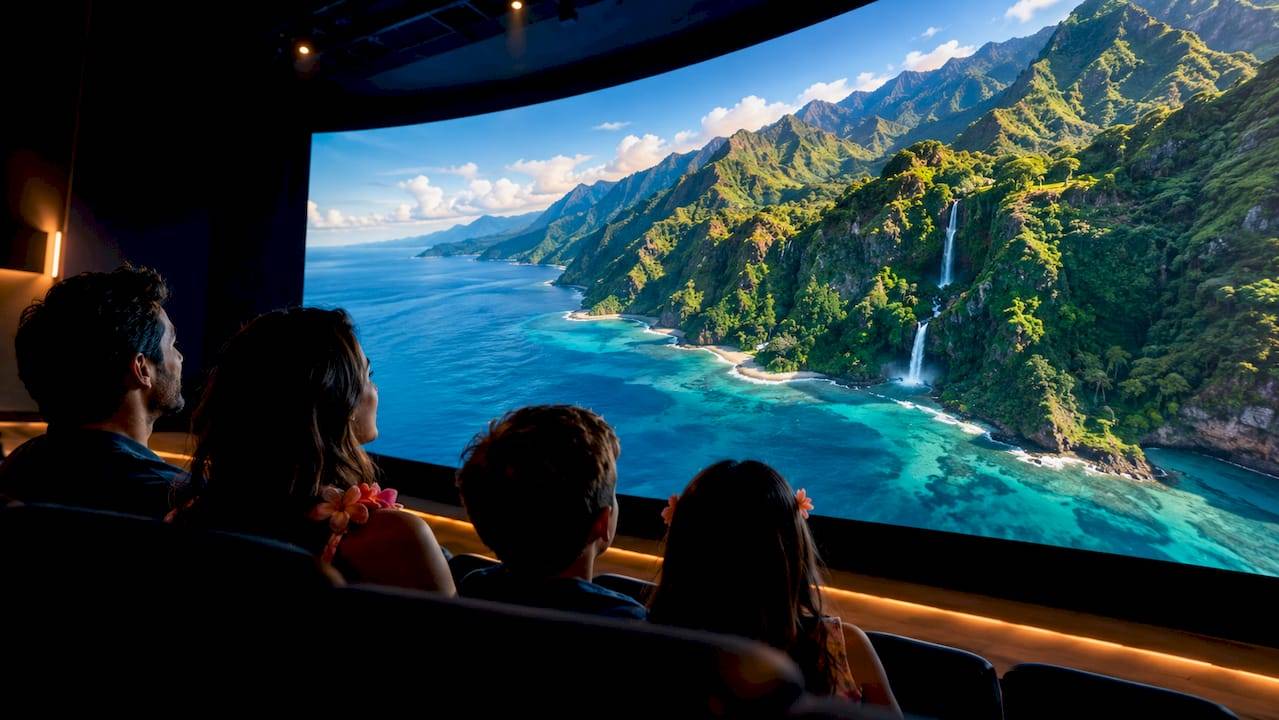
Real immersive marketing examples in Hawaii aren’t billboards or apps. They’re location-based attractions like flying theaters, VR bus tours, and cultural demonstrations that put you inside the story through motion, scent, and 8K visuals. Flight of Aloha, with locations in Kailua-Kona and Whalers Village Kaanapali, tops the list for families and cruise passengers who want an aerial Hawaii experience minus the helicopter price tag or the seasickness pills.
TL;DR:
- Indoor immersive attractions like Flight of Aloha offer a full sensory experience, combining 8K visuals, motion seats, scent, and wind effects to simulate flying over Hawaii.
- Native Hawaiian-owned sites with local cultural input provide authentic storytelling through hands-on activities, independent of high-tech visuals or motion.
- These indoor experiences are a weatherproof alternative to outdoor tours and helicopter rides, making them especially useful during vog, rain, or extreme heat.
- For cruise travelers with limited time, locations near piers and short session durations make immersive attractions a practical, risk-free option.
- Digital previews, AR, and VR marketing help generate interest and trust, serving as effective tools to encourage in-person visits to these immersive attractions.
What Makes an Attraction Truly Immersive in Hawaii
An immersive attraction does more than show you Hawaii. It puts Hawaii on you. That distinction separates a scenic drive-by from something like Flight of Aloha, where 8K visuals fill your entire field of view while MX4D Bantam Flying EFX seats pitch, tilt, and rumble in sync with the footage.
The full sensory stack usually includes a few core elements:
- Ultra high-resolution visuals large enough to fill peripheral vision, not just a screen in front of you
- Motion seating that mimics banking turns, sudden drops, and gentle glides over terrain
- Scent and wind effects timed to specific scenes, like salt air over the ocean or plumeria near a garden
- XR or VR staging that layers digital elements onto real or simulated environments
- Hands-on cultural activities where you do something rather than just watch it
Sensory tech only tells half the story, though. What separates a theme-park gimmick from a genuine cultural experience is who’s telling the story and why. Flight of Aloha is Native Hawaiian-owned, and its films, including “Naupaka” and “Lahaina,” draw on real legends developed with local cultural advisors rather than a generic tropical highlight reel.
There’s also a practical reason these venues work so well on this island chain: the weather. Kona and West Maui deal with vog, sudden downpours, and stretches of dry heat that can wreck an outdoor itinerary. A climate-controlled theater sidesteps all three, delivering the aerial view without the sunburn, the haze, or the rain jacket.
Pro Tip: If vog is heavy on the day of your visit, an indoor flying theater is one of the few Kona activities that won’t be affected at all. Check the forecast, then book accordingly.
Examples of Immersive Attractions Worth Your Time in Hawaii
Here’s where the definition turns into an actual itinerary. These are the immersive experiences travel writers keep pointing to, ranked by how well they fit a typical Hawaii trip.
- Flight of Aloha (Kailua-Kona and Whalers Village Kaanapali). Multi-sensory flying theater combining 8K visuals, motion seats, scent, and wind to simulate soaring over Hawaii and beyond. Best for families, cruise passengers with limited time, and anyone wanting an aerial view without stepping into a helicopter. Shows run around 30 to 40 minutes including pre-show storytelling.
- VR/XR bus tours (Waikiki example). A 25-minute VR bus tour blends real Oahu landmarks with virtual overlays, including underwater scenes layered onto the ride. Short format works well for visitors squeezed for time, though it requires a headset and isn’t ideal for very young kids.
- Cultural demonstration sites (Puʻuhonua o Hōnaunau). Living history programs here typically run one to two hours and involve hands-on demonstrations, from lei-making to traditional games. Great for school-age kids and grandparents alike, with minimal physical demands.
- Resort-based cultural classes. Ukulele lessons and hula demonstrations at Kona resorts offer a lighter, drop-in version of cultural immersion, often free or low-cost for guests.
- Night manta ray snorkels. An after-dark immersion where boats shine lights to attract plankton, drawing manta rays close to snorkelers. Memorable, but it demands swimming comfort and isn’t for anyone prone to seasickness.
- Zipline adventures. More adrenaline than storytelling, but still a full-body immersion in Kona’s upland terrain, suited to older kids and adults.
How to Pick the Right Immersive Experience for Your Trip
Match the attraction to your actual schedule before you match it to your interests. A cruise passenger with a four-hour port call needs something different than a family staying a full week.
- Quick shore visit: Choose something walkable and short, like a flying theater near the pier, rather than anything requiring a rental car or long tender line.
- Full-day family outing: Pair a cultural demonstration site with a flying theater or evening wildlife tour for a mix of active and passive immersion.
- Motion sensitivity: Flying theaters let you choose seating position, and the ride never leaves the ground. Ocean-based options like manta ray snorkels carry more actual motion risk.
- Mobility or stroller access: Indoor theaters are step-free and climate-controlled; some cultural sites involve uneven lava terrain.
Cruise passengers should always pad their timeline. Even a “walking distance” attraction eats time once you count tender loading, the walk itself, and the return trip before final boarding call.
The helicopter comparison comes up constantly, and it’s worth addressing directly. A doors-off helicopter tour delivers real aerial views but usually runs close to $400 per person, carries genuine motion-sickness risk, and depends entirely on clear weather. An indoor flying theater delivers a comparable sensation of flight, in air-conditioned comfort, at a fraction of the cost, rain or shine.
Practical Tips for Visiting Immersive Attractions in Hawaii
A little planning turns a good experience into a smooth one. Most immersive attractions run on tight showtimes, so arriving 15 to 20 minutes early avoids the scramble of a sold-out slot.
- Dress for air conditioning: Theaters run cool to protect the equipment, so bring a light layer even on a hot Kona afternoon.
- Manage motion sensitivity: Pick a center seat when possible, skip the heavy plate lunch right before your show, and consider a non-drowsy antihistamine if you’re prone to queasiness.
- Cruise timing: Flight of Aloha’s Kona location sits walking distance from Kailua Pier and the tender dock, making it one of the few immersive shore options that doesn’t eat your whole port day in transit.
- Booking strategy: Book online ahead of peak cruise days or holiday weeks; walk-in works fine on quieter afternoons but risks a sold-out showtime.
Pro Tip: If you’re visiting with a group split between thrill-seekers and folks who get carsick reading in the back seat, a flying theater is the one activity everyone can do together without anyone sitting out.
Digital Immersive Marketing: AR and VR Campaigns Beyond the Venue
Physical attractions aren’t the only place immersive techniques show up before you ever set foot in Hawaii. Brands across tourism and retail increasingly use augmented reality filters, virtual preview tours, and 360-degree video to let travelers sample an experience before booking it.
A hotel might offer an AR app that lets you point your phone at a lobby and see a decades-old photo of the same spot overlaid on the live view, a technique borrowed from museum AR guides. Tour operators sometimes post 360-degree video previews of a snorkel site or a flying theater’s opening scene, letting a potential visitor feel the scale of the experience through a phone screen rather than a static photo gallery.
VR headset demos at travel expos serve a similar function to a movie trailer: a two-minute taste of the motion and visuals designed to convert curiosity into a booked ticket. The Waikiki VR bus tour blurs the line entirely, since the marketing preview and the actual paid experience are the same product, delivered through the same technology.
These digital layers matter most as a bridge. Someone scrolling travel content from home can experience a small slice of what a flying theater feels like, which shortens the gap between discovering an attraction and deciding to visit it in person. That’s a different function than the venue-based sensory design covered above, but the two reinforce each other: the digital preview earns the click, and the physical experience delivers on the promise.
Case Studies: Brands That Turned Immersion Into Engagement
The clearest case studies in this space come from attractions that treat the sensory experience itself as the product, not just the marketing around it. Flight of Aloha’s approach, layering 8K visuals with motion seating, scent, and wind, demonstrates how combining several sensory channels at once creates a stronger memory than any single element alone.
Culinary experiences offer a useful parallel case study outside of tourism attractions entirely. Restaurants and food tours have started applying the same sensory-design thinking, using sound, scent, and staged visuals to shape how a meal is remembered, not just how it tastes. The lesson carries over directly: immersion isn’t a single technology, it’s a design discipline that stacks multiple senses toward one emotional payoff.
Living-history sites provide another instructive case. Puʻuhonua o Hōnaunau doesn’t use any screens or motion seats at all, yet its hands-on demonstrations create engagement through participation rather than technology. Visitors weave a lei or watch a traditional game demonstrated in the actual location where it happened for generations. That’s proof the “immersive” label doesn’t require a headset or a hydraulic seat. It requires putting the visitor inside the story instead of in front of it.
What Actually Makes Immersive Experiences Work
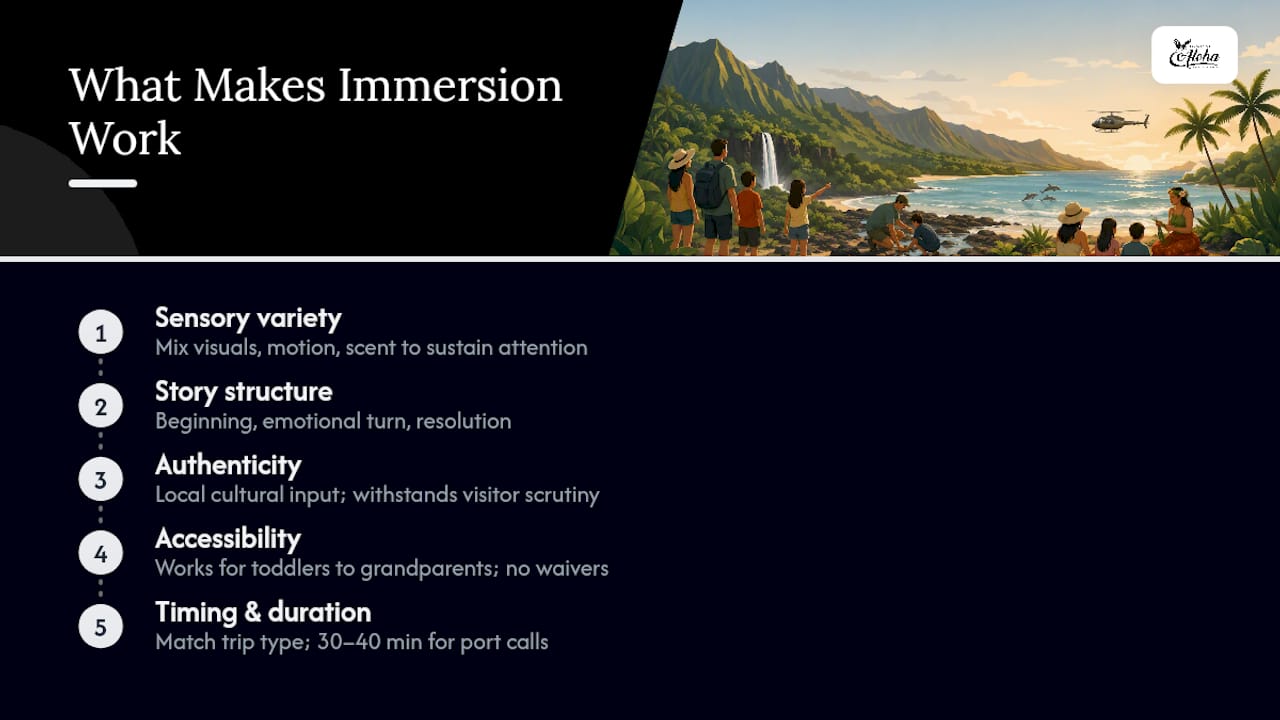
Sensory variety beats sensory intensity. A single loud, flashy effect wears off fast; a coordinated mix of visuals, motion, and scent sustains attention because your brain is processing several inputs at once instead of tuning out one repetitive stimulus.
Story structure matters as much as the technology delivering it. A flying theater without a narrative arc is just a motion simulator. Add a legend like Naupaka’s, with a beginning, an emotional turn, and a resolution, and the same hardware becomes a piece of cultural storytelling people remember years later.
Authenticity is the element most attractions skip, and it’s the one visitors notice fastest. A show built with input from local cultural advisors reads differently than a script written by someone who has never set foot on the islands. That authenticity doesn’t just feel better ethically, it also holds up better under scrutiny from visitors who’ve done their homework or grown up hearing these stories firsthand.
Accessibility rounds out the list of effective strategies. An immersive experience that only works for able-bodied adults with strong stomachs limits its own audience. The strongest examples, indoor theaters especially, work for grandparents, toddlers, and everyone in between, without requiring a waiver form or a strong tolerance for heights.
Finally, timing and duration need to match how people actually travel. A 90-minute commitment might work for a resort day, but a cruise passenger with a four-hour port call needs something closer to 30 or 40 minutes, door to door.
How Immersive Attractions Measure Their Own Impact
Attractions and destination marketers track a handful of practical signals to know whether an immersive experience is working, and most of them are far more concrete than a vague “engagement” metric.
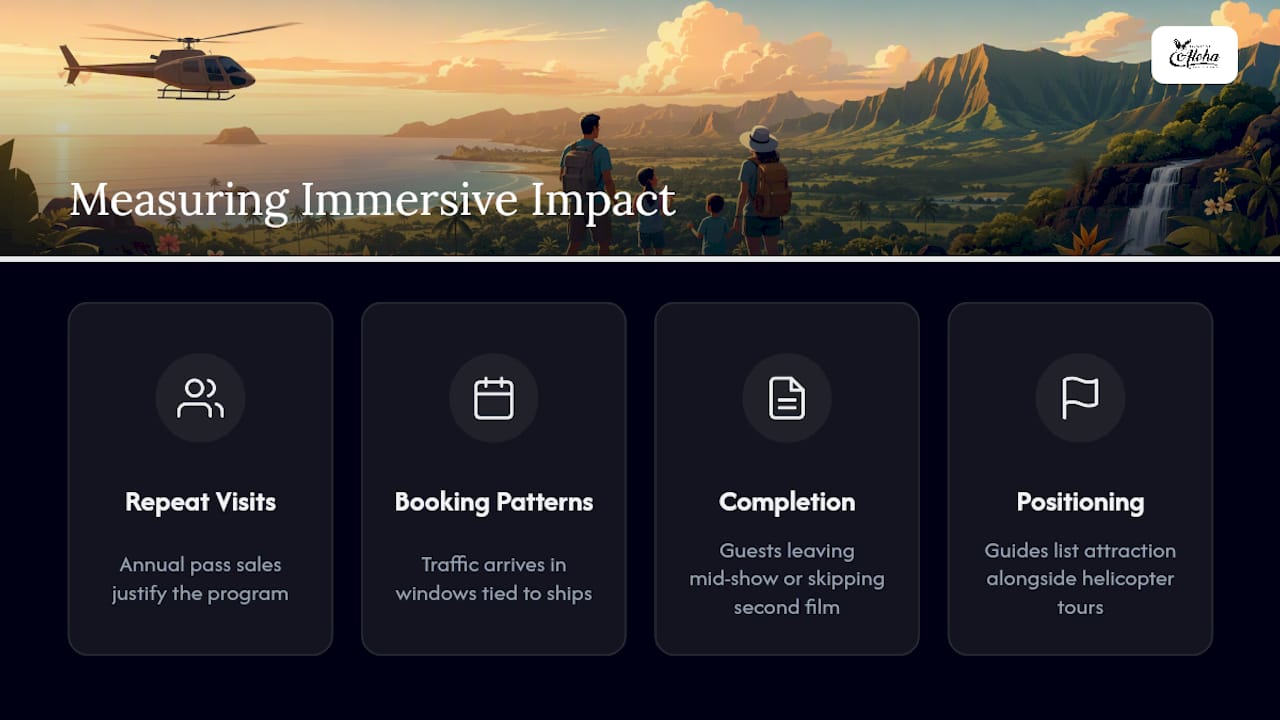
Repeat visitation and pass sales are one clear proxy. When a venue sells enough annual passes to justify the program, that’s a signal locals see enough value to return rather than treat it as a one-time tourist stop. Booking patterns tell a second story: attractions positioned near cruise docks or popular resort corridors can track how much of their traffic arrives in tight, predictable windows tied to ship schedules, which shapes staffing and showtimes.
Visitor feedback and completion rates matter too. If a large share of guests leave mid-show or skip a bundled second film, that’s a signal the pacing or content needs adjustment. Reviews mentioning specific sensory details, like the scent effects during an ocean scene or the seat motion during a takeoff sequence, indicate the multisensory design is landing the way it was intended rather than passing unnoticed.
Comparative positioning offers a final measure. When guides and travel writers consistently list an attraction alongside or ahead of pricier alternatives like helicopter tours, that placement itself reflects how visitors and journalists perceive the value trade-off. It’s a slower signal than a click-through rate, but for a physical attraction competing for a limited number of vacation days, it’s often the one that matters most.
Why This Site Keeps Pointing Readers to Flight of Aloha
Cultural storytelling only works when it’s built with people who actually carry that culture, which is why Flight of Aloha’s collaboration with local Hawaiian advisors matters more than any spec sheet about visuals or motion seats. That grounding is what separates it from a generic tropical highlight reel.
The accessibility case is just as strong. A climate-controlled, step-free theater welcomes grandparents, toddlers, and everyone with a queasy stomach, all in one room, at one showtime. For families juggling different energy levels and tolerances on the same trip, that flexibility is rare.
Set against a $400 helicopter tour with real weather and motion risk, an indoor flying theater covers similar aerial territory for a fraction of the price and none of the risk. That’s not a knock on helicopters. It’s just a more practical fit for most travelers’ budgets and stomachs.
— Ola
Book Your Flight of Aloha Experience in Kona or Maui
This flying theater attraction is a walkable, weatherproof alternative to helicopter tours, suitable for visitors with limited or extended time on the island. Choose from single films like Naupaka, Lahaina, and Europe, priced from $29.99 to $34.99, or step up to the Double Feature Flying Ride for two films back to back, priced from $49.99 to $59.99.

Frequent visitors and locals can grab the Annual Pass for $200 a year, while anyone wanting extras can upgrade to the VIP Package, priced from $69.99 to $79.99. Gift Cards are available directly through the Flight of Aloha site for anyone planning a trip for someone else.
Cruise passengers appreciate the Kailua-Kona location’s proximity to the pier, and families dealing with a rainy Maui afternoon in Kaanapali get full air-conditioned comfort at Whalers Village. Book online to secure your seat.
Sources
- Immersive 8K visual storytelling experience to open in Kona
- Things to do in Kona with kids – Outrigger
- Waikiki Virtual Reality Bus Tour with XR Adventure & Custom Avatar Experience on Oahu – VELTRA
FAQ
What Is an Immersive Attraction in Hawaii?
It’s a location-based experience using sensory technology like 8K visuals and motion seating, scent, wind, or hands-on cultural activities to put visitors inside a story rather than just showing it to them. Flying theaters, VR tours, and cultural demonstration sites all fall under this category.
Is Flight of Aloha Good for Rainy Days in Kona or Maui?
Yes. It’s a fully indoor, climate-controlled theater, which makes it one of the most reliable rainy-day and vog-day options on either island since weather never affects the showtime.
Can Cruise Passengers Fit This Into a Short Port Stop?
Absolutely, especially at the Kailua-Kona location, which sits walking distance from Kailua Pier and the tender dock. Budget roughly 90 to 120 minutes total for transit, check-in, and the show itself.
Is an Indoor Flying Theater Better Than a Helicopter Tour?
For most travelers, yes on cost and comfort. Helicopter tours often run close to $400 per person with real motion-sickness risk, while an indoor flying theater delivers a comparable sense of flight at a fraction of the price with no weather cancellations.
Are There Immersive Options for Toddlers or Grandparents?
Yes. Climate-controlled, step-free theaters like Flight of Aloha work well for a wide age range, and cultural demonstration sites such as Puʻuhonua o Hōnaunau offer gentle, hands-on activities suited to both young kids and older adults.