
Immersive Tourism: Creating Deeper Travel Experiences
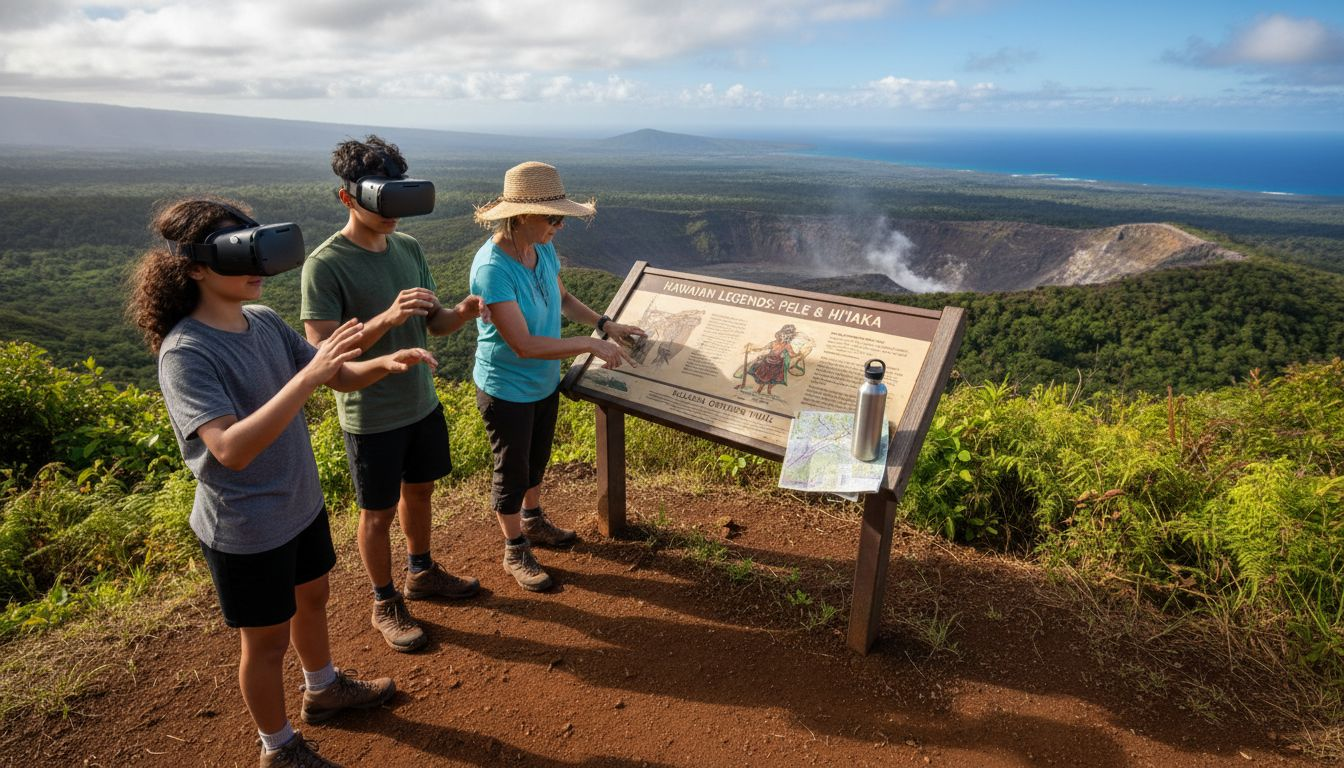
Every family exploring Kailua-Kona faces the challenge of finding experiences that delight all ages while honoring the true spirit of Hawaii. Standard sightseeing feels limited, especially for travelers eager to connect with Hawaiian culture and stories in new ways. Immersive tourism offers a solution by blending advanced technology with multisensory engagement and authentic storytelling, transforming your vacation into memorable moments where every family member feels included and inspired.
Table of Contents
- Immersive Tourism Defined And Its Core Concepts
- Major Types And Categories Of Immersive Tourism
- How Immersive Experiences Are Created And Delivered
- Sensory Features And Cultural Storytelling In Hawaii
- Risks, Costs, And Pitfalls To Avoid In Immersive Tourism
Key Takeaways
| Point | Details |
|---|---|
| Immersive Tourism Defined | Immersive tourism enhances traveler engagement through multisensory experiences, allowing deeper connections with cultures and narratives. |
| Technology’s Role | Different technologies—Virtual Reality, Augmented Reality, and Mixed Reality—shape immersive experiences, each offering unique levels of engagement. |
| Cultural Authenticity is Key | Attractions should prioritize genuine cultural storytelling through authentic narratives, ensuring experiences are respectful and enriching. |
| Assessing Experiences | Before booking, evaluate immersion attractions for cost, health impacts, cultural accuracy, and privacy practices to avoid disappointing experiences. |
Immersive tourism defined and its core concepts
Immersive tourism represents a fundamental shift in how travelers experience destinations. Rather than passively observing attractions through windows or following predetermined routes, immersive tourism actively engages visitors in multisensory experiences that blur the boundary between physical reality and digital enhancement. At its core, immersive tourism uses advanced technology to create environments where travelers become active participants in their journeys, transforming simple sightseeing into meaningful, memorable encounters. This goes beyond traditional tourism because it acknowledges that modern travelers crave deeper connections with cultures, landscapes, and stories—not just surface-level snapshots for social media.
The definition of immersive tourism rests on three interconnected pillars. First is immersion itself, which refers to the complete absorption of your attention and senses into an experience. Second is presence, the psychological feeling that you are genuinely part of the environment, whether that environment is physically real, digitally enhanced, or a blend of both. Third is multisensory engagement—the idea that meaningful experiences engage sight, sound, touch, smell, and sometimes even taste, rather than relying on a single sense. These core concepts work together to create what researchers call deep engagement rooted in immersion theory, where physical and psychological stimuli combine to produce transformative travel moments. For families visiting Kona, this means experiences like Flight of Aloha—which uses 8K visuals, motion effects, scents, and wind to simulate flight—deliver this multisensory engagement in ways traditional attractions cannot.
What makes immersive tourism distinct from conventional travel is its reliance on technology to expand possibilities beyond geographic and physical constraints. You don’t need to actually climb to the rim of Haleakala crater to experience its majesty when immersive technology can transport you there with authentic sensory detail. A rainy day in Kona, which would traditionally limit outdoor activities, becomes an opportunity for indoor immersion. This is where Flight of Aloha excels—positioned as the smart alternative to expensive helicopter tours, it offers breathtaking aerial perspectives of Mauna Kea, waterfalls, and Kohala landscapes without motion sickness, high costs, or weather delays. The experience incorporates authentic Hawaiian storytelling and cultural narratives, ensuring that technology enhances rather than replaces genuine cultural connection. For cruise ship visitors exploring Kona during shore excursions, the indoor environment provides escape from vog and heat while delivering the kind of immersive engagement that creates stories worth sharing long after the vacation ends.
The distinction between immersive tourism and standard tourism lies in intentionality and depth. Standard tourism answers the question: “What can I see?” Immersive tourism answers: “How can I belong here?” When you visit an immersive attraction, you’re not simply observing—you’re engaging with narratives, interacting with environments, and often making choices that shape your experience. This engagement triggers deeper memory formation and emotional connection compared to passive observation. For international families with children, immersive experiences offer something rare: everyone enjoys simultaneously. The grandfather, the teenager, the five-year-old—all engage at their own level with the same technology and storytelling, creating shared family moments rather than fragmented experiences where some members are bored while others are engaged. Flight of Aloha’s Native Hawaiian ownership adds another layer of authenticity to immersive experiences, ensuring that the technology serves to elevate and share genuine cultural stories rather than creating commodified approximations of Hawaiian identity.
Pro tip: When planning immersive tourism experiences, prioritize attractions that combine authentic cultural storytelling with technology rather than those that use technology for technology’s sake—this ensures your immersive moments create meaningful memories and genuine cultural understanding rather than just entertainment novelty.
Major types and categories of immersive tourism
Immersive tourism breaks down into distinct categories based on the technology that powers the experience. The primary distinction comes from what researchers call the XR continuum, which organizes immersive experiences along a spectrum from fully virtual to entirely physical with digital enhancements. Understanding these categories matters because each offers a fundamentally different type of engagement, and knowing the differences helps you choose experiences that match what you’re seeking from your travels. For families visiting Kona, this matters—some may prefer complete virtual immersion to escape reality, while others want their real-world exploration enhanced through digital layers.
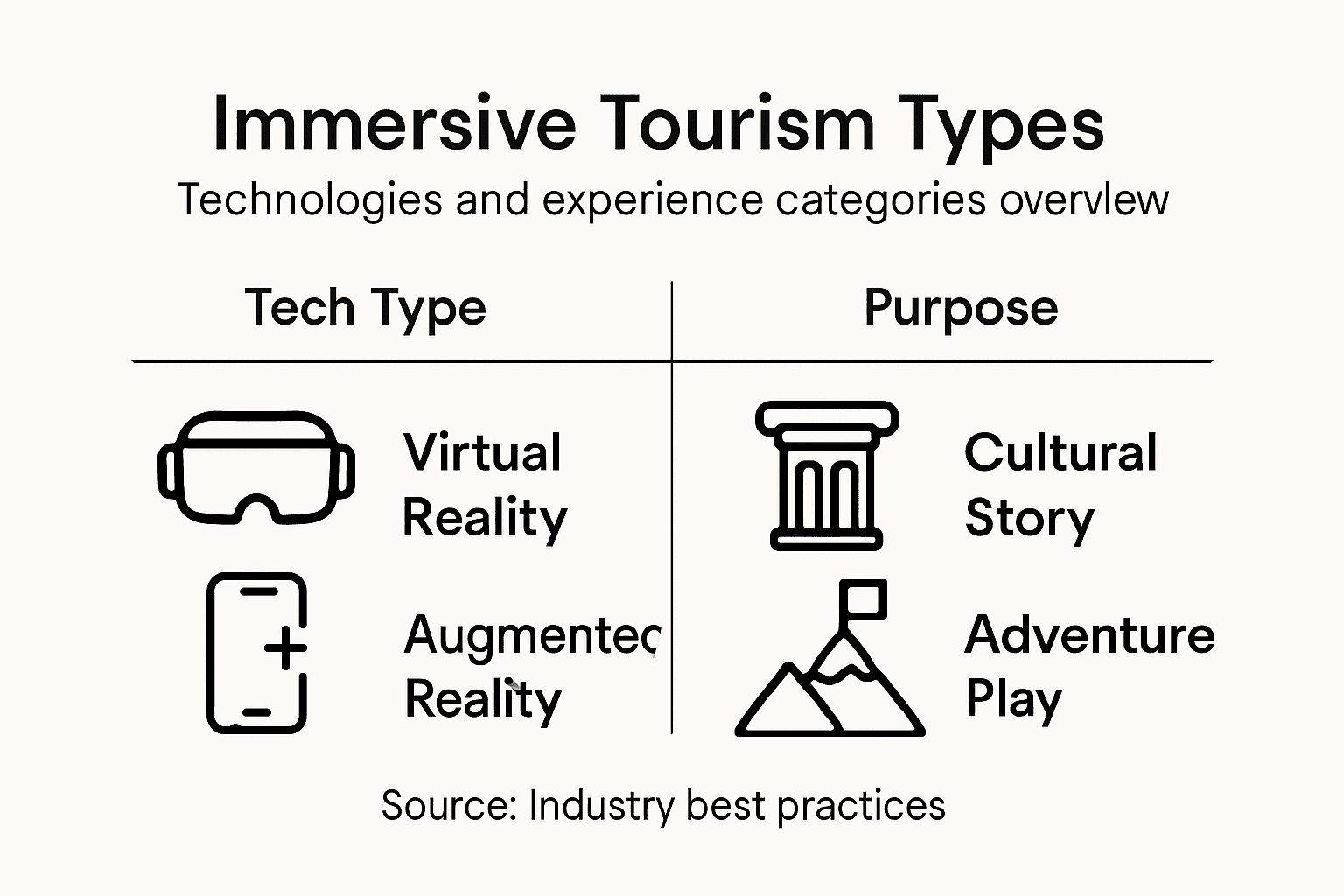
The three core technology categories shape how immersive tourism experiences operate:
Virtual Reality (VR) creates completely synthetic environments where you are fully immersed in a digital world, disconnected from physical surroundings. When you put on a VR headset, you enter an entirely constructed reality—whether that is a recreated Hawaiian volcano from centuries past, an underwater journey through the Kealakekua coral ecosystem, or an aerial tour of Kohala waterfalls. VR is powerful because it offers total control over the experience narrative; designers can craft perfect lighting, eliminate distractions, and focus your attention precisely. Flight of Aloha operates in this space with its immersive flying theater, though it goes beyond traditional VR by combining 8K visuals, motion platform effects, wind simulation, and scent to create a more complete sensory experience than typical headset-based VR alone.
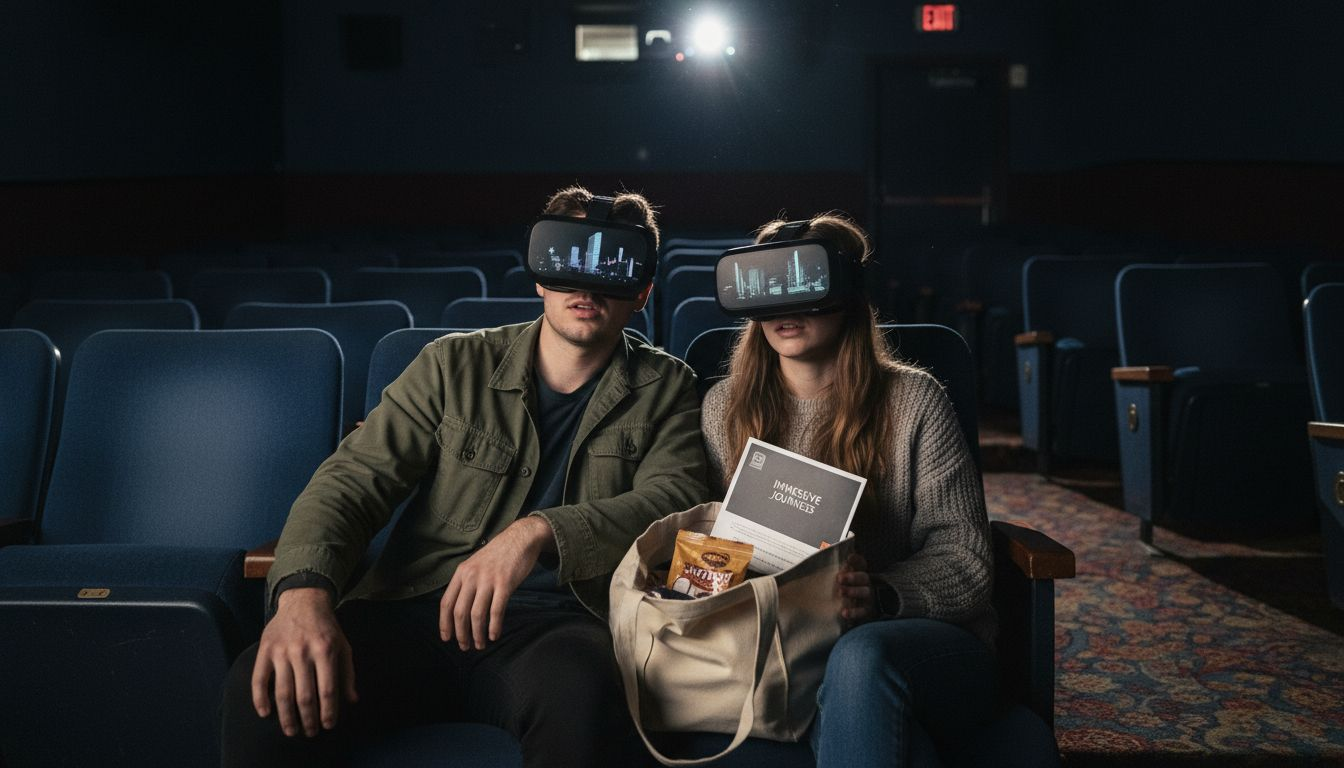
Augmented Reality (AR) overlays digital information and graphics onto the real world you see around you. Instead of replacing reality, AR enhances it. You might point your smartphone camera at a historical site in Kona and see a ghosted image of how it looked 200 years ago, or use AR to identify native Hawaiian plants during a nature walk with labels, pronunciation guides, and cultural significance appearing right in your visual field. Restaurants, museums, and historic sites increasingly use AR to supplement visitors’ experiences without requiring them to remove themselves from the physical environment. This category appeals to travelers who want enrichment without full immersion.
Mixed Reality (MR) represents the middle ground where real and virtual elements genuinely interact with each other, not just overlay. In MR experiences, digital objects respond to the physical space, cast shadows on real surfaces, and occupy actual three-dimensional space you can walk around. Imagine attending a cultural reenactment where holographic performers interact with physical stage elements, or where virtual Hawaiian warriors appear to march through an actual historical battleground. MR requires more sophisticated technology but creates compelling hybrid experiences that feel more natural than pure VR while offering richer interaction than simple AR.
Beyond technology type, immersive tourism also divides into experience categories based on purpose and application. Some experiences focus on re-interpretation, showing you familiar destinations in new ways—seeing Haleakala not just as a mountain but as the sacred birthplace of the sun in Hawaiian mythology. Others provide supplementation, adding layers of meaning to real locations—learning the cultural history of Kailua-Kona’s ancient temples through guided immersive content. Still others enable re-imagination, taking you to places you cannot physically access, whether that is underwater volcanic formation interiors, restricted archaeological sites, or historical moments frozen in time.
For international families exploring Kona, the practical breakdown is simpler: indoor immersive attractions like Flight of Aloha work best during vog, heat, or unpredictable weather, offering guaranteed engagement regardless of conditions. They work wonderfully as shore excursions for cruise passengers with limited time, positioned just steps from Kailua Pier. AR and location-based experiences enhance outdoor exploration during good weather. MR experiences are less common in Hawaii currently but represent the future of blended tourism. The most sophisticated modern attractions, like Flight of Aloha, actually blend elements from multiple categories—the immersive visuals from VR, the motion and sensory elements that feel like AR of your own body, and the shared physical space that creates community like MR does.
Here’s a clear comparison of immersive tourism technology types and how they enhance travel experiences:
| Technology Type | Level of Immersion | Typical Features | Best Used For |
|---|---|---|---|
| Virtual Reality (VR) | Full immersion in digital world | Headsets, motion platforms, 8K visuals | Simulated environments |
| Augmented Reality (AR) | Digital overlays on real world | Smartphone/tablet screens, context info | Outdoor/site enrichment |
| Mixed Reality (MR) | Interaction between digital and real | Holograms, responsive visuals | Hybrid cultural events |
Pro tip: When selecting immersive tourism experiences for your family, match the technology type to your group’s comfort level and available time—fully immersive VR works best for shorter experiences and those sensitive to motion, while AR experiences enhance longer outdoor explorations where you want context without detachment.
How immersive experiences are created and delivered
Creating an immersive experience requires far more than installing fancy technology in a building. Behind every effective immersive tourism attraction lies a deliberate process that combines technological infrastructure, thoughtful content design, and deep understanding of human psychology. The creation starts with a clear vision of what emotional and psychological response you want visitors to have, then works backward to identify which sensory inputs, technology platforms, and interactive elements will deliver that response. For Flight of Aloha, the vision centers on transporting families through authentic Hawaiian landscapes and narratives using 8K visuals, motion effects, wind, and scent—creating the feeling of flying rather than sitting in a theater. This intentionality separates memorable immersive experiences from gimmicky attractions that rely on technology novelty alone.
The technical foundation of immersive experiences involves multisensory interaction through carefully integrated technology systems. Think about what happens when you watch a traditional movie versus when you experience an immersive attraction. In a movie, you receive visual and audio input through a screen. In immersive experiences, designers activate multiple sensory channels simultaneously: vision at ultra-high resolution (8K), sound through spatial audio positioning, tactile sensation through motion platforms, scent through scent delivery systems, and sometimes even taste or temperature changes. The key is that these sensory inputs are synchronized precisely. When the visual shows wind moving through palm fronds, the wind effect hits your skin at the exact moment. When you see ocean spray, you might feel mist. This multisensory synchronization creates what neuroscientists call presence—the psychological state where your brain genuinely believes you are somewhere other than where you physically are. This presence is what transforms a passive viewing into an experience that reshapes memory formation, making the experience stick with you years later.
Content creation for immersive experiences differs fundamentally from traditional media production. Rather than creating a linear narrative viewers watch passively, immersive content designers must consider sight lines from all angles, plan for multiple possible user interactions, and account for varying attention patterns. They build what developers call scenario-based services, where different decision points or physical movements through space create slightly different narrative paths. At Flight of Aloha, the content team created narrative structures grounded in authentic Hawaiian cultural stories and legends—the Naupaka flower tale, Lahaina history, volcano formation—ensuring that the technological spectacle serves cultural storytelling rather than replacing it. The design process involves collaboration between cultural consultants (in this case, Native Hawaiian guides and storytellers), visual artists creating the 8K content, engineers programming motion sequences, and psychologists who understand how humans process multisensory information and form memories. This collaboration ensures that every sensory element reinforces the narrative rather than distracting from it.
Delivery of immersive experiences spans the entire visitor journey, not just the time spent in the attraction itself. Research shows that user psychological and emotional responses extend across pre-travel to post-travel phases, meaning the experience begins when someone first learns about the attraction and continues long after they leave. Effective delivery includes clear pre-visit communication that sets expectations and builds anticipation, a welcoming arrival experience that transitions visitors psychologically from their regular environment into the immersive mindset, the core experience itself where all sensory and technological elements work in concert, and post-visit engagement that extends the emotional connection. For cruise passengers discovering Flight of Aloha steps from Kailua Pier, the journey might involve walking past promotional displays that spark curiosity, entering an air-conditioned space that provides relief from Kona heat or vog, experiencing the flight itself with full sensory immersion, and then leaving with photos and stories to share. The Native Hawaiian ownership of Flight of Aloha adds authenticity to this entire journey because the cultural narrative feels genuine rather than commodified—visitors sense they are learning from community members rather than consuming a packaged product.
The most sophisticated immersive tourism operators continuously measure and optimize the emotional impact of their experiences. They track visitor responses through surveys, observe behavioral patterns, monitor which narrative moments generate the strongest reactions, and refine content and technology based on actual visitor feedback rather than assumptions. This iterative improvement ensures that the experience remains powerful over time, preventing the novelty effect from wearing off. Family groups, international tourists, cruise passengers, and solo travelers often respond differently to the same content, so successful attractions build flexibility into their experiences—allowing visitors to move through at different paces, engage with different interactive elements, or adjust intensity levels based on comfort.
Pro tip: When selecting an immersive experience, research whether the attraction prioritizes authentic cultural storytelling alongside technology—this ensures your immersion serves educational and emotional depth rather than pure entertainment novelty, creating memories that resonate long after your vacation ends.
Sensory features and cultural storytelling in Hawaii
Hawaii’s most powerful immersive experiences don’t rely on technology alone—they anchor themselves in authentic storytelling rooted in Hawaiian culture, language, and history. When sensory elements combine with genuine cultural narratives, the experience transcends entertainment and becomes meaningful education that visitors carry with them. The islands hold centuries of stories: the birth of volcanoes, the voyaging traditions of ancient Polynesians, the complex history of Hawaiian kingdoms, the spiritual significance of sacred sites, and the resilience of Hawaiian communities today. Effective immersive tourism in Hawaii weaves these narratives through multisensory experiences that engage not just your eyes and ears but your sense of connection to place and people. Flight of Aloha exemplifies this approach by grounding its 8K visuals and motion effects in authentic Hawaiian legends like the Naupaka flower tale and Lahaina’s historical significance. Without the cultural narrative, the sensory spectacle becomes hollow. With it, visitors experience genuine transformation—they understand not just what Hawaii looks like, but why it matters to the people who call it home.
The sensory landscape of Hawaii itself provides the foundation for immersive experiences. Vision in Hawaii means confronting colors that seem almost unreal—the impossibly bright turquoise of Kealakekua Bay, the deep purple of Kohala mountain shadows at sunset, the charcoal black of lava fields under tropical sun. Sound encompasses the ocean’s different voices: gentle lapping on white sand beaches versus the thunderous crash against rocky cliffs, the rustle of trade winds through palm fronds, the calls of native Hawaiian birds, and the silence of protected archaeological sites. Smell carries cultural meaning—the sweetness of plumeria flowers, the salt spray of makai ocean breezes, the earthy richness of volcanic soil, the fragrance of native sandalwood that once covered these islands. Temperature and tactile sensation matter too: the tropical heat that slows your pace, the cooling trade winds that refresh, the texture of volcanic rock beneath your feet. When immersive attractions incorporate these actual sensory features alongside Hawaiian cultural storytelling experiences, they create layered understanding. Flight of Aloha uses scent delivery and wind effects to trigger these sensory memories, making the experience feel less like watching a screen and more like being present in Hawaiian landscapes while hearing the stories those landscapes carry.
Cultural storytelling in Hawaiian immersive tourism must be rooted in respect and authenticity rather than romanticization or commodification. Hawaiian culture survived Western colonization, disease, forced assimilation, and systemic marginalization. The stories that matter most are not simplified tourist narratives but complex, honest accounts of Hawaiian identity, sovereignty, land relationships, and spiritual traditions. Native Hawaiian ownership of immersive attractions, like Flight of Aloha, ensures that stories are told by community members rather than outsiders interpreting Hawaiian culture for profit. When a Native Hawaiian guide shares the legend of Naupaka—the flower split in two when lovers were separated—visitors hear not just a pretty myth but a story embedded in Hawaiian ecological knowledge, spiritual beliefs, and emotional truth. When visitors learn about Lahaina’s history through immersive visuals, they understand the whaling industry’s impact, the sugar plantation era, and the ongoing relationship between Hawaiian communities and their homeland. This depth creates what researchers call meaningful Hawaiian immersion impact, where visitors leave with genuine cultural understanding rather than superficial impressions.
The practical integration of sensory features with cultural storytelling creates memorable experiences that serve both visitors and Hawaiian communities. Consider how an immersive experience might unfold: as you enter, you smell the salt air and feel trade winds—sensory cues that place you in Hawaii. The 8K visuals surround you with actual Hawaiian landscapes. A Native Hawaiian storyteller shares a legend about volcano formation, explaining both the spiritual significance and the geological reality. Motion effects synchronized with the narrative make you feel like you are witnessing the story rather than observing it. The combination of authentic cultural knowledge plus sensory immersion creates what psychologists call deep encoding—your brain processes the experience through multiple sensory channels simultaneously, making it stick in memory far more effectively than traditional tourism. For families visiting Kona, this means your five-year-old and your seventy-year-old grandfather both leave with understanding of Hawaiian culture calibrated to their developmental level, but both leave transformed. For cruise passengers with limited shore excursion time, a one-hour immersive experience combining sensory features and cultural storytelling delivers more cultural learning than a full day of passive sightseeing.
The impact of sensory features and cultural storytelling extends beyond individual visitor experience to community benefit. When tourism revenue supports Native Hawaiian cultural practitioners, historians, and storytellers, it creates economic incentive for cultural preservation and transmission. Young Hawaiians see careers in cultural interpretation and immersive entertainment, providing pathways to share their heritage professionally. Visitors who experience authentic Hawaiian stories become advocates for Hawaiian sovereignty, land protection, and cultural rights. They return home and correct misconceptions about Hawaii they had absorbed from media. They support Hawaiian-owned businesses rather than outside corporations. This is why the distinction between immersive experiences rooted in genuine cultural storytelling versus those focused primarily on technological novelty matters so profoundly. The former transforms tourism into cultural bridge building. The latter extracts cultural content without supporting communities.
Pro tip: Seek immersive experiences that explicitly credit Native Hawaiian storytellers, employ Hawaiian cultural consultants, and explain the historical or spiritual significance of narratives they share—this ensures your sensory engagement supports authentic cultural preservation rather than cultural appropriation.
Risks, costs, and pitfalls to avoid in immersive tourism
Immersive tourism promises transformative experiences, but the path to delivering them involves real obstacles that both visitors and operators must navigate carefully. The appeal of immersive attractions often rests on cutting-edge technology, which comes with significant financial investment, technical complexity, and substantial risks if not managed properly. Understanding these risks upfront helps you make informed decisions about which experiences are worth your time and money, and it helps tourism operators build sustainable businesses rather than flash-in-the-pan attractions that collapse under their own costs. The reality is that not every immersive experience lives up to its promise, and knowing what to watch for protects both your vacation investment and your wellbeing.
Cost represents the first major consideration in immersive tourism. Building sophisticated immersive attractions requires enormous upfront investment in technology, content creation, and infrastructure. Flight of Aloha, for instance, represents a significant capital investment in 8K projection systems, motion platforms, scent delivery technology, and ongoing content production. These costs get passed to visitors through ticket prices, which can range from moderate to quite expensive depending on the attraction’s sophistication. For budget-conscious travelers, this means immersive experiences may not always fit within your vacation budget. More concerning is when operators cut corners to reduce costs, resulting in lower-quality experiences that disappoint visitors. Additionally, high development and operational costs for immersive attractions create pressure on operators to maximize revenue, which can lead to overcrowding, rushed experiences, or aggressive upselling of premium packages. When evaluating an immersive attraction, consider whether the ticket price reflects genuine value or whether the operator is inflating costs based on technology novelty rather than actual experience quality. Compare pricing across similar attractions in your destination, and read recent visitor reviews about whether people felt the cost was justified.
Health and safety concerns deserve serious attention, particularly with VR-based immersive experiences. Motion sickness represents the most common physical risk, especially for people prone to vestibular sensitivity. When motion platform effects combine with visual movement on screens, your brain can become confused about which direction you are actually moving, triggering nausea, dizziness, or disorientation. This is why understanding your own motion sensitivity matters before booking VR-intensive experiences. Flight of Aloha mitigates this risk somewhat by using a seated motion platform in a controlled environment rather than full VR headsets, but even high-quality immersive experiences can trigger motion sensitivity in susceptible visitors. Beyond motion sickness, potential health risks from VR use and accessibility barriers include eye strain, disorientation after the experience ends, and challenges for visitors with mobility limitations or sensory disabilities. Before booking, research whether the attraction offers motion sensitivity warnings, provides alternative experiences for those who cannot tolerate motion effects, and accommodates visitors with disabilities. Ask directly about their accessibility features rather than assuming technology-based attractions are automatically accessible.
The Content and Cultural Authenticity Pitfall
One of the most significant pitfalls in immersive tourism involves cultural content that lacks authenticity or respect. Operators sometimes prioritize technological spectacle over genuine cultural storytelling, creating experiences that feel like caricatures rather than authentic representations. This becomes especially problematic in Hawaii, where Hawaiian culture has a long history of appropriation and exploitation. When immersive attractions cherry-pick cultural elements for their visual appeal without acknowledging their actual cultural significance or without involving Native Hawaiian storytellers and consultants, they perpetuate harm. Additionally, what researchers call digital fatigue occurs when immersive experiences overwhelm the senses without providing meaningful content to process. You leave feeling stimulated but not enriched. Avoiding this pitfall means prioritizing immersive attractions that employ Native Hawaiian cultural practitioners, credit their sources explicitly, and explain the historical or spiritual significance of the stories they share. Native Hawaiian ownership, as with Flight of Aloha, provides stronger assurance of cultural authenticity than attractions owned by external corporations.
Privacy, Data, and Interpersonal Connection
Modern immersive attractions increasingly collect data about visitor behavior, preferences, and emotional responses to optimize experiences. This raises privacy concerns about what data is collected, how it is stored, and whether it is sold to third parties. Before booking, research the operator’s privacy policy. Another often-overlooked pitfall involves the trade-off between technological immersion and genuine human connection. Traditional tourism creates opportunities for interaction with local guides, community members, and other travelers. Some immersive experiences, particularly VR-heavy attractions, can isolate you in a personal experience that reduces interpersonal connection. This matters especially for family travel, where shared discussion and interaction with guides often creates the most lasting memories. The strongest immersive experiences balance technology with human elements—combining high-tech visuals with live storytelling from Native Hawaiian guides, for instance, rather than replacing human interaction with screens.
Financial Sustainability for Operators
Operators must balance heavy technology investment with realistic revenue projections. Attractions that cannot achieve sustainable financial models eventually close, leaving visitors disappointed and communities without economic benefit from tourism revenue. This is why established attractions backed by solid business models and community support tend to deliver better long-term experiences than startups relying purely on novelty appeal. When researching immersive experiences, consider how long the attraction has been operating, whether it has consistent visitor traffic, and whether it appears to be investing in ongoing content updates and facility maintenance. Abandoned or poorly maintained attractions represent poor investments of your vacation time and money.
To help assess immersive tourism attractions, here’s a quick guide to common risks and ways to address them:
| Challenge | Visitor Impact | Operator Solution |
|---|---|---|
| High ticket prices | Limits accessibility | Flexible packages, tiered pricing |
| Motion sickness | Physical discomfort | Pre-screening, alternative seating |
| Cultural inaccuracy | Misleading experience | Native ownership, expert consulting |
| Data privacy | Visitor distrust | Clear policies, opt-in procedures |
Pro tip: Before booking an immersive tourism experience, contact the operator directly to ask about motion sensitivity accommodations, accessibility features, Native Hawaiian involvement in cultural content, data privacy practices, and visitor reviews specifically mentioning value for money—this due diligence helps you avoid costly disappointments and ensures your experience supports ethical tourism.
Experience True Immersive Tourism at Flight of Aloha
The article highlights the challenge modern travelers face in seeking deeper, meaningful connections with Hawaiian culture through immersive tourism rooted in multisensory engagement and authentic storytelling. If you want more than just sightseeing and crave an experience that makes you belong in Hawaii, Flight of Aloha perfectly answers this call. Combining cutting-edge 8K visuals, wind, scent, and motion, our immersive flying theater delivers the kind of presence and immersion that transforms family vacations and shore excursions into lasting memories.

Why settle for passive tours when you can feel the spirit of Hawaii through stories like Naupaka and Lahaina told by Native Hawaiian voices? Visit Flight of Aloha to explore our engaging ride films, discover VIP packages, and book your visit today. Step inside to escape Hawaii’s heat or vog and fly over breathtaking landscapes with an experience designed to connect all ages deeply to the islands. Don’t wait—create your own authentic Hawaiian adventure now with Flight of Aloha and transform your travel into something unforgettable.
Frequently Asked Questions
What is immersive tourism?
Immersive tourism is a travel experience that actively engages visitors through multisensory interactions, using advanced technology to create environments where travelers participate meaningfully in their journeys.
How does technology enhance immersive tourism experiences?
Technology expands possibilities by blending physical reality with digital enhancements, allowing travelers to experience destinations in new, interactive ways, such as through Virtual Reality (VR), Augmented Reality (AR), and Mixed Reality (MR).
What are the main types of immersive tourism experiences?
The main types include Virtual Reality, which offers fully synthetic environments; Augmented Reality, which overlays digital information onto the real world; and Mixed Reality, which blends real and virtual elements for interactive experiences.
How can I ensure an immersive experience is culturally authentic?
Look for attractions that involve local cultural practitioners, explicitly credit their sources, and provide narrative depth connected to the cultural significance of the stories shared. This ensures you support genuine cultural representation and avoid commodification.
Recommended
- Immersive Technology In Tourism: Transforming Travel Experiences | Flight Of Aloha
- Interactive Tourism: How It Elevates Visitor Engagement | Flight Of Aloha
- Visitor Workflow For Tourists: Enhancing Immersion | Flight Of Aloha
- What Is Experiential Tourism? Complete 2024 Overview | Flight Of Aloha
- Conversion Design Case Studies: Megabon
- Fantasiereisen für Kinder gestalten und kreativ erzählen – Edory AI – Edukative Kindergeschichten