
Must-Do Family Vacations: The Six Trip Types Worth Booking

Six vacation types deliver the most reliable family memories: theme parks, national parks and outdoor adventures, beach and resort escapes, city cultural trips, road trips and weekend getaways, and international bucket-list journeys. If you’re picking right now, start here: a theme park for thrill-seeking crews, a national park loop for nature-hungry kids, and Hawaii’s Flight of Aloha for families who want an aerial island experience without the four-figure helicopter bill.
Every one of these categories can produce the trip your family talks about for years, but only if it matches what your crew actually wants. A family of early risers who love structure will thrive at a theme park and wilt on an unplanned beach week. A family that needs downtime more than adrenaline should skip the park lines entirely.
Success isn’t about picking the “best” destination on some universal ranking. It’s a trip that fits your goals, respects your budget, and still leaves room for the unplanned moment that ends up mattering more than anything on the itinerary.
- Theme and water parks — structured fun, best for families who like a plan
- National parks and outdoor adventures — confidence-building, nature-first trips
- Beach, cottage, and resort weeks — low-effort, high-memory relaxation
- City and cultural trips — museums, zoos, and hands-on history for curious kids
- Road trips and weekend getaways — flexible, budget-friendly, close to home
- International and bucket-list trips — bigger investment, bigger payoff when timed right
Key Takeaways
Choosing a must-do family vacation comes down to matching your family’s goals and budget to one of six trip types, then pacing the days so memory-making moments have room to happen.
| Point | Details |
|---|---|
| Six trip types cover most needs | Theme parks, national parks, beach and resort weeks, city trips, road trips, and international trips each serve different family goals. |
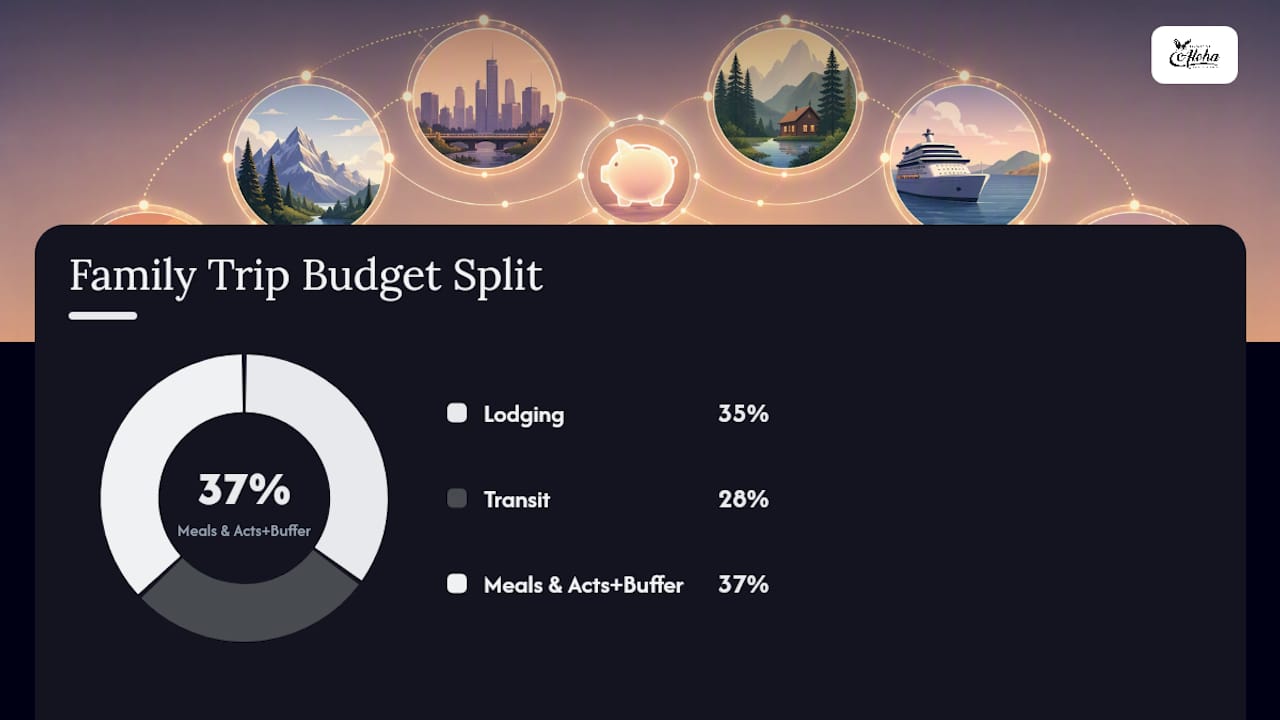
| Set budget before destination | Naming a total budget out loud first, then splitting roughly 35% lodging and 28% transit, prevents the most common vacation arguments. |
| Cap activities at two per day | Pacing the itinerary to one morning and one afternoon activity, with at least one open day, improves overall trip satisfaction. |
| Book in order to protect availability | Flights first, then lodging, then timed tickets, then rental cars, since availability disappears in that same sequence. |
| Flight of Aloha fits Hawaii trips easily | The Kailua-Kona and Whalers Village Kaanapali locations offer an accessible, air-conditioned, Native Hawaiian-owned alternative to costly helicopter tours. |
Must Do Family Vacations at Theme Parks and Water Parks
Theme parks work because they remove the guesswork. Every ride has a posted wait time, every park has a map, and every family member knows roughly what’s coming next. That predictability matters more than it sounds. A toddler who needs a nap at 1 p.m. and a teenager chasing the tallest coaster can both get what they want in the same afternoon, as long as you plan the day around age gaps instead of around the map.
Younger kids do best in designated toddler zones, where the rides are gentle and the sensory overload is dialed down. School-age children usually want the mid-tier family coasters and log flumes that let the whole group ride together. Teens gravitate toward the big-name thrill rides, and they’ll often want to break off from the group for an hour or two, which is fine if you’ve agreed on a meeting point in advance. Adults get their own reward too: shaded lounges, table-service restaurants, and the occasional beer garden tucked between the roller coasters.
- Buy timed-entry tickets in advance. Skipping the ticket line saves you 20 to 40 minutes before you’ve even entered the park.
- Front-load the morning. Hit the two or three rides your family cares most about before 11 a.m., when lines are shortest and heat is manageable.
- Schedule a midday break. Retreat to air-conditioned shows, a sit-down lunch, or the hotel pool between noon and 3 p.m.
- Save late afternoon for water rides. Crowds thin out and the heat makes a soaking ride feel like relief instead of a chore.
- Pack a meltdown kit. Sunscreen, a spare outfit, snacks, and a portable phone charger solve 90% of park emergencies.
Pro Tip: Multi-day passes make sense once your family plans to split “thrill days” from “water park days.” A single frantic day trying to do both usually ends in tears, not memories.
National Parks and Outdoor Adventures That Build Confident Kids
Time spent outdoors does something a screen-based vacation can’t replicate. Research from Children & Nature shows that outdoor family adventures tend to build long-term appreciation for conservation while also boosting a child’s confidence through exposure to new, sometimes unfamiliar environments. A kid who scrambles over a rock scramble at age seven remembers that they could do it, and that sticks with them longer than most souvenirs.
The trick is matching the trail to your youngest hiker, not your most ambitious one. National park sites like Yosemite’s official planning pages list ranger-led programs, junior ranger badge activities, and short interpretive loops built specifically for families with young kids. These programs exist precisely so you don’t have to guess which trail is toddler-safe.
A few families default to ambitious backcountry routes because that’s what shows up on travel blogs. Most families do better with:
- A one-mile interpretive loop with a waterfall or overlook payoff
- A ranger talk scheduled around nap time, not against it
- A visitor center stop first, so kids see wildlife exhibits before they’re expected to spot the real thing
- A picnic lunch built into the itinerary instead of squeezed between hikes
Children & Nature research indicates that backcountry and wilderness exposure relates to lasting environmental engagement in kids beyond a one-time novelty effect.
Gear needs stay simple: broken-in shoes, a hat, layers for temperature swings, and a paper trail map as backup, since cell service disappears fast in most parks. Accessibility varies widely between parks, so check ahead if anyone in your group uses a stroller or has mobility needs, and pick a park with paved or boardwalk trail options if that’s a factor.
The advice that saves the most arguments: cap it at one main outdoor activity per day. A single hike plus a relaxed camp dinner beats two hikes and an exhausted, cranky evening every time.
Beach, Cottage, and Resort Weeks Kids Actually Remember
Unstructured beach time consistently outperforms packed itineraries, and it’s not close. Give a kid a bucket, a shovel, and three unscheduled hours, and they’ll build something they’ll talk about at dinner. Give that same kid a fourth museum in four days, and you’ll get a meltdown by 2 p.m.
The real work happens before you book, when you’re vetting the rental or resort itself. A property that looks great in photos can still fail your family if it’s missing the basics.
- Kitchen or kitchenette — cuts food costs and lets you feed a toddler on their own schedule
- Shallow, calm water access — check surf reports and lifeguard hours before booking, not after arrival
- On-site laundry — non-negotiable for trips longer than four nights with small kids
- Kid-specific amenities — cribs, high chairs, and pool depth markers save you from packing gear you don’t own
- Clear cleaning and check-in policies — read the fine print on late check-out, since toddler nap schedules rarely respect a strict 11 a.m. deadline
Memory-making activities here don’t need to be elaborate. A sunset walk along the shoreline, a family sandcastle contest with a silly prize, or a stop at a local farmers market for fresh fruit all deliver more lasting impact than a full-day excursion that eats the whole afternoon. For more low-effort ideas that consistently land well with kids, WonderLens’ roundup of simple family activities is worth a look before you finalize a schedule.
Timing matters for the budget, too. Shoulder-season weeks, generally the stretch just before or after peak summer, tend to offer lower nightly rates and thinner crowds at the same beaches. If your kids aren’t yet tied to a school calendar, that flexibility can cut a beach week’s cost noticeably.

City and Cultural Trips That Keep Kids Curious
A good city day with kids has a rhythm: one major activity in the morning, a local food stop for lunch, one more activity in the afternoon, and a slower transit window built in between. Trying to cram three museums into one day guarantees a cranky group by 3 p.m., no matter how good the exhibits are.
The attractions that reliably hold a kid’s attention share a common trait: they’re hands-on. Interactive science museums with buttons to press and levers to pull beat glass-case exhibits every time. Aquariums work across almost every age group, from toddlers pointing at fish to teens reading the conservation placards. Historic sites with actual family programs, costumed guides, scavenger hunts, junior docent badges, outperform sites where kids are just told to look and not touch.
- Morning: interactive museum or aquarium. Book the earliest slot to beat both crowds and heat.
- Midday: local lunch spot with kid-friendly options. Skip the chain restaurant near the hotel; a genuine local spot often becomes part of the trip story.
- Afternoon: historic site or park with a program. Look specifically for junior ranger, scavenger hunt, or hands-on craft activities.
- Evening: unscheduled downtime. Pool, hotel game night, or an early dinner and bed.
Adapt by age: toddlers do best with one activity and a long stroller nap between stops. School-age kids can genuinely handle the two-activity structure above. Teens should get a say in choosing at least one stop, whether that’s a specific exhibit, a skate park, or a particular neighborhood they saw online.
Road Trips and Weekend Getaways That Feel Bigger Than They Are
Road trips remain one of the most accessible family vacations because you control every variable. No flight delays, no fixed check-in time, and the freedom to add an unplanned stop when someone spots a roadside attraction worth the detour.
Car time itself becomes part of the fun if you plan activities by age. Younger kids do well with audio stories and simple travel games. School-age kids can handle license plate bingo, road trip scavenger hunts, or a shared playlist they get to help build. Teens generally want their own headphones and their own screen time, and that’s fine on a drive under four hours.
- Build in a rest stop every 90 minutes to two hours, longer than most adults would choose on their own
- Split long drives across two days if you’re covering more than six hours total, with an overnight stop at the halfway point
- Pack a cooler with real food, not just gas-station snacks, to avoid the 4 p.m. hunger meltdown
A few formulas travel well across regions. A lake cottage weekend built around one full free day and one paddle or swim outing. A mountain cabin trip anchored by a single easy trail and a game-night evening. A coastal drive with two or three scenic overlook stops planned in advance so nobody’s negotiating over the map at 60 miles per hour. For more short-getaway inspiration, Southern California’s daycation guide offers ideas that adapt easily to other regions.
International and Bucket-List Trips Done at the Right Age
International travel with kids works best when you match the trip to the child, not the other way around. A flight under five hours with a toddler is manageable. A 14-hour flight with a two-year-old is a different kind of vacation entirely, one that requires realistic expectations rather than optimism.
Readiness comes down to three questions: How long is the flight relative to your youngest traveler’s tolerance? Is everyone’s passport valid for at least six months past the return date? And does the budget account for the fact that international trips typically cost more than domestic ones once you factor in flights, visas, and currency exchange?
Age-appropriate picks tend to fall into a few buckets. Short-haul island destinations work well for families with younger kids who need lower-stress logistics. European cities with dedicated family programs, kid-friendly museum passes, stroller-accessible transit, interactive science centers, suit families with school-age children who can handle longer days. Wildlife safaris adapted specifically for families, shorter game drives, kid-focused guides, tend to work best once children are old enough to sit still and stay quiet for extended stretches, typically around age seven and up.
- Check passport expiration dates at least three months before booking, not before departure
- Confirm whether any recommended vaccinations apply to your destination well ahead of the trip
- Plan for jet lag by shifting bedtime gradually in the days before departure, rather than trying to power through on arrival
- Pack differently than you would domestically: a portable white noise option, familiar snacks that may not be available abroad, and any medication in carry-on rather than checked luggage
The Vacation Decision Matrix Every Family Can Use
The single most common source of family vacation arguments is money, according to a ConsumerAffairs report on families scaling back vacation plans. Families who plan successfully name a total budget out loud before anyone proposes a destination. That one step eliminates half the arguments before they start.
From there, a simple weighted scoring method, similar to the approach outlined by Ardent Workshop’s guide to choosing a vacation, turns a family debate into basic math.
- Set your goals. Does everyone want rest, adventure, culture, or some mix? Write down the top two priorities.
- Set your budget and hard vetoes. Name the dollar ceiling and anything that’s off the table, no long layovers, no camping, no destinations over six hours by car.
- List three to five real contenders and score each one on a 1 to 5 scale across weighted criteria.
| Criteria | Weight | Beach Resort | National Park | Theme Park |
|---|---|---|---|---|
| Budget fit | 3x | 4 | 5 | 3 |
| Travel time | 2x | 3 | 2 | 4 |
| Kid-friendliness | 3x | 4 | 3 | 5 |
| Downtime | 2x | 5 | 3 | 2 |
Multiply each score by its weight and total the columns. In this example, the beach resort edges out the theme park once downtime and budget carry more weight than raw excitement. The math doesn’t erase every disagreement, but it turns “I just don’t want to” into a criteria conversation everyone already agreed to.
Planning Essentials: Budget, Booking Order, and Packing
A proven seven-step approach recommends splitting your budget roughly by category before you book anything: lodging around 35%, transit near 28%, and the rest held as a buffer for meals, activities, and the inevitable surprise expense, according to Endless Travel Plans’ family vacation planner. That same guide notes a one-week domestic trip for a family of four runs roughly $7,964 on average, which makes the buffer rule less optional than it sounds: build in at least 10% extra, because family trips almost always produce one unplanned cost.
Booking order matters more than most families realize. Lock flights first, followed by lodging, then timed tickets for parks or popular attractions, with rental cars last, since those tend to have the most last-minute availability.
Pacing deserves its own rule: cap the itinerary at a small number of main activities per day and build in at least one fully unscheduled day per typical week-long trip. Over-scheduling doesn’t just exhaust kids. Research covered by The Globe and Mail suggests it measurably reduces overall family enjoyment, while looser, less curated days often produce the moments families remember longest.
Packing by age keeps mornings sane. Toddlers need a comfort item, a change of clothes accessible without digging through a suitcase, and snacks that don’t need refrigeration. School-age kids can handle their own small backpack. Teens should pack their own bag entirely, within a checklist you’ve both agreed on.
- Carry-on essentials: chargers, one full outfit change, medication, and any comfort items that can’t be replaced if luggage is delayed
For a Hawaii-specific version of this checklist, Flight of Aloha’s family adventure checklist covers island-specific packing details worth reviewing before you fly.
Pro Tip: Book your timed-entry attractions the same week you book lodging. Popular time slots vanish faster than hotel rooms, especially during school breaks.
Flight of Aloha: A Must-Do Hawaii Family Pick
Any list of must-do family vacations touching Hawaii needs a spot for Flight of Aloha, and it belongs in the top three for a specific reason: it’s the most accessible attraction on the islands. No boat, no hiking boots, no early wake-up call.
Flight of Aloha is an immersive flying theater that uses 8K visuals, motion seats, wind, and scent effects to simulate soaring over Hawaii, paired with storytelling rooted in real Hawaiian legend. The experience runs about 25 to 30 minutes including the pre-show, and it’s built for ages 3 and up, according to activity details listed on Expedia. That age range matters. A toddler too young for a helicopter tour, and definitely too young for the motion sickness that comes with one, can still fly over Maui’s coastline from a comfortable, moving seat.
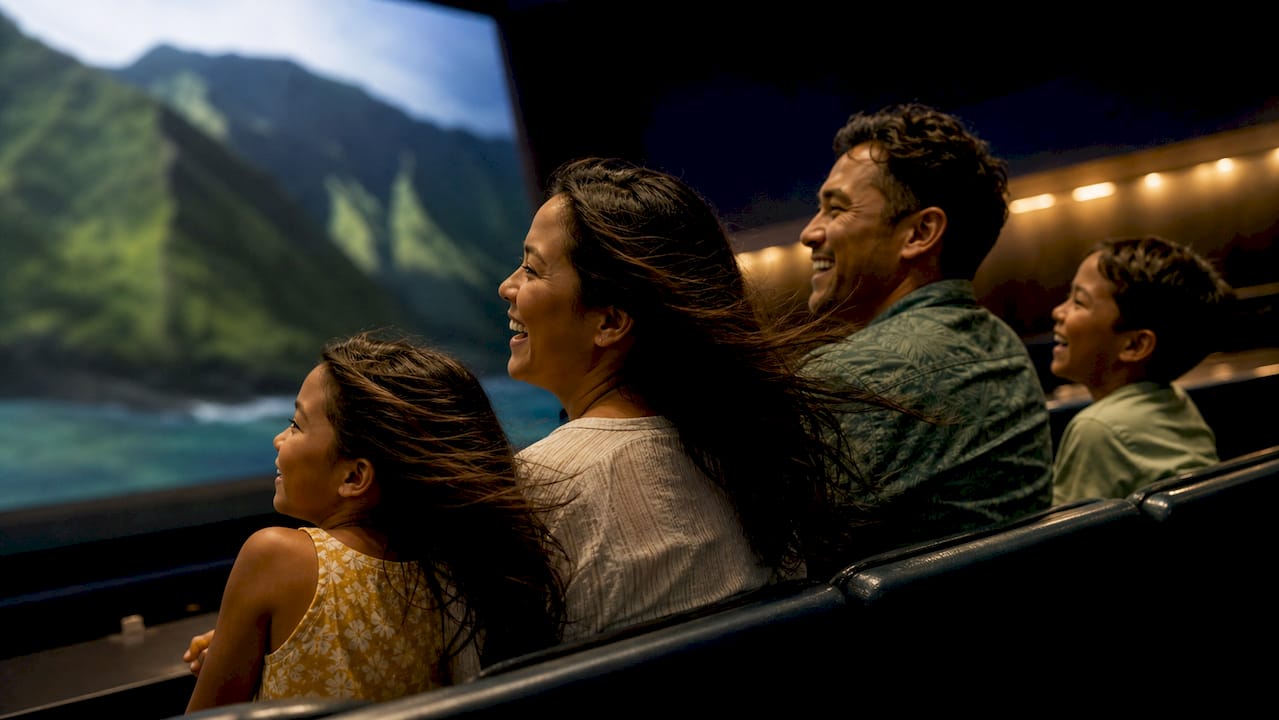
That’s the helicopter pivot worth understanding: a real helicopter tour runs close to $400 a person, comes with strict weight and age limits, and leaves a fair number of passengers queasy by the second turn. Flight of Aloha delivers the aerial views and the emotional payoff without the price tag, the altitude anxiety, or the motion sickness risk.
A few more reasons it earns a spot on this list:
- Walking distance from Kailua Pier and the Kona tender dock, making it a genuinely easy shore excursion for cruise passengers with limited time
- The best air-conditioned escape in town for a rainy Kona afternoon, a smoky vog day, or simply a break from the midday heat
- Native Hawaiian owned, with storytelling and cultural detail woven directly into the films rather than bolted on for tourists
- Two convenient locations: Kailua-Kona on the Big Island and Whalers Village in Kaanapali, Maui
Book online to secure your seat, especially during cruise season when tender-dock crowds fill afternoon slots fast.
Family-Friendly Accommodation Options and Amenities
The right room type shifts as kids grow. Families with toddlers generally do best in suites or two-room setups, since a separate sleeping space means adults get an evening after bedtime instead of tiptoeing around a crib in the same room. Families with school-age kids often prefer connecting rooms or vacation rentals with a full kitchen, which cuts meal costs significantly over a week-long stay.
Amenities worth checking before booking, not after arrival, include a kids’ pool with a shallow end, on-site laundry for longer trips, and a refrigerator at minimum even in a standard hotel room. Resorts marketed specifically as family-friendly often add kids’ clubs, but read the fine print on minimum ages and included hours. Some clubs run only a few hours a day, which isn’t enough to plan an entire adult date night around.
Vacation rentals deserve a specific gut check: confirm crib or pack-and-play availability directly with the host rather than assuming a listing labeled “family-friendly” includes it. Resort loyalty programs sometimes offer free additional-room discounts for larger families, worth asking about directly since these deals aren’t always listed publicly. Whatever you choose, book accommodations early. Family-sized rooms sell out months before standard doubles do, particularly around school breaks.
Safety Considerations and Health Tips for Family Travel
Basic health prep prevents most travel disruptions. Pack a compact first-aid kit with children’s pain reliever, adhesive bandages, and any prescription medications in their original labeled containers, especially important if you’re flying internationally and might need to explain contents at security.
Sun protection deserves more attention than most families give it. Reapply sunscreen every two hours during outdoor days, not just once in the morning, and pack a wide-brim hat for toddlers who won’t reliably wear sunscreen on their face. Hydration matters just as much, particularly at theme parks and on hiking trails, where kids get distracted and forget to drink water until they’re already cranky.

Before departure, confirm your health insurance covers your destination, and consider travel insurance for international trips or any vacation with a significant non-refundable deposit. If anyone in your family has allergies, pack written documentation and consider a translated allergy card for international trips where a language barrier could slow down a restaurant conversation that matters.
For water-based trips, confirm lifeguard hours directly rather than assuming a beach or resort pool is staffed the entire day. Many resort pools reduce staffing in shoulder seasons, and that’s exactly the detail that gets missed until it matters.
Author Perspective: Balancing Plan and Spontaneity
I’ve come to trust loosely paced plans over tightly packed ones. A schedule with two main activities and real breathing room beats a checklist crammed with everything a destination offers. The research backs this up: over-scheduled trips tend to produce less satisfaction, not more, and the moments families actually remember are rarely the ones planned down to the hour.
That’s why the decision matrix earlier in this guide matters. It gets you to the right destination fast, so you can spend your actual planning energy on pacing instead of indecision. Hawaii rewards that approach especially well. An easy afternoon booked at Flight of Aloha leaves the rest of the day wide open for whatever your family stumbles into next.
— Ola
Book Flight of Aloha for Your Hawaii Family Trip
Skip the $400-a-head helicopter tour and the motion sickness that comes with it. Flight of Aloha gives your family the same aerial thrill over Hawaii’s coastlines and valleys through 8K visuals, motion seats, and cultural storytelling rooted in real Hawaiian legend, all from a comfortable seat with zero altitude anxiety.

It’s genuinely the easiest activity to add to a Kona or Maui itinerary. The Kailua-Kona location sits walking distance from Kailua Pier and the tender dock, making it a natural stop for cruise passengers on a tight shore excursion window. Both the Kona and Whalers Village Kaanapali locations double as the best air-conditioned escape in town on a rainy day, a vog-heavy afternoon, or any stretch when the midday heat makes outdoor plans miserable. The experience is Native Hawaiian owned, with cultural storytelling built into every film rather than added as an afterthought.
If your Hawaii plan needs one reliable, low-effort activity that works for a three-year-old and a teenager in the same afternoon, this is it. Check show times and book your tickets online before your trip, since cruise-season afternoons fill quickly. Book online to secure your seat.
Sources
- Children & Nature — Research digest: backcountry and wilderness adventures
- Family Vacation Planner: A 7-Step Process (2026)
- Choosing a Vacation Everyone Likes | Ardent Workshop