
Sustainable tourism in Hawaii: Principles and practices 🌺
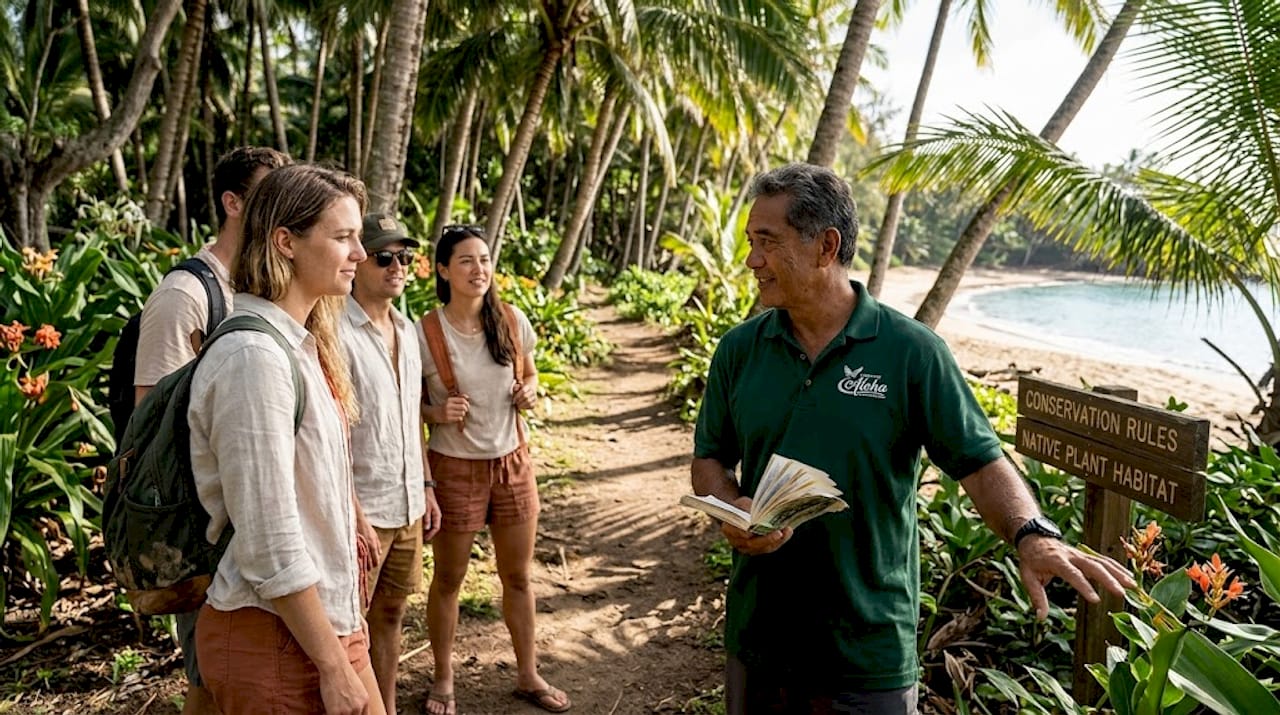
Most people assume sustainable tourism simply means picking a hotel with recycling bins or skipping single-use plastics. That idea is genuinely incomplete. Sustainable tourism requires attention to social and economic impacts and to host communities’ needs, not just environmental ones. In a place like Hawai’i, where Native Hawaiian culture, ‘āina (land), and living traditions are at the core of every experience, this distinction matters deeply. If you’re planning a trip and want your visit to actually do good, here’s everything you need to understand first.
Key Takeaways
| Point | Details |
|---|---|
| Holistic approach | Sustainable tourism addresses environmental, economic, and social impacts together—not just eco-friendly practices. |
| Local culture matters | In Hawaii, meaningful stewardship and cultural respect are at the heart of true sustainability. |
| Standards guide action | Look for certified businesses and community-led programs that meet recognized standards like GSTC. |
| Evidence is crucial | Trust experiences that offer transparency and measurable impacts, not just marketing claims. |
| Traveler choices matter | Your decisions as a visitor help support Hawaii’s people, heritage, and environment. |
Defining sustainable tourism: Beyond eco-friendly travel
Sustainable tourism is not a single idea. It is a three-fold commitment to environmental health, economic fairness, and cultural respect. Think of it as a triangle where all three sides must stay in balance. Remove one side and the whole structure collapses.
The globally accepted definition says it best:
“Sustainable tourism takes full account of its current and future economic, social, and environmental impacts while addressing the needs of visitors, the industry, the environment, and host communities.”
This means that choosing a tour operator who plants trees but ignores local wages or disrespects sacred sites is not truly sustainable. All three pillars must be present and working together.
When you’re looking for genuinely sustainable experiences, here’s what to consider:
- Environmental responsibility: Does the experience protect natural ecosystems, reduce waste, and conserve water and energy?
- Cultural authenticity: Does it respect and reflect real Hawaiian traditions, rather than turning them into entertainment for profit?
- Economic fairness: Does money flow into the local community, supporting local jobs, vendors, and cultural practitioners?
- Community consent: Were local people involved in designing and approving the experience?
Looking for cultural entertainment in Hawaii that checks all of these boxes takes a little research, but the reward is an experience that feels genuine and leaves a positive mark.
The eco-friendly lens alone is not wrong. It is just far too narrow. Hawai’i’s rich cultural legacy, its living language, and its place-based values mean that any tourism claiming the “sustainable” label must go much deeper than carbon offsets.
Guiding principles and operational standards
Once you understand the core definition, the next key is knowing how these concepts are put into practice on the ground. Global organizations have built frameworks that translate broad principles into specific, measurable actions.
UN Tourism describes sustainable tourism development as requiring three things:
- Preserving natural heritage and biodiversity
- Respecting socio-cultural authenticity and the heritage of host communities
- Providing viable long-term economic operations that benefit all stakeholders
These are not aspirational slogans. They are operational requirements. The difference matters because they force businesses, governments, and travelers to ask specific questions: Is this reef being protected? Are local cultural practitioners being compensated? Is this business model sustainable over 20 years?
The Global Sustainable Tourism Council (GSTC) translates these principles into concrete standards. According to GSTC standards, requirements are structured around four core themes:
| Theme | What it covers |
|---|---|
| Effective sustainability planning | Policies, goals, and accountability systems |
| Social and economic community benefits | Local hiring, fair wages, community investment |
| Cultural heritage | Protecting traditions, sacred sites, and local knowledge |
| Reducing environmental impacts | Energy, water, waste, and ecosystem protection |
These standards serve as a benchmark, and travelers can use them as a checklist when evaluating experiences.
Pro Tip: When booking any tour or attraction in Hawai’i, ask the company directly: “Do you have a sustainability policy?” and “How do you support local Hawaiian culture or community programs?” A genuine operation will have clear, specific answers. Vague responses are a red flag.
Signs of an authentic, sustainable experience include transparent reporting on environmental impact, visible community partnerships, local guides who are connected to the culture, and programs that give back to Native Hawaiian organizations. The Hawaii attractions guide is a great starting point for identifying experiences that meet these standards.
The GSTC framework is especially powerful because it distinguishes between intentions and outcomes. Any business can say it’s sustainable. Standards require proof.
Sustainable tourism in Hawaii: Local stewardship and cultural connection 🌿
Applying global principles looks different everywhere. In Hawai’i, sustainable tourism is inseparable from Native Hawaiian values. Two concepts are central: ‘āina (land, with a sense of stewardship and reciprocity) and kama’āina (local people, those born of the land). These values shape how responsible tourism here works at every level.

The Hawaii Tourism Authority (HTA) actively funds community-based programs. The Kūkulu Ola program awarded $980,000 to 26 organizations for 2025 to 2026 to support and strengthen Native Hawaiian culture. That’s not a small gesture. It reflects an official recognition that tourism’s health is directly tied to the health of the culture that makes Hawai’i extraordinary in the first place.
Here are the top practical actions eco-conscious visitors can take in Hawai’i:
- Choose locally owned experiences that employ Native Hawaiian guides or cultural practitioners.
- Learn a few Hawaiian words before you arrive. Mahalo (thank you), aloha (love, peace, compassion), and mauka/makai (toward the mountains/toward the ocean) show genuine respect.
- Follow posted cultural protocols at sacred sites like heiau (ancient temples). Never climb on structures or remove stones.
- Support organizations and businesses that have transparent community investment programs.
- Ask questions about where your money goes. Does this tour operator employ local people? Do they partner with Hawaiian nonprofits?
- Avoid over-visited sites during peak hours. Redistributing your visits reduces pressure on fragile ecosystems and cultural landmarks.
The data below shows how community investment connects to cultural sustainability in Hawai’i:
| Program | Funding (2025-2026) | Organizations supported | Focus |
|---|---|---|---|
| HTA Kūkulu Ola | $980,000 | 26 | Native Hawaiian culture |
| Community-based tourism | Varies | Island-level | Local stewardship |
| Environmental restoration | Varies | Multiple agencies | ‘Āina (land) care |
Exploring immersive Hawaii experiences rooted in genuine cultural storytelling is one of the most powerful ways to connect with this place. And for deeper background on what separates authentic cultural engagement from surface-level “Hawaii-themed” entertainment, the overview of cultural experiences in Hawaii is genuinely eye-opening.
When cultural stewardship is treated as a foundation rather than an add-on, the entire tourism ecosystem becomes healthier for everyone: visitors, residents, and the land itself.
Measuring success: Evidence, indicators, and ongoing challenges 📊
With local action underway, it’s important to ask: What systems actually prove progress toward sustainability? Good intentions without measurement lead to greenwashing. Real sustainable tourism requires data, transparency, and honest reporting.
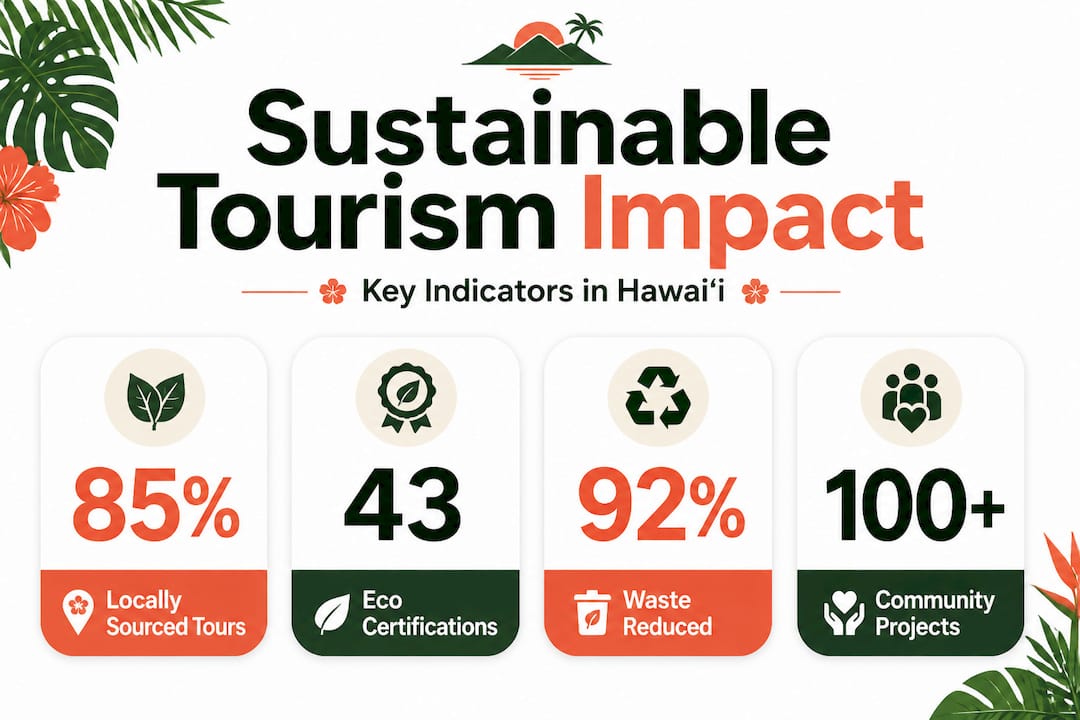
The OECD has studied this challenge directly. A recent OECD report highlights the importance of building an evidence base and developing indicators to measure and monitor the sustainability of tourism destinations over time. Without these indicators, “sustainability” becomes just a marketing label.
Indicators that matter include:
- Environmental health: Water quality at reefs, wildlife population trends, waste volumes per visitor
- Cultural vitality: Number of active Hawaiian language speakers, participation in cultural programs, funding for cultural organizations
- Economic equity: Percentage of tourism revenue staying in local communities, local employment rates in tourism sectors
- Visitor experience quality: Satisfaction data balanced against community wellbeing surveys
The challenges are real and worth naming honestly:
- Varying definitions: Not everyone agrees on what “sustainable” means in practice, which creates gaps between policy language and on-the-ground reality.
- Community consensus: Local residents, tourism businesses, and government agencies don’t always share the same vision. Finding common ground takes time and genuine dialogue.
- Balancing visitor numbers: More visitors often mean more economic activity, but also more pressure on natural and cultural sites. Managing this balance is one of the hardest governance questions Hawai’i faces.
“The evidence base for sustainable tourism is still maturing. Destinations that lead will be those who invest in transparent monitoring and reporting systems rather than relying on self-declared claims.”
As a traveler, you can make smarter choices by looking for destinations and attractions that publish their impact data, welcome questions about their practices, and have verifiable partnerships with local communities. The eco-friendly checklist for Hawaii is a practical resource for filtering your options before you book.
Measurement is not glamorous. But it’s the difference between tourism that actually protects Hawai’i and tourism that just says it does.
Why sustainable tourism requires more than good intentions
Here’s the honest truth that too many conversations about sustainable tourism skip entirely: good intentions are not enough, and they never have been.
It’s easy for “sustainable tourism” to become a buzzword that looks great in a brochure but creates no measurable benefit. The GSTC framework makes this explicit, noting that standards distinguish between what should be done and how performance is actually achieved and measured. Operators need real implementation systems and transparent evidence, not just polished marketing language. This is a standard many businesses simply don’t meet.
The governance challenge in Hawai’i is especially layered. UHERO research shows that while residents and industry leaders often align on supporting regenerative tourism in principle, they diverge sharply when it comes to definitions and practical models, including whether to limit visitor numbers or focus on managing specific sites. That disagreement isn’t a failure. It’s actually a sign of a healthy, working democracy. But it means progress is slower and messier than we’d like.
What this means for travelers: be skeptical of vague “sustainable” claims without proof. Ask for specifics. Look for businesses that acknowledge trade-offs rather than pretending none exist. The best operators will tell you where they’re still improving. That honesty is itself a marker of authenticity.
Understanding entertainment trends in Hawaii also reveals how the most forward-thinking attractions are blending cultural storytelling, community investment, and visitor experience in ways that actually serve the ‘āina and the people who call it home.
Sustainable tourism in Hawai’i is not a destination you arrive at. It’s a practice you commit to, visit after visit, choice after choice. 🌺
Explore immersive and sustainable experiences in Hawaii
Equipped with a clearer picture of what sustainable tourism really means, you’re ready to plan a Hawaii visit that truly honors the land and its people. Choosing wisely starts with knowing where to look.

At Flight of Aloha, cultural storytelling rooted in Hawaiian legends meets breathtaking 8K visuals, motion, scents, and wind, creating an immersive experience that puts the spirit of Hawai’i at the center. It’s the kind of experience where you learn why this place matters, not just what it looks like. For a curated overview of responsible options across the islands, the attractions visitor guide helps you identify experiences with real community roots and transparent cultural values. Your next trip can be one that leaves Hawai’i better than you found it.
Frequently asked questions
What are the main principles of sustainable tourism?
Sustainable tourism balances environmental conservation, socio-cultural respect, and economic benefit for host communities. UN Tourism defines these three pillars as the foundation for tourism development that protects natural heritage, honors culture, and supports viable local economies.
How do I identify a truly sustainable travel experience in Hawaii?
Look for local stewardship, community programs, certified guides, and transparent evidence of environmental and cultural benefit. GSTC Standards provide operational structure that translates good intentions into verifiable, measurable business practices.
Why is Hawaiian culture important to sustainable tourism in Hawaii?
Native Hawaiian values, stewardship, and culture shape genuinely responsible tourism and benefit both visitors and residents. Programs like the HTA Kūkulu Ola reflect how deeply cultural health and tourism health are connected in Hawai’i.
Are there standards or certifications for sustainable tourism?
Yes, programs like the GSTC Hotel Standard set minimum requirements for hotels and tour operators, covering cultural, social, and environmental outcomes. These standards offer travelers a reliable filter for identifying businesses that take sustainability seriously.
What challenges does sustainable tourism face in Hawaii?
Major challenges include differing definitions, balancing local wishes with visitor needs, and transparent measurement of outcomes. UHERO research shows that even aligned stakeholders diverge on governance models and practical approaches, which makes consistent progress genuinely complex.
Recommended
- Sustainable Tourism In Hawaii Attractions: Visitor Guide | Flight Of Aloha
- Your Eco-friendly Attractions Checklist For Hawaii Adventures | Flight Of Aloha
- Understanding Hawaiian Tradition In Tourism | Flight Of Aloha
- Hawaii Attraction Safety Tips For Families And Cultural Explorers 🌺 | Flight Of Aloha
- Essential tips for responsible safaris in Uganda: ethical wildlife