
The Role of Animation in Flying Theaters: A Complete Guide 🌺

Animation is the core engine of every flying theater experience. It is the synchronized visual narrative that fuses with motion seats, wind, scent, and sound to create the convincing sensation of flight. Without animation, a flying theater is just a chair that tilts. With it, you are soaring over Hawaiian lava fields, diving through Niagara’s mist, or gliding above the Arabian desert. The role of animation in flying theaters goes far beyond pretty visuals. It is the storytelling medium that makes audiences feel something real, and that emotional truth is what separates a great flying theater from a forgettable one.
How does animation drive immersion in flying theaters?
Animation is the primary medium that makes immersive flight sensations feel real. Attractions like Simworx’s Pegasus Flying Theatre in Istanbul use synchronized visuals and wind effects across 40 motion seats to build a shared story that no single rider experiences alone. Brogent’s Flying Over Saudi wraps visitors in panoramic 8K visuals combined with wind, mist, and scent, proving that animation quality directly controls emotional depth. MetaPano describes the flying cinema format as entirely dependent on the fusion of visuals and motion to produce the flight illusion. Hardware provides movement. Animation provides meaning.
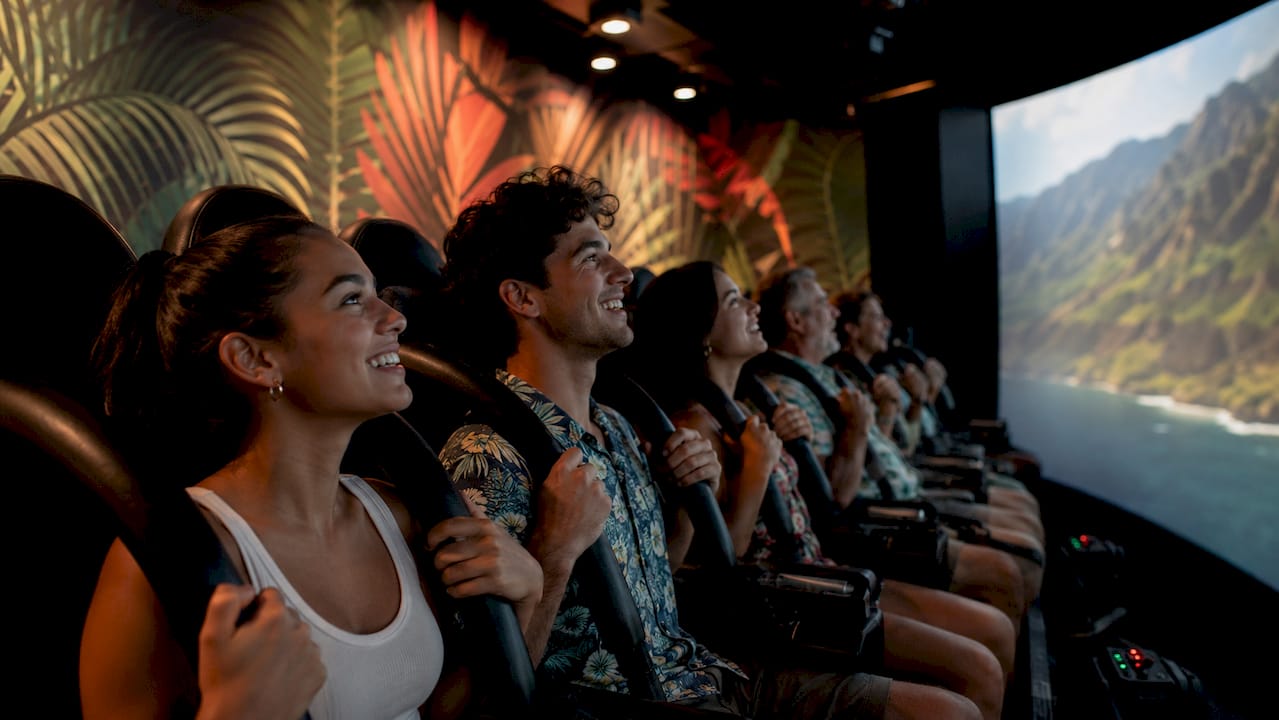
The industry term for this format is “flying theater” or “flying cinema,” and both terms point to the same truth: the cinematic content is inseparable from the physical experience. Filmmakers and entertainment designers who understand this produce rides that audiences remember for years. Those who treat the film as secondary to the hardware produce experiences that feel hollow after the first drop.
What animated storytelling techniques create emotional resonance?
Animated storytelling in flying theaters relies on visual composition, timing, color, and camera movement rather than dialogue. Pixune explains that timing and visual cues power emotional impact in immersive animation far more effectively than spoken words. This matters enormously in a flying theater, where the audience is in motion and cannot read subtitles or focus on complex text. The story must land through what they see and feel.
Here are the core animated storytelling techniques that work best in flying theater environments:
- Composition and framing. Wide establishing shots orient the audience in space. Tight close-ups of natural details like crashing waves or lava flows create intimacy and wonder.
- Color grading and mood. Warm golden tones signal safety and beauty. Deep blues and greens signal mystery or depth. Color guides emotion without a single word.
- Camera pacing. Slow glides build anticipation. Sudden drops or banking turns create excitement. The camera’s rhythm must match the motion platform’s rhythm exactly.
- Story beats. Each emotional shift in the animation, called a story beat, must be readable in under two seconds. Audiences in motion have less cognitive bandwidth for complex narrative transitions.
- Character and cultural anchoring. Stories rooted in real places or legends, like Hawaiian mythology, give audiences an emotional anchor that pure spectacle cannot provide.
Pro Tip: Design your animation’s emotional arc before you touch the motion programming. If the story does not work as a silent film, it will not work on a motion platform either.
Animation vs. motion: how does synchronization actually work?
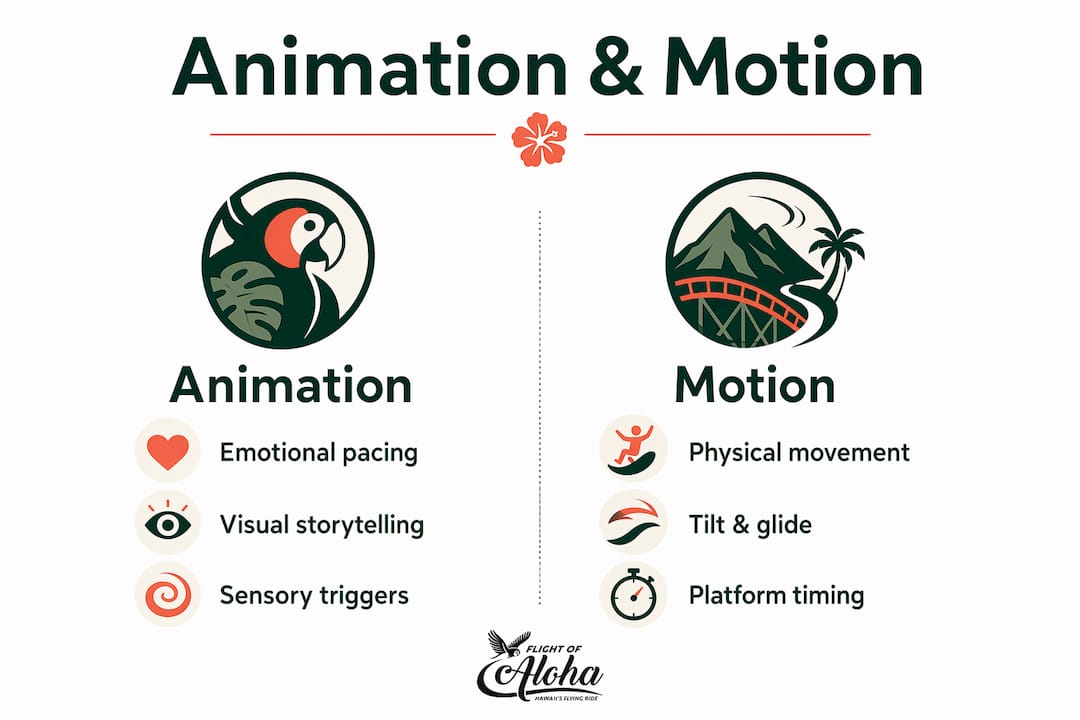
The technical challenge of flying theater animation is precise synchronization between the visual story and the physical ride. DOF Robotics describes compact flying theaters where animation timing and ride kinematics must align to the frame. A single second of misalignment between a banking turn in the film and the platform’s tilt breaks the illusion completely. That break pulls the audience out of the story and reminds them they are sitting in a chair.
The table below shows the key differences between animation timing requirements and motion programming requirements in flying theater production:
| Factor | Animation timing | Motion programming |
|---|---|---|
| Primary goal | Emotional story pacing | Physical realism and safety |
| Unit of measurement | Frames per second (24–60 fps) | Degrees of tilt and velocity |
| Flexibility | High creative latitude | Constrained by hardware limits |
| Revision cycle | Can be edited post-render | Requires re-testing on platform |
| Failure mode | Pacing feels slow or rushed | Audience feels sick or disoriented |
Environmental effects add another layer. Wind, mist, and scent are triggered by animation cues, not motion cues. A waterfall scene needs mist to hit the audience at the exact frame the waterfall fills the screen. Scent diffusers for a coffee farm sequence must activate two to three seconds before the visual, because the human nose processes scent with a slight delay. These micro-timing decisions are what separate world-class flying theater experiences from average ones.
Pro Tip: Build your sensory effect triggers directly into your animation timeline, not as a separate document. Treating them as one unified script prevents the timing drift that kills immersion.
How does pre-show animation prepare audiences emotionally?
Pre-show animation is not a waiting room distraction. It is the first act of the story. Niagara Takes Flight uses LED lighting and cinematic media in its queue and pre-show areas to open the narrative and emotionally engage visitors before they ever sit down. That emotional calibration is deliberate. Audiences who arrive at the ride seat already invested in the story respond more deeply to the flight sequence.
The best pre-show animation strategies share these qualities:
- Narrative continuity. The pre-show introduces characters, locations, or themes that the flight sequence then expands. There is no jarring reset when guests board.
- Atmospheric design. LED lighting color temperatures shift from cool neutrals in the queue to warm, story-specific tones as guests approach the boarding area.
- Anticipation building. Sound design and animation pacing in the pre-show accelerate gradually, raising heart rates and excitement before the first motion cue.
- Cultural context. For attractions rooted in place, like a Hawaiian flying theater, the pre-show is where legends and history are introduced so the flight feels earned.
Queue and pre-show animations function as emotional preparation, so the animation strategy must integrate from the first moment a guest enters the building through the final frame of the flight. Treating pre-show and ride film as separate productions is the most common creative mistake in this format.
What should filmmakers know before producing flying theater animation?
Producing animation for a flying theater is fundamentally different from producing a film or a theme park video. Storybirdie highlights that storyboards for ride animations require pose and duration markers that represent exact timing beats, not just visual composition. Every frame that coincides with a platform motion cue must be flagged in the storyboard. This is not optional. It is the production document that keeps the animation team and the motion engineering team synchronized.
Here are the five most important production rules for filmmakers entering this format:
- Storyboard for motion, not just vision. Mark every platform cue directly on your storyboard. Note the expected tilt angle, direction, and duration alongside the visual frame.
- Avoid static moments longer than four seconds. Audiences in motion seats expect continuous visual flow. A held wide shot that works beautifully in cinema feels like a system error in a flying theater.
- Design for group experience, not individual immersion. Flying theaters offer shared storytelling with synchronized motion and scale that isolated VR cannot replicate. Your animation should create moments that feel communal, not personal.
- Test on the actual platform early. Renders that look perfect on a monitor often reveal pacing problems the moment the platform moves. Schedule platform testing at the animatic stage, not after final render.
- Respect the field of view. Flying theater screens fill the audience’s peripheral vision. Compositions that work on a standard cinema screen often feel claustrophobic or disorienting at full projection scale.
Pro Tip: Watch your animatic on the largest screen available while someone physically tilts your chair. It sounds ridiculous, but it catches pacing errors that no monitor review will reveal.
Key Takeaways
Animation is the soul of every flying theater. Without precise visual storytelling synchronized to motion and sensory effects, the physical hardware produces no meaningful experience.
| Point | Details |
|---|---|
| Animation drives the flight illusion | Synchronized visuals, not hardware alone, create the sensation and emotional impact of flight. |
| Storytelling techniques matter most | Composition, color, pacing, and story beats communicate emotion more effectively than dialogue in motion environments. |
| Synchronization is frame-level work | Animation timing and motion platform programming must align precisely to prevent immersion breaks. |
| Pre-show is part of the story | Queue and pre-show animations emotionally prepare audiences and must connect directly to the ride film. |
| Filmmakers need specialized storyboards | Pose and timing markers tied to platform cues are required, not optional, in flying theater production. |
Why animation is the soul, not the skin, of flying theaters
I have watched a lot of immersive experiences over the years, and the ones that stay with me are never the ones with the most impressive hardware. They are the ones where the animation told a story I actually cared about. The technology in flying theaters has advanced dramatically. 8K projection systems and LED walls now deliver visual fidelity that was impossible a decade ago. But fidelity without narrative is just a very expensive screensaver.
What I find most exciting right now is the convergence of cultural storytelling and animation technology. Attractions rooted in real places and real legends, like the Hawaiian mythology woven through Flightofaloha’s ride films, have an emotional depth that generic “fly over the world” content simply cannot match. The animation is not just showing you a place. It is telling you why that place matters.
The practical lesson I keep coming back to is this: the filmmakers who succeed in this format are the ones who treat the motion platform as a storytelling collaborator, not a technical constraint. When the platform’s tilt is choreographed to the animation’s emotional beat, the audience does not notice the technology at all. They just feel like they are flying. That invisibility is the goal. And animation is the only tool that achieves it.
— Ola
Flightofaloha: where animation meets the spirit of Hawai’i
Flightofaloha is the Big Island’s most immersive indoor experience, and one of the top things to do in Kona for families, cruise visitors, and anyone who wants aerial views of Hawai’i without the $400 helicopter tour price tag. Located inside King Kamehameha’s Kona Beach Hotel, it is walking distance from Kailua Pier, making it perfect for shore excursions Kona visitors can complete in under two hours.

This Native Hawaiian-owned attraction blends 8K visuals, motion seats, wind, scent, and cultural storytelling rooted in Hawaiian legends through ride films like Naupaka and Lahaina. It is the best indoor activity on the Big Island when vog rolls in or the heat climbs mauka. Whether you are a first-time visitor or a local looking for a family friendly Kona experience, Flightofaloha delivers the animation-driven flight sensation this article describes. Book online at flightofaloha.com to secure your seat.
FAQ
What is the role of animation in flying theaters?
Animation is the synchronized visual narrative that integrates with motion seats and sensory effects to create the illusion of flight and deliver emotional storytelling. Without animation, the physical hardware produces no meaningful experience.
How does animation synchronize with motion in a flying theater?
Animation timing aligns frame-by-frame with the motion platform’s tilt, drop, and glide sequences. A single second of misalignment between the visual and the physical motion breaks the flight illusion entirely.
Why is pre-show animation important in flying theaters?
Pre-show animation emotionally prepares audiences and establishes the story’s context before guests board the ride. Attractions like Niagara Takes Flight use LED lighting and cinematic media in queue areas as the story’s opening act.
How is producing animation for a flying theater different from regular filmmaking?
Flying theater animation requires storyboards with pose and timing markers tied to platform motion cues, and it demands early testing on the actual hardware. Static shots longer than a few seconds and compositions designed for flat screens often fail in the immersive environment.
Are flying theaters better than VR for group storytelling?
Flying theaters deliver shared, synchronized storytelling with motion and scale that isolated VR experiences cannot replicate. The group format creates communal emotional moments, which is a core advantage of the flying theater model.