
Traditional vs. Immersive Hawaii Attractions: Your Guide 🌺
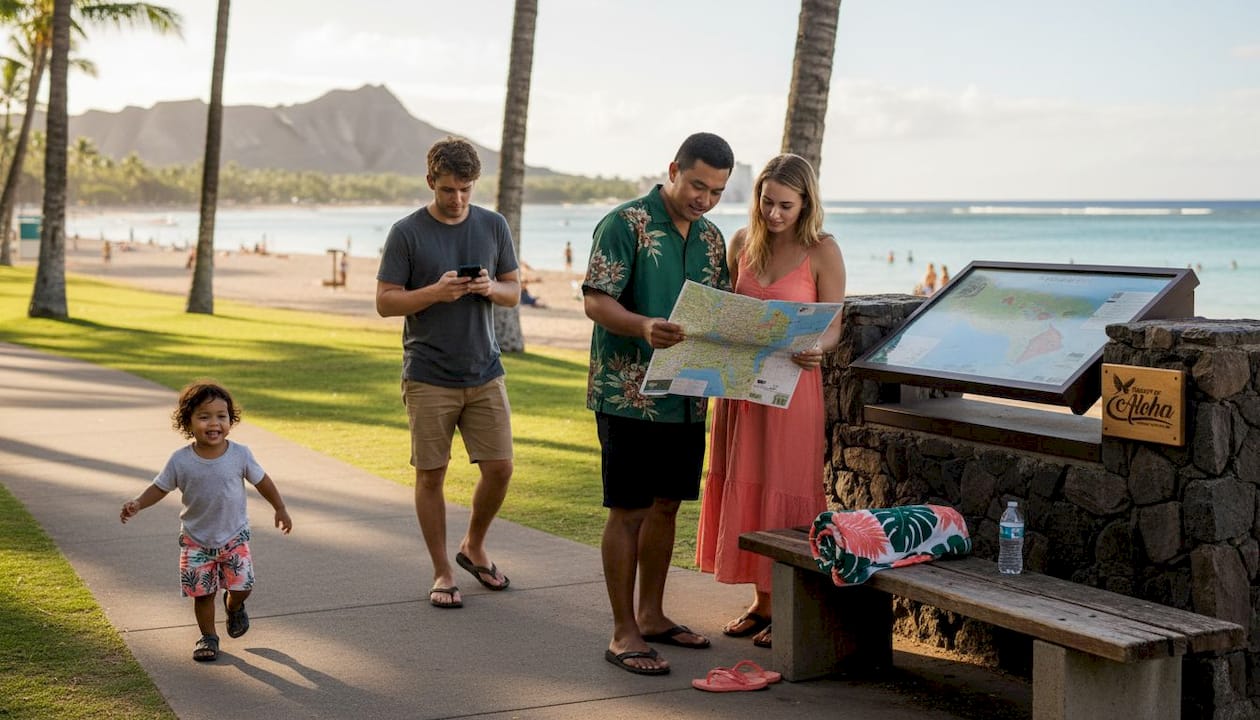
Planning a trip to Hawai’i often feels like standing at a fork in the road. Do you book a luau, catch a hula show, or try that buzzy new immersive flying theater everyone is talking about? Most visitors assume Hawaii attractions fall neatly into two buckets: old-school cultural traditions or flashy high-tech experiences. The truth is far more exciting. Today’s Hawai’i offers a rich, evolving landscape where modern attraction definitions are shifting fast, and the smartest travelers are learning to mix both worlds for a trip they will never forget.
Key Takeaways
| Point | Details |
|---|---|
| Know the difference | Traditional attractions focus on live performance and culture, while immersive use VR/AR tech for multi-sensory experiences. |
| Authenticity matters most | Native Hawaiian leadership is key to genuine storytelling, regardless of the attraction’s technology. |
| Consider accessibility | Immersive attractions are more accessible for people with mobility challenges, but traditional options often foster deeper group connection. |
| Best experiences blend both | Combining traditional and immersive attractions leads to a richer, more memorable Hawaiian trip. |
Defining traditional and immersive attractions
With the context set, let’s define exactly what we mean by “traditional” and “immersive” attractions in the Hawaiian context.
Traditional attractions are rooted in face-to-face human connection, live performance, and physical participation. Think of these as experiences where people are the main ingredient:
- Luaus: Outdoor feasts featuring fire dancing, imu (underground oven) ceremonies, and live hula performances. They have been welcoming families for generations.
- Polynesian Cultural Center (PCC): Village-based demonstrations where performers teach authentic crafts, music, and storytelling in real time.
- Hula and chant performances: Live shows anchored in live storytelling that pass down centuries of oral Hawaiian history.
- Cultural walking tours: Guided journeys through historical sites like Pu’uhonua o Honaunau, where guides bring the past alive through personal narrative.
Immersive attractions layer technology over or around real-world experience to create environments that feel larger than life. They sit along what researchers call the reality-virtuality continuum, ranging from augmented reality (AR) overlays that add digital content to a real space, all the way to full virtual reality (VR) that places you inside a completely simulated world. Studies show that traditional relies on physical storytelling while immersive formats use multi-sensory feedback to create a powerful sense of presence. Examples in Hawai’i include:
- AR-enhanced cultural journeys: Apps or guided tours that overlay digital legends and historical figures onto real landscapes.
- VR canoe experiences: Seated rides that simulate paddling across ancient Hawaiian waters with surround sound and motion.
- Flying theater attractions: Platforms like Flight of Aloha in Kailua-Kona, which combine 8K visuals, motion seating, wind, and even scent to simulate soaring over lush Hawaiian landscapes.
Why do these definitions matter? Because your expectations change everything. Arriving at a VR experience expecting the warmth of a family luau will leave you disappointed. Showing up at a traditional hula show hoping for high-speed thrills misses the whole point. Knowing the format in advance helps you choose what fits your travel style and your group’s needs.
Pro Tip: When booking an immersive experience, ask directly whether Native Hawaiian cultural advisors or storytellers were involved in creating the content. Their involvement is the clearest signal that the technology is in service of the culture, not the other way around.
Key differences: Experience, authenticity, and accessibility
Now that you know what’s considered traditional and what’s immersive, let’s directly compare them so you can make informed choices for your Hawaii experience.
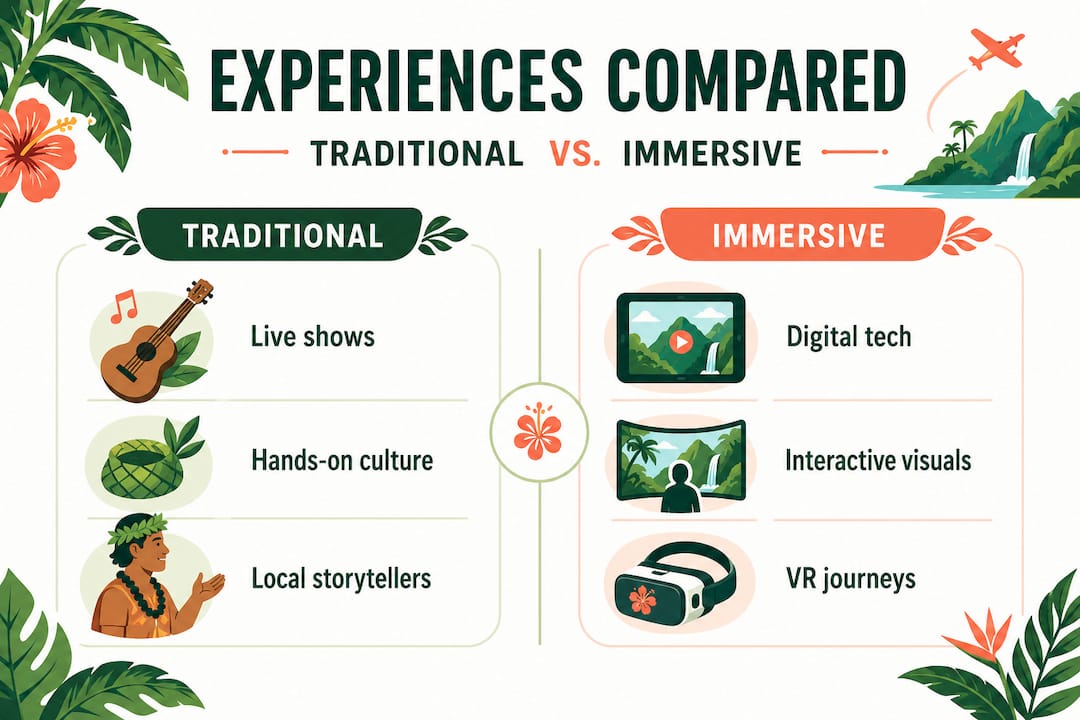
| Dimension | Traditional attractions | Immersive attractions |
|---|---|---|
| Guest experience | Personal, communal, tactile | Sensory-rich, high-impact, visually spectacular |
| Cultural authenticity | High when Native-led; varies by venue | Varies widely; strongest when Native-led and story-focused |
| Accessibility | Weather-dependent; may require mobility | Seated, climate-controlled; great for all abilities |
| Sustainability | Varies; outdoor events have footprints | Lower emissions; no transportation required |
| Emotional connection | Deep, personal, ohana feel | Powerful awe and wonder, less interpersonal warmth |
| Age suitability | Strong for all ages; especially meaningful for adults | Excellent for children; engaging for all ages |
Research shows that VR/AR is better for accessibility for mobility-limited visitors and remote previews, while also offering zero-emission alternatives to helicopter tours. That is a big deal for Hawai’i, where helicopter tours are popular but face growing environmental scrutiny.
Here is a quick way to think about which format fits your situation:
- Families with young children or mobility needs: Immersive attractions win here. Seated, climate-controlled, and designed for multi-age groups, they remove the physical barriers that can make some traditional sites challenging.
- Visitors seeking deep cultural connection: Traditional experiences, especially Native-led ones, deliver the genuine “ohana” feeling that technology cannot fully replicate. Check out authentic cultural experiences before booking.
- Solo travelers or couples interested in Hawai’i’s history: A blend works beautifully. Start with an immersive experience for stunning visual context, then deepen it with a guided traditional cultural tour.
- Visitors with limited time: Immersive attractions are often shorter, weather-proof, and more efficient to plan around. They pack a lot of emotional and visual impact into a contained timeframe.
“When evaluating any Hawaiian attraction, content matters more than the technology used to deliver it. A story told by the wrong hands, no matter how high the resolution, will always feel hollow.” This is the consensus emerging from tourism researchers and cultural practitioners alike.
It is also worth noting that traditional experiences like outdoor luaus are vulnerable to weather cancellations and crowd congestion, while family travel accessibility through immersive formats remains a growing and exciting space in Hawaiian tourism planning. 🌌
How Hawaiian storytelling shapes the attraction experience
Understanding how authenticity and accessibility play out, let’s look at why storytelling is so influential in both kinds of attractions.
Storytelling is the heartbeat of Hawaiian culture. Every volcanic ridge, every ocean current, every flower has a name and a legend behind it. The best attractions, whether traditional or immersive, understand this. They don’t just show you Hawai’i. They tell you Hawai’i.
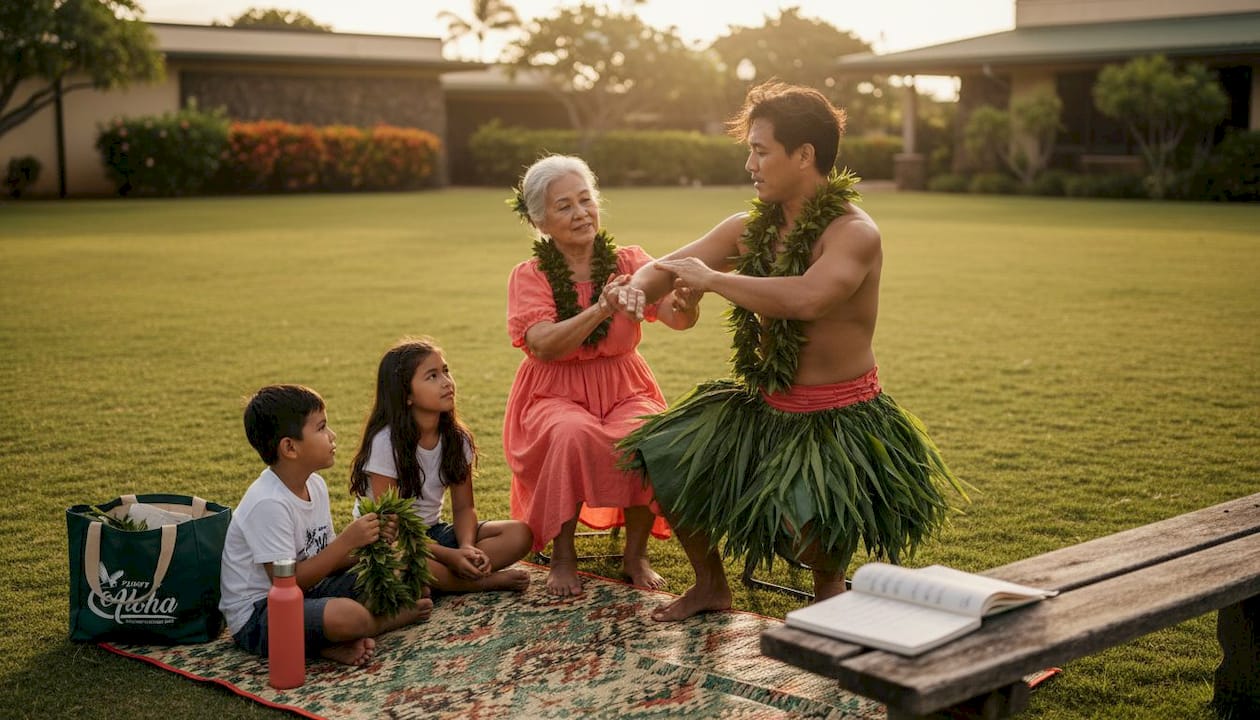
In traditional experiences, story is embedded in every action. A hula dancer’s hand movements narrate journeys across the Pacific. A chanter’s words carry the genealogy of ali’i (chiefs) going back a thousand years. The Polynesian Cultural Center, often cited as the most authentic traditional experience in the Pacific, draws praise specifically because its performers are Polynesian students who live and breathe the cultures they represent.
In immersive experiences, technology becomes the storyteller’s canvas. At Flight of Aloha, for example, the films “Naupaka” and “Lahaina” don’t just show beautiful aerial footage. They weave in Hawaiian legends, giving families an emotional and cultural framework for what they are seeing. The technology enhances the story rather than replacing it. The cultural storytelling impact of this approach is profound because visitors leave with both awe and understanding.
The qualities that separate powerful Hawaiian storytelling from generic entertainment are clear:
- Authenticity: The story comes from the culture, not from a Hollywood interpretation of it.
- Inclusiveness: The narrative welcomes visitors into the experience rather than positioning them as outside observers.
- Interactivity: Whether through a kumu hula (hula teacher) asking guests to try a movement, or a motion theater that makes you feel the wind off the Na Pali Coast, engagement deepens meaning.
- Specificity: Great stories use real place names, real legends, and real historical events rather than generic “ancient Hawaiian” themes.
- Native-led creation: The difference between a story about Hawaiian culture and a story from Hawaiian culture is enormous.
Criticism tends to land on immersive experiences that skip the last point. When VR or theater attractions are built without genuine Hawaiian cultural input, they can veer into what some visitors describe as “cheesy” or superficial. Native-led storytelling remains the gold standard for both formats.
Pro Tip: Before you book any cultural attraction, search for the creative team behind it. Were Native Hawaiian artists, historians, or cultural practitioners part of the design process? If the answer is yes, you are almost certainly in for something meaningful.
Making your choice: Selecting and combining the best for your trip
With a foundation in how each style connects to Hawaiian storytelling, here’s how to make the smartest attraction choices for your group.
- Define your values first. Ask yourself: Is this trip about cultural education, thrill and wonder, relaxation, family bonding, or a mix? Your honest answer narrows the field quickly.
- Check the cultural credentials. Whether traditional or immersive, look for Native Hawaiian involvement. This is your quality filter for both formats.
- Assess your group’s physical needs. Immersive, seated attractions work for nearly everyone. Some traditional outdoor sites require moderate walking or standing for long periods.
- Plan for weather flexibility. Outdoor traditional experiences can be disrupted by rain, especially on the windward side of the islands. Build an immersive option into your schedule as a rain-proof backup or highlight.
- Budget for a blend. One traditional and one immersive experience together often costs less than people expect and delivers twice the perspective.
Here’s a practical planning table to match your traveler profile with the right experience type 🌺:
| Traveler type | Best primary format | Recommended sample experience |
|---|---|---|
| Families with kids under 10 | Immersive | Flying theater, AR storytelling tour |
| History-focused adults | Traditional | Guided cultural site tour, PCC village |
| Visitors with mobility needs | Immersive | Seated flying theater, VR experience |
| First-time Hawaii visitors | Blend | Luau + immersive flying theater |
| Groups celebrating milestones | Blend | VIP immersive experience + sunset luau |
| Eco-conscious travelers | Immersive | Zero-emission VR/theater options |
Research on the topic confirms that immersive tech reconstructs market potential through virtual and real integration, but must be designed thoughtfully to avoid watering down cultural authenticity. The practical takeaway: great immersive experiences are built around the story, with technology added to amplify it, not carry it.
For help enhancing your immersion and planning the right sequence of experiences for your visit, explore itinerary resources that map out how both formats can complement each other beautifully.
Why the best Hawaiian experiences blend old and new
Here is an honest truth that most travel guides won’t tell you: visitors who choose only traditional experiences sometimes leave without fully grasping the visual and geographic grandeur of Hawai’i. And visitors who choose only immersive tech experiences sometimes leave without the human warmth that makes Hawaiian culture so extraordinary. Both groups miss something essential.
We have seen this pattern firsthand. Families who attended a traditional luau in the evening and visited immersive Hawaii experiences during the day consistently reported richer, more layered memories. Kids who “flew” over the Kohala Coast in a motion theater came to the luau that night already asking their hula performer about the legends they had seen visualized earlier. That connection, between the visual wonder of technology and the human warmth of live storytelling, is where the magic happens.
There is also a flawed assumption worth challenging directly: that “authentic” means old-fashioned, and that technology is inherently superficial. That assumption does a disservice to the Native Hawaiian creators who are using immersive technology as a powerful new medium for cultural preservation. Animating a legend in 8K with wind and scent is not selling out. It is finding a new way to make sure the story survives and reaches more people than ever before.
Technology can support, inspire, and amplify. But it cannot replace a kumu hula looking you in the eye and teaching you what a hand gesture means. The best Hawaiian experiences understand this balance and build it intentionally.
Ready to experience Hawaii’s attractions your way?
Having seen the benefits of combining both attraction types, the next step is making those authentic experiences your own. Whether you are traveling with young kids, a group of friends, or celebrating something special, Hawai’i has a perfect blend waiting for you.

Flight of Aloha in Kailua-Kona is one of the most exciting ways to start or round out your Hawaiian adventure. Think of it as what you would get if a helicopter tour and a Disney ride had a baby, rooted entirely in aloha. From the legend-driven film “Naupaka” to the emotional story of “Lahaina,” every experience is crafted with deep respect for Hawaiian culture. Explore customized Hawaiian attractions and discover VIP packages, group experiences, and annual pass options designed to make your trip unforgettable. Book your flight today and feel Hawai’i like never before. 🌌
Frequently asked questions
Are immersive attractions in Hawaii accessible for people with mobility challenges?
Yes, immersive attractions like VR and flying theaters are generally better for mobility-limited visitors because they offer seated, climate-controlled environments that require little to no physical exertion. They are an excellent option for guests who find traditional outdoor sites challenging.
How can I tell if an immersive Hawaiian attraction is culturally authentic?
Look for Native Hawaiian storytellers, cultural advisors, or creators listed as part of the team behind the experience. Attractions praised for authentic preservation consistently involve community members in the creative process, not just as performers but as cultural authorities.
Which type of attraction is better for children: traditional or immersive?
Both work wonderfully for kids, but for different reasons. Immersive attractions are highly engaging and visually thrilling for younger children, while traditional formats build face-to-face connection and hands-on learning. Research notes that immersive tech reconstructs market potential for younger audiences especially when content quality is prioritized over novelty.
Is a luau considered a traditional or immersive attraction?
A luau is a classic traditional attraction. It centers on physical participation and live storytelling, including music, dance, food, and communal celebration, making it one of the most culturally grounded experiences available in Hawai’i.
Are immersive attractions more sustainable than traditional ones?
In many cases, yes. VR/AR offers zero-emission alternatives compared to transportation-heavy options like helicopter tours. For eco-conscious travelers, immersive attractions can be a meaningful way to experience Hawai’i’s landscapes without adding to environmental strain.
Recommended
- Discover Destination Entertainment: Immersive Hawaii Experiences | Flight Of Aloha
- Understanding What Makes Hawaii Immersive Experiences Special | Flight Of Aloha
- How Guides Make Hawaiian Attractions Unforgettable 🌺 | Flight Of Aloha
- Why Try New Attractions: Enrich Your Kona Vacation | Flight Of Aloha