
Why Cultural Preservation Matters: Heritage, Identity, and Community 🌺
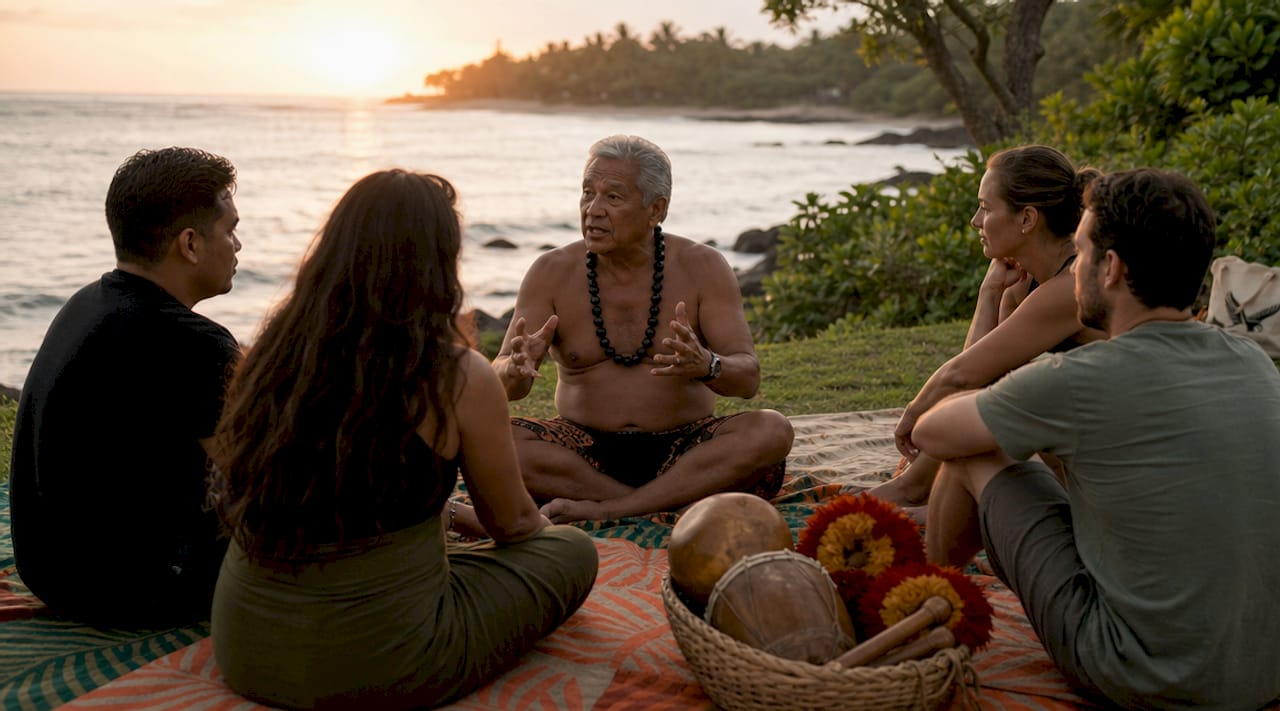
Cultural preservation is defined as the active effort to protect, transmit, and sustain the practices, traditions, languages, and physical sites that form the foundation of human identity. Why cultural preservation matters goes far beyond nostalgia or museum collections. UNESCO emphasizes that heritage is a resource for community identity and cohesion, and a powerful tool to transform societies and renew ideas. Without deliberate preservation, the world loses not just artifacts but living systems of knowledge, belonging, and creativity. From the ancient fishponds of Hawai’i to the oral traditions of Indigenous communities worldwide, cultural heritage is the thread that holds societies together across generations.
Why cultural preservation matters for identity and social cohesion
Cultural preservation is the foundation of community identity because it gives people a shared story, a sense of place, and a framework for understanding the world. When traditions are lost, communities lose more than customs. They lose the social glue that holds neighborhoods, families, and nations together.
UNESCO frames living heritage as vital for intercultural dialogue and mutual respect in a globalized world. This means that preserving culture is not an inward-looking act. It is an outward one, creating the conditions for genuine exchange between different peoples. The rebuilding of Timbuktu’s ancient manuscripts and mausoleums after their deliberate destruction in 2012 is a striking example. Restoring those sites restored community trust, dignity, and a sense of future for the people of Mali.
Here is how cultural preservation directly strengthens social cohesion:
- Shared identity: Common traditions, languages, and rituals create a sense of belonging that reduces social fragmentation.
- Intergenerational connection: Elders pass knowledge to youth, creating continuity and mutual respect across age groups.
- Conflict resolution: Shared cultural frameworks give communities tools to navigate disagreement peacefully.
- Intercultural respect: Exposure to preserved traditions builds empathy and reduces prejudice between different groups.
- Community resilience: Cultures with strong preserved identities recover faster from economic and environmental shocks.
“Heritage must be preserved and handed on as a record of human experience to foster creativity and dialogue among cultures; market forces alone cannot guarantee this.” — UNESCO Universal Declaration on Cultural Diversity
This quote carries a direct policy implication. Governments and communities cannot rely on commercial demand to protect what is most meaningful. Public commitment and funding are required.
What is cultural heritage and what forms does it take?
Cultural heritage preservation operates across two distinct categories recognized by UNESCO: tangible heritage and intangible heritage. Understanding both is key to grasping the full scope of what preservation protects.

Tangible heritage includes physical objects and places: monuments, archaeological sites, historic buildings, and artifacts held in museums. Think of the Hawaiian heiau (sacred temples) scattered across the Big Island, or the ancient taro lo’i (flooded fields) that shaped the landscape mauka to makai for centuries.
Intangible heritage is harder to see but equally vital. UNESCO’s 2003 Convention defines it as community-recognized practices and expressions passed across generations, including:
- Oral traditions and storytelling
- Performing arts such as hula and mele (chant)
- Social practices, rituals, and festive events
- Knowledge about nature and the universe
- Traditional craftsmanship
Korean kimjang, the communal practice of making kimchi, is listed on UNESCO’s Representative List of Intangible Cultural Heritage. It is not just a recipe. It is a social system of sharing, cooperation, and seasonal rhythm. Hawaiian cultural practices like the navigation of traditional wa’a (canoes) carry the same depth. They encode knowledge about stars, ocean currents, and wind patterns that no textbook fully captures.
Pro Tip: When you visit a cultural site or attraction, ask whether it is community-led and whether local practitioners are involved in the storytelling. That question alone tells you whether preservation is genuine or performative.
Preservation of intangible heritage focuses on education, community control, and revitalization rather than static documentation. The goal is not to freeze a tradition in amber but to give it the conditions to keep growing.
How does cultural preservation drive economic growth?
The importance of cultural preservation extends directly into economic development, and the numbers are significant. Cultural and creative industries generate approximately 6.1% of the global economy and 30 million jobs, mostly for people aged 15 to 29. That figure represents a $4.3 trillion annual contribution to global GDP. This means cultural heritage is not a soft social good. It is a major economic engine, particularly for young people in communities where other industries are declining.
| Economic benefit | How cultural preservation delivers it |
|---|---|
| Tourism revenue | Heritage sites attract visitors who spend on accommodation, food, and local goods |
| Creative industry jobs | Preserved traditions fuel music, film, fashion, and design sectors |
| Community enterprise | Local artisans, performers, and guides build livelihoods from living heritage |
| Sustainable development | UNESCO integrates culture into poverty reduction, education, and environmental policy |
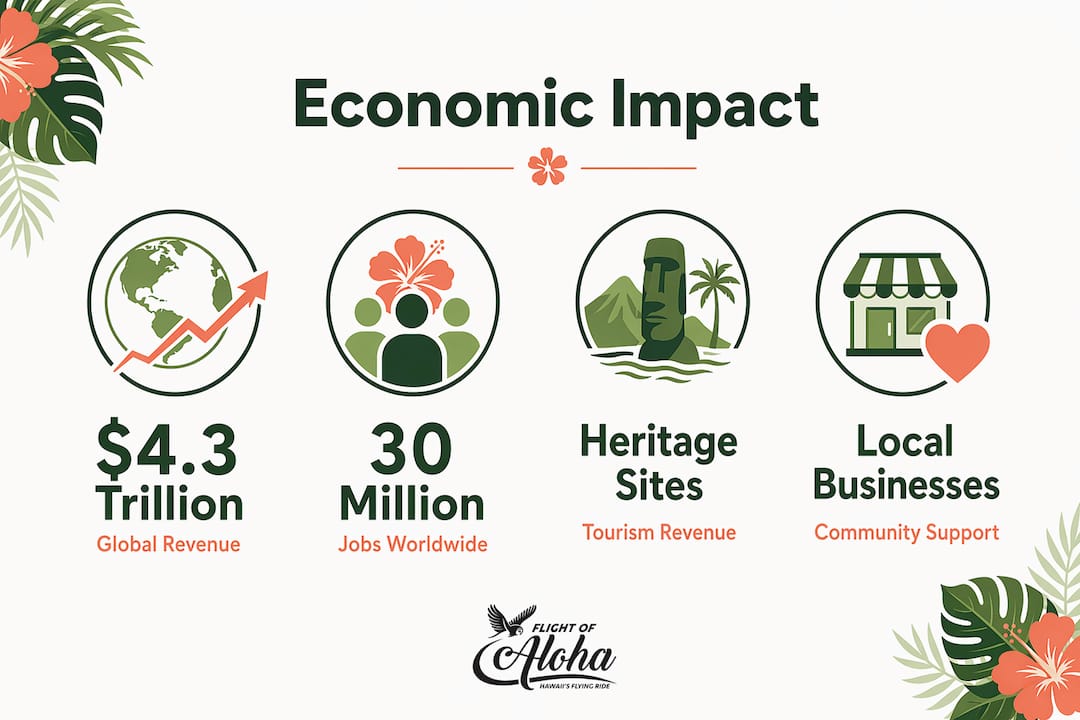
Cultural tourism in Hawai’i is a clear example of this dynamic. Authentic Hawaiian cultural experiences reinforce local identity, sustain traditions, and provide direct economic benefit to communities. When visitors engage with hula, traditional navigation, or Hawaiian legends through responsible tourism platforms, they fund the very practitioners who keep those traditions alive.
Pro Tip: Choose cultural tourism experiences that are Native Hawaiian-owned or community-operated. Your spending directly supports the families and practitioners who carry these traditions forward.
UNESCO’s position is that culture must be integrated into sustainable development policies as a cross-cutting dimension influencing poverty reduction, education, social justice, and environmental sustainability. This is not a peripheral recommendation. It is a call to treat cultural heritage as infrastructure, as essential as roads or schools.
Why do people support preservation even without visiting heritage sites?
One of the most fascinating findings in cultural economics is the concept of non-use value. Most people who support funding for cultural preservation will never personally visit the sites or participate in the traditions they are protecting. Yet they still believe preservation matters. This is not irrational. It reflects three distinct types of value:
- Existence value: The knowledge that a tradition or site exists is itself meaningful, even if you never experience it directly. Many people feel satisfaction knowing that the Hawaiian language is being revitalized, even if they will never speak it.
- Altruistic value: People support preservation for the benefit of others, particularly marginalized communities whose heritage is at risk.
- Bequest value: Communities want to pass cultural heritage to future generations, treating it as an inheritance rather than a commodity.
UK government research demonstrates a positive willingness to pay for these non-use values, meaning people will contribute financially to preservation even when they receive no direct personal benefit. This finding has real policy power.
“Non-use values are politically effective in garnering support for preservation, even when economic returns are low.” — UK Government Research on Cultural Heritage Valuation
Heritage’s non-market social values, including aesthetic pleasure and cultural continuity, are consistently underestimated in traditional economic appraisals. When policymakers use only direct revenue metrics to evaluate heritage funding, they miss the majority of what communities actually value.
Practical approaches to cultural preservation today
Effective preservation does not happen by accident. UNESCO’s legal frameworks position heritage safeguarding as a public responsibility requiring coordinated governance, policy frameworks, education, and community engagement. The most successful preservation efforts combine international legal frameworks with local governance and community empowerment.
Here is how preservation works in practice across different actors:
Communities are the primary custodians of intangible heritage. In Hawai’i, Native Hawaiian families and cultural practitioners lead hula schools (hālau hula), maintain fishpond restoration projects, and teach ‘ōlelo Hawai’i (Hawaiian language) in immersion schools. These are not museum projects. They are living systems.
Governments provide legal protection, funding, and institutional support. The designation of a site or practice as UNESCO World Heritage or Intangible Cultural Heritage creates international visibility and access to preservation resources.
Tourism platforms play a growing role when they operate with genuine respect for community control. Cultural storytelling in attractions can serve as both a preservation platform and an education tool, reaching thousands of visitors who would otherwise have no connection to the traditions being shared.
The key distinction in smart preservation is adaptation versus dilution. Preservation is not about freezing culture but enabling living heritage to adapt meaningfully across generations. A hula performed in 2026 is not identical to one performed in 1826, and that is exactly as it should be. The tradition lives because it breathes.
Pro Tip: Support preservation by engaging with cultural education platforms that involve community practitioners in content creation. Ask who wrote the story before you watch it performed.
Key takeaways
Cultural preservation matters because it sustains identity, drives economic growth, and protects the living knowledge systems that no market will automatically save.
| Point | Details |
|---|---|
| Identity and cohesion | Preserved traditions give communities a shared story and the tools to navigate conflict and change. |
| Tangible vs. intangible heritage | UNESCO recognizes both physical sites and living practices as equally vital to protect and transmit. |
| Economic significance | Cultural and creative industries contribute $4.3 trillion annually and support 30 million jobs globally. |
| Non-use value | People support preservation for existence, altruistic, and bequest reasons, even without direct personal benefit. |
| Living heritage | Effective preservation enables traditions to adapt and thrive, not remain frozen in time. |
Why preservation is the most urgent conversation of our time
I have spent time around cultural heritage projects in Hawai’i, and the thing that strikes me most is how often people frame preservation as a backward-looking act. They imagine it as saving old things from disappearing. That framing misses the point entirely.
Preservation is a forward-looking act. When a Native Hawaiian family teaches their children to navigate by stars, they are not recreating the past. They are building a future where that knowledge exists. When a cultural attraction tells the story of Naupaka or the resilience of Lahaina with genuine respect and community input, it is not performing history. It is extending it.
The globalization argument cuts both ways. Yes, global connection spreads ideas and creates opportunity. But it also creates pressure to homogenize, to sand down the edges of what makes each culture distinct. The communities I have seen thrive are the ones that treat their heritage as a living asset, not a liability to be managed.
What I find most compelling is the non-use value research. The fact that people who will never visit a Hawaiian heiau or attend a hālau hula performance still want those things to exist tells you something profound about human nature. We understand, even intuitively, that a world with more living cultures in it is a richer world for everyone.
The cultural preservation significance of places like Hawai’i is not just local. It is a model for how communities everywhere can hold onto what makes them irreplaceable while still welcoming the world.
— Ola
Experience Hawaiian cultural preservation firsthand

Flightofaloha is one of the most powerful ways to connect with Hawaiian heritage on the Big Island. This Native Hawaiian-owned immersive flying theater, located inside King Kamehameha’s Kona Beach Hotel, uses 8K visuals, motion effects, scents, and wind to bring Hawaiian legends like Naupaka and the story of Lahaina to vivid life. It is walking distance from Kailua Pier, making it a perfect shore excursion for cruise visitors. On rainy days or when the vog rolls in, it is the best indoor activity in Kona, with the best AC in town. Skip the $400 helicopter tour and experience Hawaii’s breathtaking landscapes and living culture from a completely new perspective. Book your experience online to secure your seat.
FAQ
Why does cultural preservation matter for future generations?
Cultural preservation passes living knowledge, identity, and creative traditions to future generations who cannot inherit what no longer exists. UNESCO’s frameworks treat this bequest value as a core reason for public investment in heritage.
What is the difference between tangible and intangible cultural heritage?
Tangible heritage includes physical sites and artifacts, while intangible heritage covers living practices like oral traditions, performing arts, and traditional craftsmanship. Both are protected under UNESCO conventions, with intangible heritage defined by the 2003 Convention.
How does cultural preservation support economic development?
Cultural and creative industries generate approximately $4.3 trillion annually and 30 million jobs worldwide, demonstrating that heritage preservation is a direct driver of economic growth and employment, particularly for young people.
What is non-use value in cultural heritage?
Non-use value is the benefit people derive from knowing a cultural tradition or site exists, even if they never experience it directly. UK government research confirms people will pay for existence, altruistic, and bequest values in heritage.
How does tourism contribute to cultural preservation in Hawaii?
Responsible cultural tourism in Hawai’i supports Native Hawaiian practitioners financially and extends the reach of living traditions to global audiences. Venues that center community storytelling function as both preservation platforms and education tools.