
Accessible Cultural Storytelling at Flight of Aloha in Kona & Kaanapali
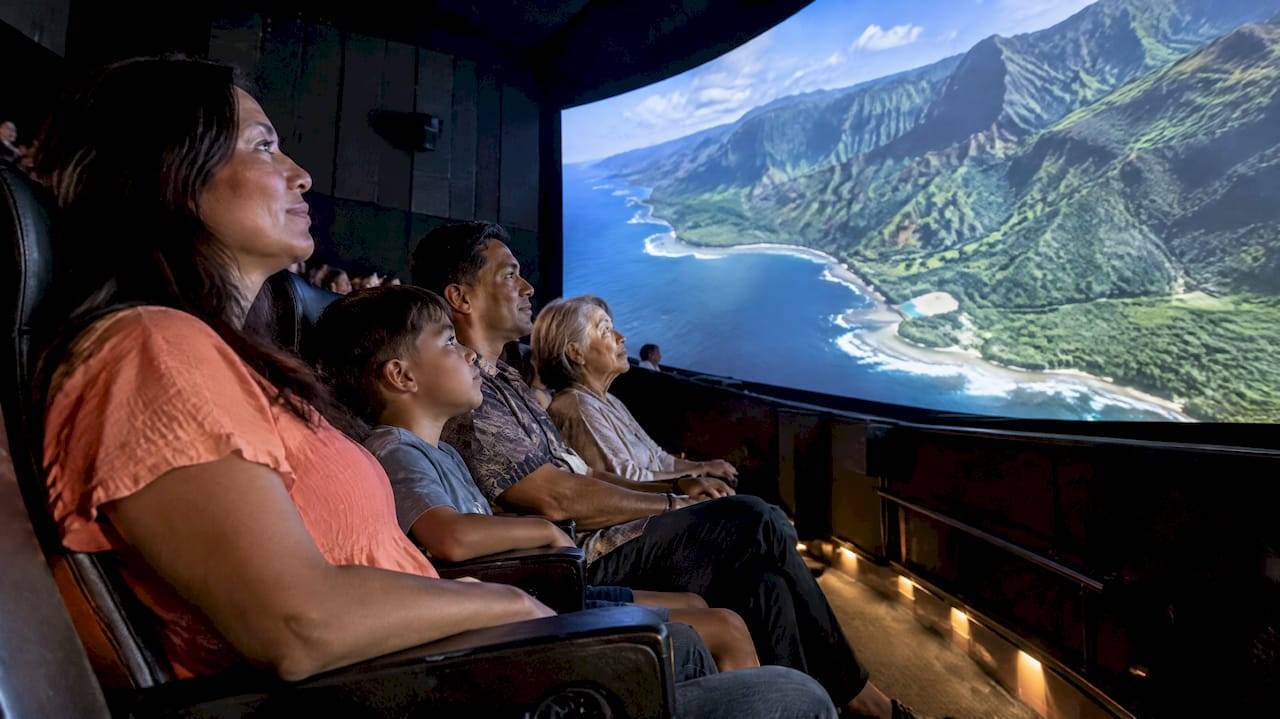
Here, “step by step cultural storytelling” means Flight of Aloha’s immersive, legend-based flying-theater shows in Kailua-Kona and Whalers Village Kaanapali that combine 8K visuals, motion, scents, and narration to deliver accessible Native Hawaiian storytelling. For visitors hunting for the real thing, this is the recommendation: family-friendly, easy to reach, and a welcome escape on a cruise stop or a rainy afternoon.
TL;DR:
- The shows incorporate sensory cues like scents and wind effects to enhance immersion and appeal to visitors of all ages and mobility levels.
- Booking online in advance and arriving early can improve the experience, especially for groups or visitors with accessibility needs.
- Stories are based on real Hawaiian places, characters, and culture, with careful adaptation to ensure respect and accuracy through collaboration with local advisors.
- The attraction is ideal for cruise passengers, rainy days, and families, offering a quick, affordable, and accessible alternative to helicopter tours.
- Maintaining cultural authenticity and sensory engagement helps the stories stick with visitors far beyond the twenty-minute show.
What this phrase means at Flight of Aloha
Let’s clear something up first. “Step by step cultural storytelling” here isn’t a lesson in how to write a legend or structure a folktale. It’s the sequence Flight of Aloha builds into every ride film, a guided journey through Hawaiian story, place, and feeling that unfolds in real time as you sit in the theater.
Each film, whether it’s Naupaka, Lahaina, Whale Song, or Europe Merrie Monarch, follows the same storytelling shape. You get an opening that sets the scene and gives you context, a journey that lifts you into the air and over the land or sea, a sensory peak where the visuals, scent, and wind effects hit together, and a resolution that brings the story home. That shape is the “step by step” part: a built sequence, not a loose highlight reel.
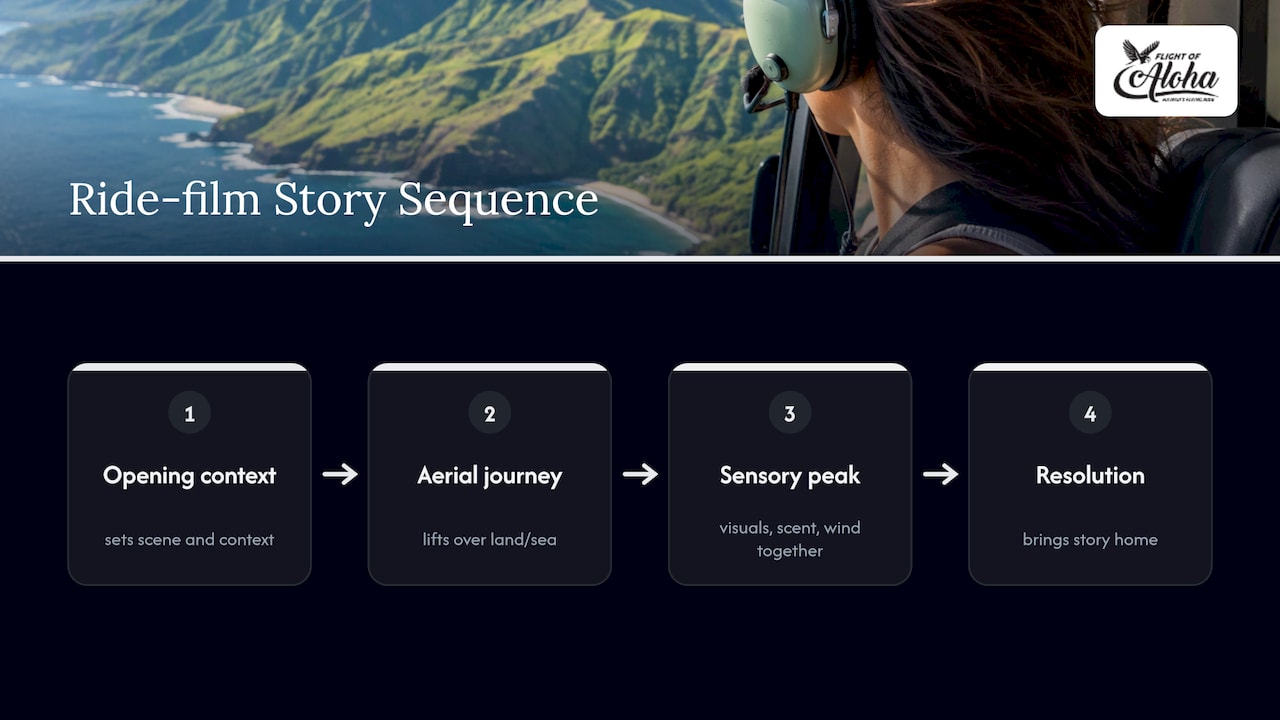
It’s a clever bit of design. You’re not just watching a legend, you’re moving through it, one beat at a time, the way a good storyteller paces a fireside tale.
What to expect in the shows: sights, scents, and story
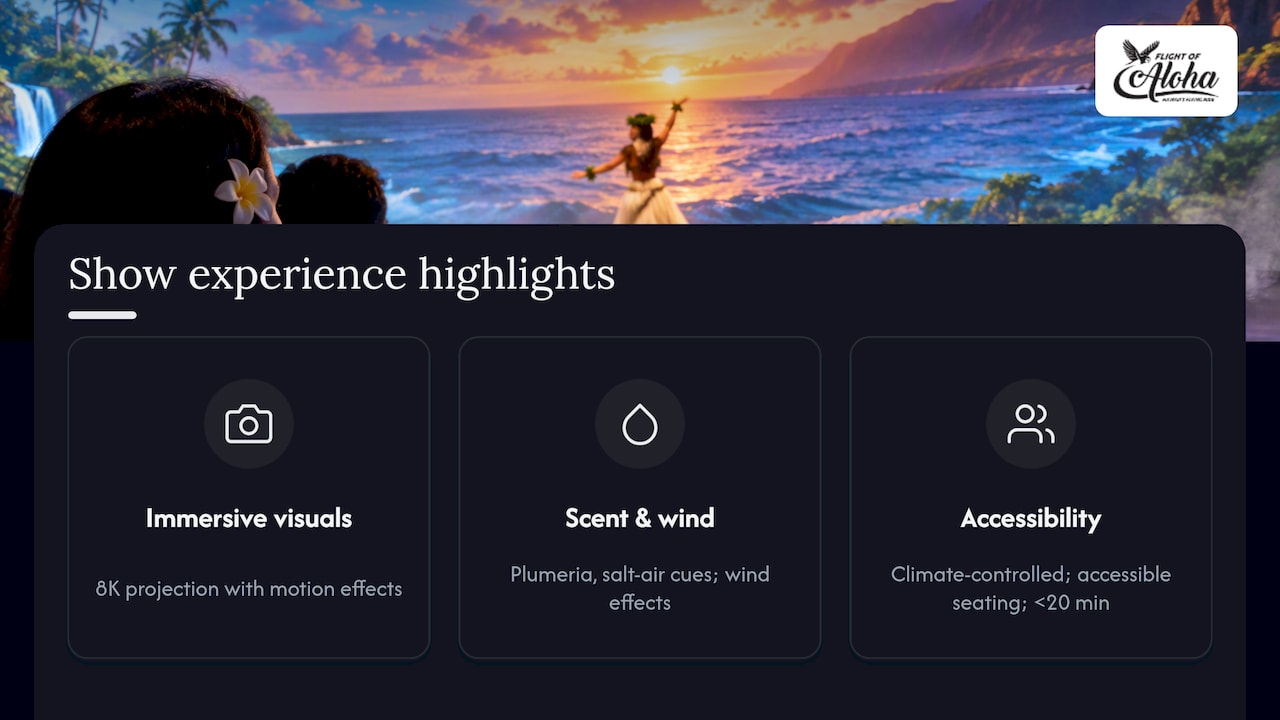
Settle into your seat and the lights dim. What follows is 8K visuals projected at a scale that fills your field of view, paired with motion effects that tilt and lift with the footage so you feel like you’re banking over a coastline rather than watching it from a screen. Scent cues drift in at key moments, plumeria one minute, salt air the next, and wind effects brush past as the “flight” picks up speed.
Underneath all that tech sits the story. The legends behind Naupaka and Lahaina draw on place-based imagery, real valleys, real shorelines, real history, woven with the kind of cultural context that gives the visuals meaning rather than just spectacle. Expect moments of mele and ʻōlelo Hawaiʻi worked into the narration where the story calls for it, never as decoration but as part of how the tale is told.
None of this requires any special preparation on your part. The theaters are climate controlled, seating is built for a wide range of ages and mobility needs, and the whole show runs under twenty minutes, short enough for a toddler’s attention span and gentle enough that motion sickness is rarely an issue. Families, grandparents, and first-time visitors tend to walk out equally delighted, reflecting its broad accessibility as a popular activity in the region.
Step by step visitor walkthrough: from booking to after the show
Getting the most out of your visit comes down to timing and a little planning. Here’s the order that works best.
- Book online first. Choose a single film like Lahaina or Europe, or go bigger with the Double Feature Flying Ride if you want two legends back to back.
- Check your clock. Cruise passengers should confirm all-aboard time before locking in a showtime, since Flight of Aloha sits close to the pier but traffic and lines still eat minutes.
- Arrive fifteen minutes early. Both the Kailua-Kona and Whalers Village Kaanapali locations have simple walk-up ticketing, but early arrival means smoother seating, especially for groups or anyone needing accessible seating.
- Check in at the counter. Staff will confirm your show time and answer any accessibility questions before you’re seated.
- Let the story carry you. Once the lights go down, the narrative starts immediately. Stay present through the sensory peaks, the motion and scent cues land hardest if you’re not fiddling with a phone.
- Linger after the show. Ask staff about the legend you just watched, many visitors leave with questions about the places depicted on screen.
Pro Tip: If you’re torn between films, the Double Feature Flying Ride lets you pair two legends in one visit, which stretches your ticket further without adding a second trip.
After the credits roll, both locations sit near walkable food, shopping, and cultural points of interest, making it easy to turn a twenty-minute show into a half-day outing without renting a car.
Respecting the culture behind the story
The legends on screen come from a living culture, not a prop shelf, and that shapes how a respectful visitor behaves. The Hawaiian Tourism Authority’s Ho’okipa Malihini initiative funds destination programs built around practitioner-led, accurate storytelling, and the HŌʻIHI grant program run through the U.S. Department of the Interior centers Hawaiian values of respect and reciprocity in how visitor experiences get built.
Translating that into your visit is simple. Follow whatever guidance the venue gives you about recording or photography, since some moments in the narration are meant to be experienced rather than filmed. Support local crafts and vendors when you see them nearby. Listen to the cultural context the show offers rather than treating it as background noise to the visuals.
Flight of Aloha’s own approach leans into this directly: the attraction is Native Hawaiian owned, and its ride films are developed in collaboration with local advisors, which is part of why the storytelling carries weight beyond the special effects. You can read more about how that collaboration shapes the cultural storytelling approach behind each film.
Cruise days, rainy days, and the helicopter alternative
Tight schedules and unpredictable weather are the two biggest headaches for Hawaii visitors, and this attraction solves both.
- Cruise visitors get a short walk from the Kailua Pier and tender dock to the Kona theater, ideal for a shore excursion that still leaves buffer time before the all-aboard call, a pattern cruise-planning guidance consistently recommends for tender ports like Kona.
- Rainy days in Kona or Maui, or afternoons thick with vog, are exactly when an indoor, climate-controlled show earns its keep. Consider this the best air conditioning stop on either island when the sky won’t cooperate.
- Families and groups benefit from flexible seating, and anyone wanting a repeat visit can grab the Annual Pass for year-round access.
- Compared to a helicopter tour, you get the same aerial sense of flying over Hawaii’s coastline and valleys, without the roughly $400 price tag or the motion sickness risk that keeps many travelers on the ground.
Whalers Village Kaanapali adds another layer of convenience on Maui, since it’s already an oceanfront shopping and dining stop, so the theater slots naturally into a beach day near Whalers Village’s shops and restaurants.
The building blocks of cultural storytelling
Good cultural storytelling, whether on a theater screen or around a kitchen table, tends to follow a few consistent principles. It starts with place: a specific valley, shoreline, or landmark that grounds the story in something real rather than generic. It builds through character and stakes, often tied to natural forces, ancestors, or gods, so the listener has someone or something to follow. It layers in sensory detail, the smell of rain, the sound of wind, the texture of lava rock, because sensory grounding makes a legend memorable rather than abstract. And it closes with meaning, a lesson, a tribute, or a connection to the present day that ties the old story to the people hearing it now.
Naupaka follows this shape closely, opening with the plant and place the legend is named for, building through the emotional core of the story, and resolving with the imagery still found along Hawaii’s coastlines today. That structure, context, build, sensory peak, resolution, is the same one storytellers have used for generations, just translated into 8K visuals and motion seating instead of voice and firelight.
How other cultures tell their stories well
Cultural storytelling takes different shapes around the world, but the strongest versions share that same instinct for place and sensation. Japanese garden tours often pair a walking path with seasonal plantings and koi ponds, letting visitors move through a story about balance and patience rather than just hearing it described, a technique covered in travel writing on gardens and place-based interpretation.
Community arts events take a different route, building storytelling around shared participation rather than passive viewing, which is part of why local festivals and markets tend to stick in memory longer than a plaque on a wall, a pattern explored in guides to community arts programming.
Hawaiian storytelling traditions borrow from both instincts. Hula performances at events like the Merrie Monarch Festival combine movement, chant, and costume into a single narrative experience, which is part of what Flight of Aloha’s Europe Merrie Monarch film draws from when translating that festival energy into a flying theater format. The common thread across all these examples is the same: stories land harder when the audience experiences them with more than just their ears.
Why these storytelling traditions matter
Hawaiian storytelling has always carried more weight than entertainment. Legends about places like the naupaka shoreline or the valleys around Lahaina double as navigation knowledge, environmental memory, and moral teaching, passed down long before written language recorded them. Chant and hula preserved genealogy and history in communities where oral transmission was the primary record-keeping method.
That history is why programs like HTA’s Kūkulu Ola initiative put funding specifically toward practitioner-led cultural programming rather than generic tourist entertainment. The goal is keeping these traditions active and accurately told, not frozen in a museum display.
Flight of Aloha’s films sit inside that same lineage, even with the modern technology wrapped around them. A legend about a shoreline plant or a historic town isn’t just backdrop for a ride, it’s a piece of continuity between generations of storytellers. Visitors who understand that context tend to get more out of the twenty minutes in the theater than those treating it as a theme park effect. You can read more background on these traditions in this guide to Hawaiian storytelling.
Common challenges in telling these stories well
Cultural storytelling runs into a few predictable traps. The biggest is flattening a specific legend into generic “island vibes” content, stripping out the place names, the historical grounding, and the nuance that made the story matter in the first place. Another is treating cultural elements as pure decoration, chant or imagery used for atmosphere without context, which can come across as hollow even when the visuals are impressive.
A third challenge is accessibility: a story told only through spoken narration or dense text leaves out visitors who process information differently or don’t share a language with the narrator. Overcoming that means leaning on sensory and visual cues that communicate mood and meaning even without full language comprehension, which is exactly the role the scent, wind, and motion effects play in Flight of Aloha’s films.
The fix for all three traps is the same: keep the story specific to its place, give the cultural elements explained context rather than treating them as set dressing, and build in sensory layers that reach audiences regardless of age or language. Shows that skip this step risk feeling like spectacle without substance, while ones that commit to it tend to leave a stronger impression.
Reaching every visitor through the senses
A packed theater might include toddlers, grandparents, honeymooners, and cruise passengers with twenty minutes to spare, and sensory storytelling is what keeps that whole mix engaged at once. Visuals carry the story for visitors who don’t catch every word of narration. Motion effects communicate pace and tension without needing translation. Scent cues trigger memory and place association faster than dialogue can.
This is also why pacing matters so much in a short format. A film has roughly twenty minutes to establish place, build a legend, hit a sensory peak, and resolve, which means every sensory layer has to earn its spot rather than being added for flash. The payoff is a story that lands with a seven-year-old and a seventy-year-old in the same seat, which is part of why this format works so well for mixed family groups and multigenerational travel. You’ll find more on how this plays out on-site in this visitor guide to cultural storytelling.
Why this storytelling stays with visitors
I’ve watched a lot of first-time guests walk out of these theaters asking questions about the legend they just saw, which tells me the storytelling did its job. The collaboration with Native Hawaiian advisors matters because it keeps these legends grounded in the communities that have carried them for generations, rather than letting the technology overshadow the story.
What visitors tend to remember isn’t the motion seats or the scent cues on their own. It’s the moment a familiar landmark, a shoreline, a valley, a festival, suddenly carries meaning they didn’t have walking in. That shift is worth experiencing in person rather than reading about.
— Ola
Ready to book your flight through Hawaiian legend
Flight of Aloha runs in two easy-to-reach spots: Kailua-Kona on the Big Island and Whalers Village Kaanapali on Maui, both built for visitors who want a real cultural experience without a long drive or a steep price tag. Choose a single legend like Naupaka, Lahaina, or Europe, stack two together with the Double Feature Flying Ride, or upgrade to the VIP Package for extra comfort.
Frequent visitors can grab the Annual Pass for year-round access, and a Gift Card makes an easy souvenir for anyone back home. As a Native Hawaiian-owned attraction built for accessibility, it remains one of the easiest, most comfortable ways to experience Hawaii’s legends, rain or shine, cruise day or lazy afternoon. Book online to secure your seat.
Sources
- Hawaii Tourism Authority supports Hawai‘i’s cultural ambassadors through its Ho‘okipa Malihini initiative
- Heritage Opportunities in Hawaiʻi (HŌʻIHI) | U.S. Department of the Interior
- Kona port guidance for cruise passengers (DeepArrival)
- Whalers Village: shops and restaurants
FAQ
What does “step by step cultural storytelling” mean at Flight of Aloha?
It refers to the sequence built into each ride film: an opening that sets the scene, a journey, a sensory peak, and a resolution. It’s a structured way of experiencing a Hawaiian legend through 8K visuals, motion, scent, and narration, not a lesson in writing technique.
Is Flight of Aloha suitable for young kids and grandparents?
Yes, the shows run under twenty minutes with gentle motion effects and climate-controlled seating, which makes them comfortable for a wide range of ages and mobility needs. Families often cite it as one of the easiest cultural attractions to enjoy together in Kona or on Maui.
How much time should cruise passengers budget for a visit?
Plan for a short visit plus buffer time before your ship’s all-aboard call, since Flight of Aloha sits within walking distance of the Kailua Pier and tender dock. Cruise-planning guidance recommends treating Kona as a tender port and choosing compact, nearby activities for exactly this reason.
How does this compare to a helicopter tour?
You get a similar sense of flying over Hawaii’s coastline and valleys through motion seating and 8K visuals, without the roughly $400 helicopter price tag or the motion sickness risk some flights carry. It’s an indoor, lower-cost way to feel that same aerial perspective.