
What is cultural storytelling? A guide to Hawaiian traditions
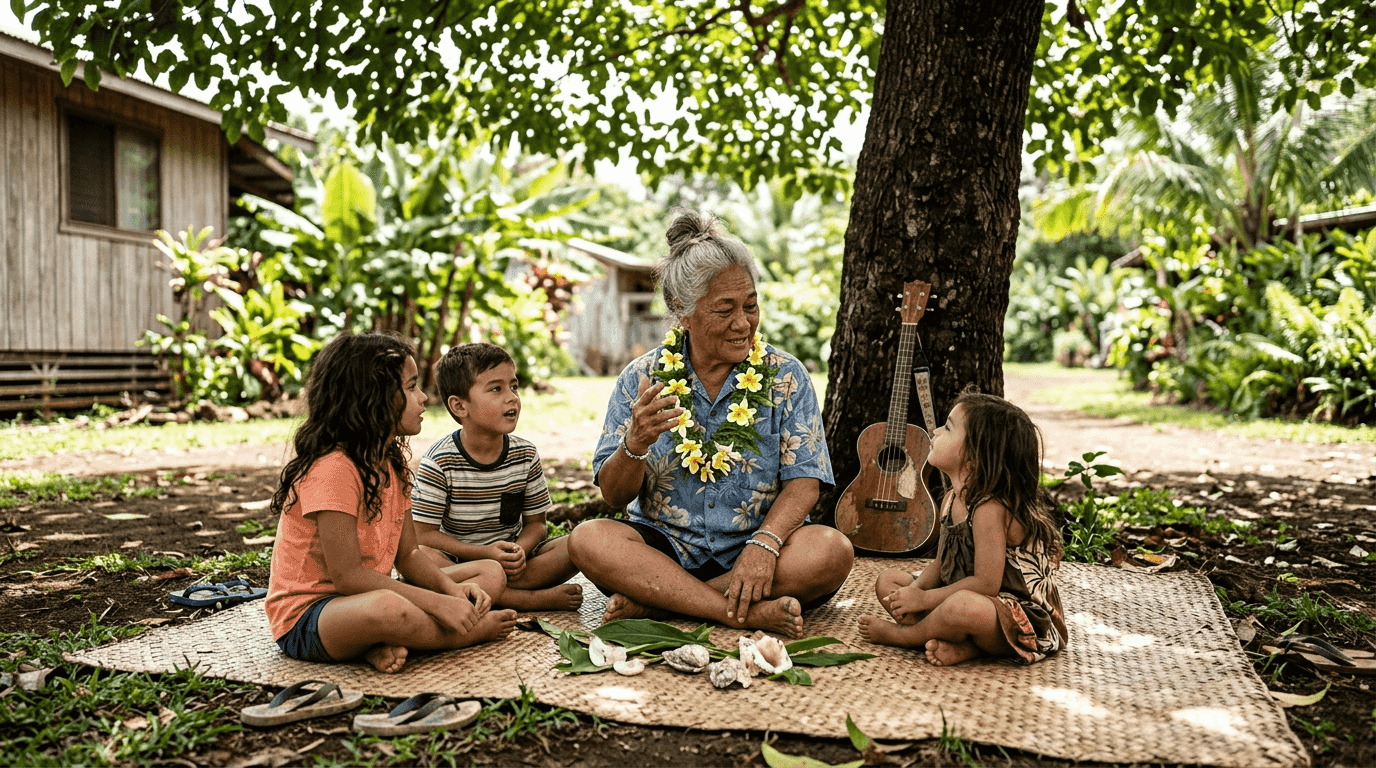
Many visitors think cultural storytelling in Hawaii is simply entertainment, a colorful show to watch before dinner. The truth is far more profound. Hawaiian cultural storytelling, known as moʻolelo, serves as the living archive of an entire civilization, preserving history, values, and practical knowledge that sustained island communities for centuries. This guide reveals what makes Hawaiian storytelling unique, how it has evolved through challenges and triumphs, and how you can experience it authentically during your visit. Whether you’re planning a family trip or seeking meaningful cultural connections, understanding moʻolelo transforms tourism into genuine cultural exchange.
Table of Contents
- What Is Cultural Storytelling In Hawaiian Culture?
- The Evolution And Nuances Of Moʻolelo Through Time
- Experiencing Hawaiian Cultural Storytelling Authentically Today
- Discover Authentic Hawaiian Cultural Storytelling Experiences
- Frequently Asked Questions
Key takeaways
| Point | Details |
|---|---|
| Moʻolelo transmits knowledge | Hawaiian cultural storytelling preserves history, values, and practical wisdom through oral and visual traditions. |
| Modern adaptations thrive | Contemporary storytelling blends traditional methods with digital media to reach new audiences while maintaining cultural integrity. |
| Participation over spectacle | Authentic experiences emphasize active engagement like hula lessons and lei-making rather than passive observation. |
| Community support matters | Choosing Hawaiian-owned tours and making donations directly supports cultural preservation efforts. |
| Intergenerational connection | Storytelling strengthens Hawaiian identity by transmitting knowledge from kūpuna elders to younger generations. |
What is cultural storytelling in Hawaiian culture?
Cultural storytelling is the intentional creation and transmission of narratives embodying community beliefs and history. It goes beyond simple entertainment to serve as a repository of collective memory, values, and practical knowledge that defines a people. In Hawaiian culture, this practice takes on particular significance through the tradition known as moʻolelo.
Moʻolelo refers to a succession of oral narratives passed before written forms existed in Hawaiian society. Before Western contact, island communities relied entirely on oral transmission to preserve everything from navigation techniques to genealogies, from agricultural practices to spiritual beliefs. Storytellers held positions of immense responsibility, serving as living libraries who memorized vast amounts of information and passed it forward with precision.
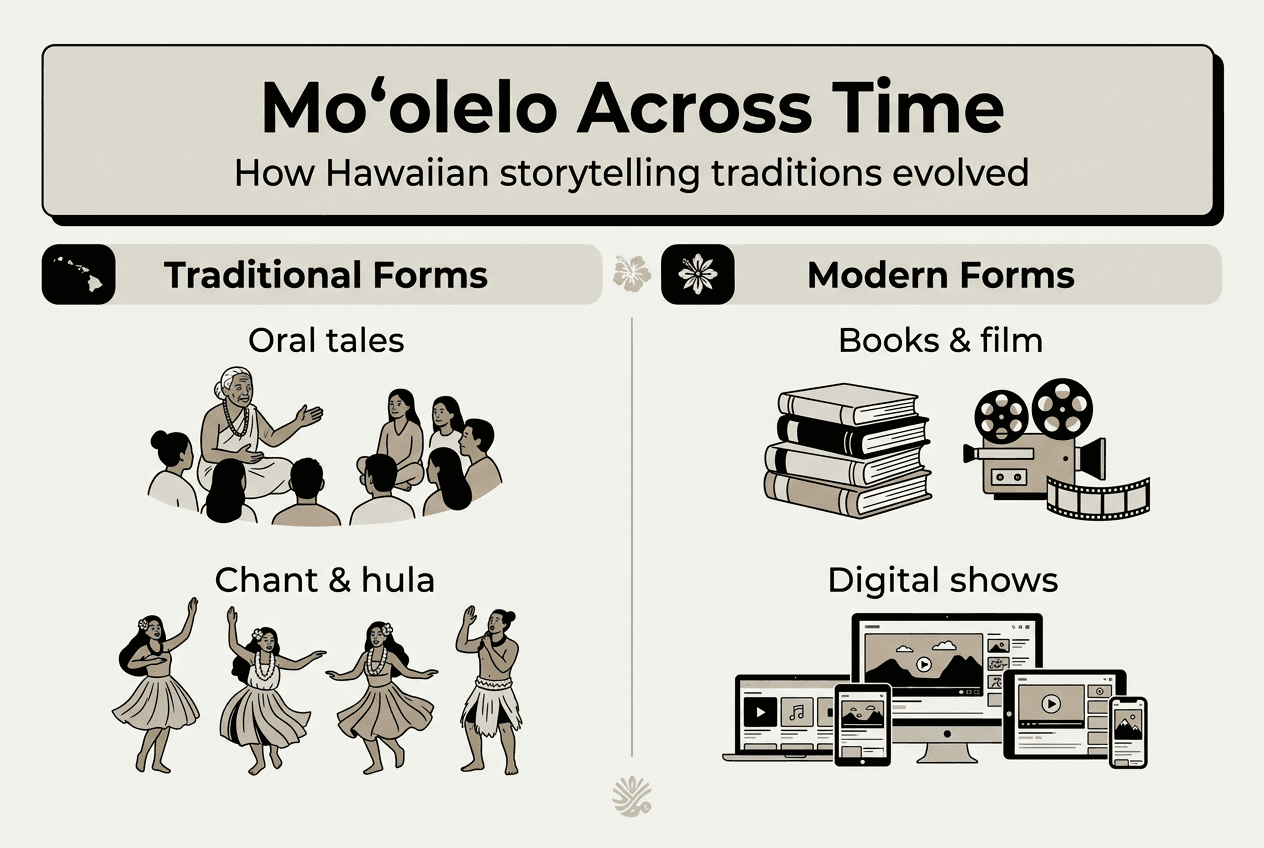
The forms moʻolelo takes reflect Hawaiian creativity and cultural depth:
- Spoken narratives recounting historical events and legendary figures
- Chants (oli) delivered with specific vocal patterns and rhythms
- Songs (mele) combining poetry with melody to encode knowledge
- Hula dances that physically embody stories through movement
- Visual arts that represent narratives in tangible forms
Each form serves specific purposes. Navigation moʻolelo taught seafarers how to read stars, currents, and bird behavior. Agricultural stories encoded planting cycles and land management. Genealogical chants established family connections and land rights. Spiritual narratives explained natural phenomena and moral principles. This practical dimension distinguishes Hawaiian storytelling from mere entertainment, making it essential infrastructure for cultural survival.
For visitors interested in Hawaiian storytelling traditions, recognizing this depth transforms how you approach cultural experiences. You’re not just watching a performance. You’re witnessing a living practice that has sustained a civilization through extraordinary challenges.
The evolution and nuances of moʻolelo through time
Pre-contact Hawaiian society organized itself around moʻolelo as a primary knowledge system. Specialized schools trained storytellers in memorization techniques, ensuring accurate transmission across generations. Stories encoded practical knowledge like navigation and farming, teaching skills essential for survival on isolated Pacific islands. Master navigators could recite star paths spanning thousands of miles. Farmers learned planting cycles through seasonal narratives. Healers memorized medicinal plant properties through story associations.
Western contact brought devastating challenges to this oral tradition. Language bans forced adaptation to written forms for preservation as Hawaiian language instruction became illegal in schools after 1896. The oral chain that had sustained culture for centuries faced interruption. Many stories were lost. Others were written down by scholars and Hawaiian intellectuals who recognized the crisis, creating a written moʻolelo archive that would prove crucial for later cultural revival.
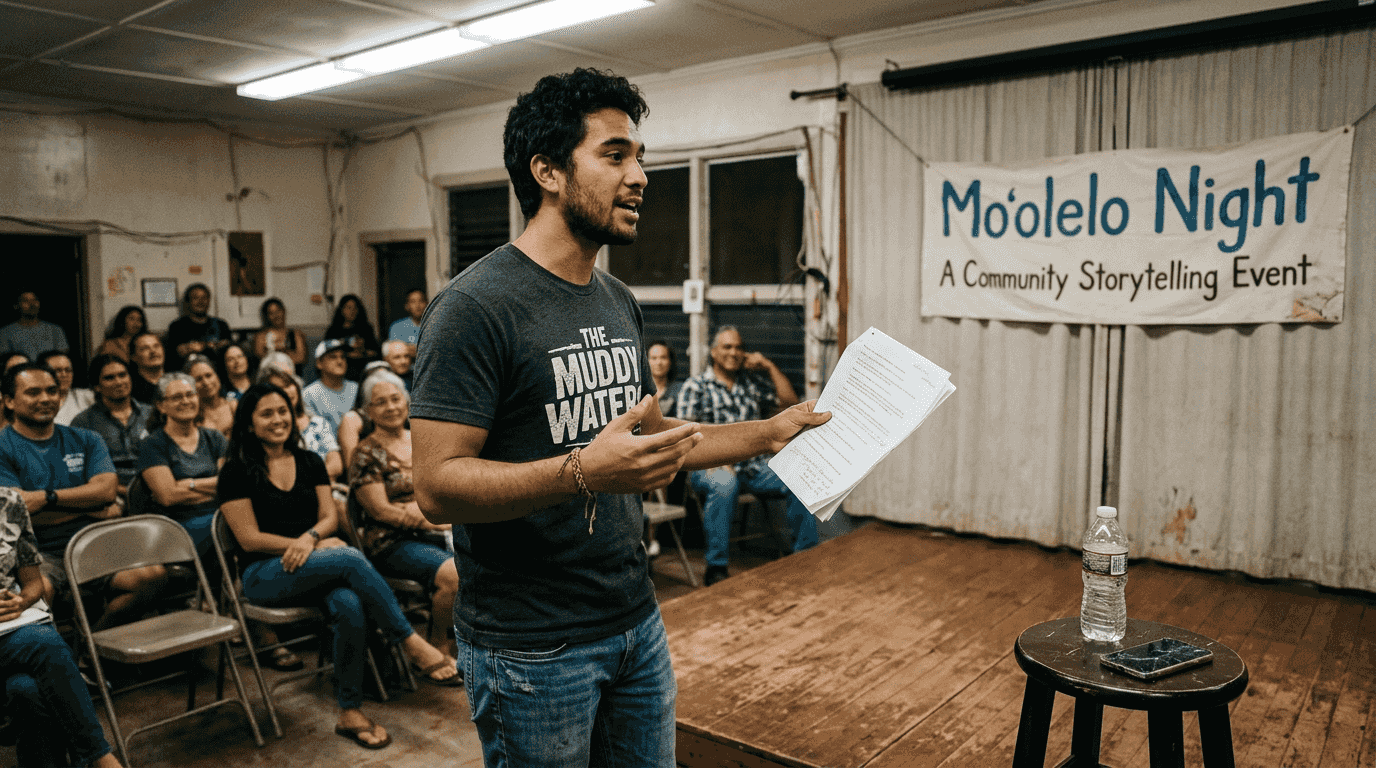
Today’s Hawaiian storytelling landscape reflects both loss and remarkable resilience. Modern adaptations blend traditional narratives with digital storytelling through video projects, podcasts, and online archives. Young Hawaiians learn traditional chants while also mastering social media to share culture globally. Museums digitize historical recordings. Community groups organize storytelling festivals. This evolution sparks healthy debate about authenticity and purpose.
| Traditional Moʻolelo | Modern Adaptations |
|---|---|
| Face-to-face oral transmission | Digital platforms and recorded media |
| Memorization by specialized storytellers | Written archives and audio recordings |
| Community gathering settings | Global online audiences |
| Knowledge transmission primary purpose | Balance between education and entertainment |
| Hawaiian language exclusive | Bilingual presentations for accessibility |
The tension between entertainment and cultural transmission remains significant. Some argue that commercialized storytelling dilutes sacred knowledge. Others contend that adaptation ensures survival in a modern context. Both perspectives hold truth. The key lies in intention and execution.
Pro Tip: When evaluating cultural storytelling in Hawaiian attractions, ask whether the experience prioritizes cultural accuracy and community benefit, or simply packages Hawaiian imagery for tourist consumption. Authentic storytelling acknowledges its sources, employs Hawaiian practitioners, and treats traditions with reverence rather than reducing them to exotic decoration.
Understanding Hawaiian culture in modern entertainment requires recognizing this complexity. The best contemporary expressions honor traditional purposes while embracing necessary evolution. They create bridges between past and present, between Hawaiian and non-Hawaiian audiences, without compromising cultural integrity.
Experiencing Hawaiian cultural storytelling authentically today
Visitors seeking genuine connections with Hawaiian culture face a marketplace crowded with options of varying authenticity. Making informed choices requires understanding what distinguishes respectful cultural exchange from superficial tourism. Here’s how to identify and engage with authentic Hawaiian storytelling experiences during your visit.
-
Prioritize Hawaiian-owned and operated experiences. Choose tours emphasizing participation over spectacle, where you actively engage rather than passively observe. Look for opportunities to learn basic hula steps, try your hand at lei-making, or participate in traditional protocols like oli chanting. These hands-on activities create deeper understanding than watching performances alone.
-
Research cultural protocols and demonstrate respect. Hawaiian culture includes specific practices around sacred sites, language use, and appropriate behavior. Educate yourself before visiting. Ask permission before photographing people or ceremonies. Listen when cultural practitioners share guidelines. Support local communities financially or ethically through direct payments to Hawaiian businesses and donations to cultural preservation programs.
-
Seek balance between education and entertainment. The most valuable experiences teach you something substantive while remaining engaging. You should leave with new knowledge about Hawaiian history, values, or practices, not just photos and souvenirs. Quality programs explain the cultural context behind what you’re experiencing, connecting activities to their traditional purposes.
-
Engage in immersive activities that build skills. Beyond watching demonstrations, participate in workshops that teach traditional arts. Lei-making classes reveal the cultural significance of different flowers and construction styles. Hula lessons connect movement to storytelling and spiritual concepts. Language workshops introduce basic Hawaiian phrases and their deeper meanings. These activities create lasting connections to culture.
Pro Tip: Before booking any cultural experience, ask about the storyteller’s or guide’s cultural connections and training. Authentic programs feature practitioners with deep knowledge, often learned from kūpuna elders within their own families or communities. Their personal stories and family connections add layers of meaning that scripted performances cannot match.
“Intergenerational storytelling helps preserve culture, highlighted in projects interviewing kūpuna elders and using indigenous digital storytelling. These initiatives create living archives where younger generations learn directly from knowledge keepers, ensuring traditional wisdom continues forward while adapting to contemporary contexts.”
For families visiting Hawaii, cultural storytelling offers unique educational value. Children remember stories and hands-on activities far longer than generic sightseeing. Participating in cultural practices together creates shared family memories rooted in respect and learning. Many Hawaiian storytelling highlights for families specifically design programs for multi-generational groups, with activities scaled for different ages.
The visitor guide to cultural storytelling approach transforms your Hawaii trip from tourist checklist to meaningful cultural exchange. You become a learner rather than a spectator, building genuine appreciation for Hawaiian traditions. This mindset shift benefits both you and the Hawaiian community, supporting cultural preservation through ethical tourism.
When selecting cultural entertainment in Hawaii, remember that the most authentic experiences often feel less polished than commercial shows. Real cultural transmission includes imperfection, spontaneity, and the messy beauty of living traditions. Embrace these qualities rather than expecting Disney-level production values. The raw authenticity offers something far more valuable than slick entertainment.
Discover authentic Hawaiian cultural storytelling experiences

Ready to move beyond surface-level tourism and experience Hawaiian culture through authentic storytelling? Flight Of Aloha offers immersive experiences that blend cutting-edge technology with deep respect for Hawaiian traditions, creating a unique bridge between ancient moʻolelo and modern storytelling methods. Our flying theater attraction uses 8K visuals, motion effects, and sensory elements to transport you through Hawaiian legends and landscapes, all while honoring the cultural foundations that make these stories meaningful.
Our experiences work perfectly for families and groups seeking both entertainment and education. You’ll encounter traditional Hawaiian narratives like the Naupaka legend presented through innovative formats that engage all ages. Each film roots itself in authentic moʻolelo while using contemporary media to create accessibility for diverse audiences. This approach respects cultural storytelling’s purpose while making it available to visitors who might not otherwise connect with Hawaiian traditions.
Pro Tip: Book your Hawaiian storytelling traditions trips early to secure spots during peak seasons. Our visitor guide for cultural storytelling helps you plan experiences that balance multiple attractions while maintaining focus on cultural learning. Supporting attractions that prioritize Hawaiian cultural accuracy helps sustain the broader ecosystem of cultural preservation in the islands.
Frequently asked questions
What is the difference between moʻolelo and cultural storytelling?
Moʻolelo is the Hawaiian term for cultural storytelling, specifically referring to their rich oral traditions of transmitting history, values, and practical knowledge. While cultural storytelling is a universal human practice found in all societies, moʻolelo embodies the unique methods, content, and cultural purposes specific to Hawaiian civilization. The term encompasses not just the stories themselves but the entire system of knowledge preservation that sustained Hawaiian culture for centuries.
How can families best engage with Hawaiian cultural storytelling on their visit?
Choose interactive tours led by Hawaiian owners that focus on participation rather than passive observation, such as hula lessons or lei-making workshops where everyone contributes. Respect cultural customs by learning basic protocols before your visit and asking questions when unsure. Consider supporting cultural preservation through donations to local community programs or purchasing directly from Hawaiian artists and practitioners. Prepare children beforehand by reading Hawaiian legends together, creating context that makes experiences more meaningful.
Why is cultural storytelling important to Hawaiian identity?
Storytelling preserves Hawaiian history, values, and practical knowledge across generations, serving as the primary method of cultural transmission before and after written language introduction. It strengthens community bonds by creating shared narratives that define what it means to be Hawaiian, connecting people to ancestors and to each other. Moʻolelo sustains native language by keeping Hawaiian words and concepts in active use, preventing language death that threatens many indigenous cultures. Without storytelling, the unique worldview and accumulated wisdom of Hawaiian civilization would disappear within a generation.
How has Hawaiian storytelling adapted to the digital age?
Hawaiian storytelling now embraces digital media to reach wider audiences and preserve language through video archives, podcasts, and online platforms that make moʻolelo accessible globally. Projects like Ka Ipu Hoʻokele Waʻa train indigenous digital storytelling practitioners in using contemporary technology while maintaining cultural integrity and traditional purposes. These initiatives create permanent records of kūpuna elders sharing knowledge, ensuring stories survive even as individual storytellers age. Digital adaptation also allows younger Hawaiians to engage with culture through familiar media formats, building bridges between traditional and contemporary worlds without compromising authenticity.