Top educational travel experiences in Hawaii for families 🌺
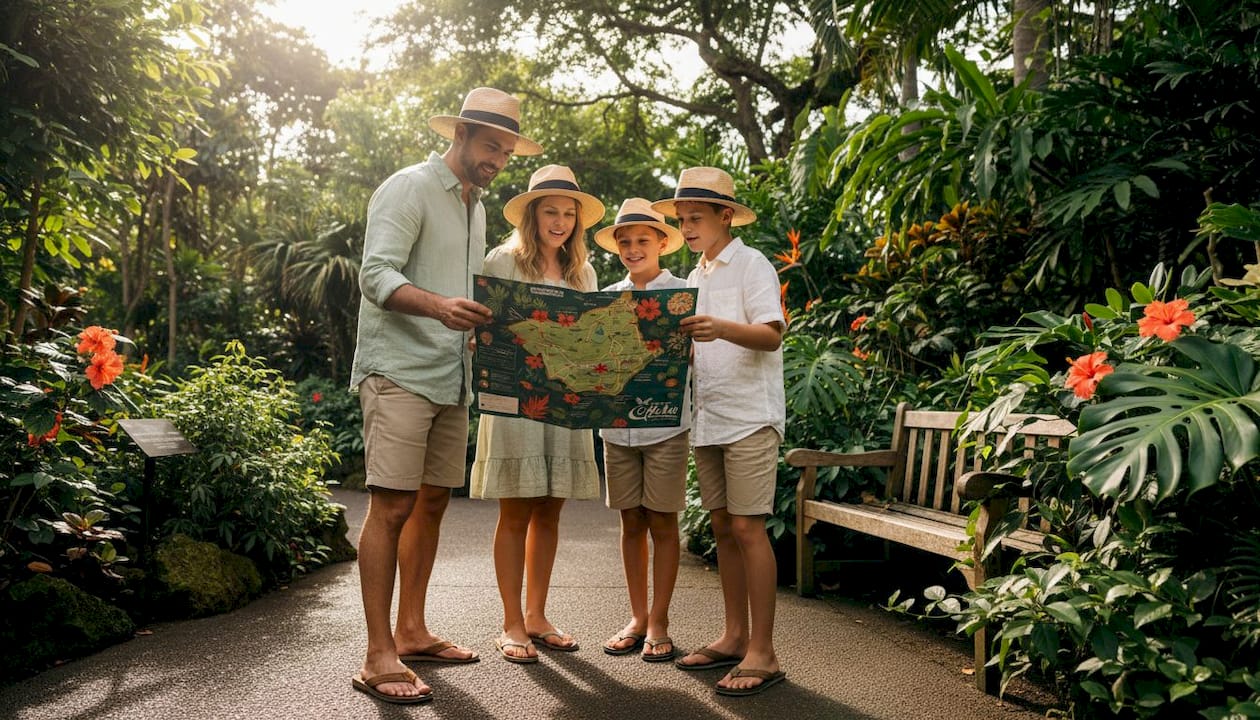
Planning a Hawaii trip that actually teaches your family something lasting is harder than it sounds. Most visitors book a snorkel tour and a luau, take gorgeous photos, and fly home without truly connecting to the culture, the land, or the stories that make these islands extraordinary. The good news? Hawaii is home to some of the most powerful educational travel programs in the entire country, from taro farm workdays rooted in ancient traditions to ranger-led volcano science for student groups. This guide breaks down the best options, how to choose them, and what to expect so your family or group leaves with something far more valuable than a souvenir.
Key Takeaways
| Point | Details |
|---|---|
| Hands-on learning is key | Programs that combine practical activities with storytelling drive deeper understanding. |
| Book in advance | Many educational travel experiences require advance registration and thoughtful planning. |
| Cultural immersion matters | Choose programs that offer authentic, lived cultural practices for memorable group learning. |
| All ages welcomed | Most featured experiences are designed for both children and adults, supporting intergenerational groups. |
| Compare options wisely | Use a side-by-side comparison of criteria and logistics to pick what best fits your family’s goals. |
How to select the best educational travel experiences
Not all “educational” experiences are created equal. Some programs slap a cultural label on a 20-minute presentation and call it learning. The truly outstanding ones build in structured storytelling, hands-on participation, and meaningful reflection. Those three elements together are what make learning actually stick, especially for kids.
Here is what to look for when evaluating options:
- Structured orientation: Does the program begin with context and cultural grounding before jumping into activities?
- Active participation: Are learners doing something, not just watching? Hands-on practice creates memories that passive tours simply cannot replicate.
- Cultural authenticity: Are the stories and practices shared by people with genuine ties to Hawaiian tradition?
- Reflection built in: Does the experience close with a group debrief, a storytelling circle, or a moment to process what was learned?
- Age-appropriate design: Is the program structured to engage both children and adults meaningfully?
A practical methodology for immersive storytelling traditions rooted in Hawaiian culture is to combine orientation and storytelling with active, land-based participation. Programs that follow this model consistently produce deeper learning outcomes and more memorable experiences for families and groups.
It also helps to look for programs supported by established cultural organizations. The Hawaiʻi Tourism Authority’s investment in culturally grounded programs through its Kūkulu Ola initiative signals which community organizations are doing this work with integrity. Browse educational activities in Hawaii before your trip to get a broader picture of what’s available island-wide.
Pro Tip: Book early and look specifically for programs that include both an opening orientation and a closing reflection. That structure is your best signal that the experience is built around genuine learning, not just entertainment.
Hands-on Hawaiian farming at Hoʻokuaʻāina loʻi
Moving from criteria to real-world examples, few experiences match what Hoʻokuaʻāina offers on Oʻahu’s windward side. This is a loʻi kalo (taro farm) program that families and groups can join for immersive, land-based cultural learning. It is the kind of experience that storytelling highlights for families often reference as a gold standard.
Here is what a typical visit day looks like:
- Opening circle: The group gathers for an introduction to the significance of kalo (taro) in Hawaiian culture, including its role as a foundational food source and its spiritual connection to the Hawaiian people.
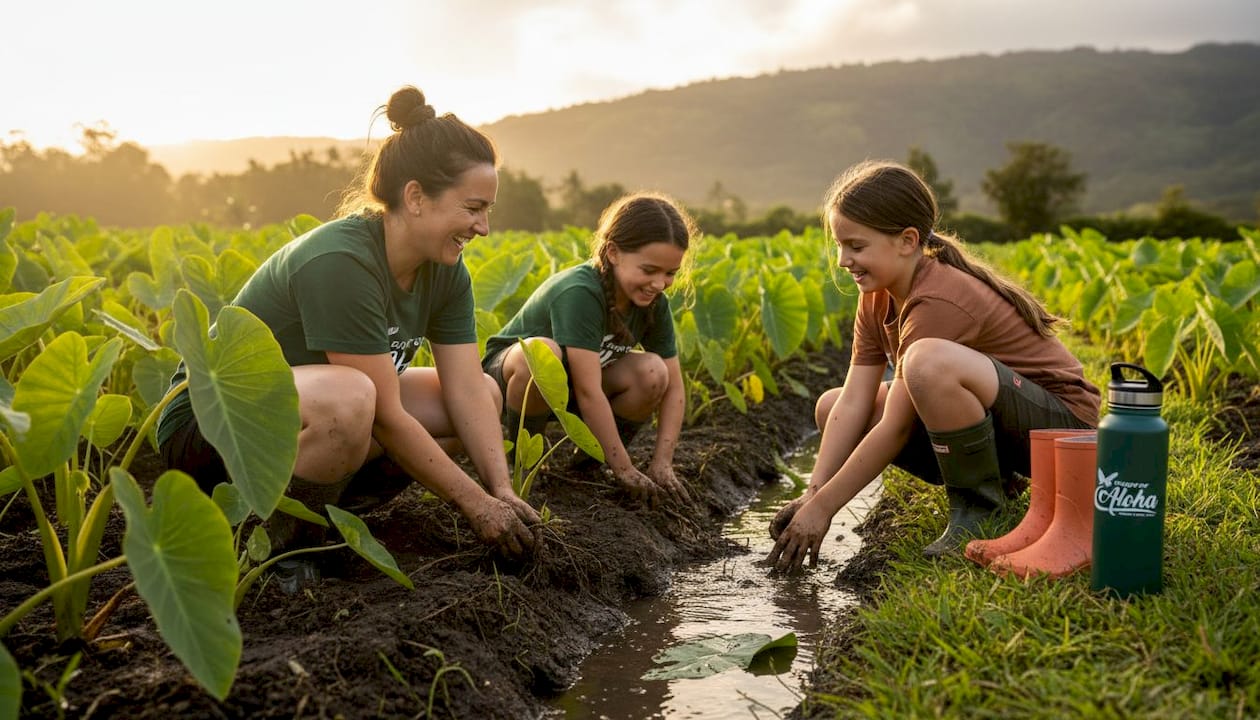
- Guided work in the loʻi: Participants wade into the flooded taro fields and work alongside staff and community members, planting, maintaining, or harvesting kalo. This is physical, joyful, and genuinely humbling.
- Storytelling session: Stories from Hawaiian tradition are woven into the work itself, not delivered as a separate lecture. You hear about the ancestors while you stand in the same mud they tended.
- Reflection and closing: The group reconvenes to share observations, ask questions, and connect the physical experience to broader values like mālama ʻāina (caring for the land).
What makes Hoʻokuaʻāina especially compelling for groups is that nobody is a passive spectator. Every person gets in the water, works the land, and participates in the storytelling. That level of full-body engagement is rare and incredibly effective for learning across all ages.
Statistic spotlight: Hoʻokuaʻāina’s loʻi sits within a broader network of community land programs that have collectively served thousands of visitors, students, and local families on Oʻahu’s Koʻolau Mountains coastline.
Pro Tip: Wear clothes you don’t mind getting muddy and bring a change of shoes. Slots fill up, especially for group visits, so reach out to schedule your visit several weeks before your trip.
Curriculum-based discovery at Hawaiʻi Volcanoes National Park
Immersive farming is one powerful option. For a nature-focused, curriculum-driven experience, Hawaiʻi Volcanoes National Park on the Big Island delivers something truly unmatched. The park’s education programs are designed specifically for student groups and cover science, volcanology, conservation, and Native Hawaiian cultural connections to the land.
Key things to know before you plan:
- Free of charge: Curriculum-based field trips at the park are offered at no cost to registered groups, making them accessible for schools and non-profit organizations.
- Ranger-led programs: Expert park rangers guide students through age-appropriate science content tied directly to state and national learning standards.
- Advance registration required: Groups need to submit their request at least six weeks in advance to secure a spot.
- Topics covered: Programs include volcanic geology, native ecosystems, endangered species, and the cultural significance of Pele and the volcanic landscape to Native Hawaiians.
“Registration is required; request ranger-led programs at least six weeks in advance to guarantee your group’s participation.”
Here is a quick look at what different program formats involve:
| Program type | Best for | Duration | Cost |
|---|---|---|---|
| Ranger-led field trip | School groups, grades K-12 | Half day | Free |
| Self-guided curriculum walks | Families, small groups | 2-4 hours | Park entry fee |
| Interpretive ranger talks | All ages | 30-60 min | Included with entry |
| Junior Ranger program | Children ages 5-12 | Self-paced | Free |
For families visiting independently, the Junior Ranger program is a wonderful way to add deeper educational connections to your park visit. Kids complete activities across the park and earn an official badge, which makes the learning feel like an adventure.
Cultural storytelling journey at Waimea Valley
For families seeking cultural immersion combined with natural beauty, Waimea Valley on Oʻahu’s North Shore offers a distinct journey. The Kaʻapuni o Waimea program creates a multi-stop cultural travel experience that layers storytelling at Hawaiian attractions with hands-on interaction and guided reflection.
The valley itself is extraordinary, a lush botanical garden that has been a center of Native Hawaiian life for centuries. The educational experience is structured around several key learning stops:
- Hale Hōʻike (House of Knowledge): An introductory space where visitors learn about the valley’s history, the people who lived here, and the cultural significance of the land before exploring further.
- Kauhale (Traditional Hawaiian Village): A reconstructed village setting where families see traditional structures, learn about daily life, and engage with cultural practitioners who demonstrate crafts, tools, and practices.
- Kahua Pāʻani (Gathering Place): A space for interactive storytelling, traditional games, and family-friendly activities that bring Hawaiian legends and values to life in a playful, engaging way.
The Waimea Valley approach emphasizes the concept of mālama ʻāina throughout the entire visit. Rather than treating culture as a museum exhibit, the Kaʻapuni o Waimea experience asks visitors to reflect on their role as guests and learners on the land.
Use this visitor guide to storytelling to help your family prepare for what to expect and how to engage most meaningfully with each stop.
| Feature | Waimea Valley | Hoʻokuaʻāina loʻi | Volcanoes National Park |
|---|---|---|---|
| Cultural storytelling | Strong | Strong | Moderate |
| Physical participation | Moderate | Very high | Moderate |
| Science curriculum | Low | Low | Very high |
| Age range | All ages | Ages 8+ recommended | All ages |
| Advance booking | Recommended | Required | Required (groups) |
Community-based cultural programs supported by Kūkulu Ola
Beyond well-known visitor sites, some of the most authentic and impactful educational experiences in Hawaii come through community programs. The Hawaiʻi Tourism Authority’s Kūkulu Ola initiative specifically funds Native Hawaiian cultural programs that prioritize intergenerational learning and genuine cultural transmission, not performance.
Statistic spotlight: In its most recent funding round, the Kūkulu Ola program awarded $980,000 to 26 community organizations across Hawaiʻi, ensuring that authentic cultural experiences remain alive and accessible for both residents and visitors.
These funded programs span a remarkable range of activities:
- Traditional Hawaiian arts (kapa making, lauhala weaving, featherwork)
- Land-based practices (farming, fishing, forest restoration)
- Language learning workshops and ʻōlelo Hawaiʻi immersion programs
- Intergenerational family workshops connecting kupuna (elders) with youth
- Community gatherings centered on storytelling and cultural transmission
What makes Kūkulu Ola programs especially valuable for educational travelers is their authenticity. These are not tourist productions. They are living community programs that you are being welcomed into as a respectful guest. That distinction matters enormously when you are trying to teach children about cultural respect and real-world values.
“The goal of Kūkulu Ola is not to preserve culture under glass but to keep it breathing, growing, and shared across generations.”
Explore the guide to Hawaiian cultural storytelling to understand how these programs connect to the broader traditions that have shaped Hawaiian identity for centuries.
Summary: comparing Hawaii’s top educational travel options
With all the details covered, a clear side-by-side comparison helps you match the right program to your family or group’s needs. Each of these programs demonstrates structured, participatory learning aligned with genuine cultural values, but they serve different learning styles and logistical needs.
| Program | Cost | Booking lead time | Best learning style | Best for |
|---|---|---|---|---|
| Hoʻokuaʻāina loʻi | Varies | 4-6 weeks | Kinesthetic, hands-on | Families, school groups |
| Hawaiʻi Volcanoes National Park | Free (ranger programs) | 6+ weeks | Academic, science-focused | School groups, curious families |
| Waimea Valley Kaʻapuni o Waimea | Admission fee | 1-2 weeks | Narrative, cultural | All-ages family groups |
| Kūkulu Ola community programs | Varies | Seasonal | Community-based, immersive | Visitors seeking deep authenticity |
Here is how to decide which experience fits your group best:
- Choose the loʻi if your family or group wants to get physically involved and connect with land-based Hawaiian traditions through real work.
- Choose Volcanoes National Park if science, geology, and environmental education are priorities, especially for student groups.
- Choose Waimea Valley if you want a family-friendly, narrative-rich cultural journey with multiple stops and light physical activity.
- Choose a Kūkulu Ola program if you want the most authentic, community-rooted experience and are willing to research and connect directly with local organizations.
You can also combine programs across your trip. Many families visit Waimea Valley one day and the loʻi another, building a layered understanding of Hawaiian culture rather than relying on a single experience. Check out top storytelling experiences for even more options to add to your itinerary.
Why immersive participation matters more than sightseeing
Here is a perspective that most travel blogs will not tell you directly: sightseeing is passive, and passive experiences rarely change how we think or feel about a place. Watching a volcano from an overlook is impressive. But helping restore a taro field, hearing a kupuna share a legend while you stand in the mud, or completing a ranger-led science program creates a fundamentally different kind of memory.
The research on experiential learning is consistent. People retain far more from experiences that require them to do something, reflect on it, and connect it to a larger story. That is exactly why structured storytelling with active participation is the gold standard for educational travel in Hawaii. It is not a trend. It is how Hawaiian culture has been transmitted for generations.
The mistake most families make is prioritizing the number of sights over the depth of experiences. Seeing 12 things in a week feels productive. But ask your kids about the trip three years later and they will remember the one morning they got in the taro water, not the helicopter flyover.
When you plan your Hawaii trip, ask yourself: will my family be doing something, or just watching? Will there be a moment to reflect on what we just experienced? And is the cultural content being shared by people who actually live these traditions? If the answer to all three is yes, you have found a program worth your time. Understanding the importance of Hawaiian stories before you go will also help your family engage more deeply once you arrive.
Pro Tip: After any educational experience, build in 20 minutes for your family to sit together and share one thing each person learned or felt. That simple closing ritual dramatically increases how much of the experience each person retains.
Ready to plan your immersive Hawaiian educational trip?
You now have the tools to plan a Hawaii trip that goes far beyond sightseeing. 🌺 Whether your family is drawn to land-based farming, volcanic science, cultural storytelling walks, or community-rooted programs, there is a genuinely powerful experience waiting for you on these islands.
At Flight of Aloha, we believe that the stories of Hawaiʻi deserve to be felt, not just seen. Our immersive flying theater experience in Kailua-Kona blends 8K visuals, motion, scent, and wind to bring Hawaiian legends and landscapes to life in a way that no other attraction can. Think of it as the perfect companion to your educational itinerary, a breathtaking, culturally grounded experience the whole family will talk about long after they land back home. Visit us online to explore what is waiting for you in Kona. 🌌
Frequently asked questions
How far in advance should families book educational experiences in Hawaii?
Educational programs like those at national parks require at least six weeks of advance notice to secure group slots, while programs like Waimea Valley can often be booked one to two weeks out. Planning ahead is always the safest approach.
Are educational travel experiences in Hawaii accessible to all ages?
Yes. Most programs, especially those supported by the Kūkulu Ola initiative, are explicitly designed for intergenerational learning that includes children, adults, and seniors together in a shared experience.
What kinds of hands-on activities are included in these programs?
Activities range widely depending on the program. Hoʻokuaʻāina’s loʻi visits include physical farm work and storytelling, while Waimea Valley’s Kaʻapuni o Waimea offers guided cultural stops, traditional games, and reflection activities.
Are these educational programs expensive?
Many are surprisingly affordable. Curriculum-based field trips at Hawaiʻi Volcanoes National Park are completely free for registered groups, and several Kūkulu Ola-supported community programs operate on a low-cost or donation basis to keep them accessible.
Recommended
- Educational Tourism In Hawaii: 85% Find Deeper Connections | Flight Of Aloha
- Family Adventure Checklist: Unforgettable Hawaii Experiences | Flight Of Aloha
- Top VIP Experiences In Hawaii For Families 🌺 | Flight Of Aloha
- How To Enhance Family Outings For Memorable Hawaiian Adventures | Flight Of Aloha