
Top immersive experiences in Hawaii for families 🌺

Planning a trip to Hawai’i is exciting, but choosing the right experience for your whole group can feel overwhelming. Every brochure promises “unforgettable,” every tour claims “authentic,” and every attraction says it’s one-of-a-kind. The truth is, genuine immersion goes far beyond beautiful scenery and a pretty view. It combines cutting-edge technology, real cultural storytelling, and interactive moments that pull every member of your group into the experience together. This guide breaks down exactly what makes an attraction truly immersive, spotlights leading examples, and gives you a clear framework for picking the perfect fit for your family or group.
Key Takeaways
| Point | Details |
|---|---|
| True immersion is multi-dimensional | Technology, storytelling, and cultural advisor involvement all matter for real engagement. |
| XploreRide leads the way | Hawaii’s XR sightseeing tour shows how location-synced visuals and stories create memorable group adventures. |
| Choose by group style | Match XR, VR, or MR attractions to your group’s mix of ages, interests, and energy levels. |
| Interaction boosts memory | Hands-on activities and shared storytelling spark stronger memories for families and groups. |
What makes an experience truly immersive?
Not all “immersive” experiences are created equal. When families and groups show up expecting something transformative and walk away feeling like they just watched a slide show, the disappointment is real. So what separates the truly powerful from the merely pretty?
Experts who study experiential design point to four key dimensions:
- Technology quality: Does the visual and sensory tech actually transport you, or does it feel cheap?
- Interactivity: Can you engage with the experience, or are you just a passive observer?
- Cultural storytelling: Does the narrative feel rooted in authentic traditions, or is it surface-level decoration?
- Expert design: Were cultural advisors, historians, or community leaders involved in shaping the content?
Research on immersive museum experience factors shows that expert-evaluation frameworks using multi-level modeling, such as AHP (Analytic Hierarchy Process), are used to quantify which of these dimensions matters most in immersive environments. The findings are clear: technology alone ranks lower than cultural adaptation and interactive design.
“The most memorable experiences are the ones where you felt something, not just saw something. Look for signs of real cultural involvement at every stage.”
When evaluating attractions, look for evidence of authentic Hawaiian storytelling woven into the experience, not just added as an afterthought. Ask whether cultural advisors shaped the narrative. Check if there are interactive moments where your group makes choices or participates.
Understanding how immersive technology changes tourism also helps set realistic expectations. Great attractions use tech to serve the story, not the other way around.
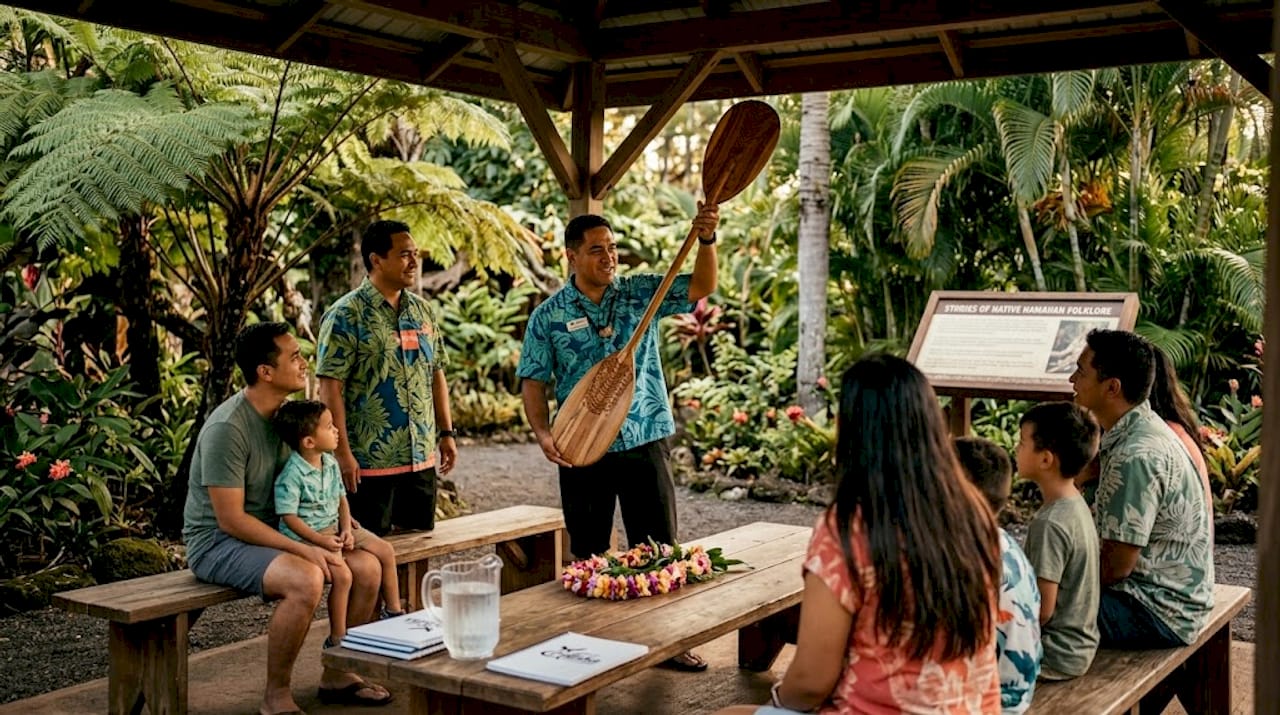
Pro Tip: Before booking any immersive attraction in Hawai’i, ask one simple question: “Who helped create the cultural content?” If the answer is vague, keep searching.
XploreRide: Hawaii’s first XR-enabled sightseeing tour 🌌
A standout example of immersion done right is XploreRide, which shows exactly what the criteria above look like in action.
XploreRide is Hawaii’s first next-gen sightseeing tour, blending location-synced XR (extended reality) visuals with authentic Hawaiian storytelling aboard a sightseeing bus on O’ahu. XR, simply put, is technology that layers digital content over the real world, so what you see through a device combines actual scenery with animated stories and characters.
Here is what makes the XploreRide experience so compelling:
- Location-synced storytelling: As the bus passes real landmarks, corresponding XR visuals and legends are triggered, making each moment feel perfectly timed.
- Cultural opening ritual: The tour features a traditional introductory chant, known as an oli, composed by a cultural advisor, which immediately grounds the experience in real Hawaiian tradition.
- Interactive “Mana Stone”: Guests interact with a special stone prop that literally unlocks new story content during the ride. This kind of hands-on trigger makes the group feel like active participants, not tourists sitting in seats.
- Co-designed content: Cultural advisors were involved at every stage, ensuring legends about Hawai’i’s origins, environment, and people are presented accurately and respectfully.
“When the Mana Stone lights up and the story unfolds around you, you stop being a tourist and start feeling like part of the legend.”
Why does this matter for your group?
Multi-generational groups especially benefit here. Young children love the interactive element and the visual magic. Teens engage with the storytelling in a way a simple bus tour would never achieve. Adults appreciate the cultural depth. It hits all the marks.
Pro Tip: For groups with mixed ages (grandparents, kids, teens all together), look for why immersive attractions are richer experiences that feature both physical interaction and narrative layers. That combination keeps everyone engaged at once.
Comparing XR technology: VR, VR360, and MR in immersive attractions
Now that we have seen how XR creates magic, it helps to understand the full technology landscape. You will likely encounter several terms when researching immersive Hawaii attractions. Here is a plain-language breakdown:
| Technology | What it means | Best for |
|---|---|---|
| VR (Virtual Reality) | Fully digital environment via headset; real world blocked out | Deep solo or small-group experiences |
| VR360 | 360-degree video; you look around but cannot truly interact | Passive scenic experiences |
| MR (Mixed Reality) | Digital content overlaid on real-world view; interactive | Group and family engagement |
| XR (Extended Reality) | Umbrella term covering VR, MR, and AR together | Varied, context-dependent |
The difference in experience quality between these formats is significant. A 2025 Springer Nature study found that VR and MR both surpassed VR360 in presence and engagement, with MR slightly preferred for group settings. Crucially, all three formats showed similar levels of intrinsic motivation among participants, meaning people want to engage regardless of format, but the depth of that engagement differs.
For families and groups, this research points clearly toward MR-based experiences like XploreRide:
- Presence feels real: MR lets you see both the real world and the digital story at once, so the experience feels grounded rather than disorienting.
- Group interaction is easier: No one is sealed off in their own headset world, making it easier for families to share reactions and discuss what they are experiencing together.
- Narrative flow is smoother: When digital content responds to real-world triggers (like passing a landmark), the story feels organic rather than forced.
If you are exploring how immersive attractions impact family travel, MR-based tours consistently come out on top for mixed-age, multi-person groups.
For groups motivated by puzzle-solving or active teamwork, other formats like group-friendly immersive experiences built around escape room mechanics might provide a different but equally thrilling type of engagement.
Pro Tip: If anyone in your group gets motion sickness easily, MR and VR360 are gentler options than fully enclosed VR headsets. Ask any attraction about their specific technology format before booking.
Situational recommendations: Which immersive experience is best for your group?
Understanding technology differences is useful, but the best immersive experience for your group depends just as much on who you are traveling with and what you all enjoy.
Here is a practical comparison to help you think it through:
| Group type | Best experience style | Why it works |
|---|---|---|
| Young families (kids under 10) | Multi-sensory, story-driven tours | Accessible interaction, no age barrier |
| Multi-generational groups | Scenic + cultural narrative (like XploreRide) | Everyone engages at their own level |
| Teen-heavy groups | Interactive puzzles or XR with choices | Keeps teens actively involved |
| Adventure seekers | Flying theater simulations or high-sensory rides | Adrenaline + storytelling combo |
| Couples or adults | Culturally deep, intimate storytelling experiences | Rich detail and emotional resonance |
The location-synced XR narrative mechanism used by XploreRide makes it ideal for groups that want scenic beauty combined with genuine story depth. It checks both boxes without anyone feeling left out.
Three questions to match your group to the right experience:
-
What is your group’s energy level? High-energy groups thrive with interactive or physically engaging formats. More relaxed groups enjoy narrative and sensory-rich environments where they can sit back and absorb the story.
-
How important is cultural learning to your group? If cultural connection matters, prioritize attractions that feature verified cultural advisor involvement, traditional chants, or interactive storytelling rooted in Hawaiian legends. Check the visitor guide to Hawaiian immersion for curated picks.
-
What ages are in your group? Younger children need experiences with clear, visual storytelling and safe interaction. Older adults often appreciate depth and authenticity more than high-tech novelty. The best attractions, like a well-designed flying theater or XR tour, are built to work across that full spectrum.
For families specifically, look for experiences highlighted in the Hawaii family entertainment guide that have been tested and reviewed for multi-age appeal.
Groups that love working together through challenges might also enjoy family teamwork immersive experiences that use puzzles and problem-solving to build shared memories. The thrill of cracking a challenge together is a memory that sticks long after the trip ends.
A new era: Why true immersion depends on both story and interaction
Here is an honest perspective, one that most travel guides will not tell you plainly.
Technology is impressive. 8K visuals, motion platforms, surround scent, and wind effects create a sensory experience that genuinely surprises people. But if the story underneath those visuals is thin, generic, or culturally disconnected, the experience fades fast. You remember the cool effect for a day. You forget the attraction within a week.
The families and groups we hear from most enthusiastically, the ones who come back year after year and bring new people with them, are never talking about the resolution of the screen. They are talking about the moment a Hawaiian legend came alive around them. They are talking about the chant that opened the experience and the feeling that someone really cared about sharing that story with them.
AHP-based evaluation frameworks for immersive experiences consistently show that immersion is multi-dimensional, covering technology, interaction, and cultural adaptation working together. Remove any one of those three, and the experience drops significantly in perceived quality.
This is why we believe the future of immersive Hawaiian tourism belongs to attractions that treat cultural wisdom as the foundation, not the decoration. Technology should serve the story of Hawai’i, not replace it.
Our advice: use the technology comparison table and the three decision questions above as your filter. But apply one final test. Ask yourself, “Will this experience teach my family or group something real about Hawai’i?” If the answer is yes, book it.
Explore traditional vs. immersive attractions to see how the landscape has shifted, and read up on Hawaii immersive entertainment insights for a broader picture of where the island experience is headed.
Ready to plan your own immersive Hawaii adventure?
You have done the research. You understand the tech, you know what to look for in a cultural experience, and you have a clear sense of what fits your group. Now it is time to put it all together. 🌺

At Flight of Aloha, we have built something unlike anything else in Kailua-Kona. Think of what happens when a helicopter tour and a Disney ride have a baby, rooted in real aloha and Hawaiian storytelling. Our flying theater blends 8K visuals, motion effects, wind, and scent into films like Naupaka and Lahaina, each grounded in authentic Hawaiian legend. Whether you are bringing the whole family or planning a group outing, we are here to give you a memory that lasts. Start exploring immersive Hawaii experiences and find the perfect fit for your group today.
Frequently asked questions
What does ‘XR’ stand for, and how is it used in Hawaii tours?
XR stands for “extended reality” and blends real-world sightseeing with digital storytelling. XploreRide uses this technology on O’ahu to layer animated Hawaiian legends over actual scenery in real time.
How do cultural advisors contribute to immersive experiences?
Cultural advisors shape authentic chants, stories, and interactive rituals that ensure accuracy and respect. The XploreRide tour features an oli composed by a cultural advisor, setting the tone from the very first moment.
Is VR technology better than MR or VR360 for group engagement?
MR and VR outperform VR360 in presence and engagement according to 2025 research, with MR slightly preferred for group and family contexts because it keeps everyone connected to both the real world and the story.
Can young children participate in immersive XR tours like XploreRide?
Yes. XploreRide’s content is designed to engage guests of all ages, featuring multi-sensory storytelling and interactive elements that are accessible and exciting for young children and adults alike.
Recommended
- Hawaii Family Attractions Checklist: Immersive & Fun 🌺 | Flight Of Aloha
- How To Enhance Family Outings For Memorable Hawaiian Adventures | Flight Of Aloha
- Unique Family Experiences In Hawaii For Cultural Fun | Flight Of Aloha
- Hawaii Attraction Safety Tips For Families And Cultural Explorers 🌺 | Flight Of Aloha